Artwork
Study of a Seated Nude Female Model Drawing
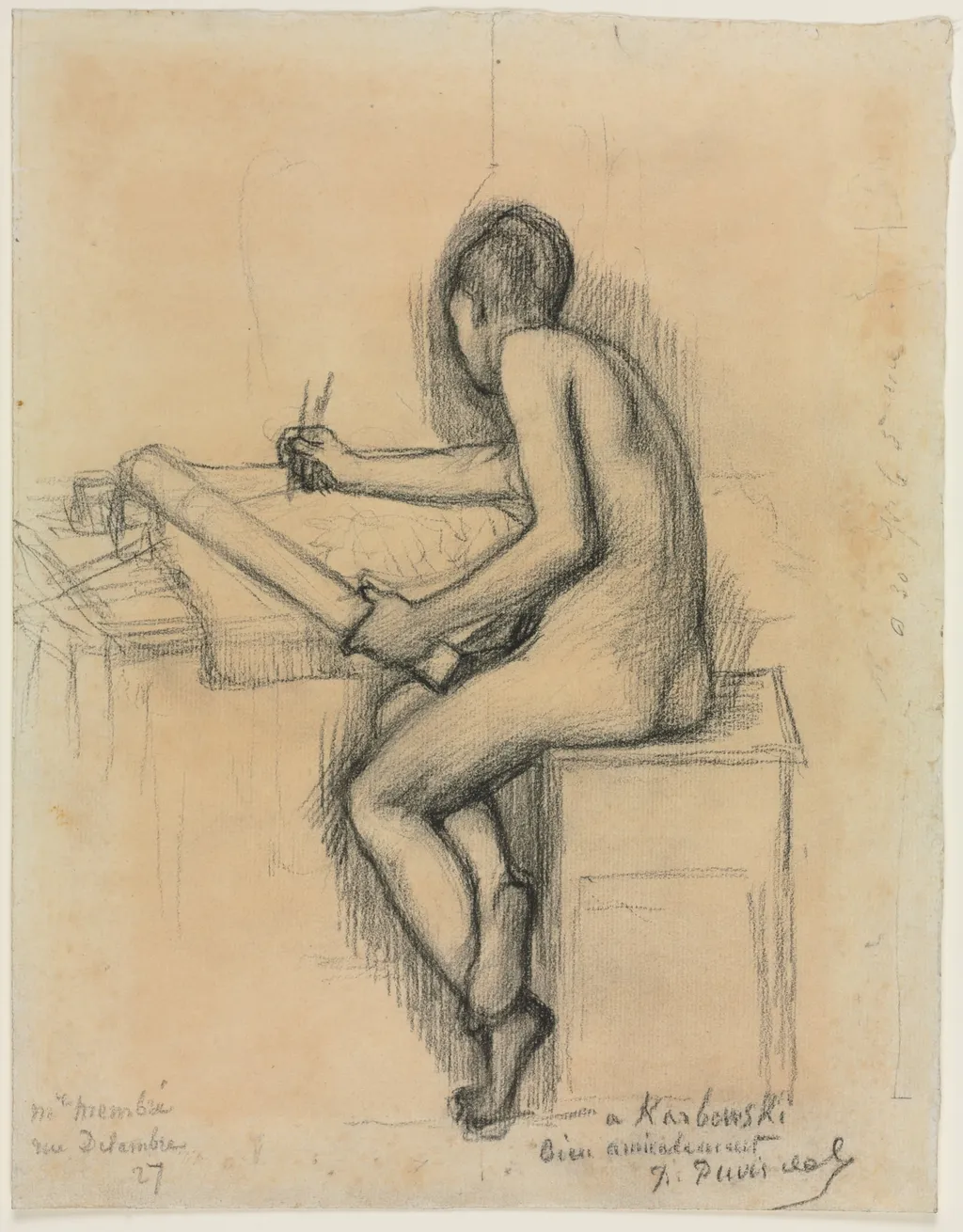
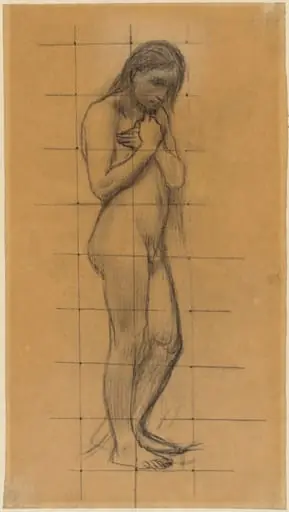
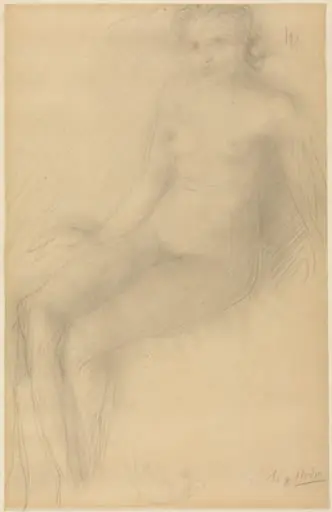
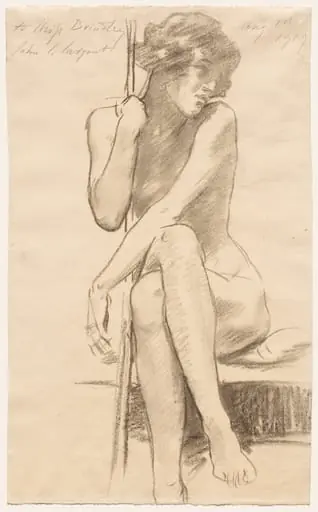
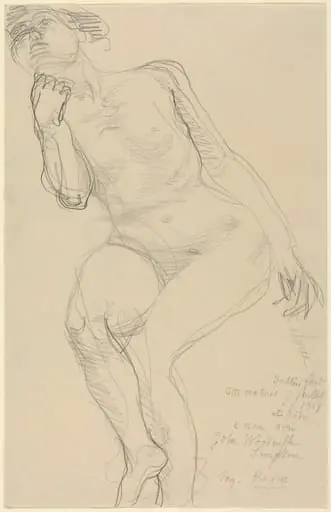
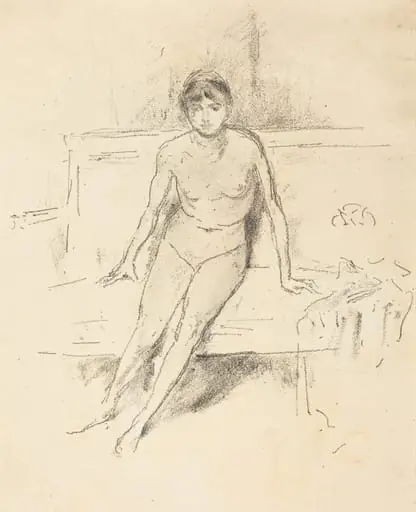
Study of a Seated Nude Female Model Drawing is a drawing by the Impressionist artist Pierre Puvis de Chavannes. It dates from 1893 and is held in the collection of the Cleveland Museum of Art.
About this work
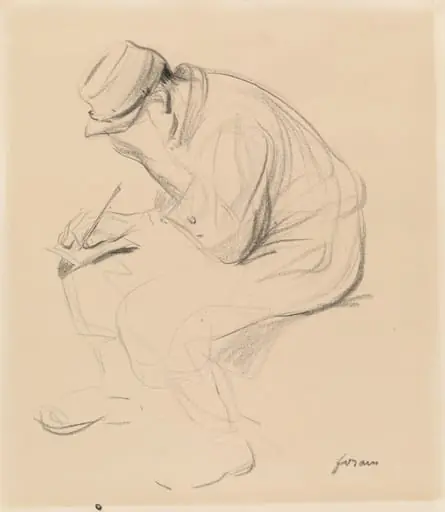
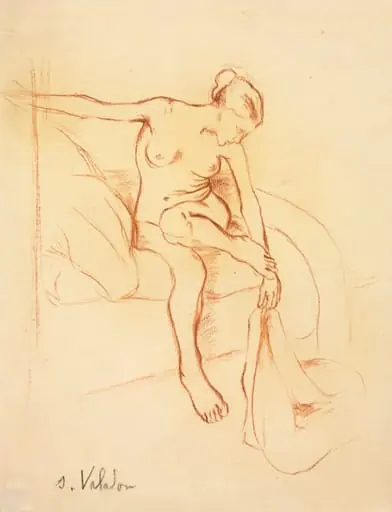
This drawing shows a nude woman sitting sideways, hunched over a sketchbook.
This drawing shows a nude woman sitting sideways, hunched over a sketchbook. She’s not posing like a model. Instead, she’s drawing herself, lost in the work.
Puvis often used soft outlines and flat colors. Here, the lines feel loose but sure. You can almost hear the scratch of her pencil.
Look at how her back curves. It’s drawn with simple, bold strokes.
Check out Pierre Puvis de Chavannes (French, 1824–1898).
Overview
This drawing by Pierre Puvis de Chavannes depicts a seated nude woman engaged in the act of drawing, subverting the traditional role of the passive model. Rather than presenting herself for observation, she is absorbed in her own creative process, turning away from the viewer. The composition emphasizes introspection over spectacle, shifting focus from the body as object to the mind as maker.
Subject & Meaning
The figure is not an idealized muse but an artist in motion, actively shaping her own image. Her hunched posture and focused gaze suggest deep concentration, transforming the studio from a space of display into one of labor. This inversion challenges 19th-century conventions that framed the female nude as an object of male gaze, instead asserting autonomy and agency in artistic creation.
Technique & Style
Puvis employs loose, confident pencil strokes to define the figure’s form, avoiding detailed rendering in favor of suggestive contours. The lines are economical yet expressive, capturing the curve of the back and the weight of the body with minimal means. The absence of shading and the flatness of the surface reflect his broader aesthetic, favoring quiet harmony over dramatic contrast.
History & Provenance
Created during Puvis’s mature period, this drawing likely served as a preparatory study or personal exploration rather than a finished work for public display. It remained within the artist’s circle until entering a public collection, where its intimate nature and unusual subject have since drawn scholarly attention for its quiet rebellion against academic norms.
Context
In an era when academic art reinforced rigid hierarchies between artist and model, Puvis’s depiction of the model as creator was unconventional. His interest in symbolic, contemplative figures aligned with Symbolist tendencies, even as he avoided overt narrative. This drawing quietly critiques the gendered dynamics of artistic production in 19th-century France.
Legacy
Though not widely exhibited in its time, this drawing has come to represent a subtle shift in how artists viewed the relationship between the body and creativity. It anticipates later feminist reexaminations of the nude and the model’s agency, offering an early example of self-referential art that privileges internal experience over external spectacle.
Artist & collection
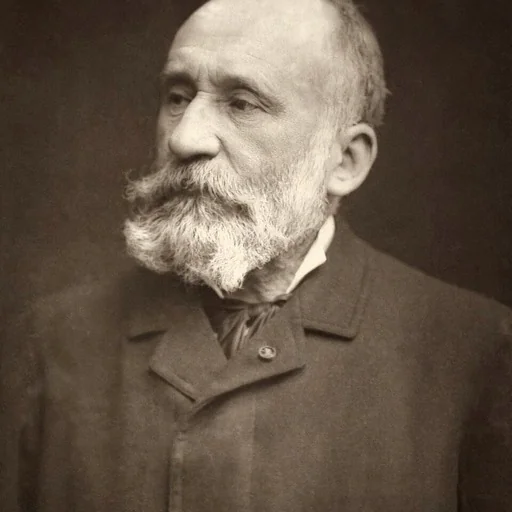
Artist
Pierre Puvis de Chavannes (French pronunciation: ; 14 December 1824 – 24 October 1898) was a French painter known for his mural painting, who came to be known as "the painter for France".