Artwork
Seated Female Nude
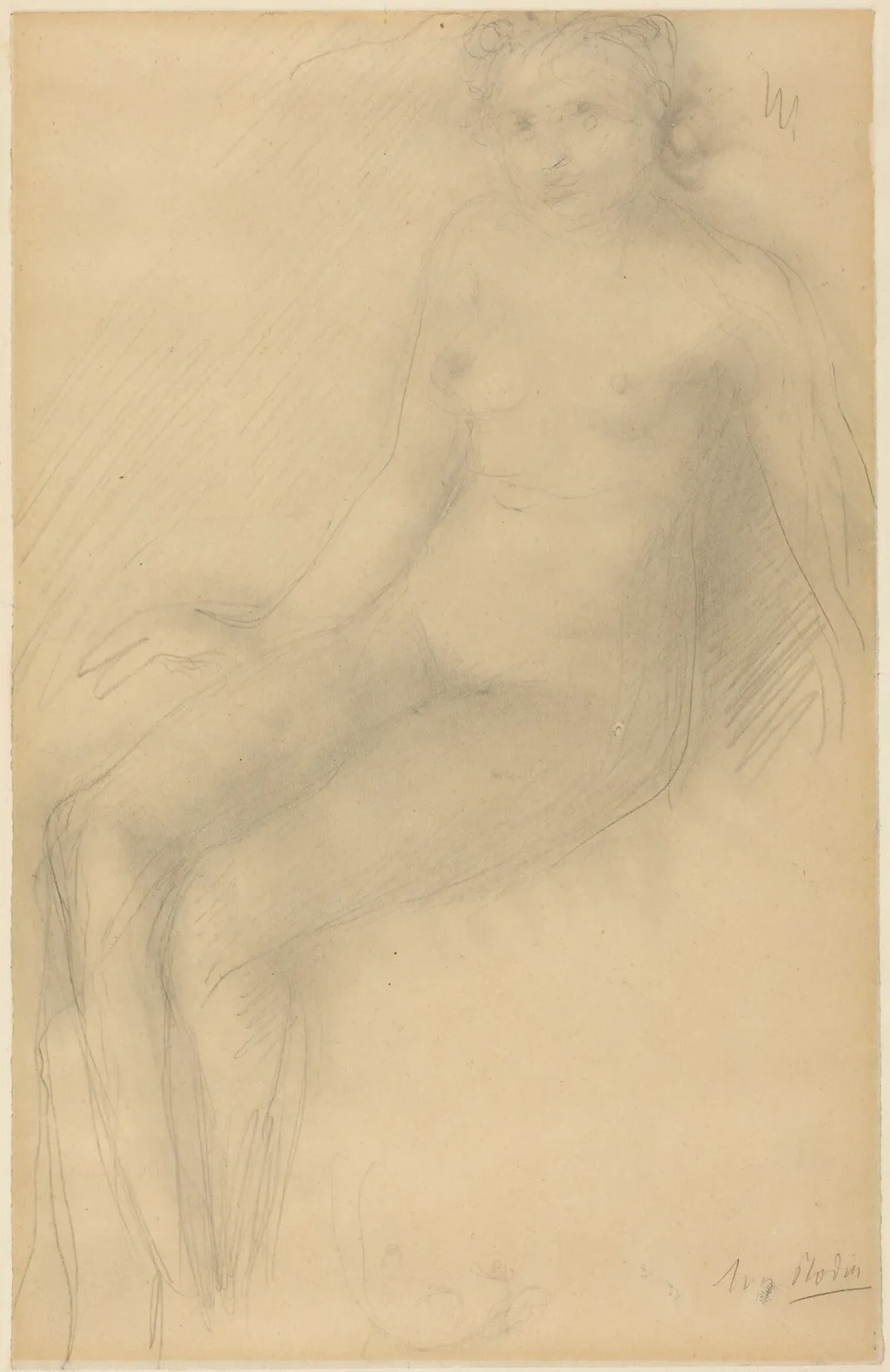
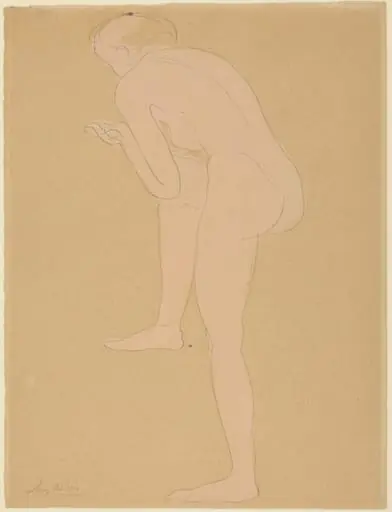
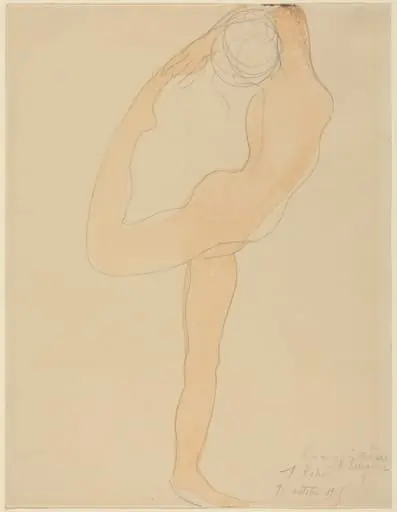
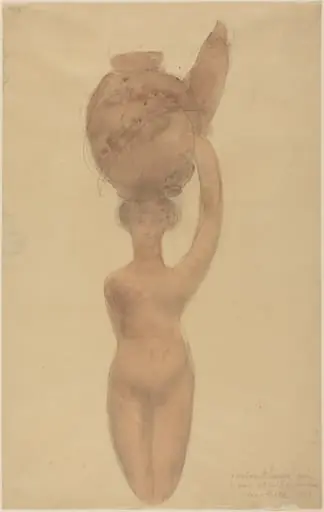
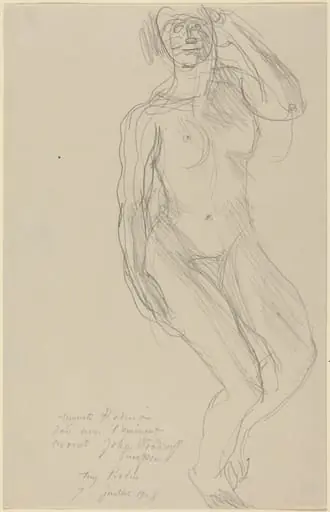
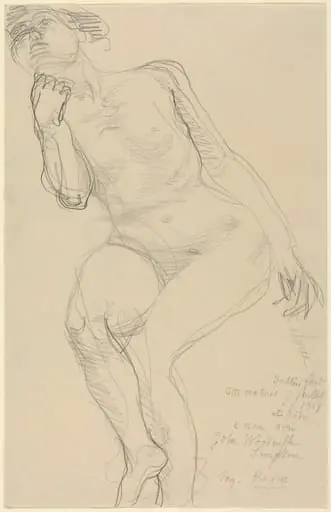
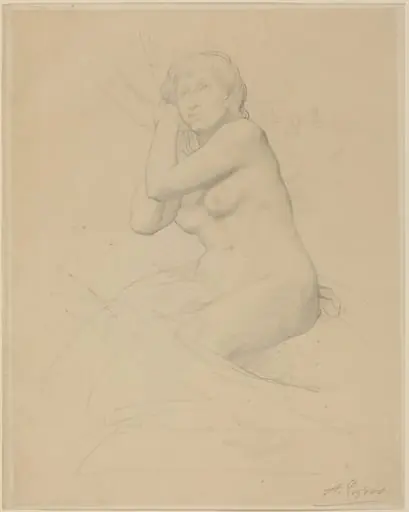
Seated Female Nude is a graphite drawing by the Romanticist artist Auguste Rodin. It dates from 1878 and is held in the collection of the National Gallery of Art.
About this work
Overview
This work exemplifies his interest in the human form through direct, intimate observation, capturing a moment of stillness with minimal yet deliberate marks.
Created in 1878, *Seated Female Nude* is a graphite drawing by Auguste Rodin, a French artist best known for his sculptural innovations. Though primarily recognized for three-dimensional work, Rodin produced numerous drawings as studies and independent pieces. This work exemplifies his interest in the human form through direct, intimate observation, capturing a moment of stillness with minimal yet deliberate marks.
Subject & Meaning
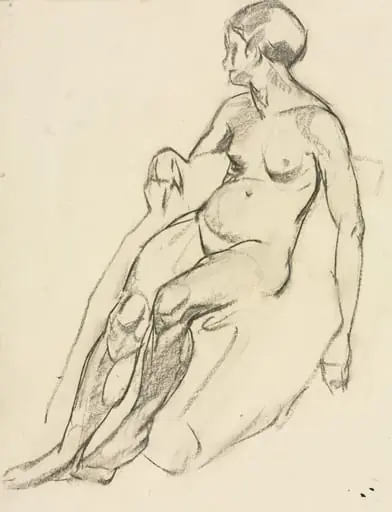
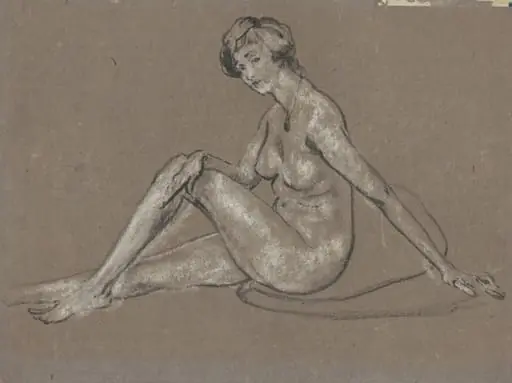
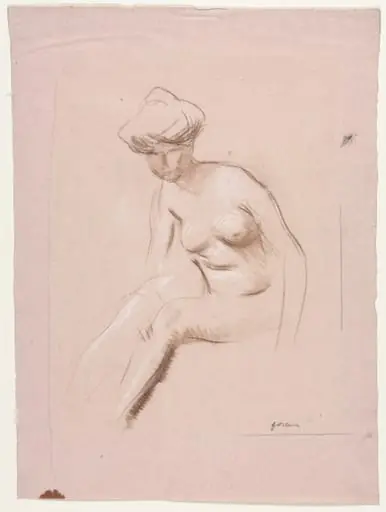
The figure is a woman seated with legs crossed and arms resting gently on her thighs, her head turned slightly to the right. Her posture suggests introspection rather than performance, avoiding theatricality. The absence of narrative context or idealized features shifts focus to the quiet presence of the body itself. Rodin treats the nude not as a symbol but as a lived, breathing entity, emphasizing dignity in repose.
Technique & Style
Rodin employed graphite to achieve subtle gradations of tone and soft, flowing contours. Lines are sparingly used, with shading concentrated along the curves of the torso and limbs to suggest volume without heavy outline. The texture of the paper interacts with the medium, enhancing the tactile quality of the skin. His approach is observational rather than decorative, prioritizing anatomical truth over stylization.
History & Provenance
This drawing was made during a period when Rodin was refining his sculptural language, often using sketches to explore poses later realized in clay. It likely originated as a preparatory study, though its completeness suggests it was intended as a finished work. The drawing remains within private collections and has been exhibited in retrospectives of Rodin’s graphic work, though it lacks a prominent public museum history.
Context
In late 19th-century France, academic traditions still dominated figure drawing, but Rodin’s approach diverged by rejecting idealized forms in favor of naturalistic, unembellished observation. His drawings were not merely studies but expressions of personal vision, aligning with broader shifts toward psychological realism. While often associated with Romanticism, his work here leans more toward realism infused with emotional gravity.
Legacy
Rodin’s graphite drawings, including this one, expanded the role of drawing in modern art—from preparatory tool to autonomous expression. They influenced later artists who valued immediacy and emotional authenticity over polished finish. Though less celebrated than his sculptures, these works reveal his deep engagement with the human form and his quiet revolution in how the body could be seen and felt on paper.
Artist & collection
Artist
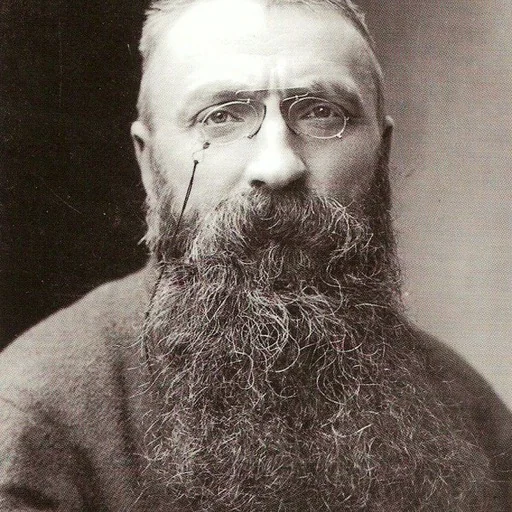
François Auguste René Rodin (; French: ; 12 November 1840 – 17 November 1917) was a French sculptor generally considered the founder of modern sculpture.