Artwork
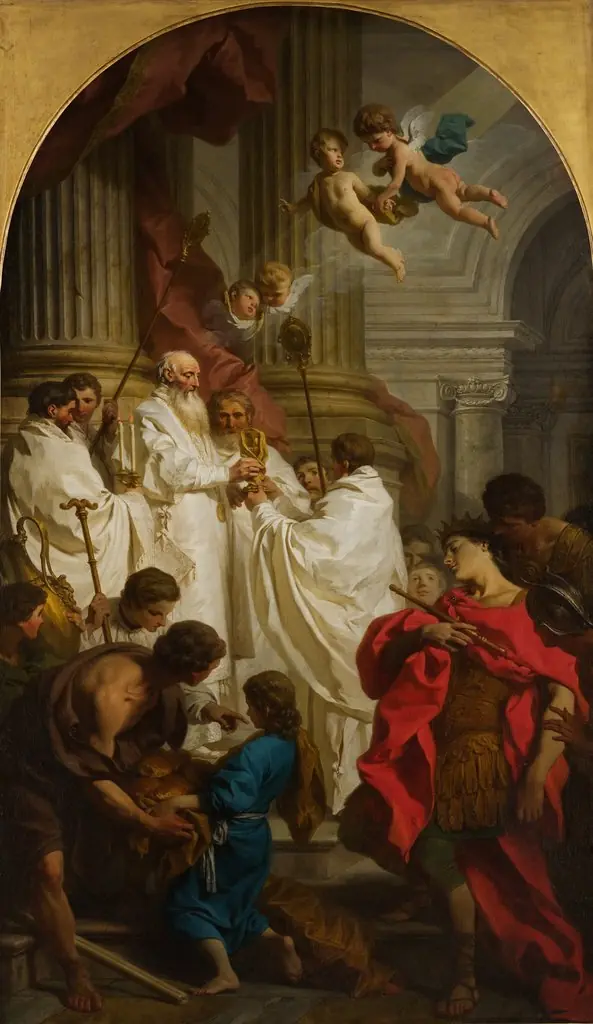
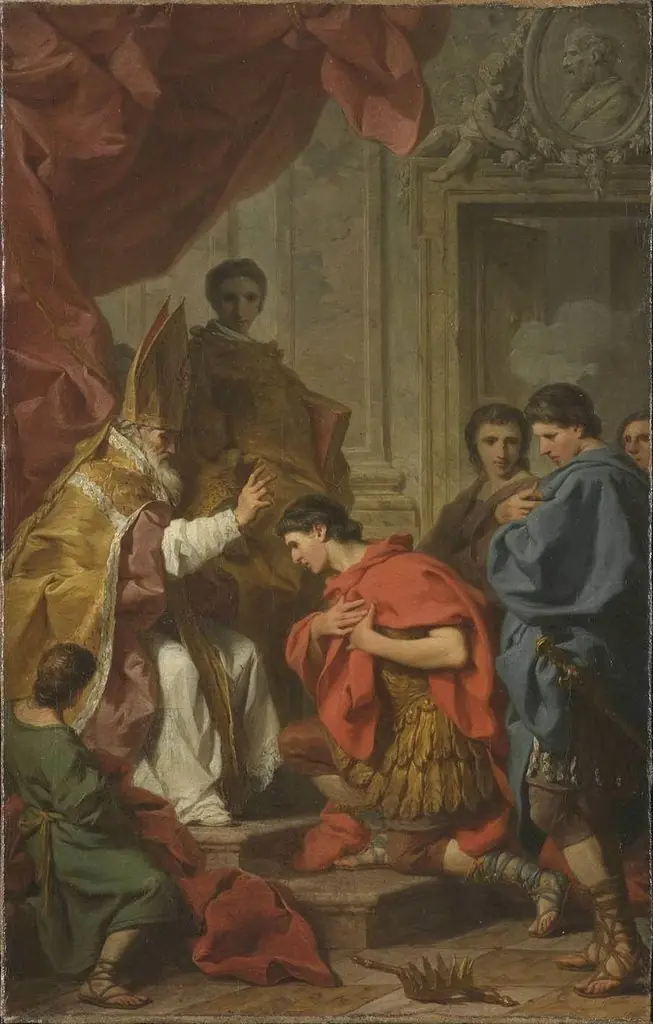
Emperor Valens before Bishop Basil (The Mass of St Basil)
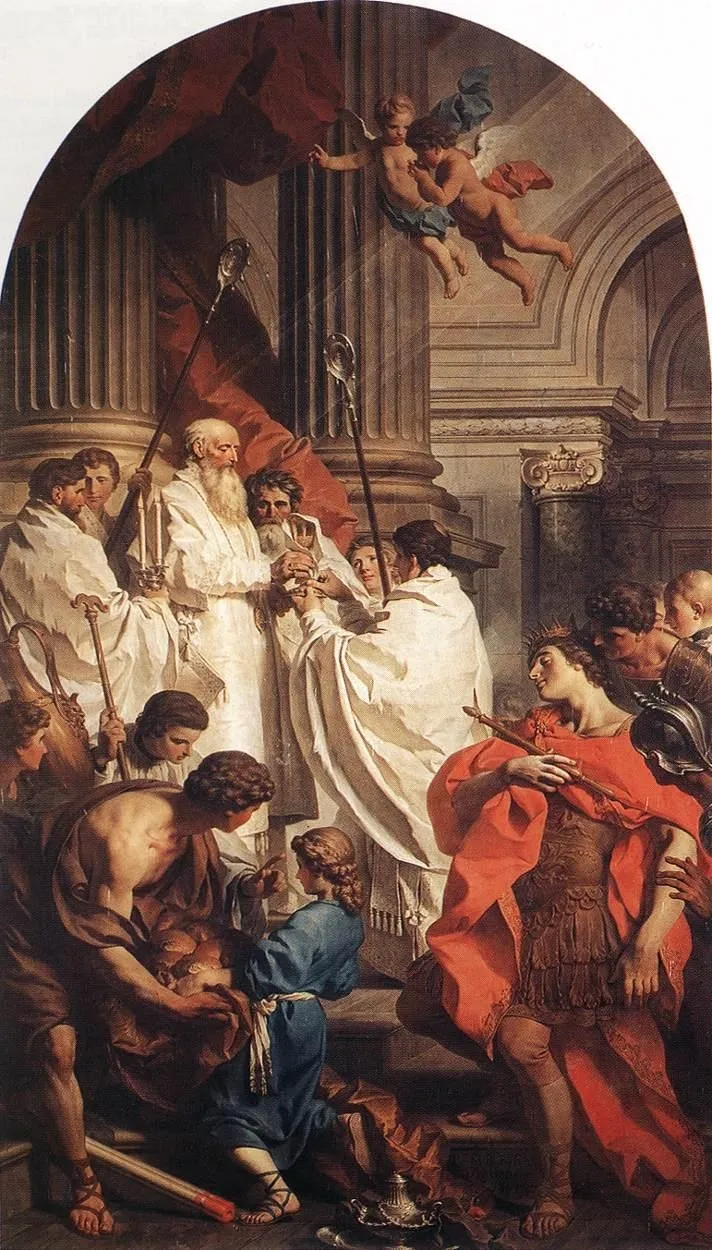
Emperor Valens before Bishop Basil (The Mass of St Basil) is an oil painting by the Rococo painting artist Pierre Subleyras. It dates from 1743 and is held in the collection of the Hermitage Museum.
About this work
Overview
Pierre Subleyras, a French artist who spent most of his career in Italy, completed this oil composition in 1743. The canvas, now part of the State Hermitage Museum’s holdings, presents a solemn encounter between the fourth‑century bishop Basil of Caesarea and the Roman emperor Valens, set within an opulent interior that combines architectural grandeur with a subdued palette.
Subject & Meaning
The surrounding onlookers, some clasping hands, others bowed, convey a collective reverence, while two cherubic figures hover above, suggesting divine presence.
The central figure, Basil, presides over a Catholic Mass, his white vestments contrasting with the crimson armor of a kneeling soldier, likely representing Valens. The surrounding onlookers, some clasping hands, others bowed, convey a collective reverence, while two cherubic figures hover above, suggesting divine presence. The juxtaposition of imperial authority and ecclesiastical ritual underscores the tension between temporal power and spiritual devotion.
Technique & Style
Executed in the Rococo idiom, Subleyras employs a delicate handling of light and shadow, creating pockets of illumination that highlight key figures while deeper recesses recede into darkness. The brushwork remains refined, with smooth transitions that soften the marble columns and arches, and the subtle coloration lends the scene an airy, almost theatrical quality characteristic of mid‑18th‑century French painting in Italy.
History & Provenance
Created during Subleyras’s mature period, the work was likely commissioned for a private collection before entering the Russian imperial acquisitions that formed the core of the Hermitage. Its presence in the museum reflects the 18th‑century European fascination with early Christian narratives and the artist’s reputation as a skilled interpreter of historical and religious subjects.
Context
The painting reflects contemporary interest in portraying early church figures alongside Roman rulers, a theme popular among Enlightenment patrons seeking moral exempla. Subleyras’s choice of a Rococo aesthetic, with its emphasis on elegance and lightness, adapts a traditionally solemn subject to the tastes of his era, bridging Baroque drama with emerging Neoclassical restraint.
Artist & collection
Artist
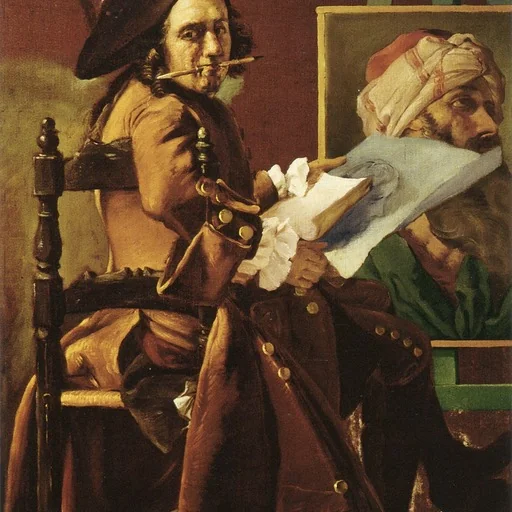
Pierre Subleyras (French: ; November 25, 1699 – May 28, 1749) was a French painter, active during the late-Baroque and early-Neoclassic period, mainly in Italy.