Artwork
Le retour trop precipite
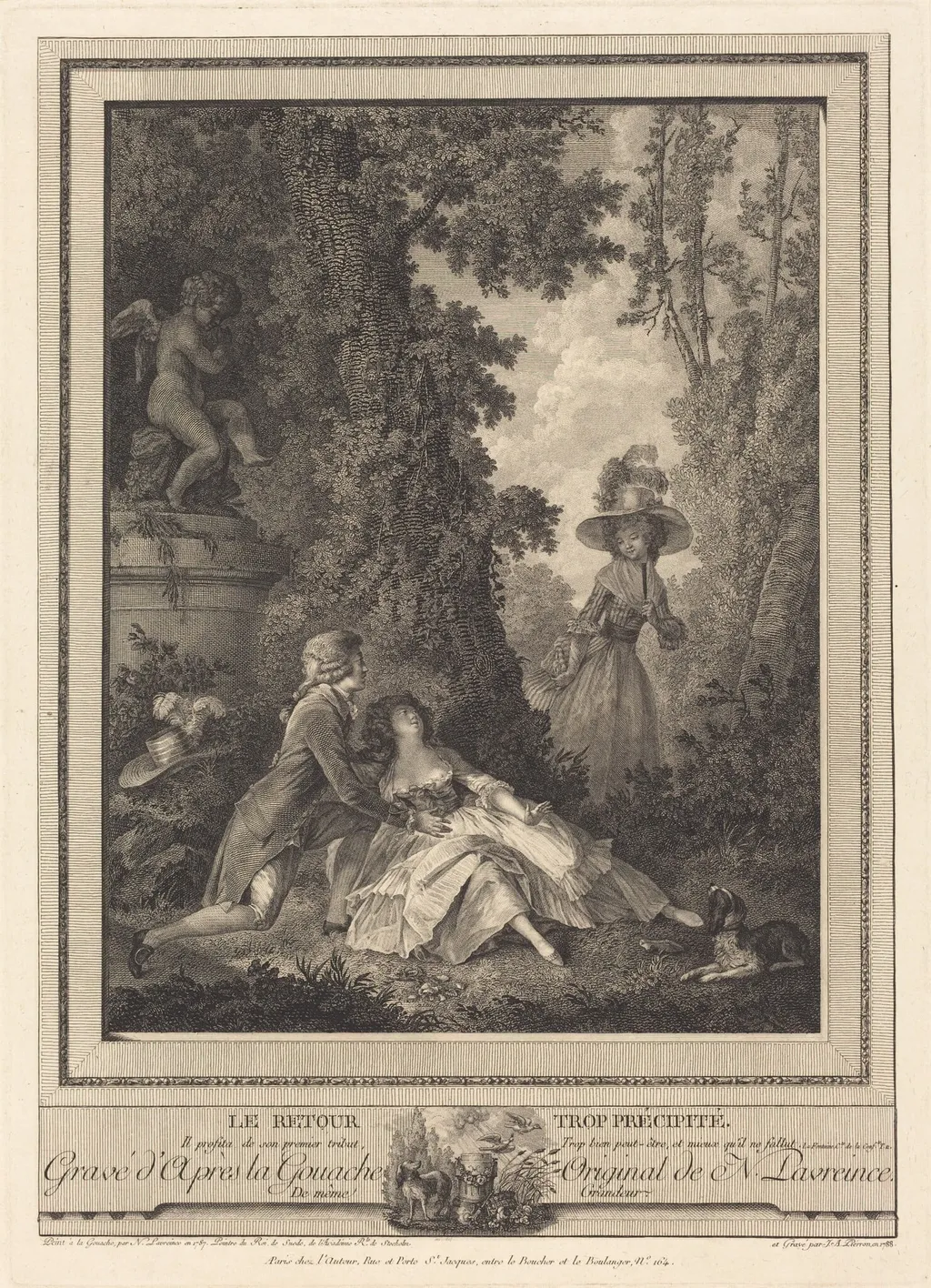
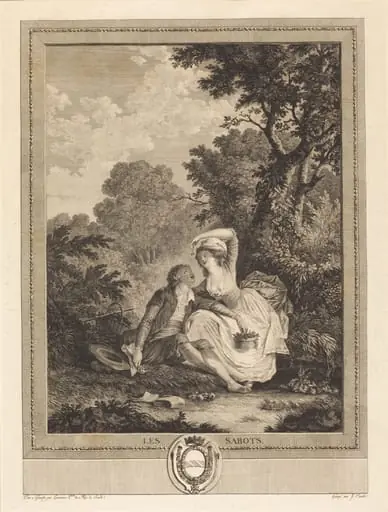
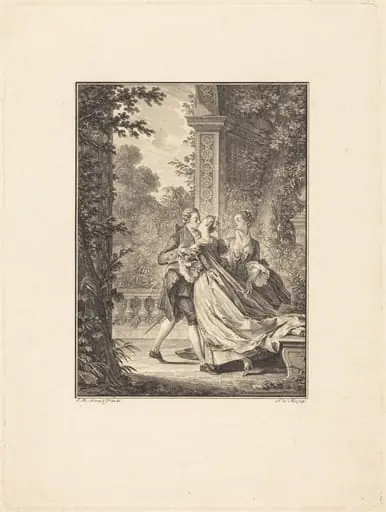
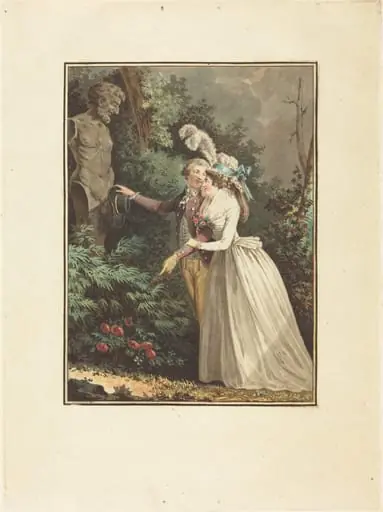
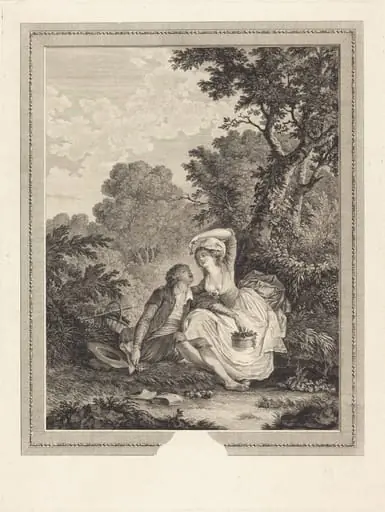
Le retour trop precipite is an ink print by the Romanticist artist Jean Antoine Pierron. It dates from 1788 and is held in the collection of the National Gallery of Art. Le retour trop précipité, executed in 1788 by the French printmaker Jean‑Antoine Pierron, is an engraved and etched print.
About this work
Overview
Le retour trop précipité, executed in 1788 by the French printmaker Jean‑Antoine Pierron, is an engraved and etched print.
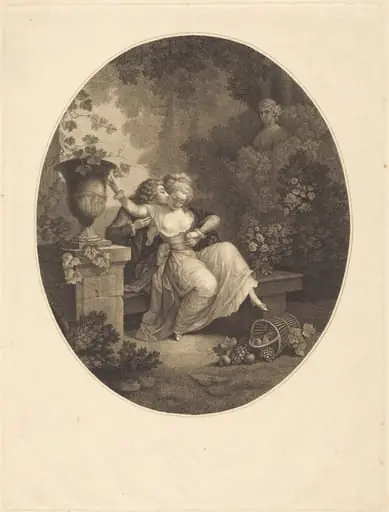
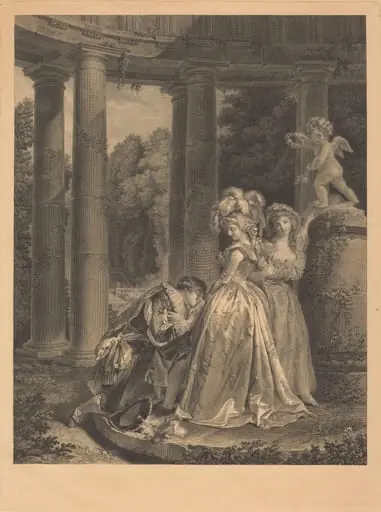
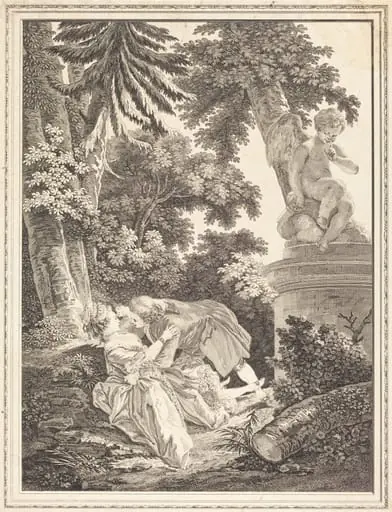
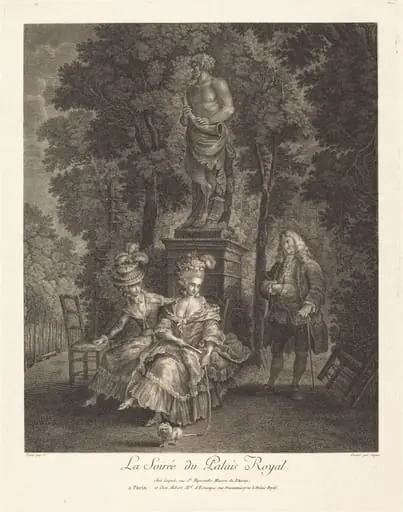
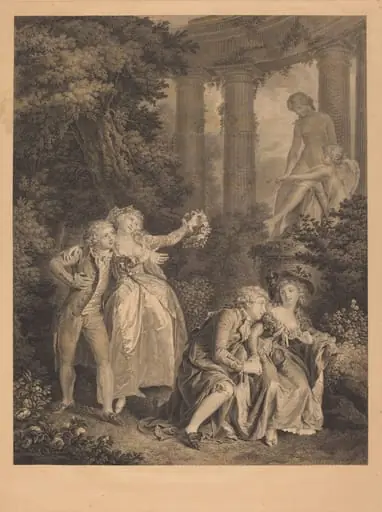
Le retour trop précipité, executed in 1788 by the French printmaker Jean‑Antoine Pierron, is an engraved and etched print. The work presents a carefully rendered garden scene populated by a kneeling gentleman, a seated lady, a recumbent dog, and a cherubic statue perched on a pedestal. The composition balances intimacy with a hint of narrative tension, inviting viewers to contemplate the moment captured.
Subject & Meaning
At the center of the image a man in contemporary eighteenth‑century dress kneels beside a woman seated on the ground, both surrounded by verdant foliage. A dog lies peacefully at their feet, while a small angelic figure crowns the background. The arrangement suggests a sudden, perhaps urgent reunion, evoking themes of love, rescue, or a dramatic return within a cultivated garden setting.
Technique & Style
Pierron employed a combination of engraving and etching, allowing for both crisp line work and subtle tonal variation. The print displays meticulous detailing of fabrics, foliage, and the marble statue, while the gradations achieved through acid biting create depth and atmosphere. The overall effect is realistic yet refined, characteristic of late‑ eighteenth‑century French printmaking.
History & Provenance
Created in 1788, the print reflects Pierron’s mature period as a specialist in reproductive and original prints. Though specific ownership records are scarce, the work circulated among collectors of French prints in the years following its production, and it has since entered museum collections that focus on Enlightenment‑era graphic arts.
Artist & collection