Artwork
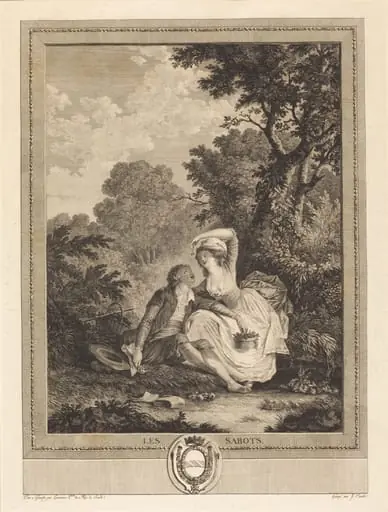
Les sabots
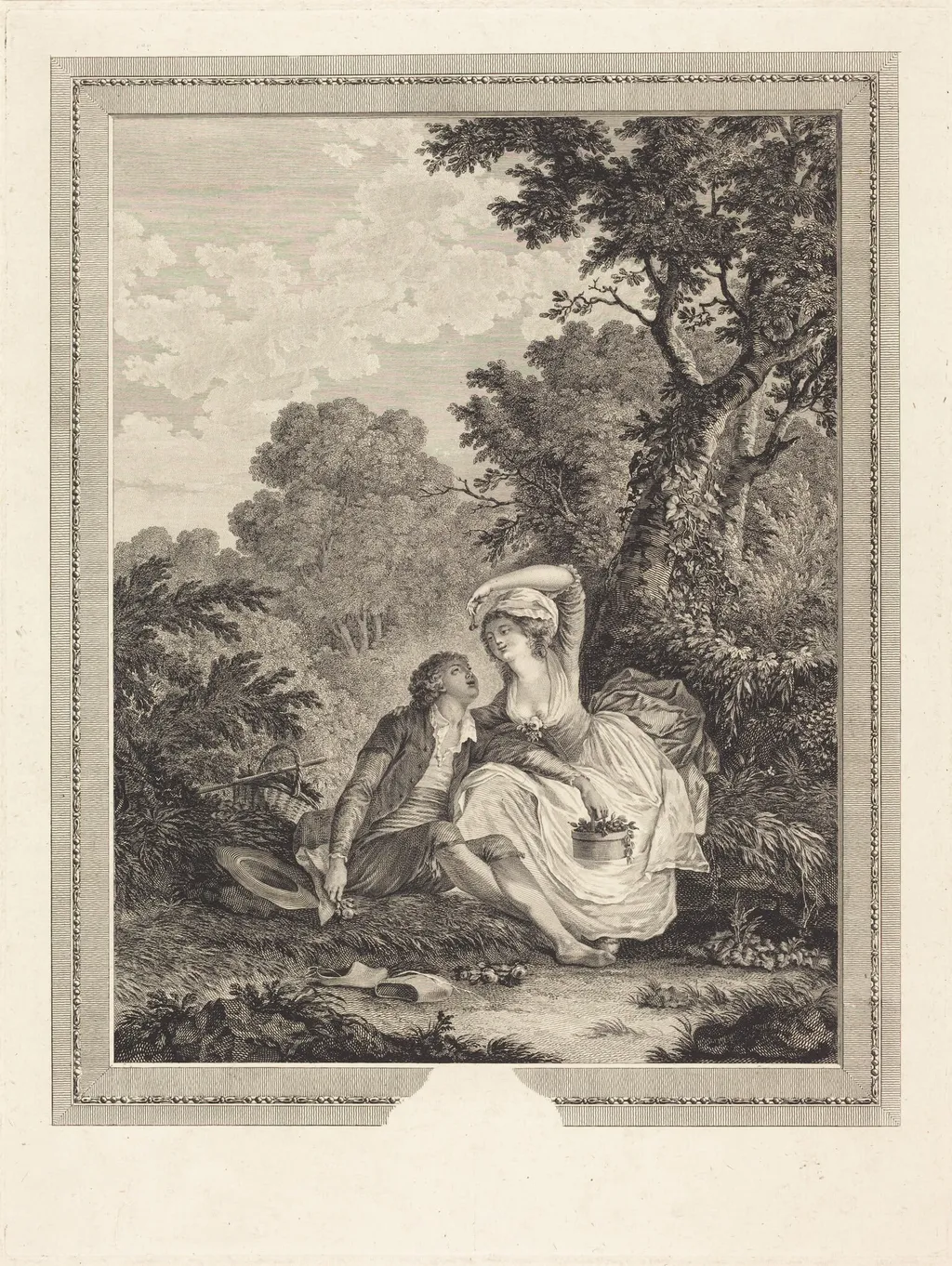
Les sabots is an ink print by the Romanticist artist Jacques Couché. It dates from 1784 and is held in the collection of the National Gallery of Art.
About this work
Overview
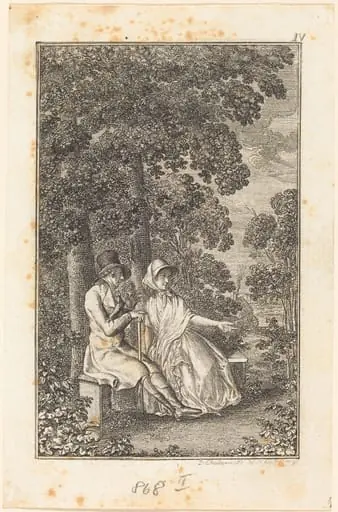
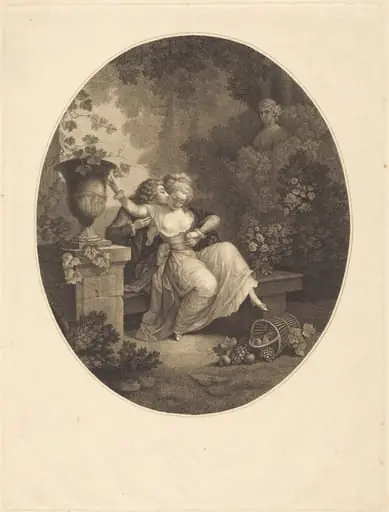
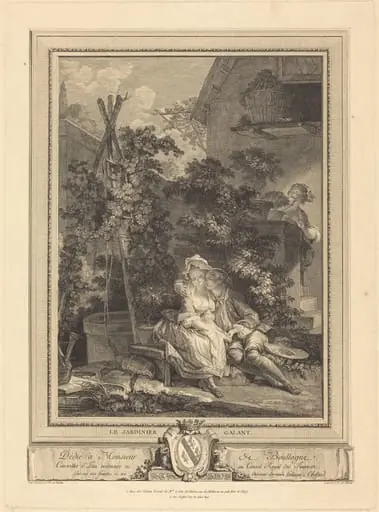
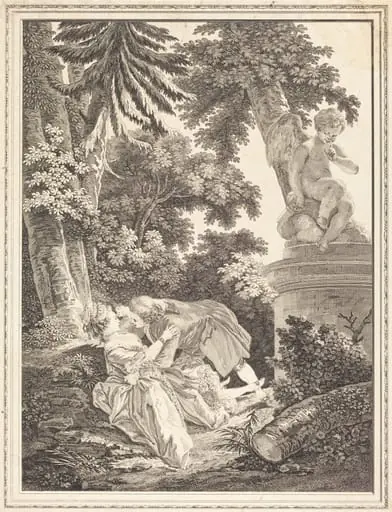
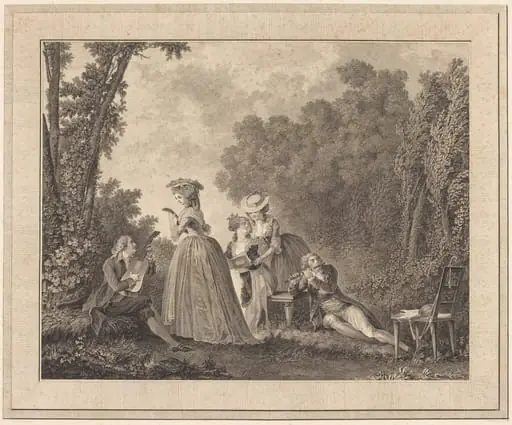
Les sabots is a black-and-white print created by Jacques Couché in 1784, utilizing etching and engraving techniques. The scene depicts two individuals in a wooded setting, engaging in a quiet, intimate moment.
Subject & Meaning
The print shows a man and a woman seated together, with the man looking up at the woman, who appears to be listening intently. She holds a basket of flowers, while he grasps a walking stick, suggesting a leisurely outdoor encounter. The specific context or narrative behind their interaction is not explicitly conveyed.
Technique & Style
Couché employed etching and engraving to achieve smooth tones and varied textures in Les sabots. Notable details include the intricate rendering of the man’s boots and the woman’s hat, demonstrating the artist’s attention to period dress.
History & Provenance
Created in 1784, the print’s provenance and exhibition history are not detailed here, focusing instead on its technical and compositional aspects.
Context
Les sabots reflects late 18th-century interests in depicting everyday life and natural settings. The use of etching and engraving was characteristic of printmaking during this period, allowing for detailed, high-quality reproductions.
Legacy
The legacy of Les sabots is not extensively outlined in available information, though it represents a typical example of late 18th-century French printmaking, with its emphasis on detail and serene, domestic scenes.
Artist & collection