Artwork
Farm near Duivendrecht
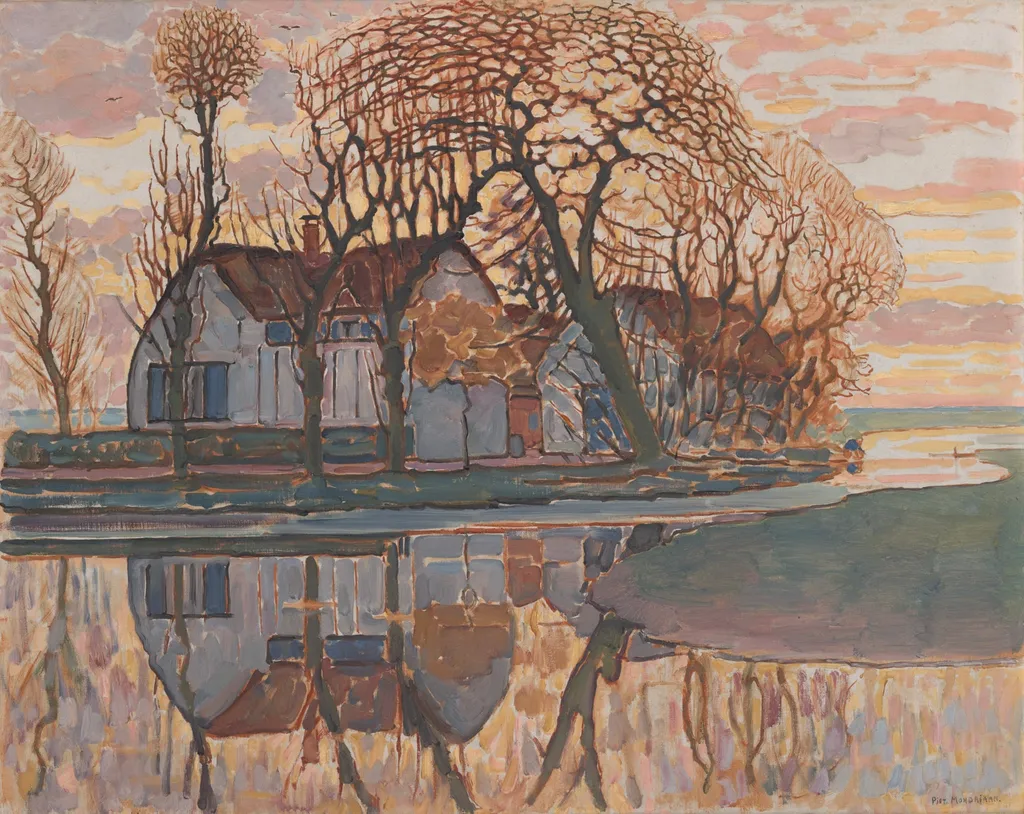
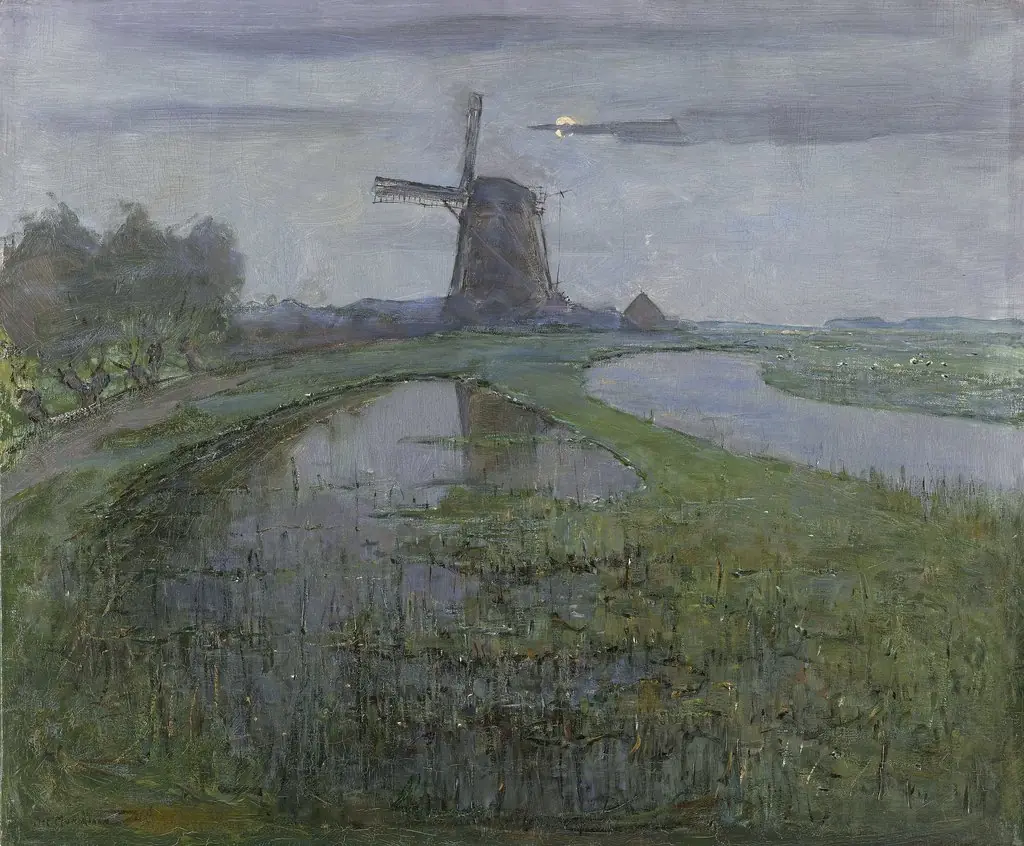
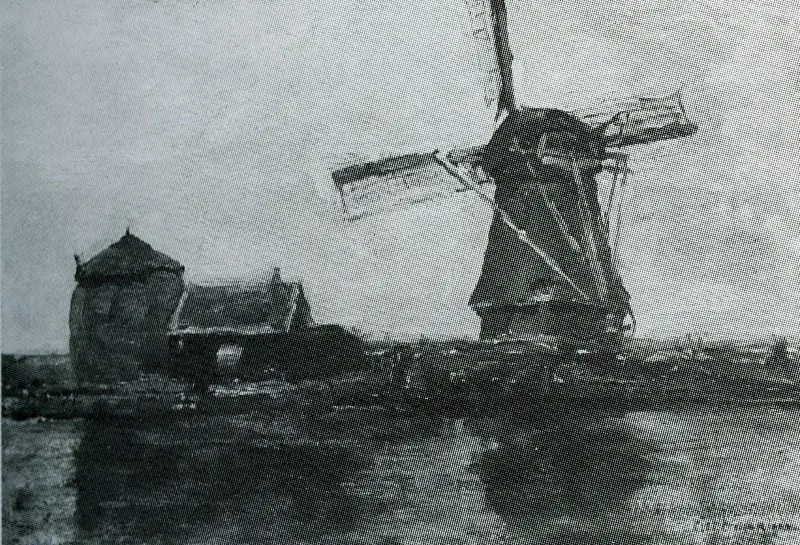
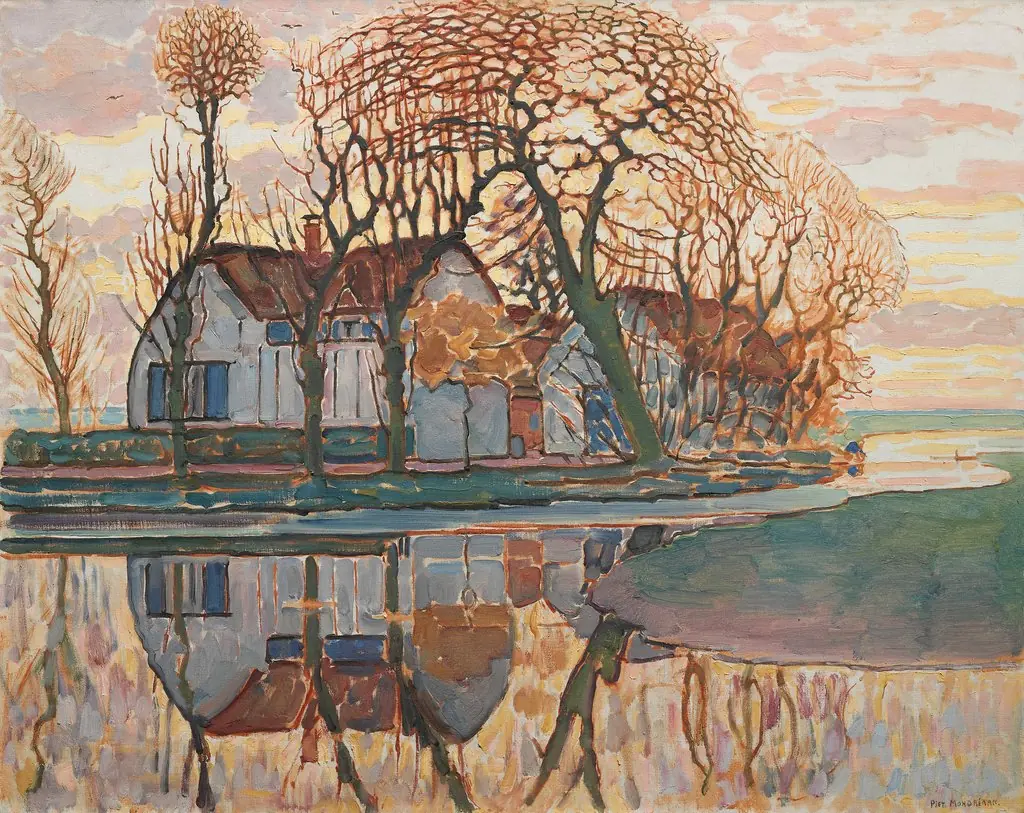
Farm near Duivendrecht is an oil painting by Piet Mondrian. It dates from 1916 and is held in the collection of the Art Institute of Chicago. Painted around 1905, this oil on canvas depicts a rural farmstead near Duivendrecht in the Netherlands.
About this work
If you like how simple lines can still feel like a real place, look up *glazing*—the technique he used to build up thin, see-through layers of paint.
You see a farmhouse, trees, and fields under a pale sky—all in soft blues, greens, and browns.
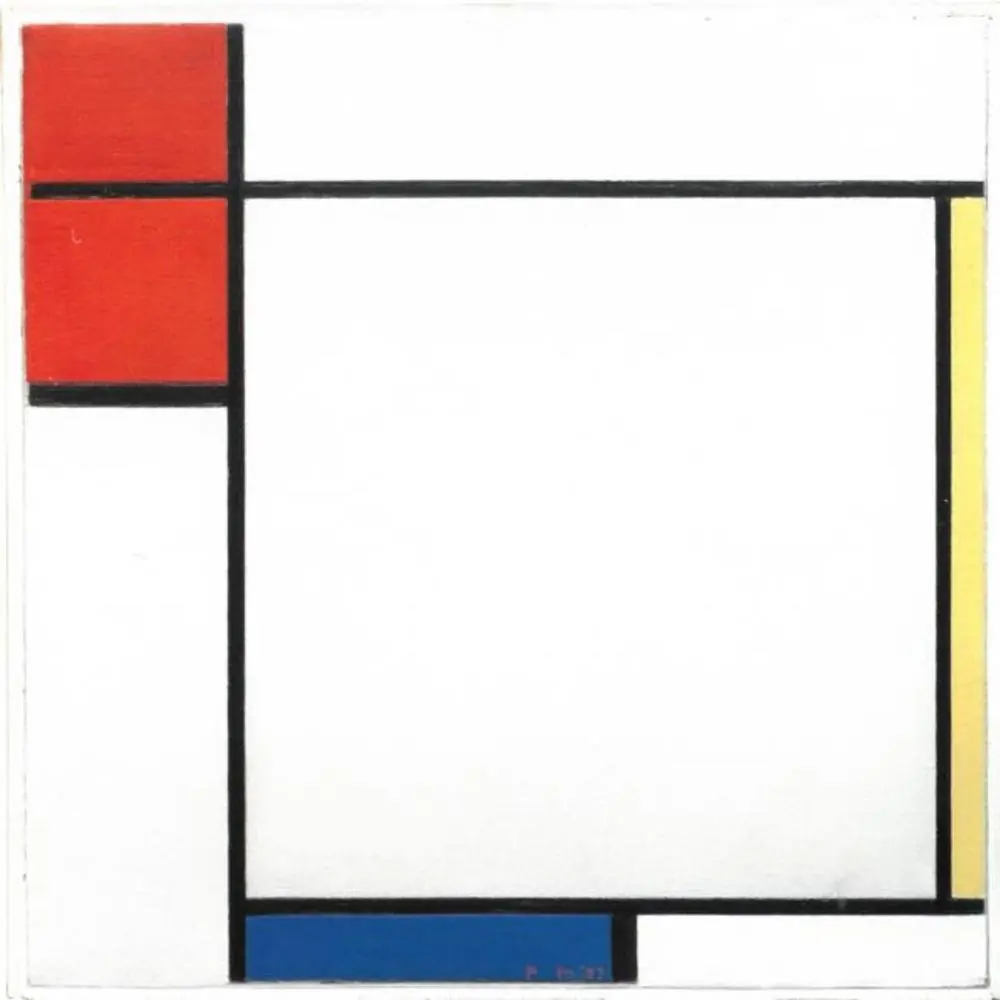
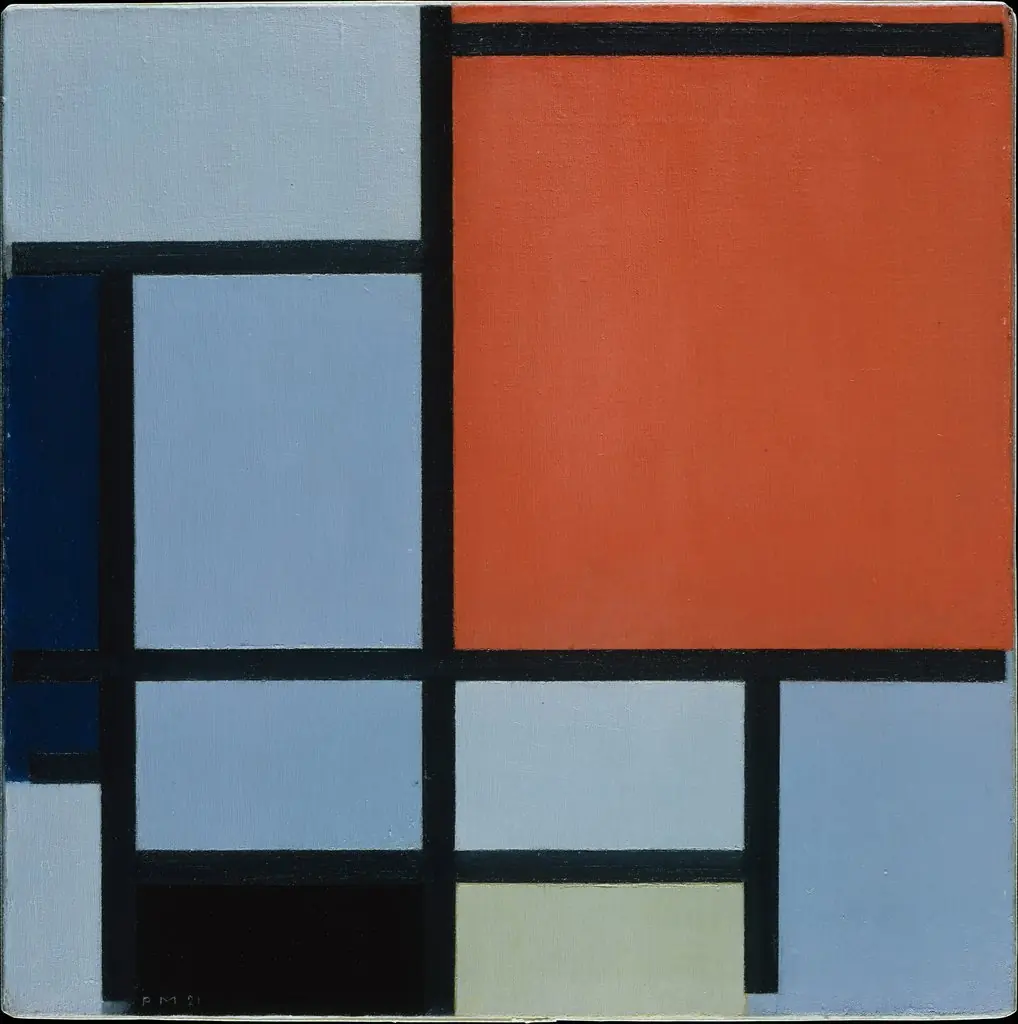
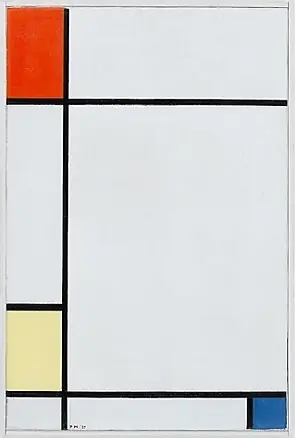
This is Mondrian before he became famous for grids and primary colors. He painted this same farm over and over, each time stripping away a little more detail. By 1916, the shapes are almost flat, like cut-out paper.
If you like how simple lines can still feel like a real place, look up *glazing*—the technique he used to build up thin, see-through layers of paint.
Overview
Painted around 1905, this oil on canvas depicts a rural farmstead near Duivendrecht in the Netherlands. Though later known for geometric abstraction, Mondrian began with representational landscapes. This work captures a quiet, open countryside scene—farm buildings, scattered trees, and cultivated fields under a muted sky—reflecting his early commitment to observing the natural world before moving toward abstraction.
Subject & Meaning
The farm served as a recurring motif in Mondrian’s early career, symbolizing the quiet order of the Dutch countryside. He returned to it repeatedly, not as a documentary exercise, but as a means to explore how form and structure could be distilled from nature. The subject’s persistence suggests a personal connection to place and a desire to uncover underlying rhythms in the landscape, long before he abandoned representation entirely.
Technique & Style
Mondrian applied thin, translucent layers of paint—known as glazing—to achieve subtle tonal shifts in the sky, fields, and foliage. His brushwork is deliberate but soft, blending blues, greens, and earth tones to suggest atmosphere without sharp definition. The composition avoids dramatic perspective, favoring a flattened space that hints at the simplification to come, as forms gradually lose detail across successive versions of the same scene.
History & Provenance
The painting is one of at least twenty related studies of the same farm, created between 1905 and the end of World War I. During the war, Mondrian resumed working in a more naturalistic style, likely due to patronage preferences that favored his earlier, recognizable landscapes over his increasingly abstract Cubist experiments. This work belongs to the initial phase of that series, predating his radical formal reductions.
Context
In the early 1900s, Dutch artists were engaged in redefining national identity through depictions of rural life. Mondrian’s farm scenes aligned with this trend, yet his approach was more analytical than sentimental. His repeated treatment of the subject reflects a broader European interest in structure and perception, foreshadowing his later engagement with Cubism and the eventual move toward pure abstraction in the 1910s.
Legacy
These early farm studies reveal the foundation of Mondrian’s mature style: a systematic reduction of visual complexity into essential forms. Though he later rejected naturalism, the discipline of observing and reworking the same subject taught him how to isolate structure from appearance. The farm near Duivendrecht thus stands as a quiet precursor to his revolutionary grid paintings, rooted in observation rather than invention.
Own this work as a print
Artist & collection

Artist
Pieter Cornelis Mondriaan (Dutch: ; 7 March 1872 – 1 February 1944), known after 1911 as Piet Mondrian (, US also ; Dutch: ), was a Dutch painter and art theoretician, who is regarded as one of the greatest artists of the 20th century.