Artwork
Woman Walking on the Banks of the Aven
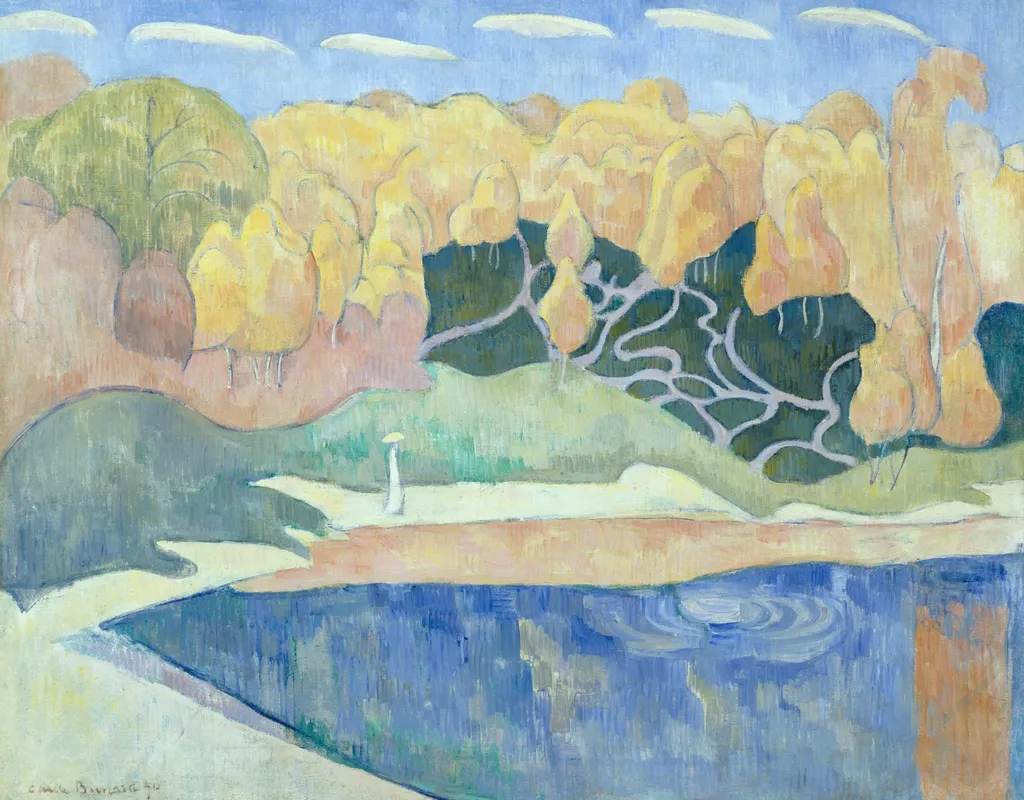
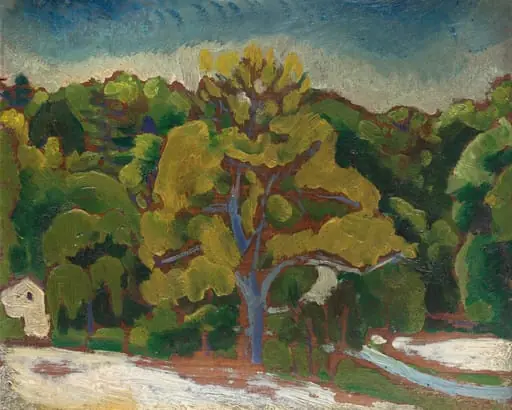
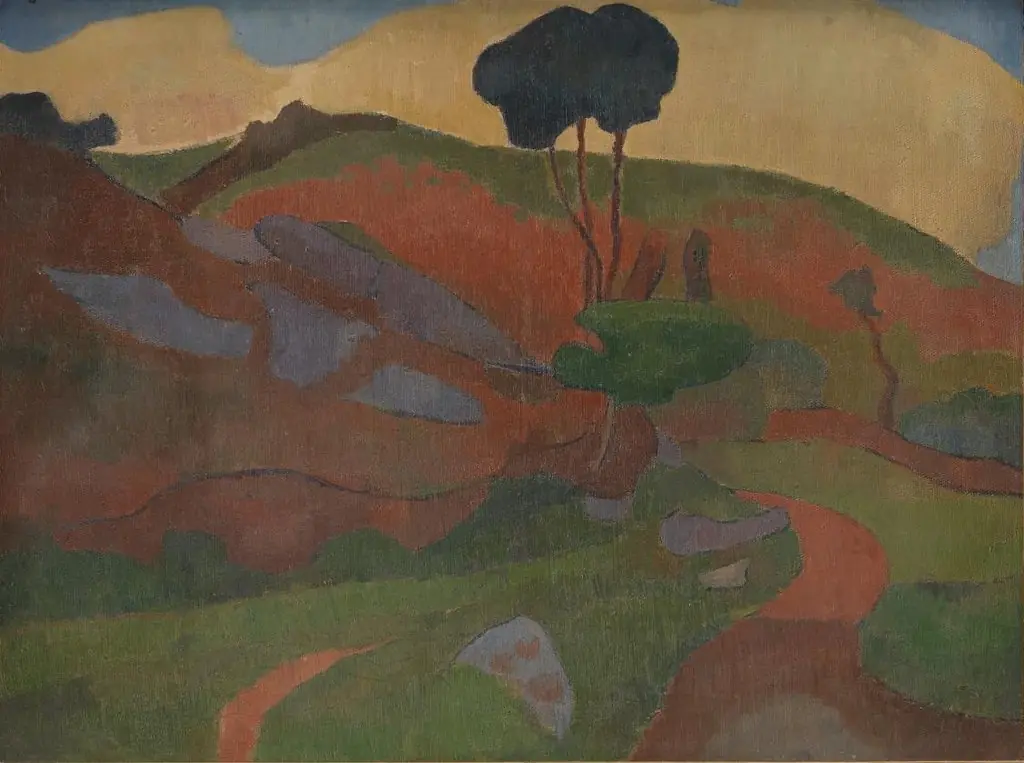
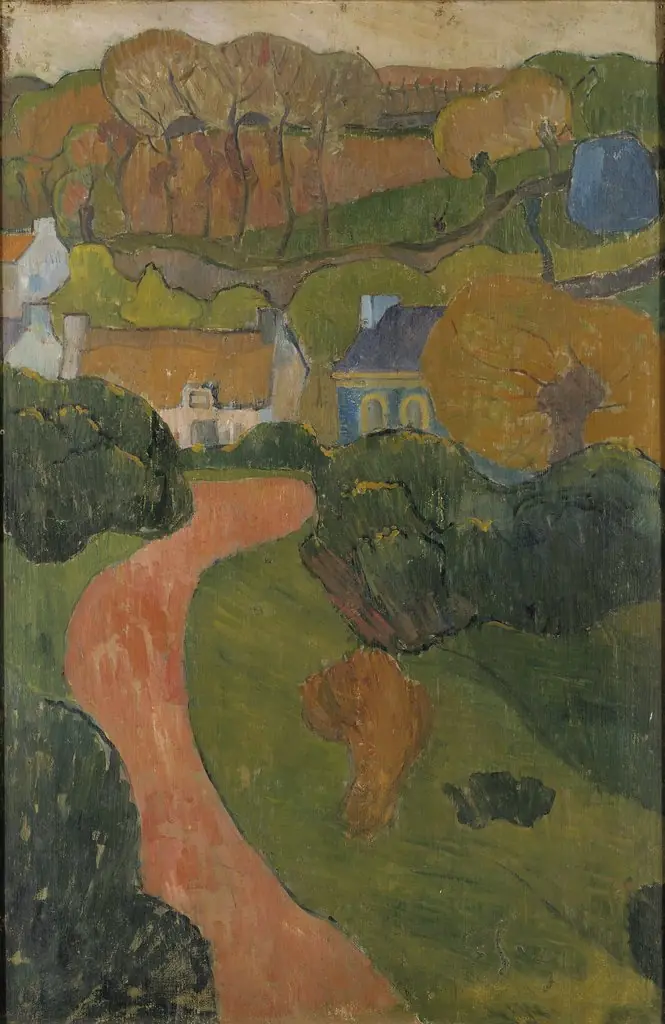
Woman Walking on the Banks of the Aven is an oil painting by the Post-Impressionist artist Émile Bernard. It dates from 1896 and is held in the collection of the Museum of Fine Arts, Houston.
About this work
The painting is called Woman Walking on the Banks of the Aven.
It was created by Émile Bernard in 1890.
The Museum of Fine Arts Houston holds this oil paint work, which is a landscape.
Émile Bernard was a French artist.
He made this painting in the late 19th century.
To learn more about the artist's style, look up Émile Bernard.
Overview
It depicts a solitary figure moving along the riverbank of the Aven in Brittany, capturing a quiet moment in a rural landscape.
Painted in 1896, *Woman Walking on the Banks of the Aven* is an oil on canvas work by French artist Émile Bernard. It depicts a solitary figure moving along the riverbank of the Aven in Brittany, capturing a quiet moment in a rural landscape. The piece belongs to Bernard’s mature period, when he was deeply engaged with symbolic and stylized approaches to form and color, moving beyond Impressionism toward more structured compositions.
Subject & Meaning
The painting presents a lone woman walking beside a winding river, her form simplified and integrated into the surrounding landscape. There is no narrative drama—instead, the scene evokes stillness and introspection. Bernard’s choice of subject reflects his interest in everyday rural life, infused with a sense of spiritual quietude. The figure becomes less a portrait and more a harmonious element within a symbolic natural setting.
Technique & Style
Bernard employs flat planes of color and bold, dark outlines, characteristic of Cloisonnism. The landscape is reduced to simplified shapes—trees, water, and grass rendered as rhythmic bands rather than naturalistic details. Brushwork is deliberate and controlled, avoiding Impressionist spontaneity. The palette is muted, dominated by earth tones and soft greens, reinforcing the painting’s contemplative mood and its ties to Synthetist ideals of emotional synthesis over optical realism.
History & Provenance
Created in 1896, the painting was produced during Bernard’s most productive years, following his time in Pont-Aven and his collaborations with Gauguin and others. It remained in private hands for much of the 20th century before entering the collection of the Museum of Fine Arts, Houston, where it is now held. Its provenance reflects its status as a significant, though not widely exhibited, work of late 19th-century French modernism.
Context
Bernard painted this work amid broader artistic shifts in France, as painters sought alternatives to naturalism. Influenced by Japanese prints and medieval stained glass, he and his peers in the Pont-Aven School rejected perspective and chiaroscuro in favor of symbolic form. *Woman Walking on the Banks of the Aven* aligns with this movement’s goal: to express inner experience through simplified visual language, distancing itself from academic traditions.
Legacy
Though less known than contemporaries like Gauguin, Bernard’s work contributed to the development of modern symbolic painting. This piece exemplifies his role in bridging Post-Impressionism and early Symbolism, influencing later artists who valued emotional resonance over literal representation. Its presence in a major U.S. museum underscores its recognition as a thoughtful example of French modernist experimentation in the 1890s.
Own this work as a print
Artist & collection
Artist
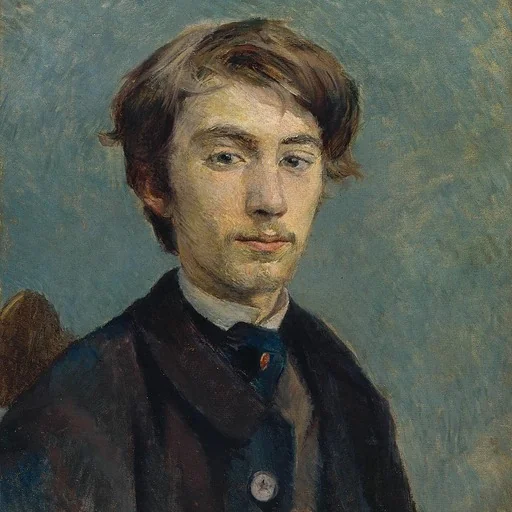
Émile Henri Bernard (French pronunciation: ; 28 April 1868 – 16 April 1941) was a French Post-Impressionist painter and writer, who had artistic friendships with Vincent van Gogh, Paul Gauguin and Eugène Boch, and at a later time, Paul…