Artwork
The Good Shepherd
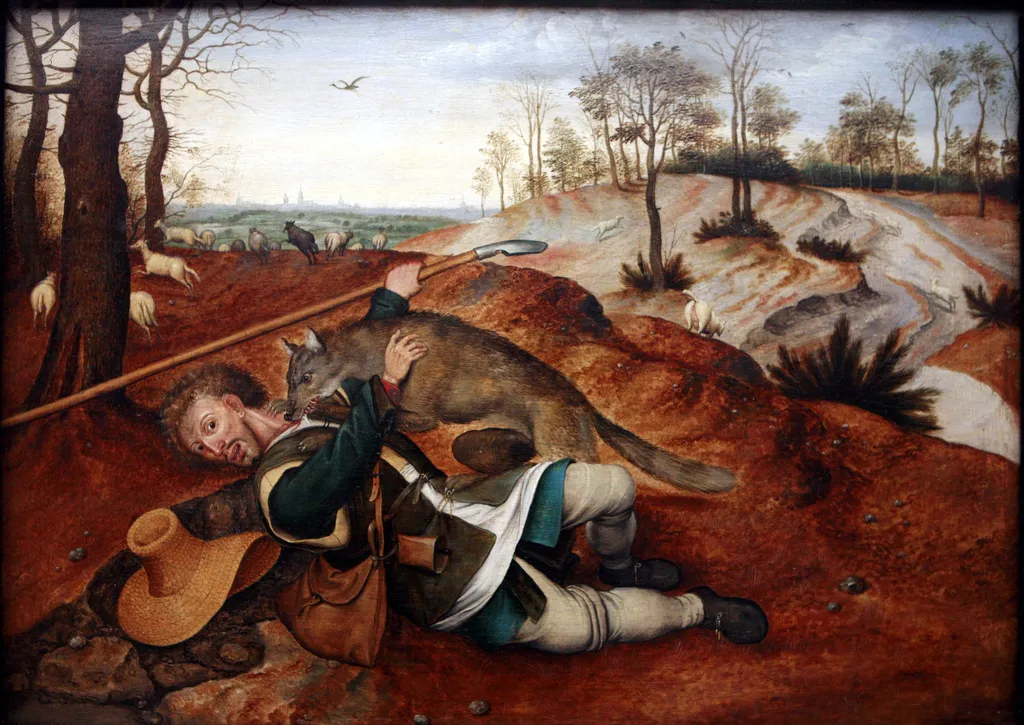
The Good Shepherd is an oil painting by the Flemish Baroque painting artist Pieter Brueghel the Younger. It dates from 1616 and is held in the collection of the Royal Museums of Fine Arts of Belgium.
About this work
Overview
Created in 1616, *The Good Shepherd* is an oil painting by Pieter Brueghel the Younger, a Flemish artist active at the turn of the 17th century. The work belongs to the Flemish Baroque tradition and is part of the collection of the Royal Museums of Fine Arts of Belgium. It presents a pastoral landscape populated by a shepherd, his flock, and a threatening wolf.
Subject & Meaning
The central figure lies on the ground, clutching a wolf with his right hand while holding a shovel in his left, suggesting a moment of defense against a predator. Dressed in a dark jacket, white shirt and trousers, and accompanied by a straw hat, the shepherd appears vigilant over a grazing herd of sheep that occupy the hillside behind him, underscoring themes of protection and vigilance in a rural setting.
Technique & Style
Brueghel the Younger uses atmospheric perspective to convey depth, with muted earth tones in the foreground giving way to lighter hues in the distant hills.
Executed in oil on canvas, the painting employs the rich, layered coloration typical of Flemish Baroque. Brueghel the Younger uses atmospheric perspective to convey depth, with muted earth tones in the foreground giving way to lighter hues in the distant hills. The composition balances the dynamic tension of the shepherd‑wolf encounter with the calm of the grazing flock, achieved through careful modeling of light and shadow.
History & Provenance
Pieter Brueghel the Younger, known for reproducing and adapting his father’s compositions, produced this work for a market that extended beyond his native Antwerp. The painting entered the Royal Museums of Fine Arts of Belgium’s holdings in the 20th century, where it remains on display as part of the museum’s Flemish Baroque collection.
Context
The work reflects the early 17th‑century Flemish interest in rural genre scenes that combine everyday labor with moral allegory. By portraying a shepherd confronting a wolf, Brueghel taps into contemporary symbolism of the shepherd as a guardian figure, a motif also found in religious and pastoral literature of the period.
Own this work as a print
Artist & collection
Artist
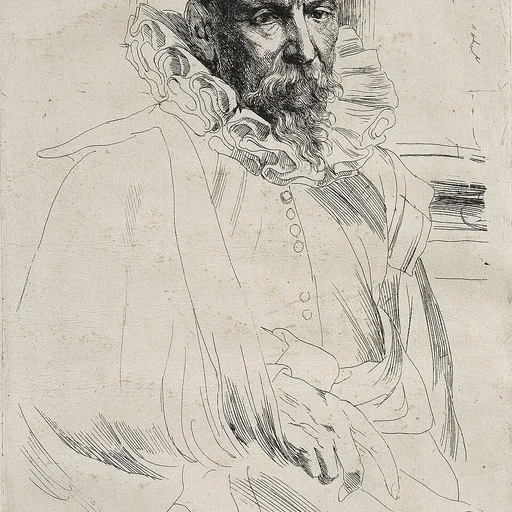
Pieter Brueghel the Younger ( BROY-gəl, also US: BROO-gəl; Dutch: ; between 23 May and 10 October 1564 – between March and May 1638) was a Flemish painter known for numerous copies after his father Pieter Bruegel the…

Museum
Royal Museums of Fine Arts of Belgium
Continue through works from the same source collection.