Artwork
Still Life with Clay Pipes
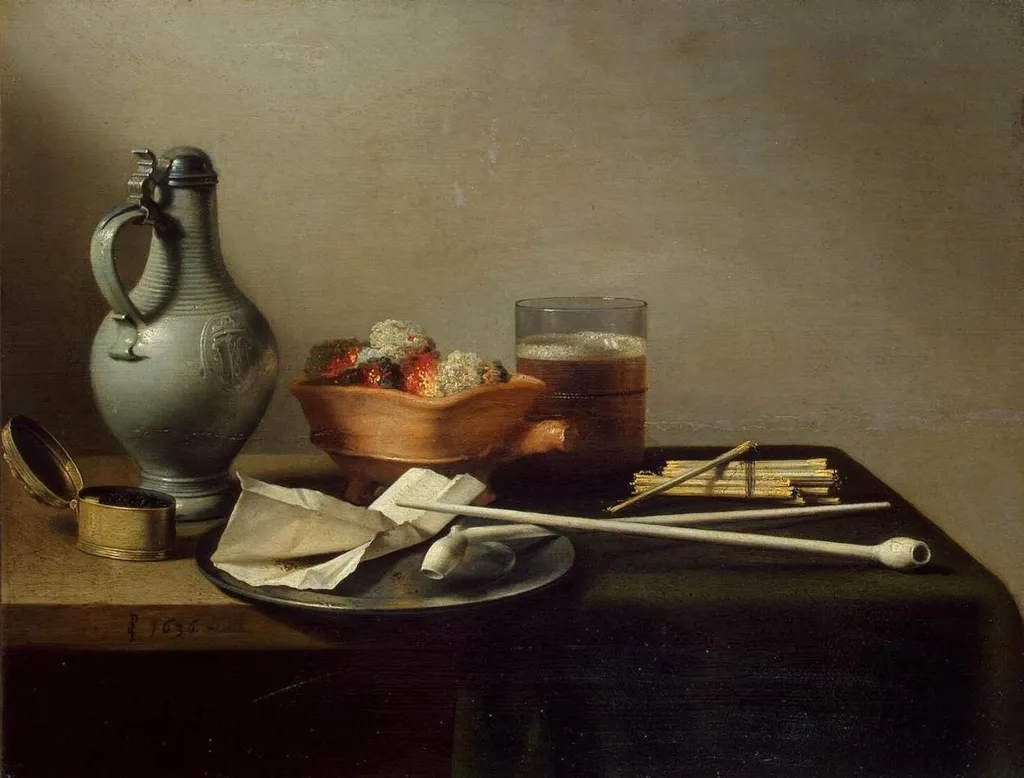
Still Life with Clay Pipes is an oil painting by Pieter Claesz. It dates from 1636 and is held in the collection of the Hermitage Museum.
About this work
Overview
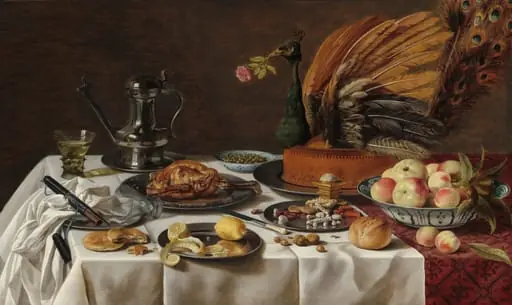
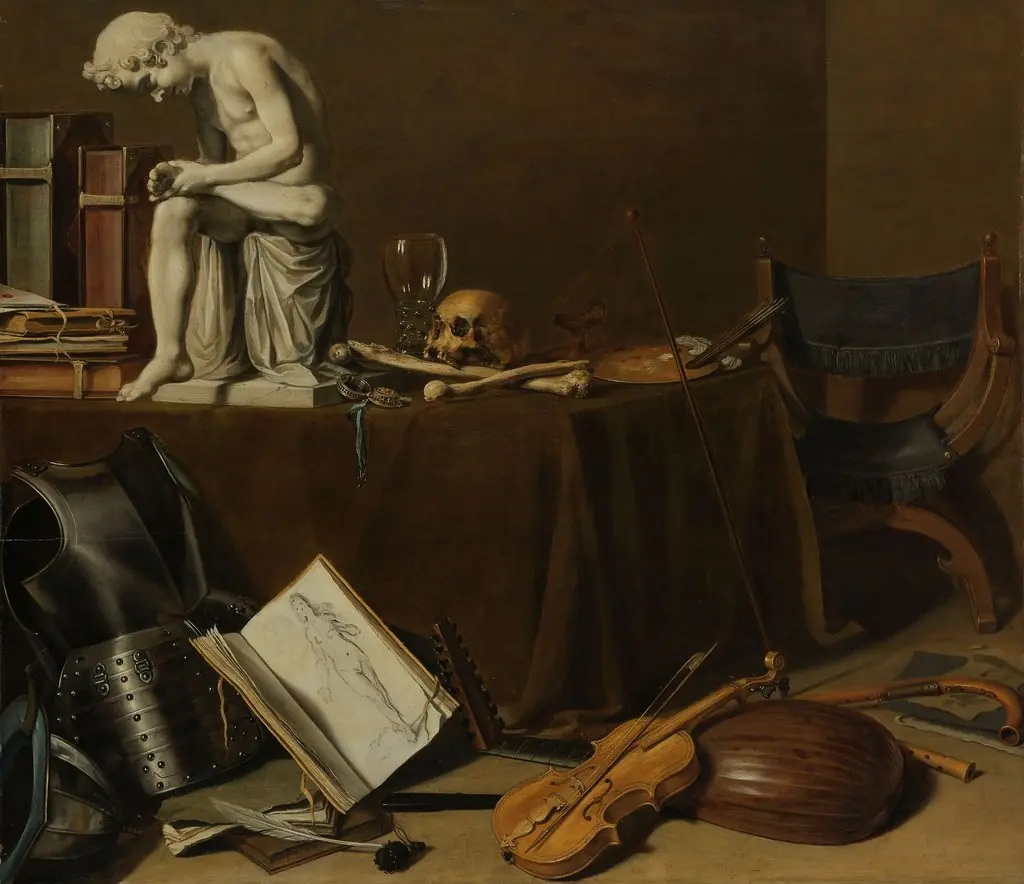
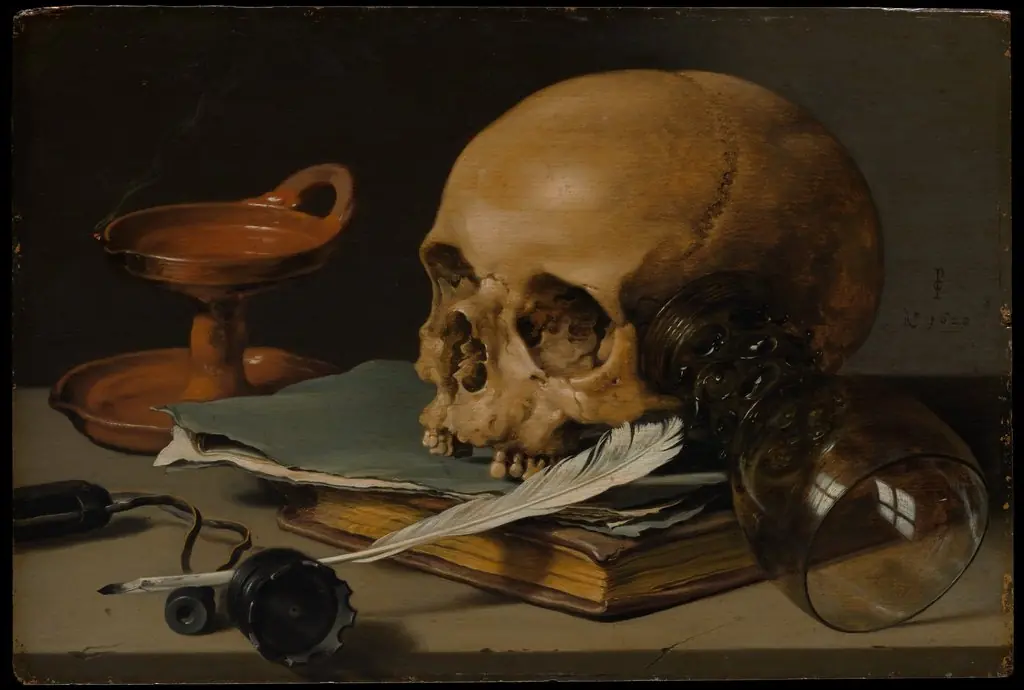
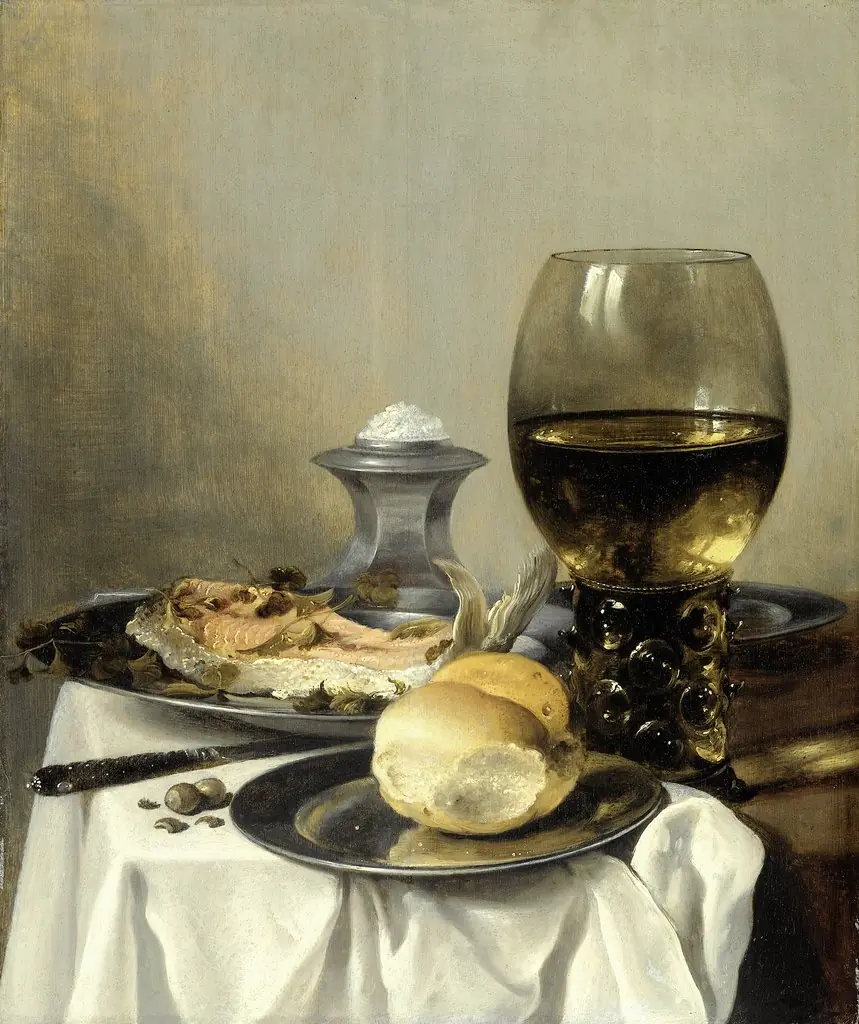
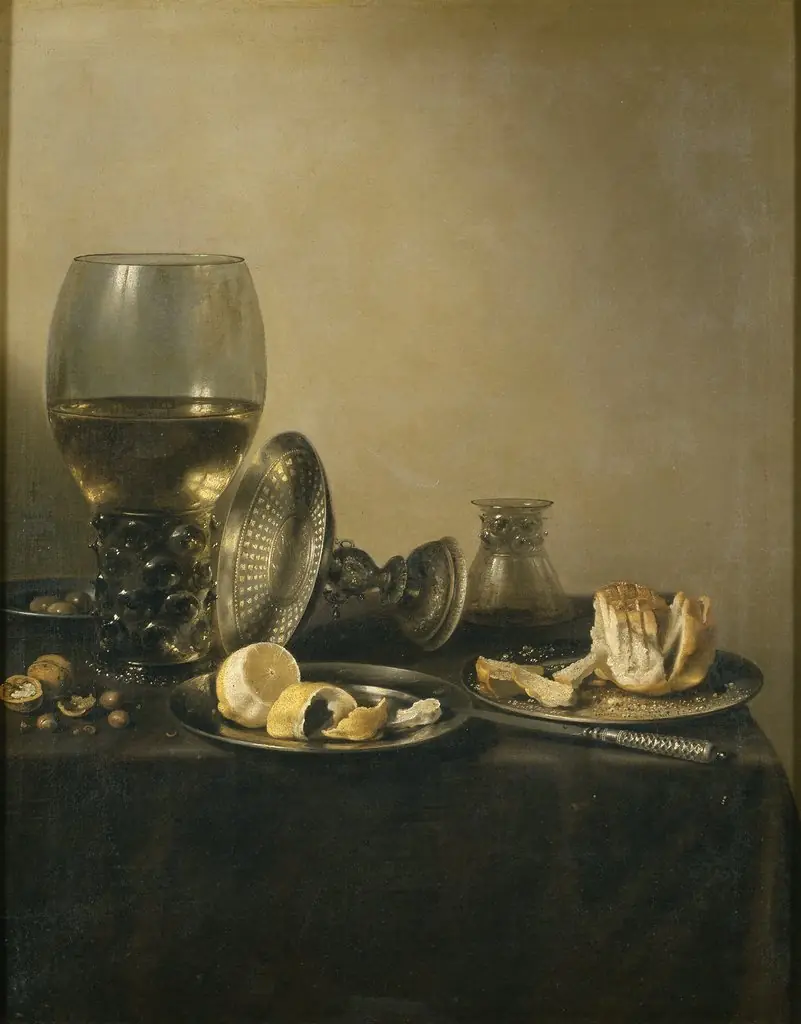
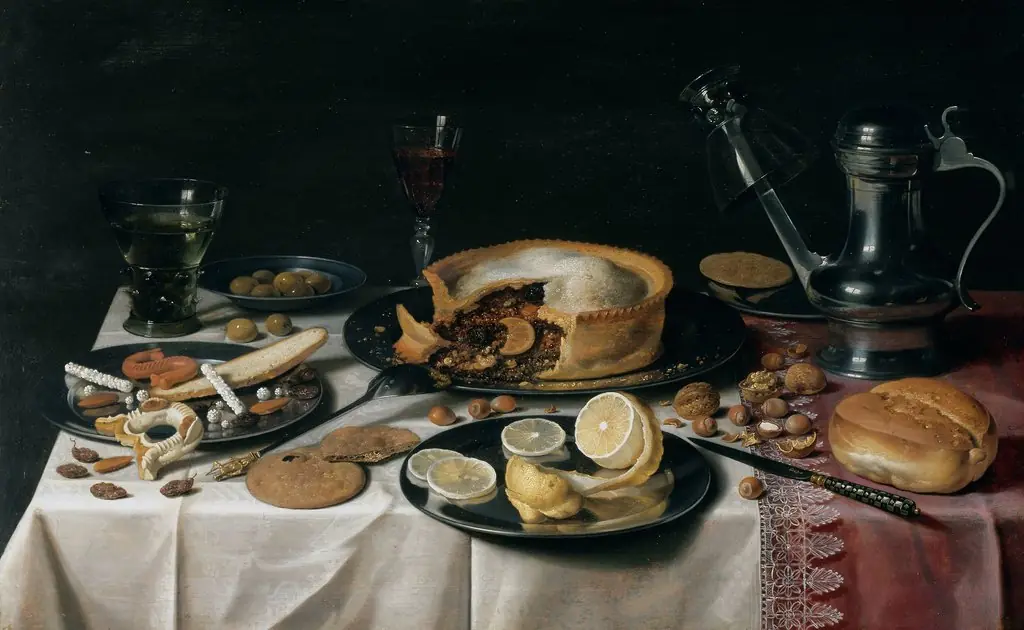
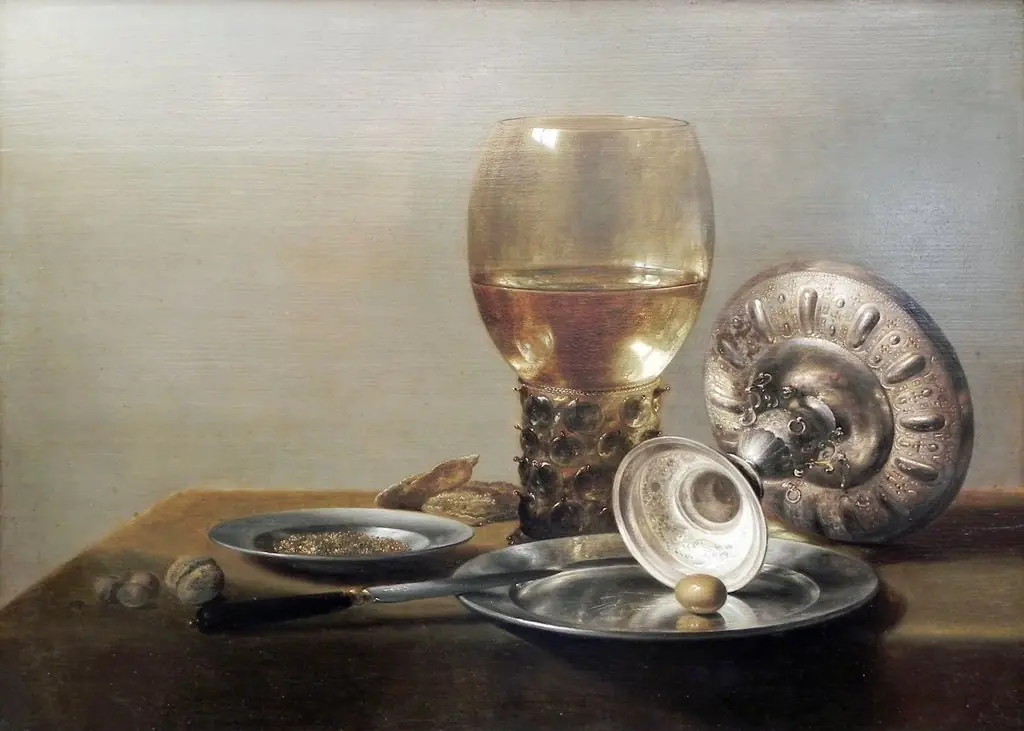
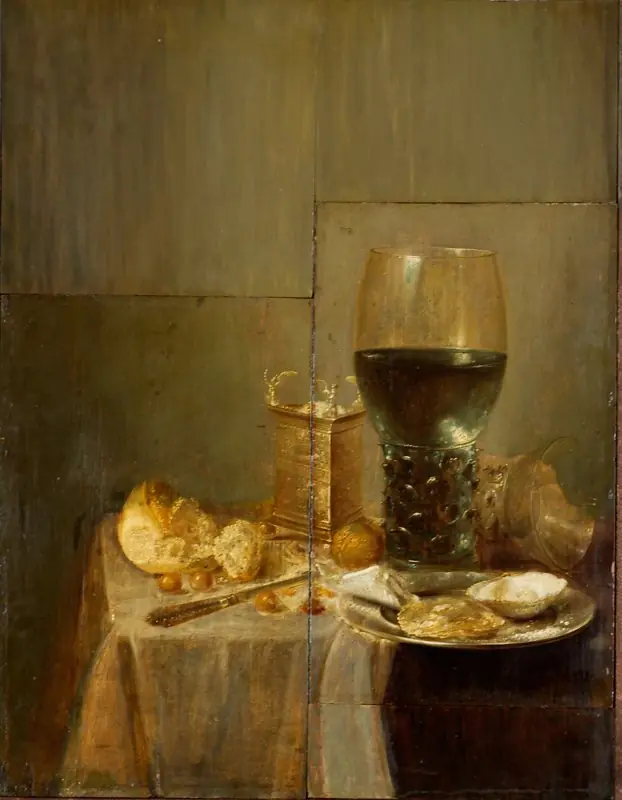
Pieter Claesz’s 1636 oil painting presents a modest tabletop arrangement, grouping a clay pipe, a stoneware wine pitcher, a glass of dark liquid, and a few ancillary objects. The composition is rendered with restrained colour and a calm atmosphere, typical of Dutch still‑life conventions of the early seventeenth century.
Subject & Meaning
The work brings together everyday items—a Gouda‑style clay pipe, a Westerwald stoneware pitcher, a half‑filled beer glass, a cloth, and a small metal box—alongside a bowl of overripe, bruised fruit. By juxtaposing consumables with signs of decay, the painting reflects contemporary concerns about transience, the pleasures of the senses, and the moral undertones of excess.
Technique & Style
Claesz employs a subtle chiaroscuro, allowing light to strike the glossy surfaces of the pitcher and glass while casting softer shadows across the cloth and fruit. The meticulous handling of texture distinguishes the porous clay of the pipe from the glazed stoneware, and the reflective quality of the liquid is achieved through delicate brushwork and layered glazing.
History & Provenance
Created in 1636, the painting entered the collection of the State Hermitage Museum in St. Petersburg, where it remains on display. Its acquisition reflects the museum’s broader interest in Dutch Golden Age still lifes, which were valued for both their aesthetic qualities and their insight into 17th‑century material culture.
Context
In the 1600s, clay pipes were common accessories for tobacco users across Europe, while Westerwald stoneware pitchers were prized for their durability and distinctive speckled glaze. By incorporating these items, Claesz situates the scene within the everyday domestic environment of the Dutch Republic, offering a snapshot of contemporary consumption habits.
Artist & collection
Artist
Pieter Claesz was born in 1596 or 1597 in Berchem, near Antwerp, and moved to Haarlem in the Dutch Republic around 1620.