Artwork
Still Life with Roemer
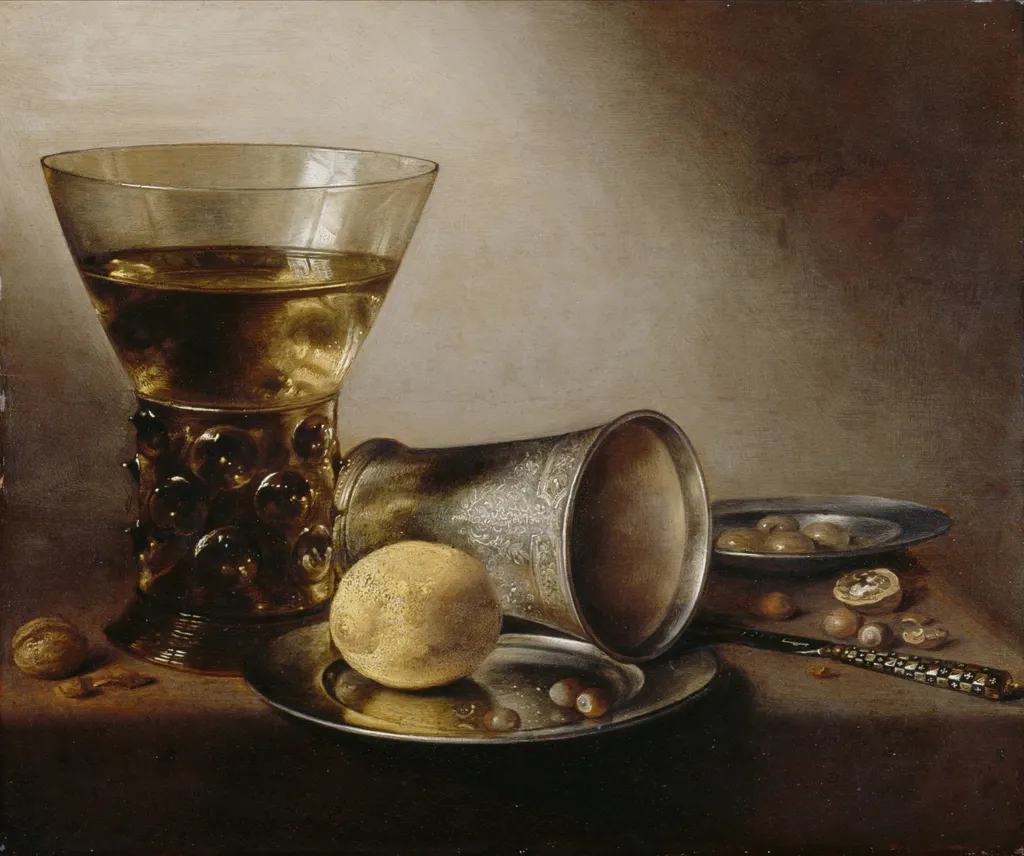
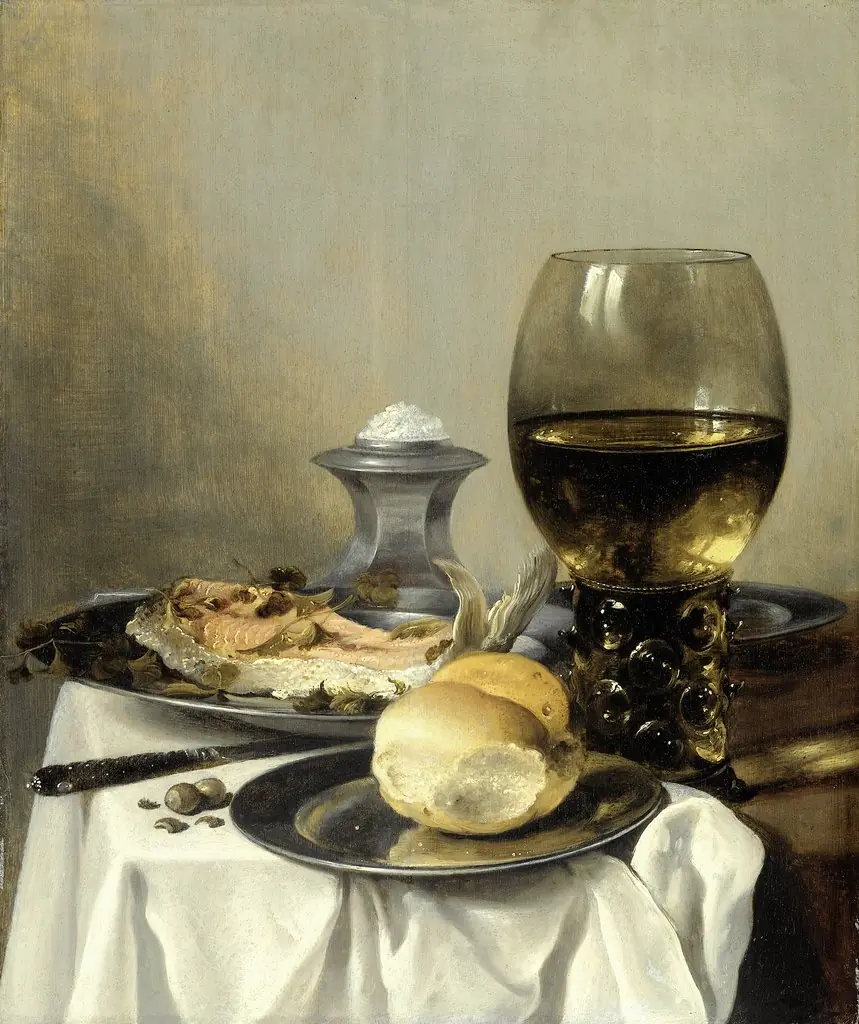
Still Life with Roemer is an unspecified painting by the Dutch Golden Age artist Pieter Claesz. It dates from 1644 and is held in the collection of the Detroit Institute of Arts.
About this work
Overview
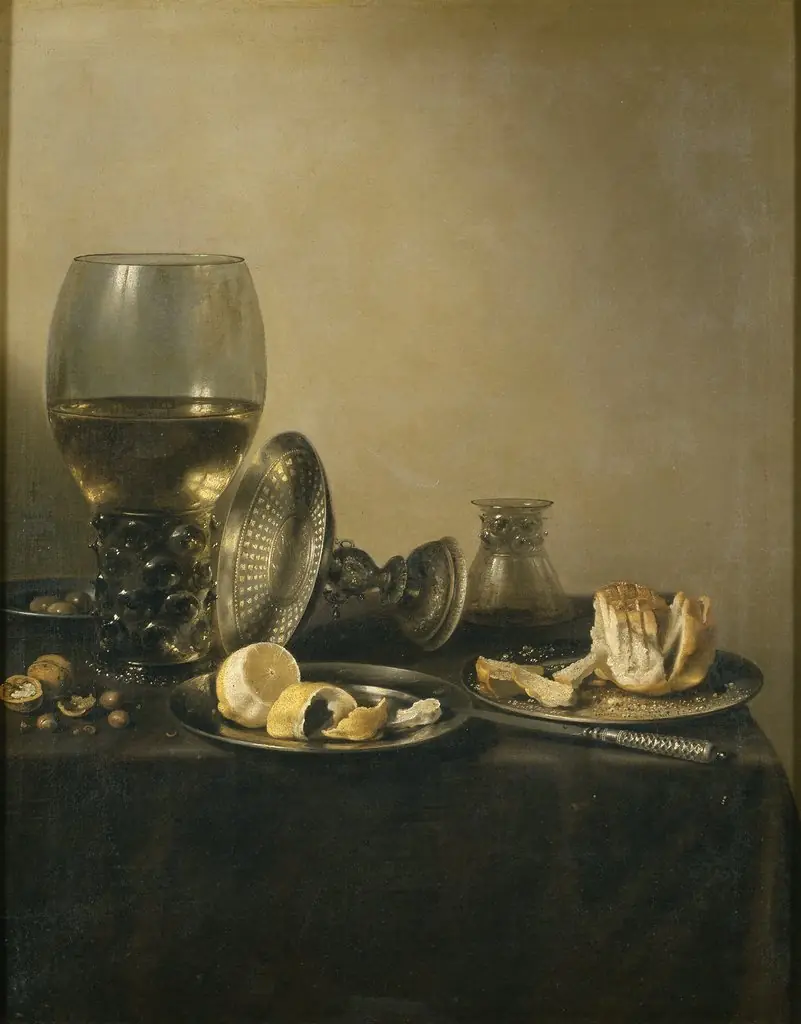
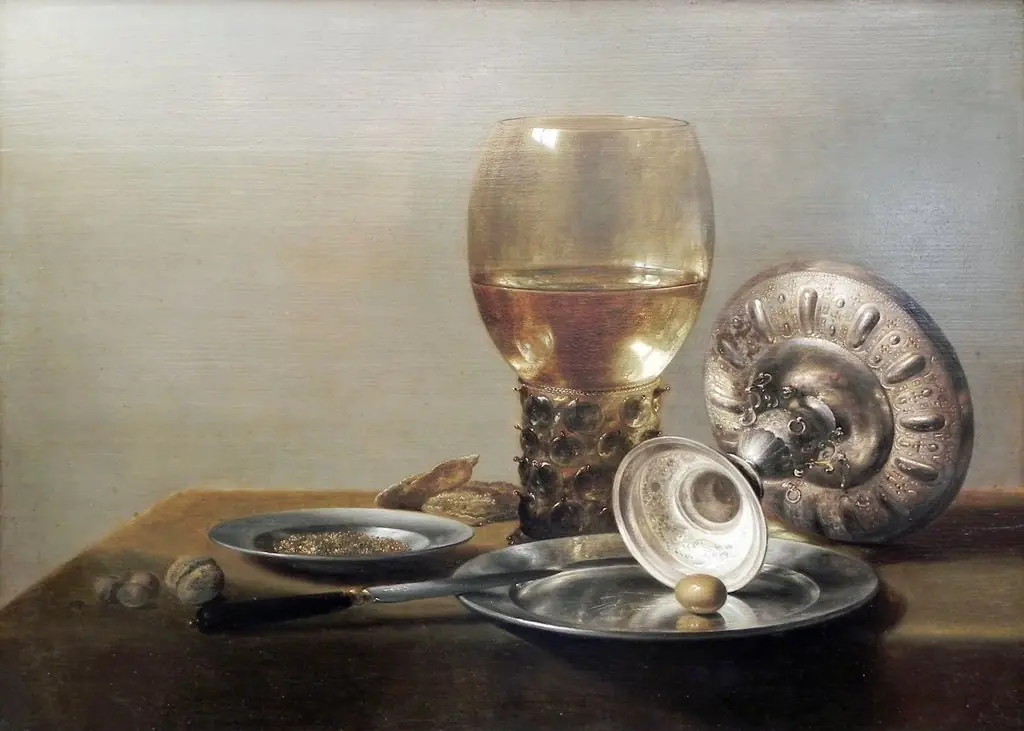
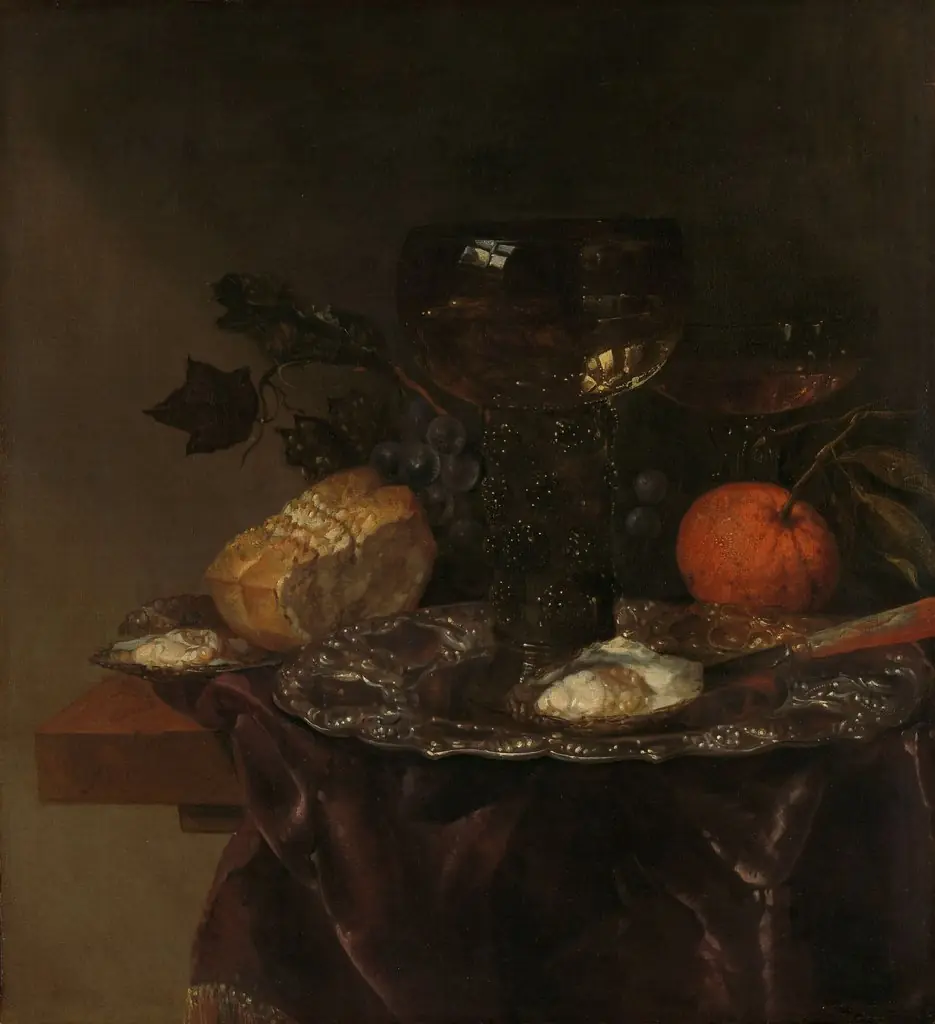
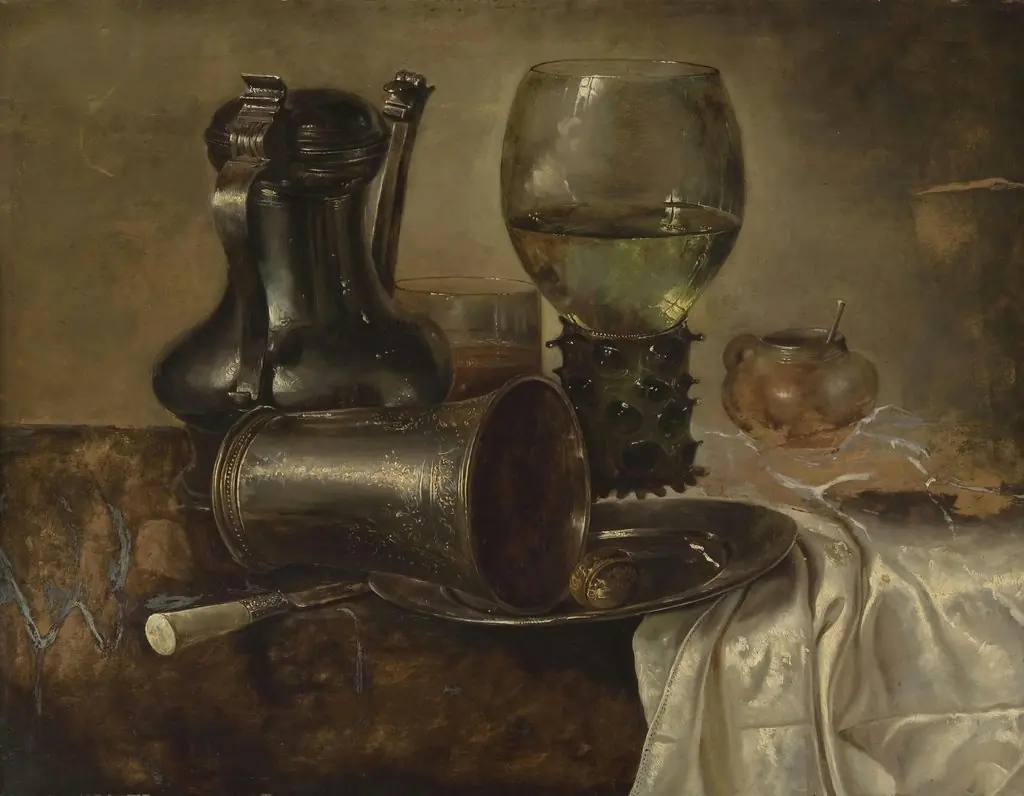
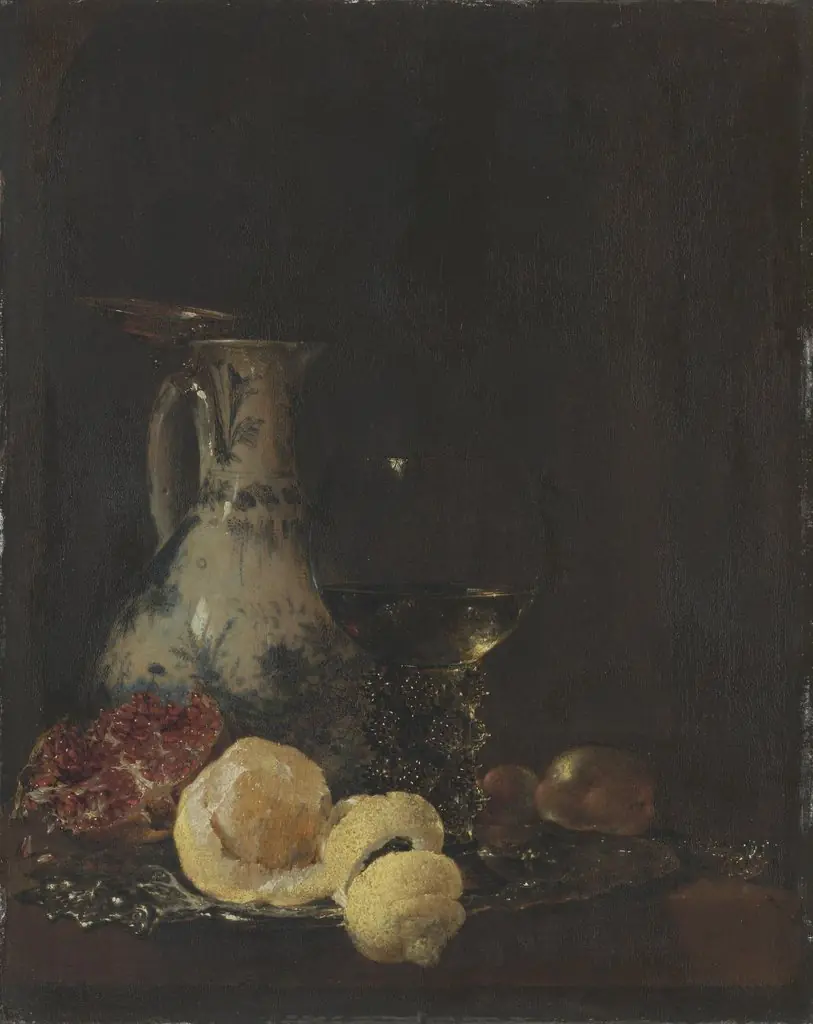
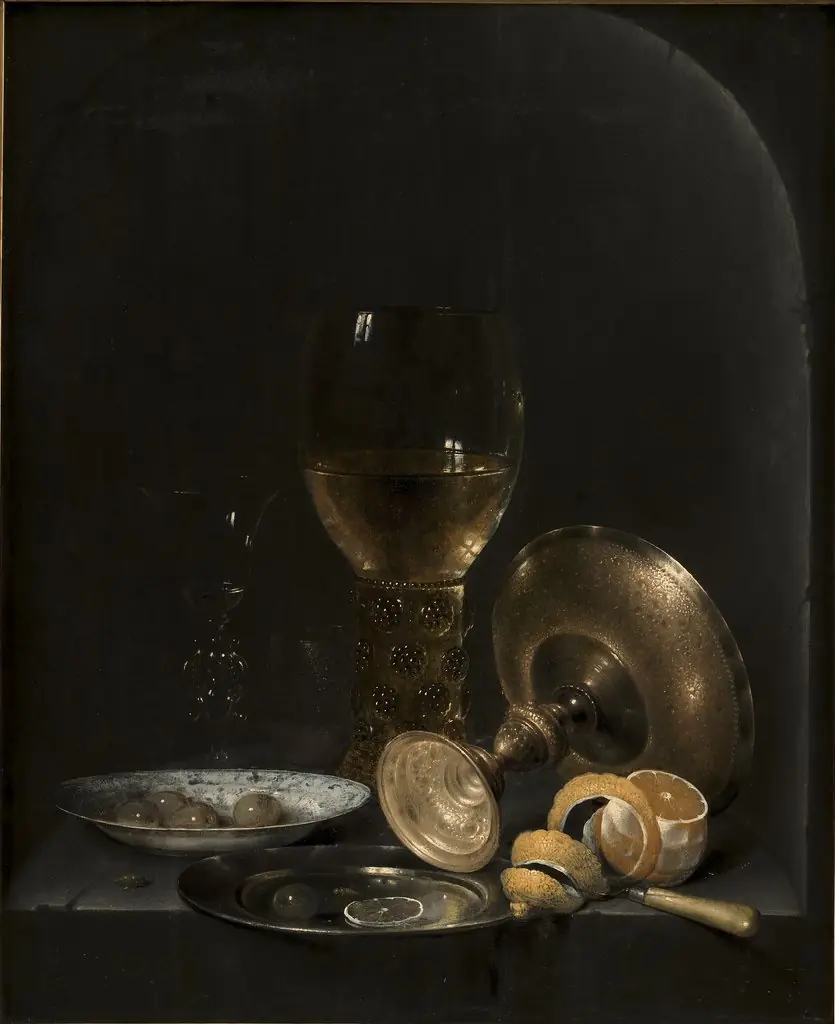
Pieter Claesz’s 1644 oil painting, titled Still Life with Roemer, presents a modest tabletop composition. Central to the scene are a glass rummer filled with liquid, a silver chalice tipped on its side, and a pewter plate bearing a single lemon and assorted nuts. The work is part of the collection of the Detroit Institute of Arts.
Subject & Meaning
The arrangement juxtaposes transparent, reflective, and matte surfaces, inviting contemplation of materiality and the fleeting nature of luxury objects. The lemon, a common vanitas symbol, hints at impermanence, while the gleaming glass and metal suggest wealth and the pleasures of the senses.
Technique & Style
Claesz employs a restrained palette of muted earth tones for the background, allowing the cool blues of the glass and the warm metallic sheen to stand out. His handling of light creates subtle chiaroscuro, emphasizing the reflective qualities of the rummer and chalice and rendering the textures of the lemon and nuts with delicate brushwork.
History & Provenance
Created in the Dutch Golden Age, the painting entered the Detroit Institute of Arts in the 20th century, though earlier ownership records are sparse. Its acquisition reflects the museum’s broader effort to represent Dutch still‑life painting within its European holdings.
Context
Claesz was a leading figure in the Dutch still‑life tradition, known for his sober compositions and meticulous rendering of objects. This work aligns with contemporary trends that favored simple yet carefully balanced groupings, often used to convey moral messages about transience and the material world.
Own this work as a print
Artist & collection
Artist
Pieter Claesz was born in 1596 or 1597 in Berchem, near Antwerp, and moved to Haarlem in the Dutch Republic around 1620.