Artwork
Odysseus and Nausicaa
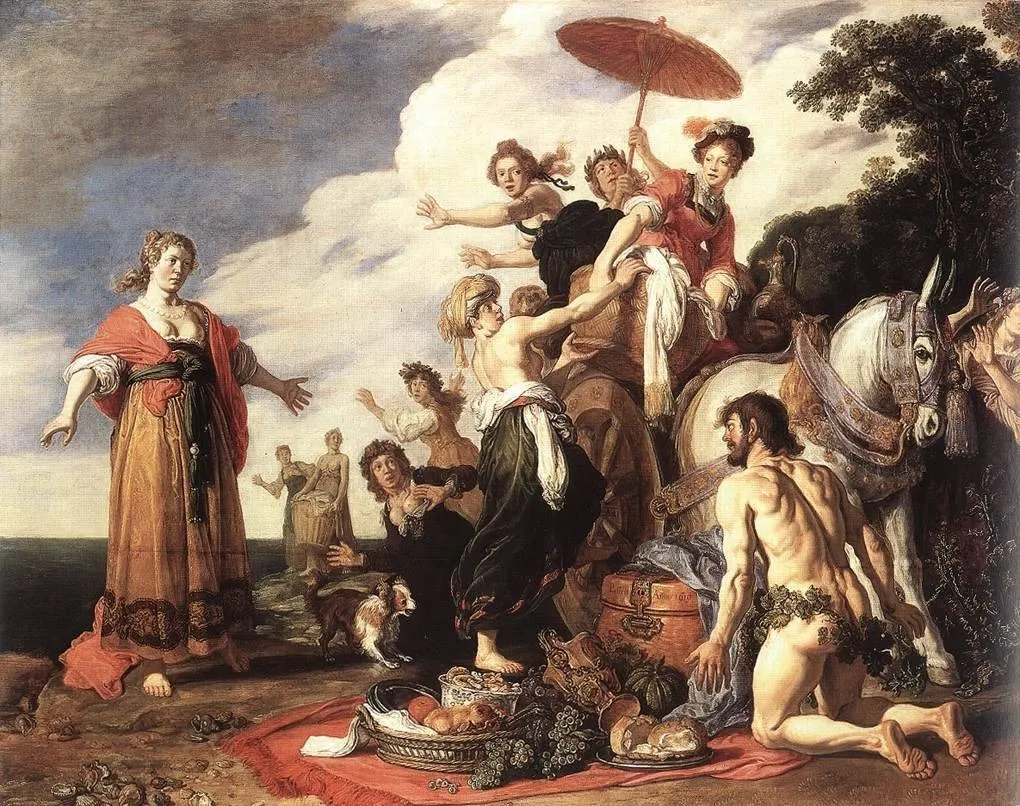
Odysseus and Nausicaa is an oil painting by the Early Baroque Italian artist Pieter Lastman. It dates from 1619 and is held in the collection of the Bavarian State Painting Collections.
About this work
Overview
Pieter Lastman’s 1619 oil painting presents a mythic episode from Homer’s *Odyssey*, showing the meeting of the wandering hero Odysseus with the Phaeacian princess Nausicaa. Executed in the early Baroque idiom, the work combines a lively outdoor setting with a carefully arranged group of figures, each rendered with distinct gestures and attire.
Subject & Meaning
The composition captures the moment when Odysseus, shipwrecked and exhausted, encounters Nausicaa and her companions on the shore. The princess, dressed in a flowing red‑brown garment, extends hospitality, while surrounding courtiers observe the exchange. The scene underscores themes of aid, hospitality, and the transition from peril to civilization that recur throughout the epic.
Technique & Style
Lastman employs a pronounced chiaroscuro, using strong contrasts of light and shadow to model the bodies against a bright sky and verdant backdrop. The varied costumes—elaborate fabrics for the seated pair, a nude figure kneeling by a basket, and a donkey nearby—create visual interest and suggest narrative depth. The brushwork balances fine detail in faces with broader handling in the landscape.
History & Provenance
Created during Lastman’s early Baroque period in the Netherlands, the painting reflects his interest in historical and literary subjects. It later entered the collection of Munich’s Alte Pinakothek, where it remains on display. The work also illustrates the pedagogical role Lastman played, having taught artists such as Rembrandt, who inherited his compositional strategies.
Artist & collection
Artist
Pieter Lastman (1583–1633) was a Dutch painter. Lastman is considered important because of his work as a painter of history pieces and because his pupils included Rembrandt and Jan Lievens. In his paintings Lastman paid…