Artwork
Abraham and the Three Angels
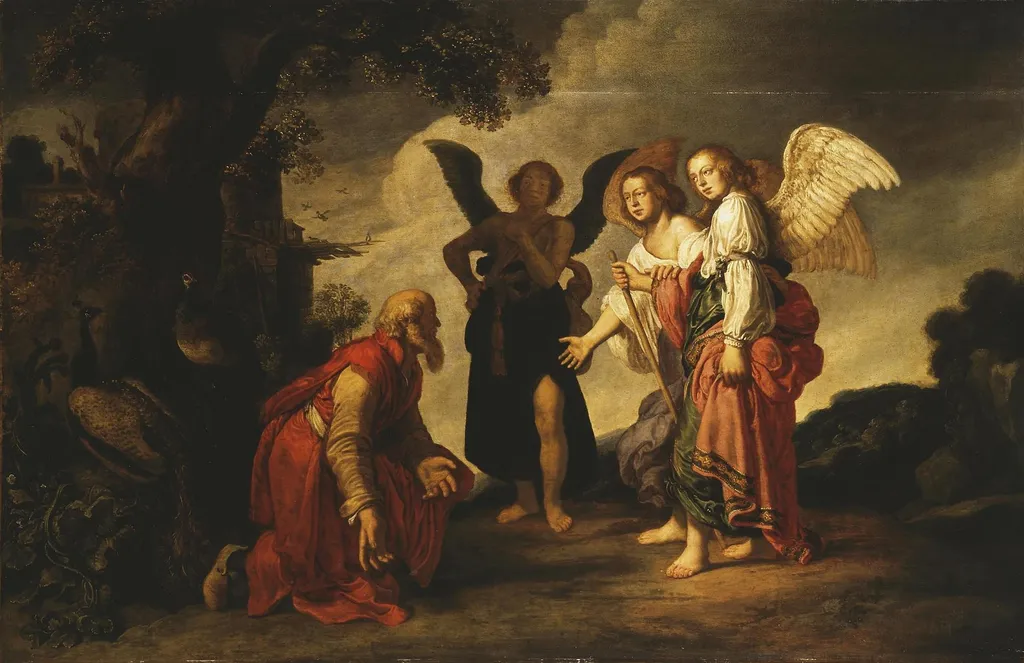
Abraham and the Three Angels is an oil painting by the Early Baroque Italian artist Pieter Lastman. It dates from 1623 and is held in the collection of the Hermitage Museum.
About this work
Overview
Pieter Lastman painted Abraham and the Three Angels in 1623, employing oil on canvas to render a biblical encounter near the oaks of Mamre.
Pieter Lastman painted Abraham and the Three Angels in 1623, employing oil on canvas to render a biblical encounter near the oaks of Mamre. The composition centers on a kneeling Abraham in red robes, extending his hand toward a book, while three angelic figures—two winged and one clothed only in a simple wrap—stand nearby. A dark, cloud‑filled sky and a rugged terrain frame the scene, emphasizing its solemn atmosphere.
Subject & Meaning
The work illustrates the moment when divine messengers visit Abraham, a narrative drawn from Genesis in which the Lord promises a lineage through Abraham’s descendants. The presence of the book suggests a covenant or divine decree, while the gestures of the figures convey reverence and the transmission of sacred promise.
Technique & Style
Lastman applies a pronounced chiaroscuro, allowing light to illuminate the faces and hands of the central figures against a shadowed background. The rendering of textures—particularly the folds of Abraham’s robe and the delicate feathering of the angels’ wings—demonstrates his careful attention to anatomical detail and surface material.
History & Provenance
Created during the early Baroque period, the painting entered the collection of the State Hermitage Museum, where it remains on display. Its execution reflects the influence of Italian Baroque aesthetics on Dutch artists of the era, and it later served as a model for Lastman’s pupils, notably Rembrandt and Jan Lievens, who studied his compositional and lighting techniques.
Own this work as a print
Artist & collection
Artist
Pieter Lastman (1583–1633) was a Dutch painter. Lastman is considered important because of his work as a painter of history pieces and because his pupils included Rembrandt and Jan Lievens. In his paintings Lastman paid…