Artwork
Two wings of a triptych, with the portraits of a man and a woman, accompanied respectively by John the Baptist and St. Adrianus
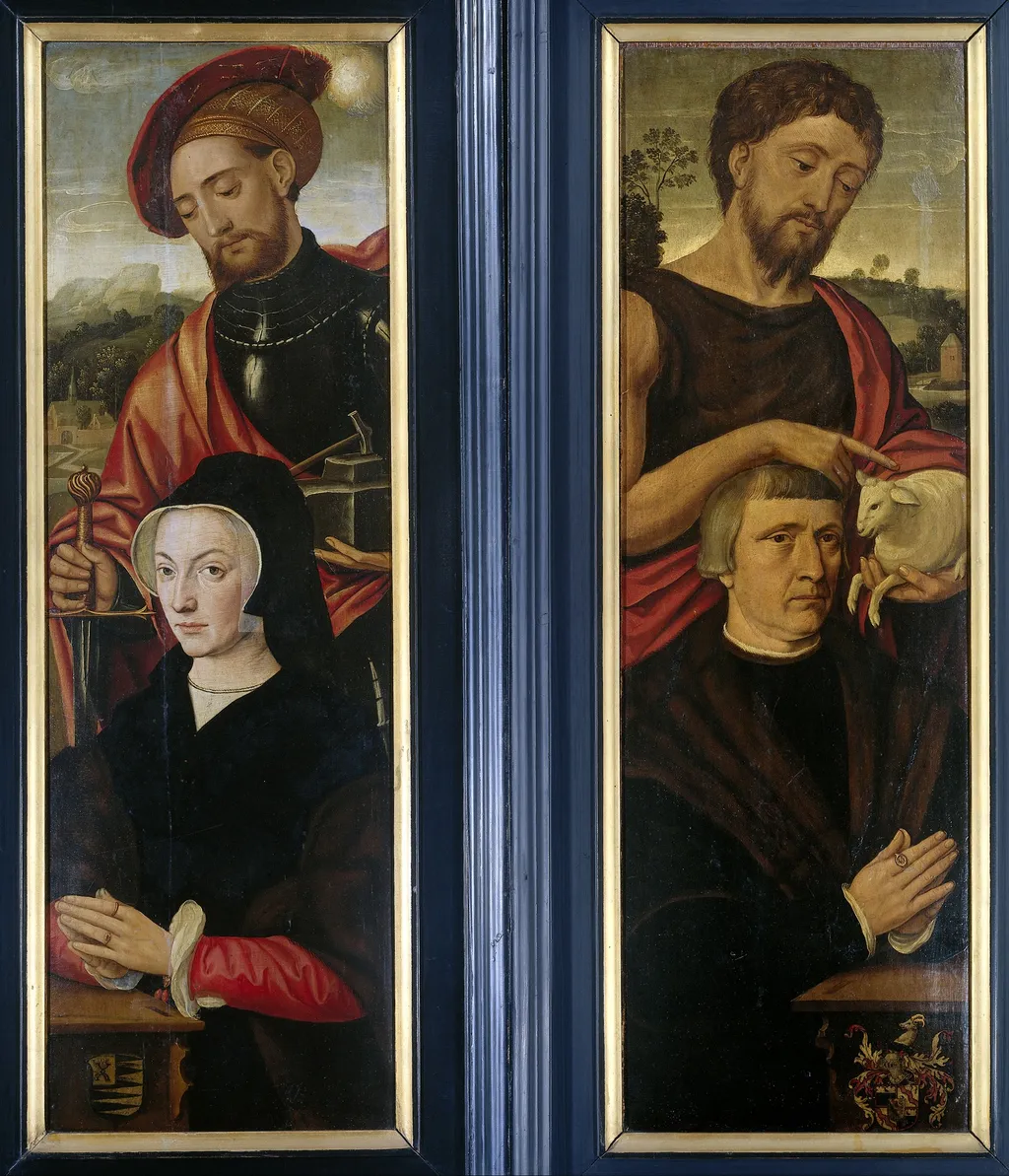
Two wings of a triptych, with the portraits of a man and a woman, accompanied respectively by John the Baptist and St. Adrianus is an oil painting by the Northern Renaissance artist Pieter Pourbus. It dates from 1550 and is held in the collection of the Rijksmuseum.
About this work
Overview
This oil painting, created by the Flemish Renaissance artist Pieter Pourbus around 1550, comprises two panels that once formed the wings of a triptych.
This oil painting, created by the Flemish Renaissance artist Pieter Pourbus around 1550, comprises two panels that once formed the wings of a triptych. Titled Two wings of a triptych, with the portraits of a man and a woman, accompanied respectively by John the Baptist and St. Adrianus, the work combines portraiture with religious iconography. It depicts a male and female sitter, each presented alongside their respective patron saint, reflecting a common practice in Northern European art of the period.
Subject & Meaning
The artwork features two donors, a man and a woman, rendered with individualized features, suggesting they are portraits of specific individuals. They are shown in devotion, accompanied by their patron saints. On the right panel, John the Baptist is identifiable by his traditional attribute, a lamb, which symbolizes Christ as the "Lamb of God." The other saint, St. Adrianus, accompanies the male sitter. This integration of contemporary portraiture with sacred figures was a characteristic element of Northern Renaissance religious commissions.
Technique & Style
Executed in oil paint, a prevalent medium during the Northern Renaissance, this work exemplifies Pieter Pourbus’s proficiency in both religious and portrait painting. The artist employs a detailed, naturalistic approach characteristic of Flemish art in the 16th century. The figures are set against a relatively simple landscape background, allowing focus to remain on the sitters and their saintly companions. This stylistic choice underscores the devotional purpose of such commissions.
Context
Pieter Pourbus was a prominent painter active in Bruges during the 16th century, a period when the city was a significant artistic center in the Low Countries. His work is firmly rooted in the Flemish Renaissance tradition, which emphasized meticulous detail, rich color, and a blend of secular and sacred themes. This triptych fragment reflects the artistic trends and patronage practices prevalent in the region during Pourbus's career.
History & Provenance
Originally conceived as part of a larger altarpiece or devotional ensemble, these two panels have been separated from their central component over time. The work is now preserved within the collection of the Rijksmuseum, where it represents a significant example of 16th-century Flemish painting and the artistic output of Pieter Pourbus.
Artist & collection
Artist
Pieter Jansz. Pourbus (c. 1523–1584) was a Flemish Renaissance painter, draftsman, engineer and cartographer who was active in Bruges during the 16th century. He is known primarily for his religious and portrait paintings.

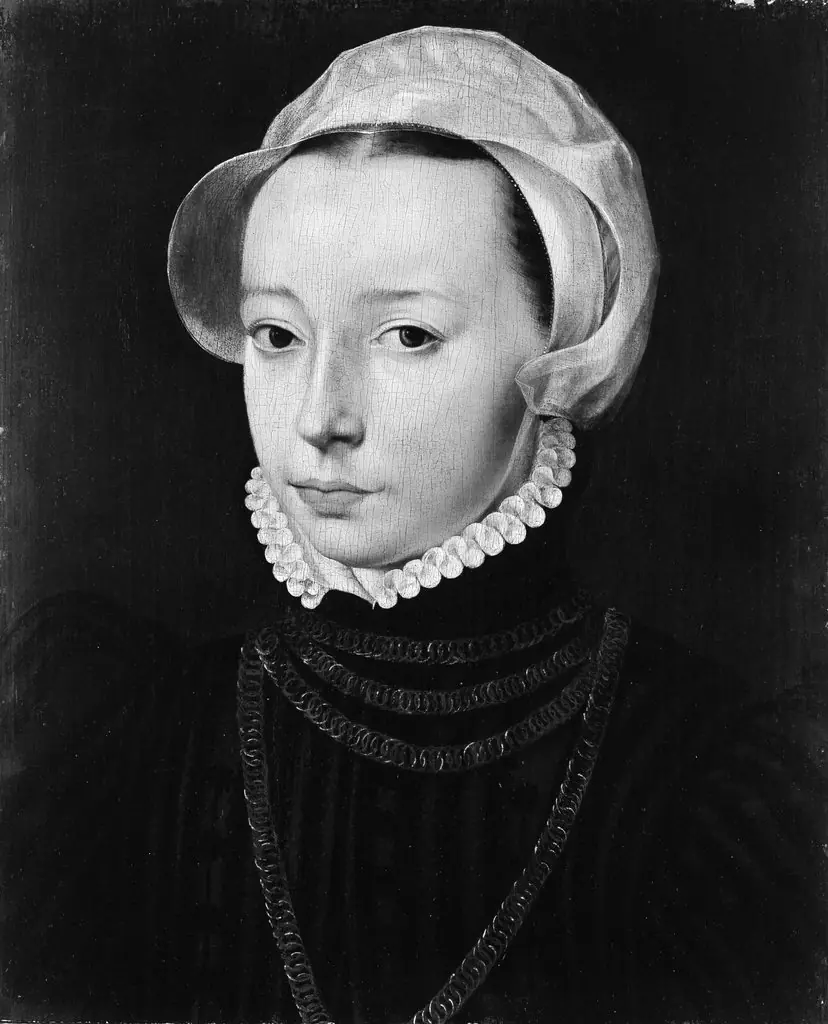
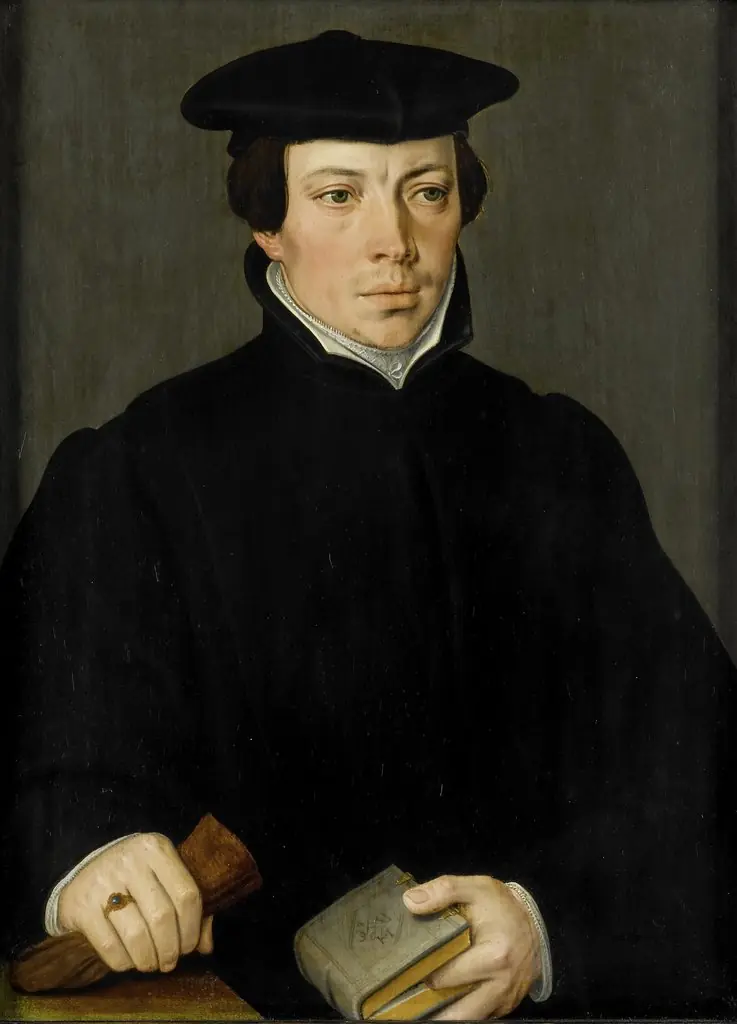
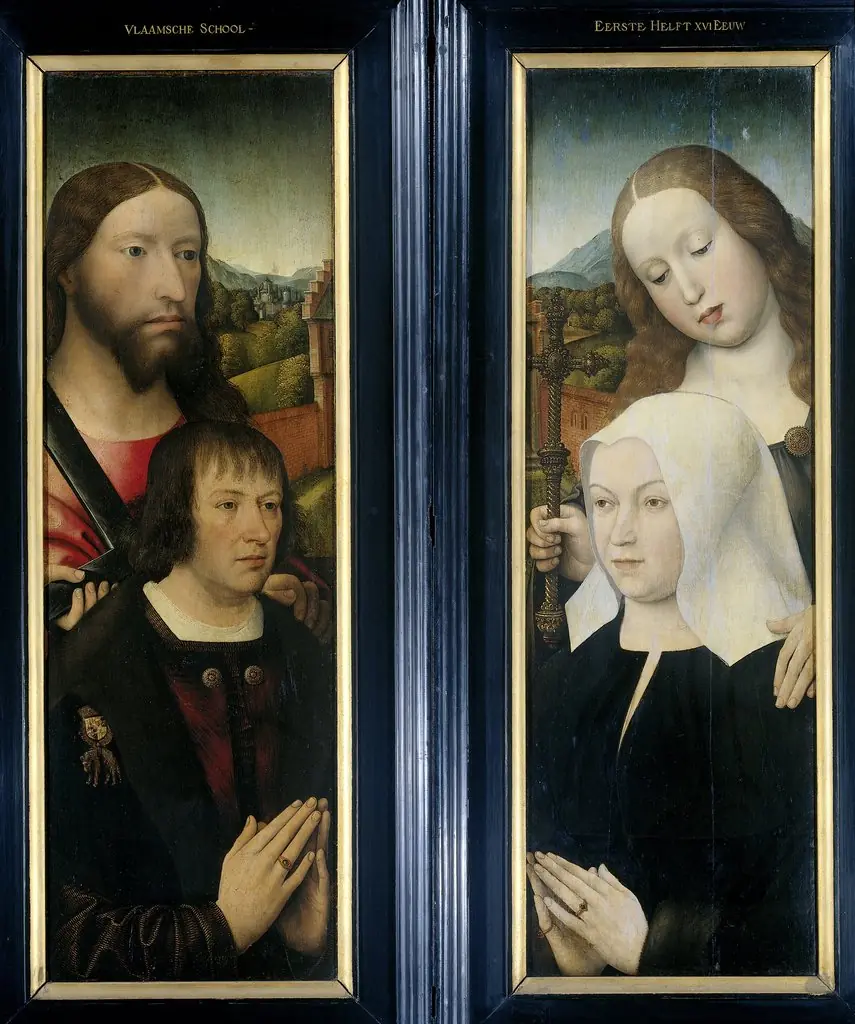 Two Wings of a Triptych with the Donor, Thomas Isaacq, accompanied by Saint Thomas (left, outer wing), and the Donor's Wife accompanied by Saint Margaret (right, outer wing)
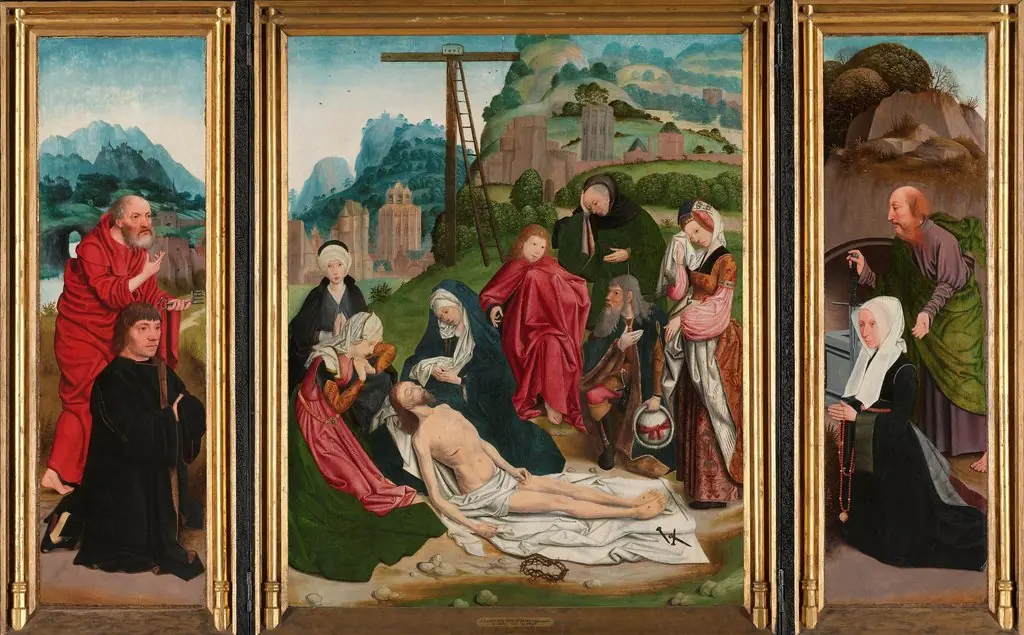 Triptych with the Lamentation (centre panel), the donor with St Peter (inner left wing), the donor’s wife with St Paul (inner right wing) and the donors’ coats of arms (outer wings)
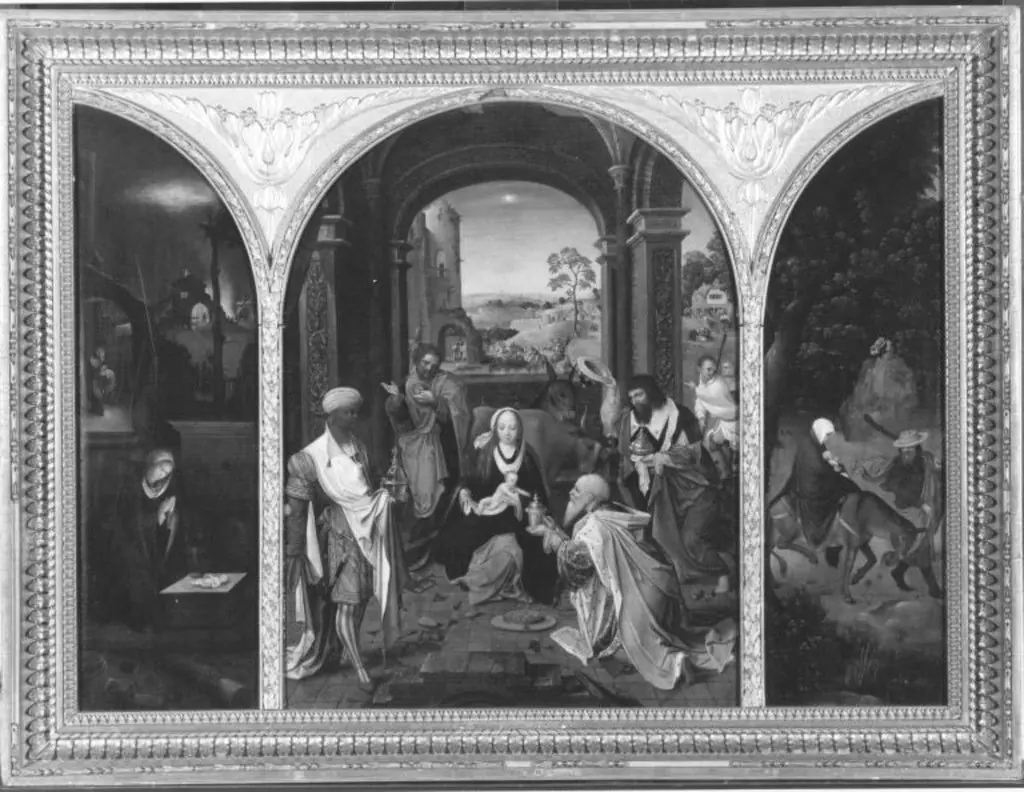 Triptych of the Adoration of the Magi with Nativity and Flight into Egypt on outer wings