Artwork
Emblem of Death
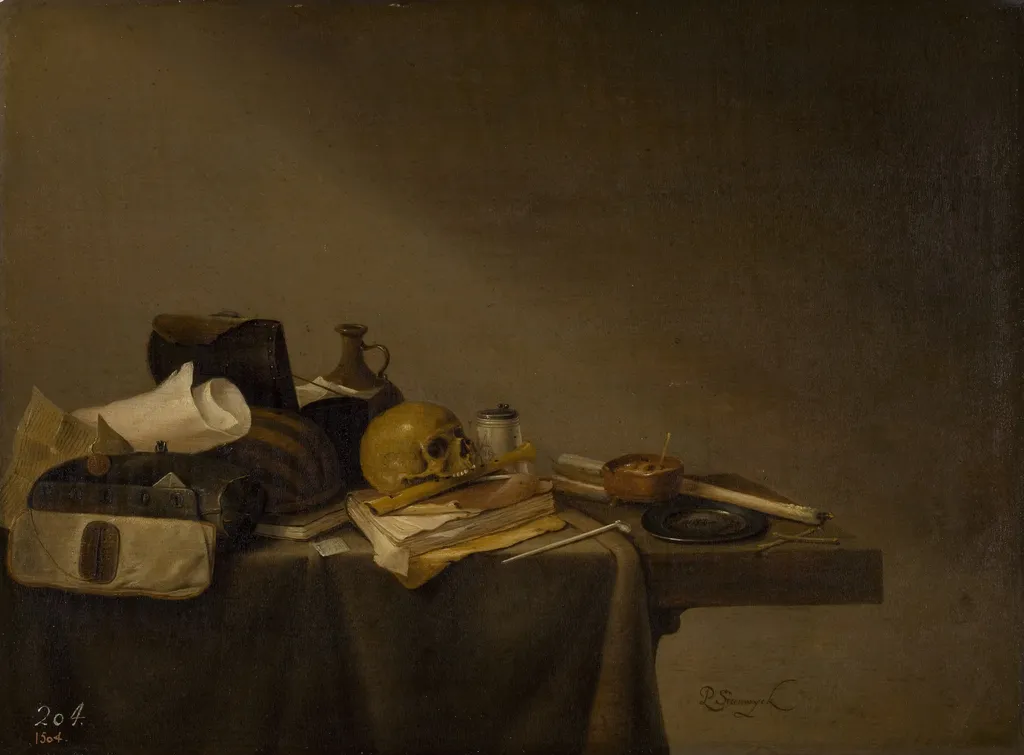
Emblem of Death is an unspecified painting by the Flemish Baroque painting artist Pieter Steenwijck. It dates from 1635 and is held in the collection of the Museo del Prado.
About this work
Overview
The painting is characterized by its subdued color palette and dramatic lighting, which contribute to its reflective atmosphere.
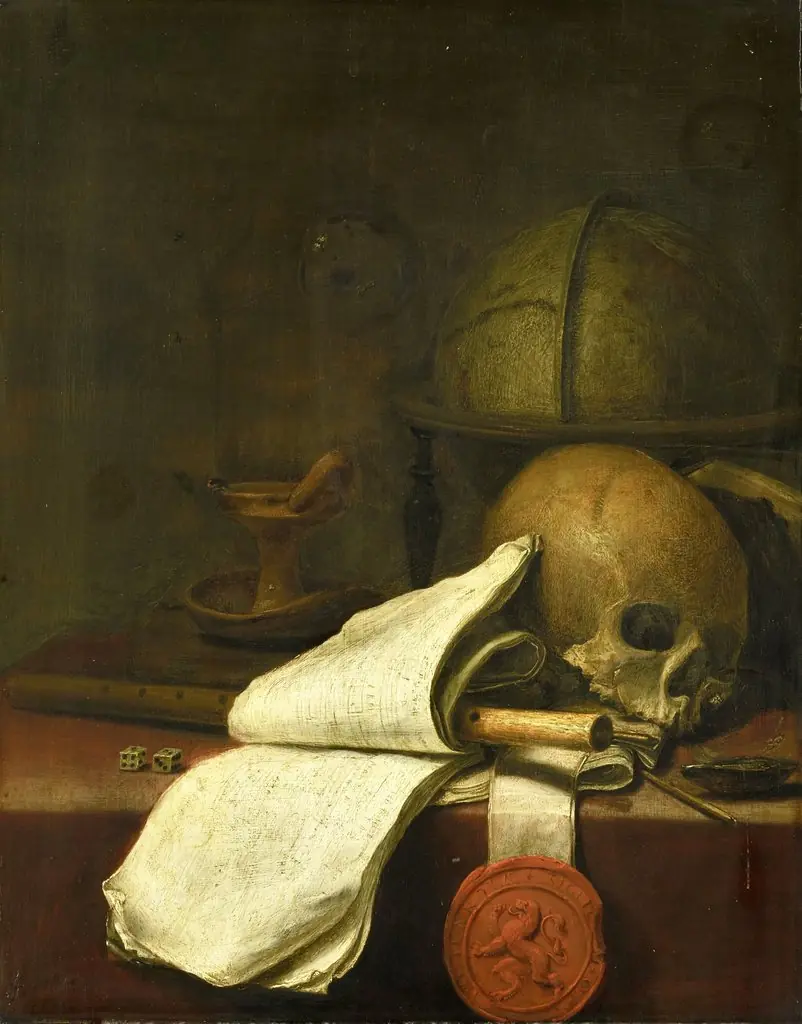
Pieter Steenwijck's painting, Emblem of Death, created in 1635, presents a still life composition. This work features an arrangement of objects, including a skull and musical instrument, carefully placed on a surface. The painting is characterized by its subdued color palette and dramatic lighting, which contribute to its reflective atmosphere. It is currently housed in the collection of the Museo del Prado.
Subject & Meaning
The painting's title, Emblem of Death, directly relates to its central imagery. A human skull and a recorder are prominently positioned, flanked by a book and a container. These elements collectively evoke themes of mortality, the transience of life, and the fleeting nature of earthly pleasures and knowledge. The deliberate arrangement encourages a sense of quiet contemplation on human existence and its inevitable end.
Technique & Style
Steenwijck employs a restrained palette dominated by browns and grays, contributing to the work's somber mood. The composition demonstrates a skillful use of chiaroscuro, where strong contrasts between areas of light and shadow create a dramatic effect. This technique enhances the three-dimensionality of the objects and imbues the scene with depth and volume. The balanced and harmonious arrangement of elements further contributes to the painting's contemplative quality.
History & Provenance
This painting, Emblem of Death, was completed by the artist Pieter Steenwijck in 1635. While details of its early history are not extensively documented, the work has become part of a significant public collection. It is presently held by the Museo del Prado, where it represents an example of Dutch still-life painting from the 17th century.
Own this work as a print
Artist & collection