Artwork
H Beard Print Collection
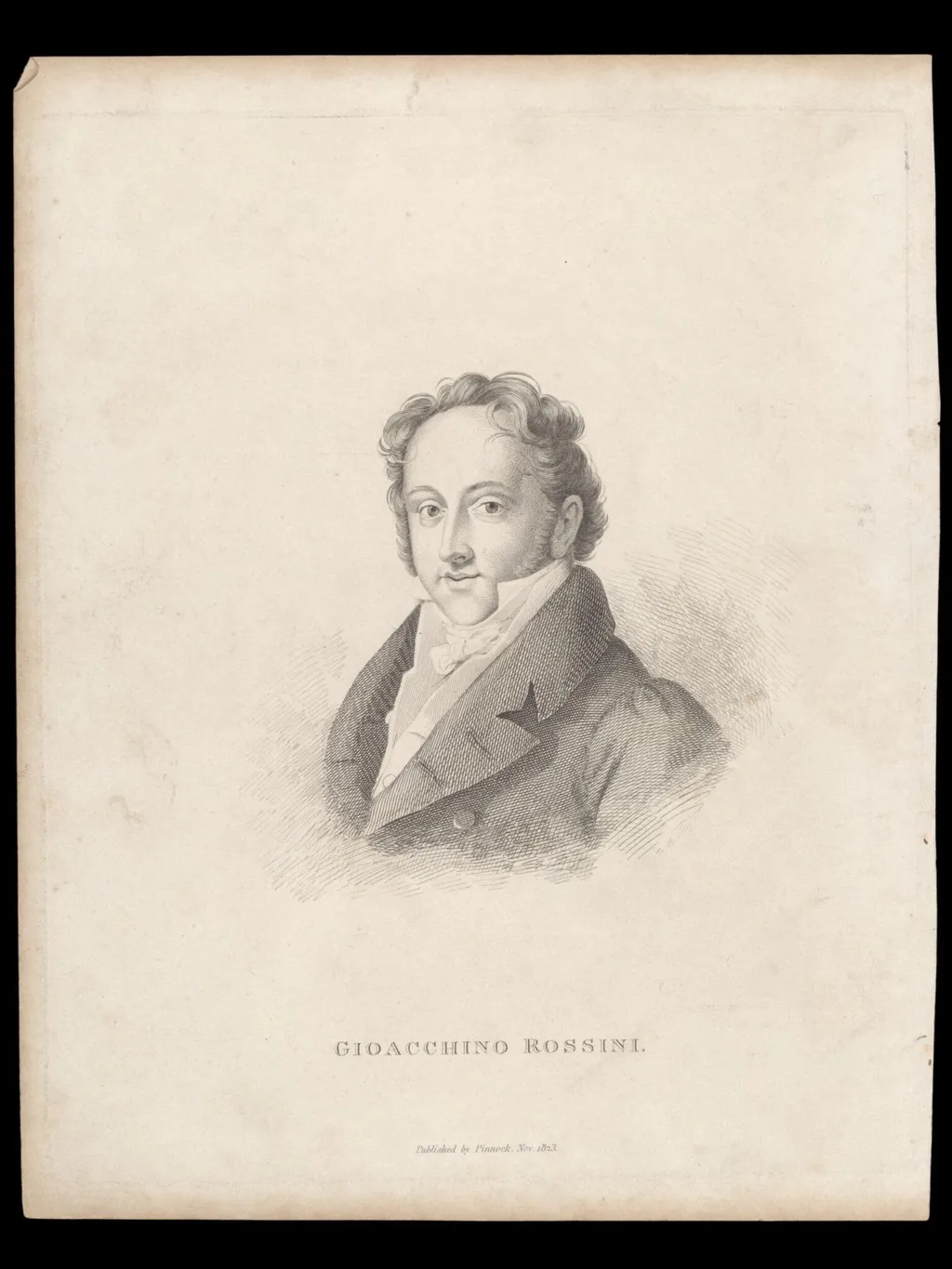
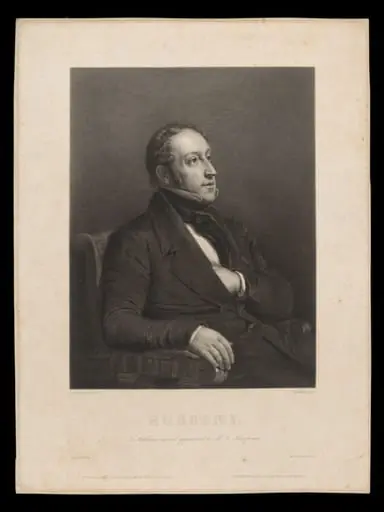
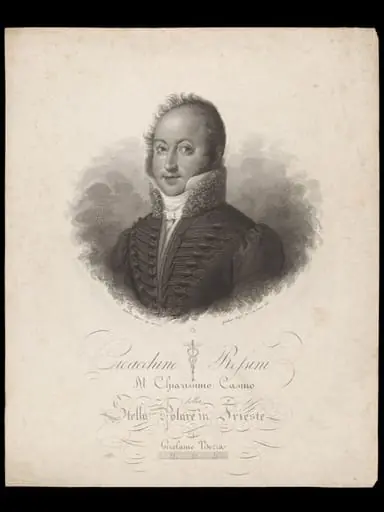
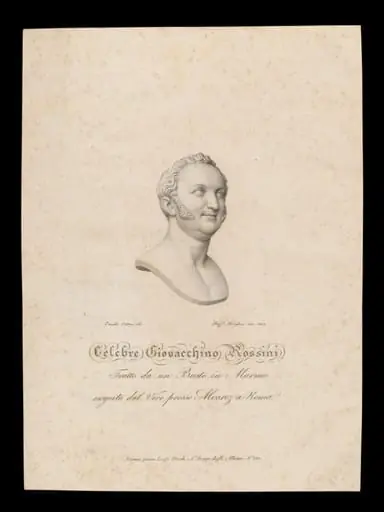
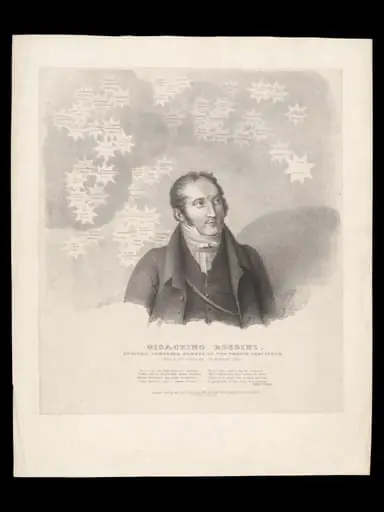
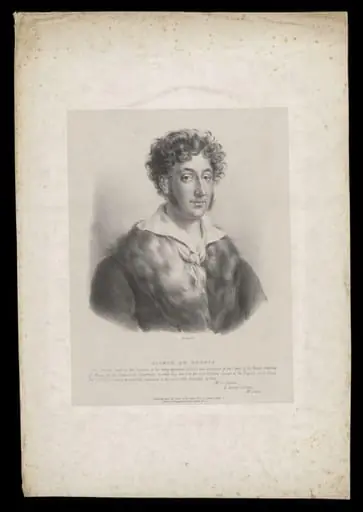
H Beard Print Collection is a print by the Romanticist artist W. Pinnock. It dates from 1823 and is held in the collection of the Victoria and Albert Museum. This 1823 print depicts the Italian composer Gioachino Rossini, rendered from the shoulders upward.
About this work
This is a print portrait from 1823. It shows G. A. Rossini, the composer, from the shoulders up. Pinnock made it, and it sits in the Victoria and Albert Museum now.
Prints like this were how people shared images before cameras. Rossini was famous in his time, so this image helped spread his face and fame.
Look up the Victoria and Albert Museum.
Overview
Produced by the London publisher Pinnock, it was part of a series of engraved portraits intended for widespread distribution.
This 1823 print depicts the Italian composer Gioachino Rossini, rendered from the shoulders upward. Produced by the London publisher Pinnock, it was part of a series of engraved portraits intended for widespread distribution. As a reproductive print, it served as a primary means of visual communication before photographic technology, allowing the public to become familiar with prominent cultural figures.
Subject & Meaning
Gioachino Rossini, then at the height of his fame following the success of operas like 'The Barber of Seville,' was a subject of public fascination. The portrait captures him in a dignified, composed manner, reflecting his status as a celebrated artist. Its purpose was not merely likeness but to reinforce his public persona, making his image accessible to audiences beyond the opera house.
Technique & Style
Executed as an engraved print, the portrait relies on fine linear detail to define Rossini’s features and attire. The tonal range is restrained, typical of black-and-white reproductive prints of the era, with emphasis on clarity over dramatic contrast. The composition is formal, centered, and framed by a simple border, aligning with conventions of 19th-century portraiture meant for mass reproduction.
History & Provenance
The print was published in London by Pinnock, a known publisher of educational and cultural engravings. It entered the collection of the Victoria and Albert Museum, where it remains as part of the H. Beard Print Collection. This collection preserves examples of 19th-century popular imagery, documenting how visual culture was disseminated before the age of photography.
Context
In the 1820s, printed portraits of celebrities were widely circulated as affordable keepsakes. Rossini’s international fame made him a natural subject for such reproductions. These prints functioned as cultural artifacts, bridging elite artistic achievement and middle-class domestic life, offering the public a tangible connection to figures they admired through performance.
Legacy
The print endures as evidence of early visual media’s role in shaping public perception of artists. It illustrates how fame was constructed and sustained through print culture before photography. Today, it serves scholars as a record of how Rossini’s image was curated and consumed, reflecting broader trends in 19th-century European visual communication.
Artist & collection
Artist
W. Pinnock turned 19th-century daily life into keepsakes. He made small, crisp prints of everything from a dog wearing a hat to a teapot on a shelf, printed on cheap paper so regular folks could pin them up. If you’ve…