Artwork
H Beard Print Collection
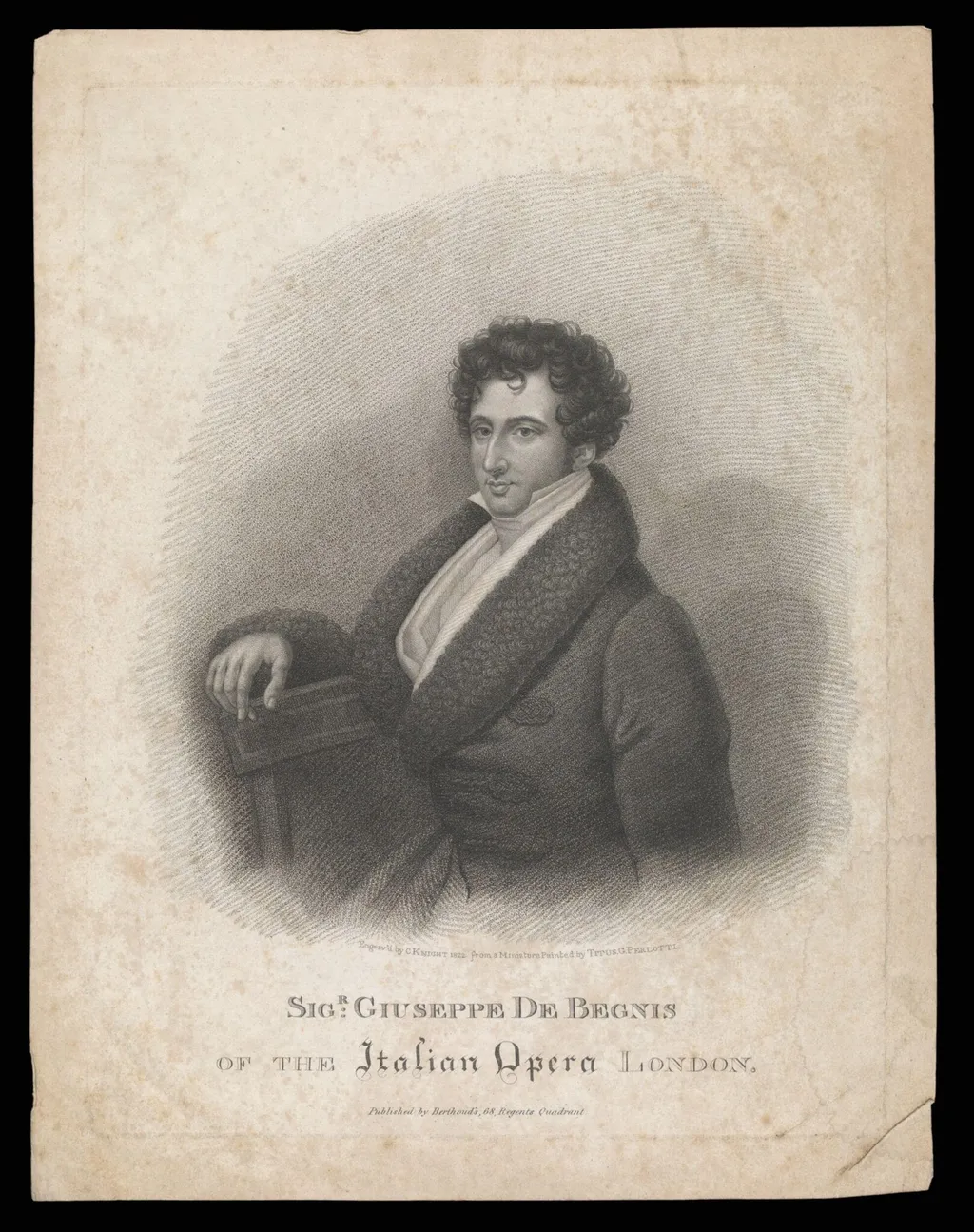
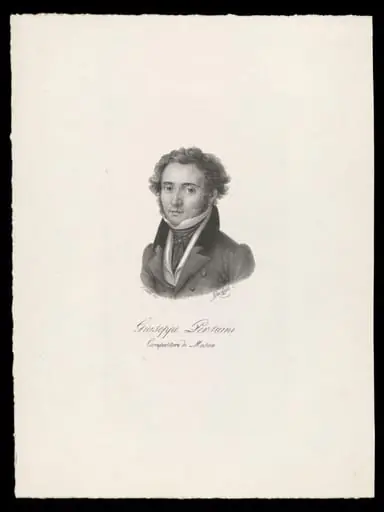
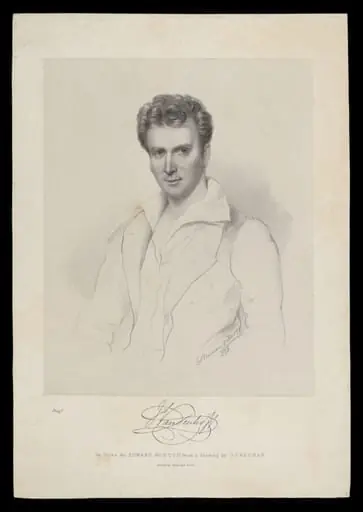
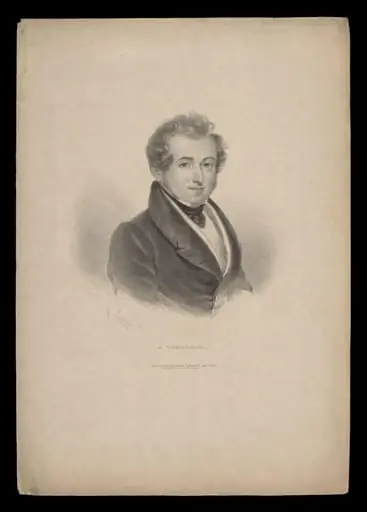
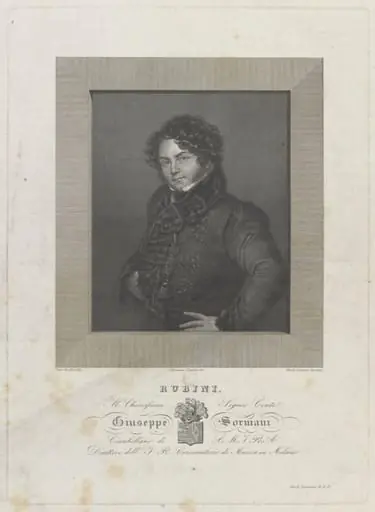
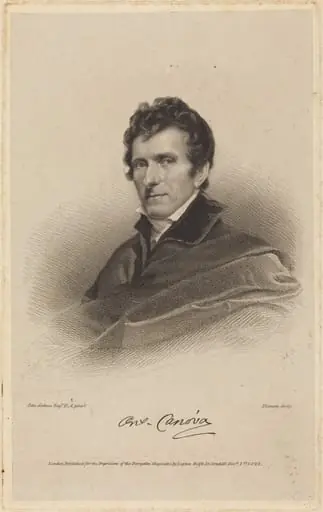
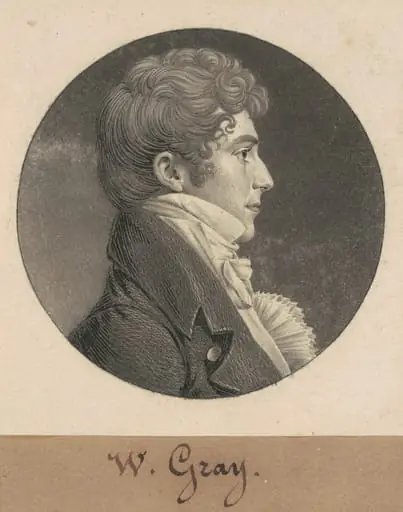
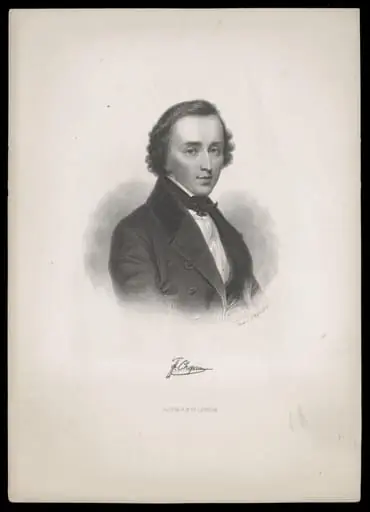
H Beard Print Collection is a print by the Romanticist artist Titus G. Perlotti. It dates from 1822 and is held in the collection of the Victoria and Albert Museum. A portrait print of Giuseppe De Begnis, an Italian operatic baritone active in London during the early 1820s, was created by Titus G.
About this work
This print shows Mr. Giuseppe De Begnis, an Italian opera singer based in London, sitting for his portrait. Titus G. Perlotti made it in 1822 using printmaking. Romanticism was in full swing at the time.
Opera stars like De Begnis were celebrities back then—think today’s pop icons. The work is held at London’s Victoria and Albert Museum.
Look up the artist Titus G. Perlotti next.
Overview
A portrait print of Giuseppe De Begnis, an Italian operatic baritone active in London during the early 1820s, was created by Titus G. Perlotti in 1822. Executed in printmaking, the work captures De Begnis in a seated pose, reflecting the era’s fascination with performing artists. The piece is part of the H. Beard Print Collection at the Victoria and Albert Museum in London.
Subject & Meaning
Giuseppe De Begnis was a prominent singer in London’s Italian opera scene, known for his roles in works by Rossini and other contemporaries.
Giuseppe De Begnis was a prominent singer in London’s Italian opera scene, known for his roles in works by Rossini and other contemporaries. The portrait presents him not as a mythic figure but as a cultivated individual, aligning with Romantic ideals that valued personal expression and artistic identity. His presence in print form underscores the rising cultural status of opera performers as public figures.
Technique & Style
Perlotti employed traditional printmaking methods to render De Begnis with refined detail, likely using engraving or etching. The composition emphasizes naturalistic posture and subtle shading, avoiding theatrical exaggeration. The restrained elegance of the rendering reflects a transitional style between neoclassical formality and Romantic individualism, characteristic of early 19th-century British portraiture.
History & Provenance
The print was produced in 1822 during De Begnis’s tenure at London’s King’s Theatre. It entered the H. Beard Collection, assembled by a 19th-century theater enthusiast, and was later acquired by the Victoria and Albert Museum. Perlotti, a lesser-known artist, specialized in theatrical portraits, and this work remains one of the few documented examples of his output.
Context
In the 1820s, London’s opera houses drew large, socially diverse audiences, elevating singers to celebrity status. Print media proliferated to meet public demand for images of these stars, much like modern celebrity photography. De Begnis’s portrait thus functions as both a personal likeness and a cultural artifact of a society increasingly captivated by performance and public persona.
Legacy
Though Perlotti’s name has faded, the print endures as a record of an era when opera stars commanded public attention. It contributes to the V&A’s broader archive of theatrical history, offering insight into how performance culture was visually documented before photography. The work remains a quiet testament to the intersection of art, celebrity, and print in early Victorian England.
Artist & collection
Artist
Titus G. Perlotti made single-sheet prints around the 1820s. One example is his 1822 print in the H Beard Collection titled simply H Beard Print Collection. The design shows fine, controlled lines and a small vignette…