Artwork
Virgin and Child
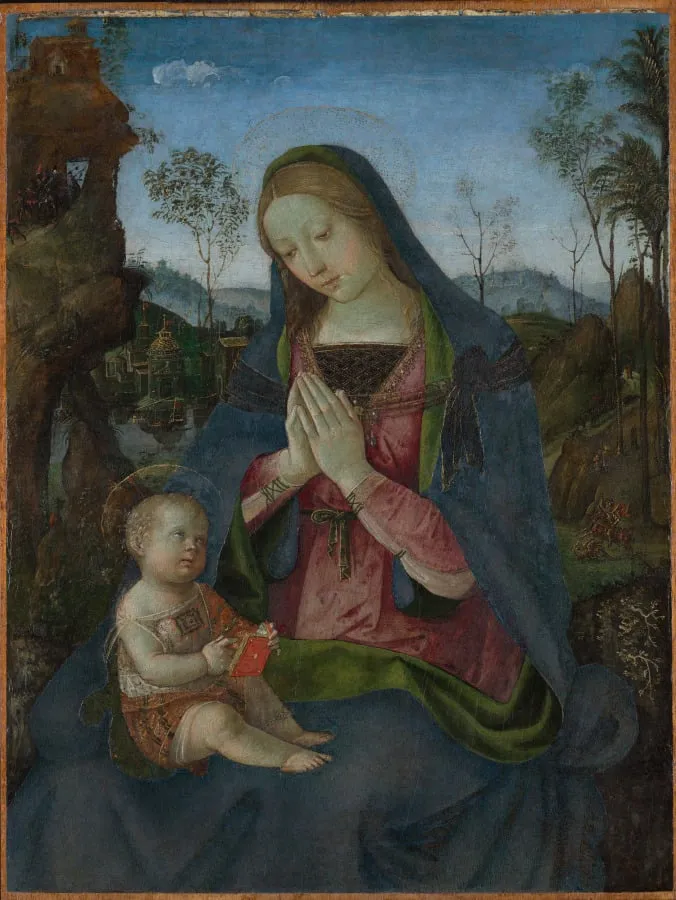
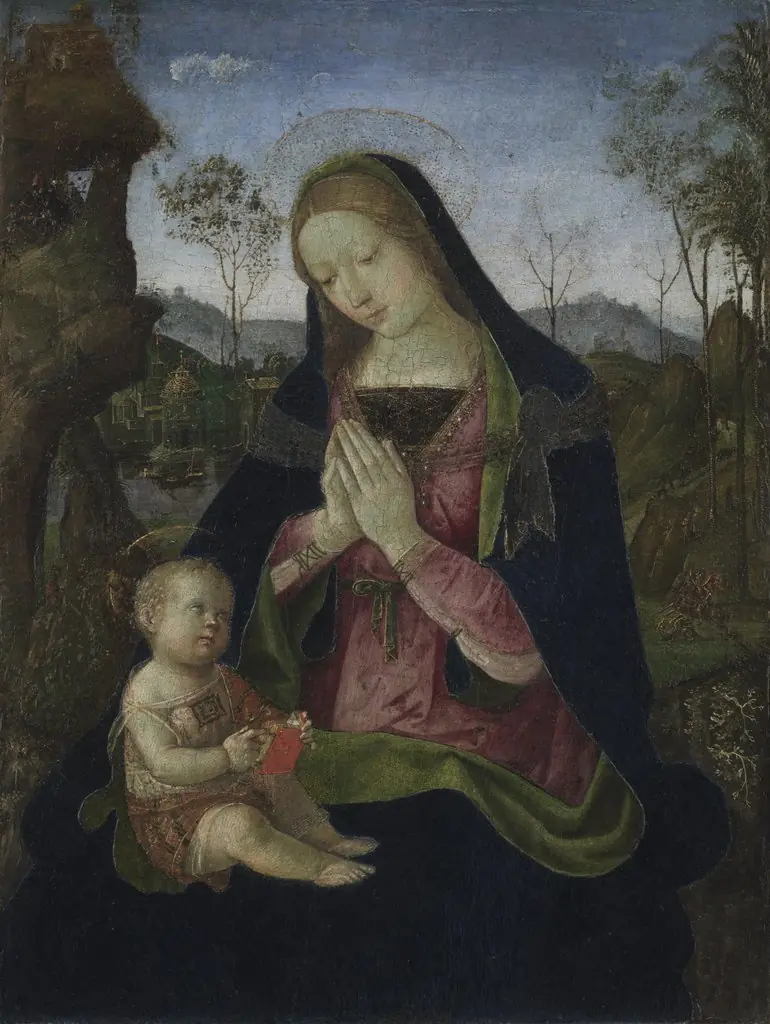
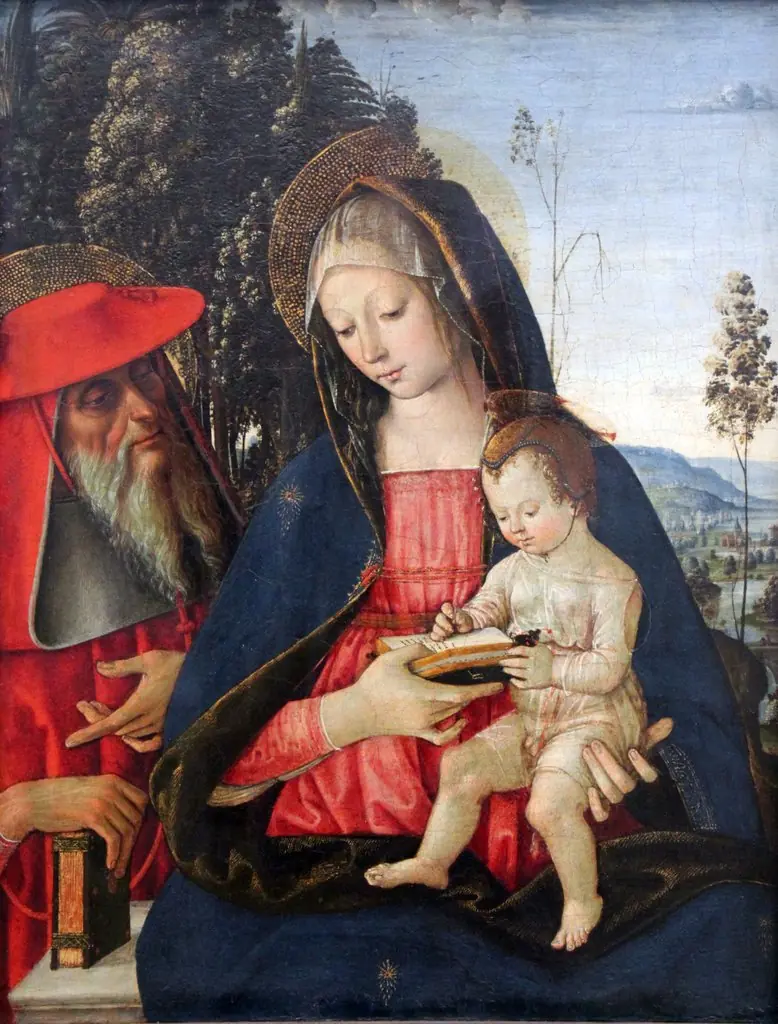
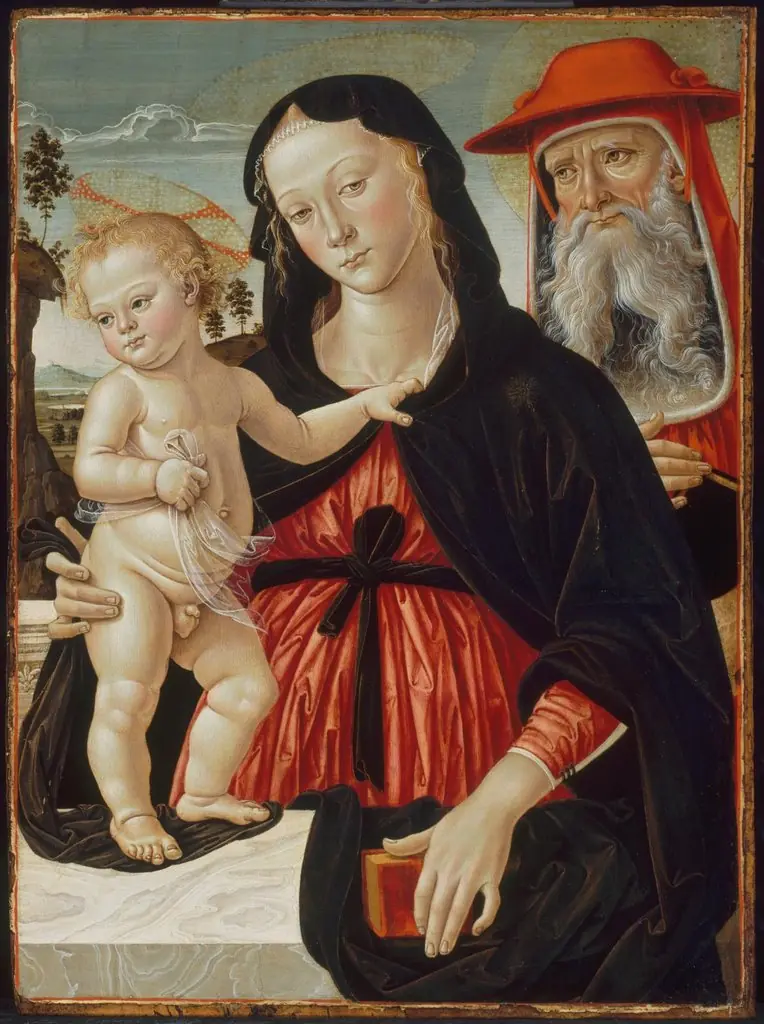
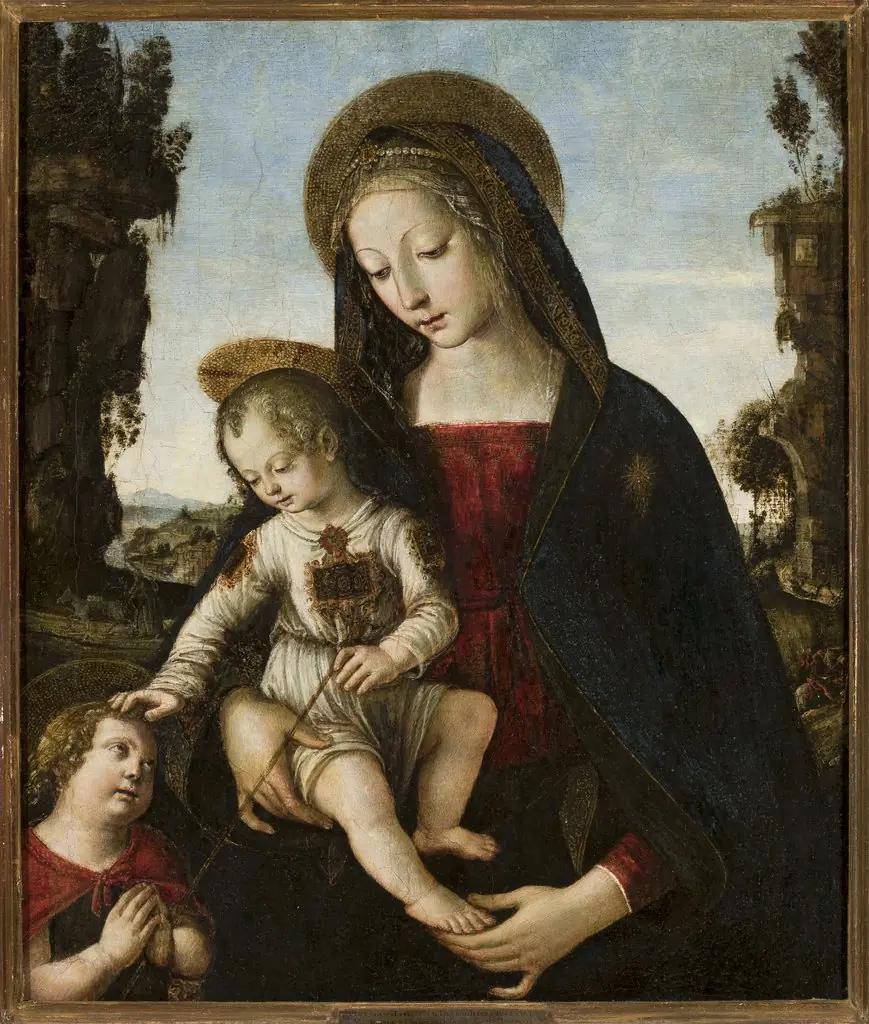
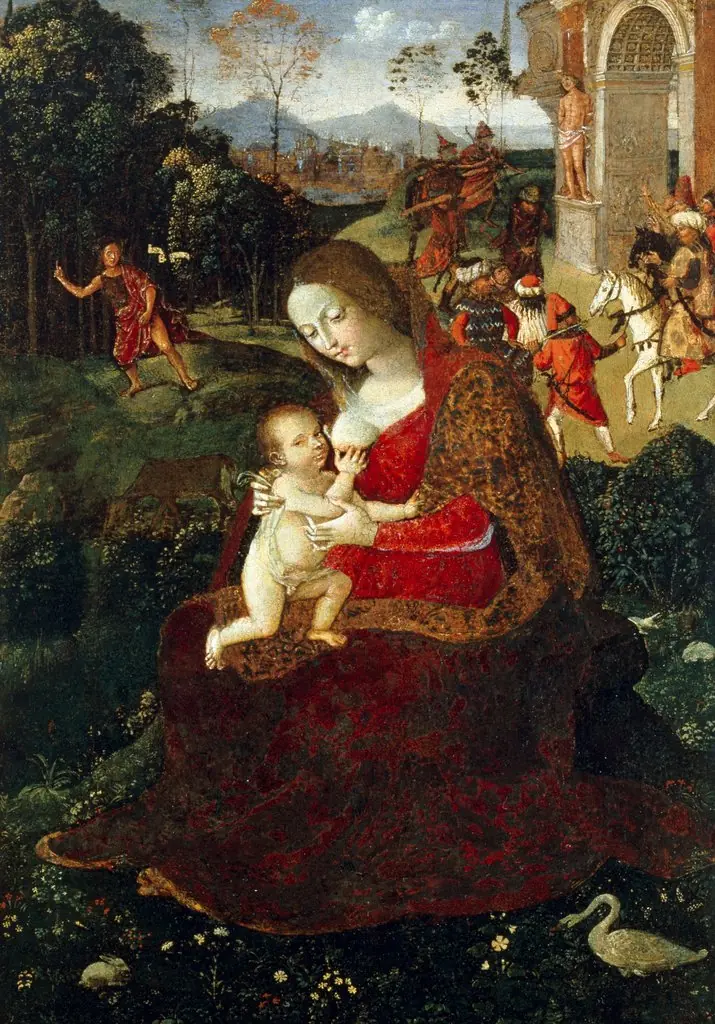
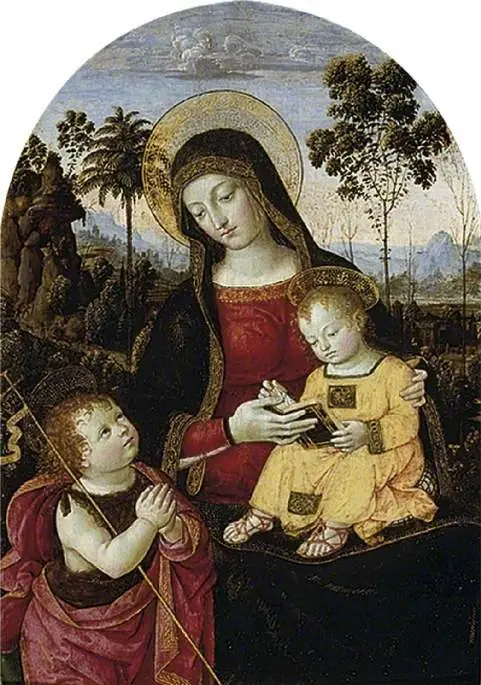
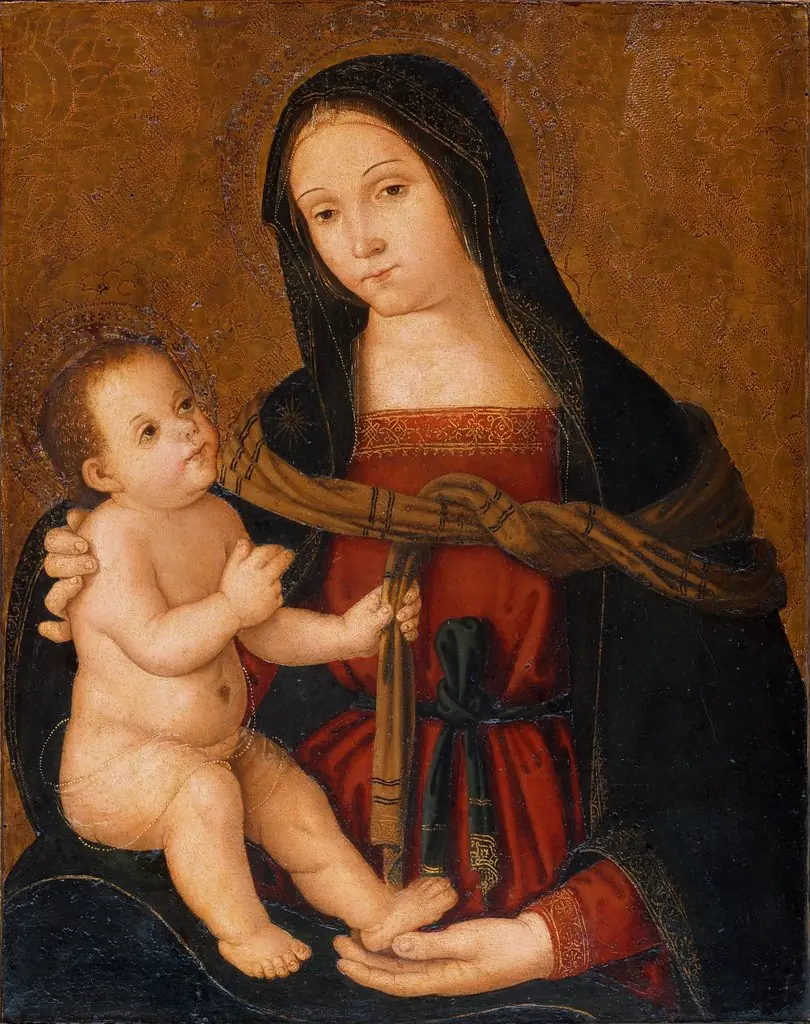
Virgin and Child is an unspecified painting by the Early Renaissance artist Pinturicchio. It dates from 1495 and is held in the collection of the Cleveland Museum of Art.
About this work
Overview
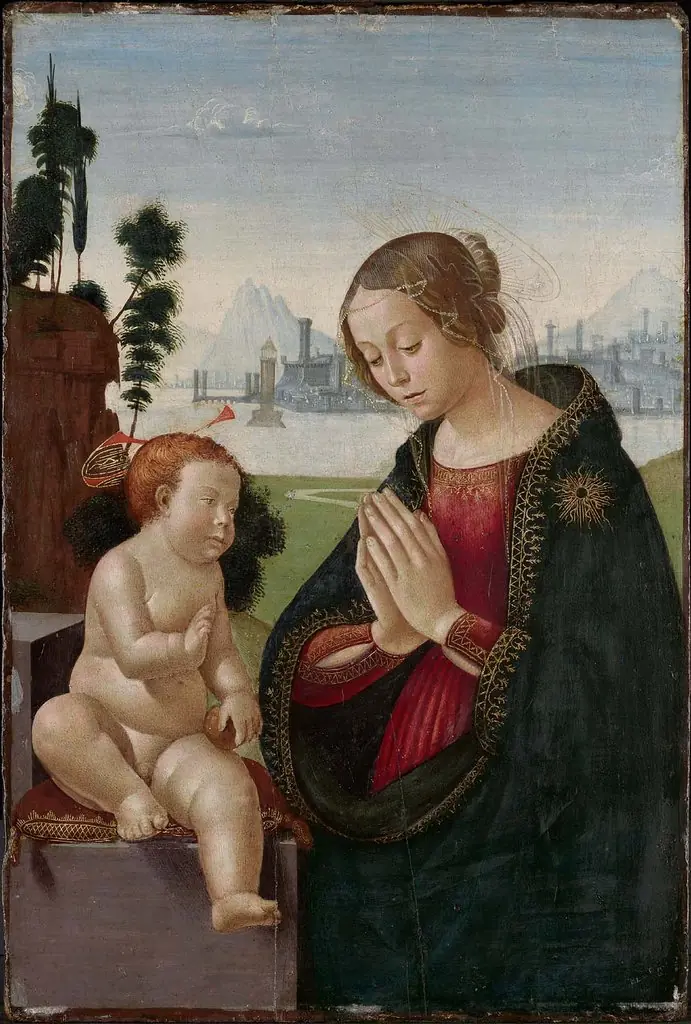
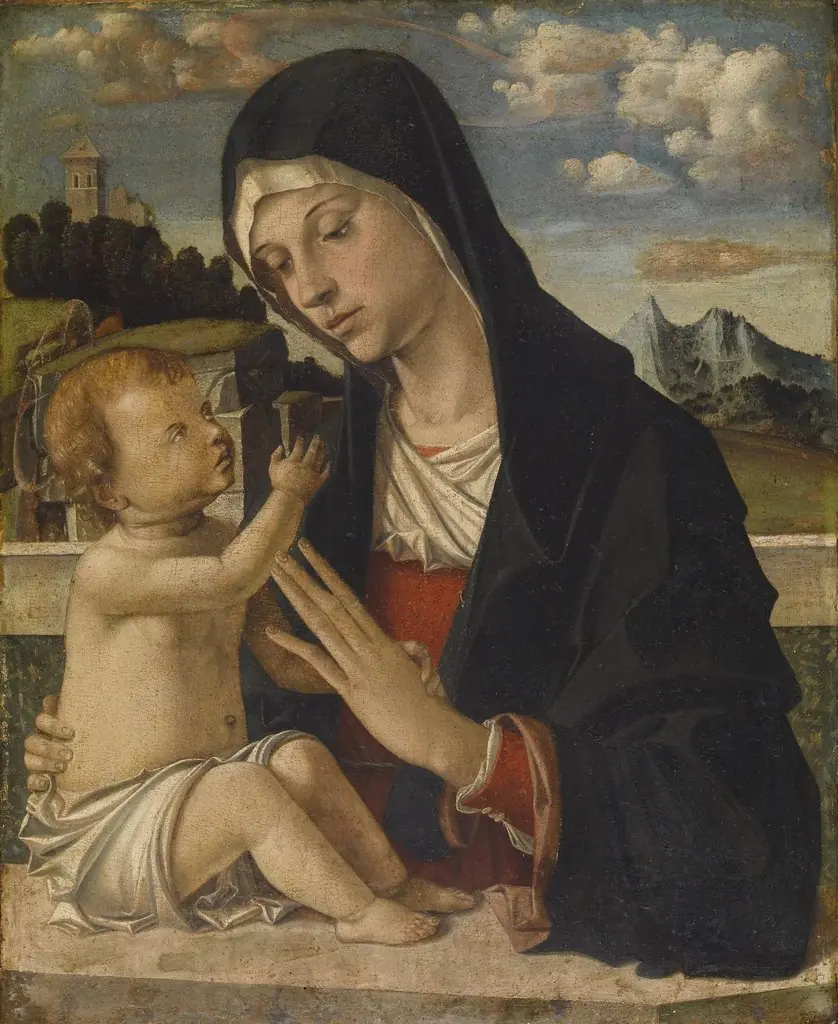
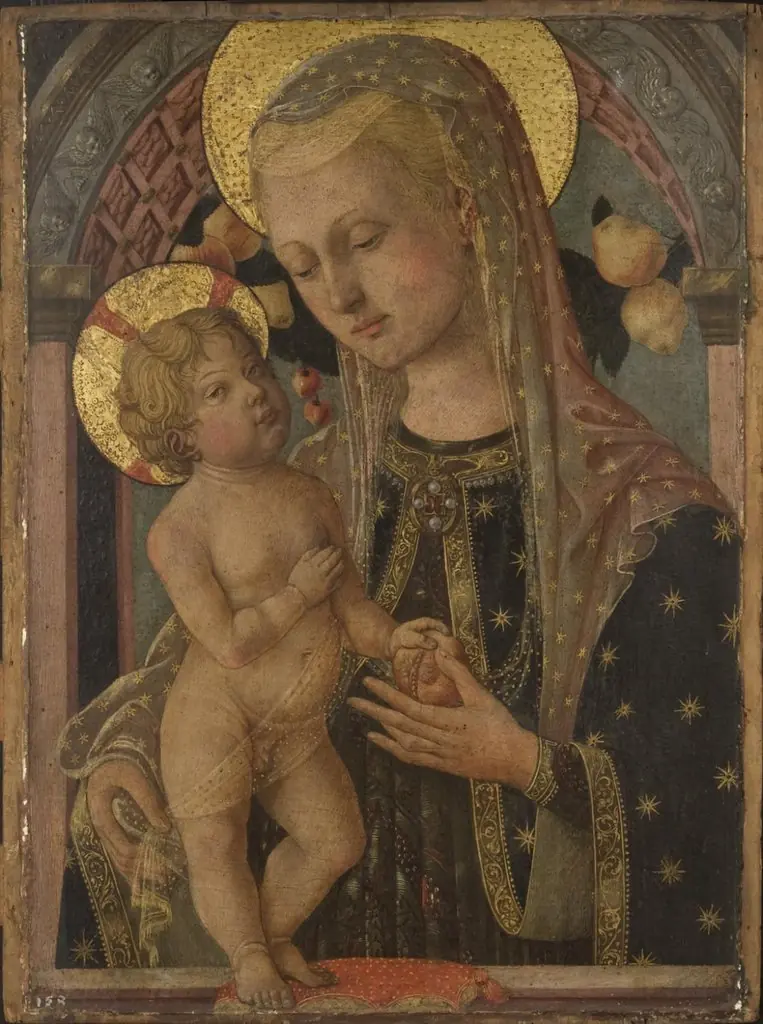
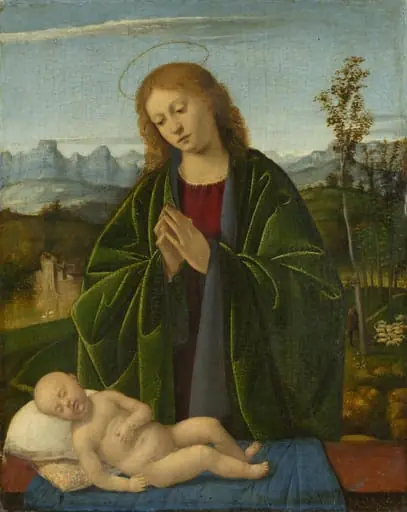
Attributed to Bernardino di Betto, known as Pinturicchio, this small devotional panel depicts the Virgin Mary with the infant Jesus.
Attributed to Bernardino di Betto, known as Pinturicchio, this small devotional panel depicts the Virgin Mary with the infant Jesus. Likely created for private worship, it reflects the artist’s early style before his major public commissions. The use of real gold leaf, uncommon for domestic works of the period, signals the patron’s means and the image’s sacred purpose. Pinturicchio, trained in Umbria, later gained recognition for fresco cycles in Rome.
Subject & Meaning
The Virgin, seated on a richly draped throne, holds the Christ Child who reaches toward her face with tender, grasping fingers. This intimate gesture emphasizes human connection within a divine context. The blue robe symbolizes purity and heavenly grace, while the red drape suggests royal dignity and sacrifice. The quiet, focused interaction invites contemplation, aligning with private devotional practices common in Renaissance households and chapels.
Technique & Style
The painting employs tempera and gold leaf on wood, a traditional medium for panel works of the late 15th century. The gold background, meticulously applied in thin sheets, creates a luminous, otherworldly glow. Pinturicchio’s brushwork is delicate, with soft modeling of forms and refined details in the figures’ garments. The composition is balanced and serene, reflecting the influence of his mentor Perugino, though with a more intimate scale and emotional nuance.
History & Provenance
The painting’s early ownership is undocumented, but its size and subject suggest it was commissioned for a private setting rather than a church. It entered the Cleveland Museum of Art’s collection in the 20th century, likely through a private acquisition. While no archival records confirm its original location, its craftsmanship and materials point to a wealthy Umbrian or central Italian patron seeking a personal devotional object.
Context
In late 15th-century Italy, devotional panels of the Virgin and Child were common in domestic spaces, serving as focal points for prayer. Wealthy families often commissioned such works to express piety and social status. Pinturicchio’s training under Perugino and his involvement in major ecclesiastical projects placed him within a network of artists responding to both religious devotion and aristocratic taste, blending sacred imagery with refined technique.
Legacy
Though Pinturicchio is best known for large fresco cycles, this small panel reveals his skill in intimate religious imagery. Its preservation and display highlight the significance of private art in Renaissance spiritual life. The use of gold leaf, rare in non-ecclesiastical works, underscores the blending of luxury and devotion. The painting remains a quiet testament to the personal dimensions of faith in an era dominated by grand public art.
Artist & collection

Artist
Pinturicchio, or Pintoricchio (US: , Italian: ; born Bernardino di Betto; 1454–1513), also known as Benetto di Biagio or Sordicchio, was an Italian Renaissance painter.