Artwork
Grove of Trees
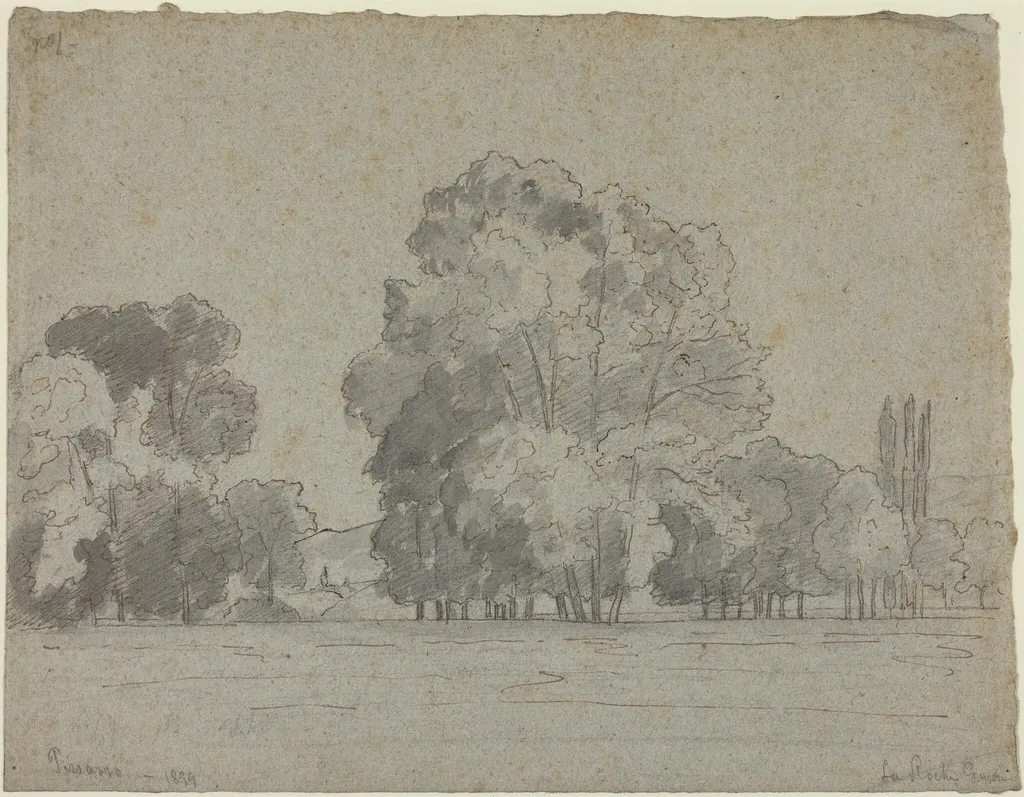
Grove of Trees is an ink drawing by the Impressionist artist Camille Pissarro. It dates from 1859 and is held in the collection of the National Gallery of Art.
About this work
Overview
Created in 1859, Grove of Trees is a delicate drawing by Camille Pissarro executed in pen with brown and black ink, complemented by gray wash and graphite on gray-blue laid paper. The work belongs to his early period, before his full transition to Impressionism, and reflects his engagement with landscape as a subject rooted in observation rather than idealization.
Subject & Meaning
The drawing depicts a cluster of trees in a natural setting, arranged without dramatic emphasis or narrative. The composition suggests a quiet, unembellished moment in the countryside, emphasizing the rhythm of branches and the play of light through foliage. It conveys an interest in the ordinary, grounding the scene in the tangible rather than the symbolic.
Technique & Style
Pissarro employed fine pen lines to define tree trunks and limbs, layered with soft gray washes to suggest volume and shadow. Graphite adds subtle tonal variations, while the gray-blue paper provides a neutral ground that enhances the atmospheric quality. The technique is restrained, prioritizing structure and spatial depth over expressive flourish.
History & Provenance
The drawing was made during Pissarro’s formative years in France, likely in the countryside near Paris. It remained in private hands for much of the 19th and 20th centuries before entering a public collection. Its survival in good condition offers insight into his working methods prior to his association with the Impressionist circle.
Context
In 1859, Pissarro was studying under established landscape painters and absorbing the traditions of Barbizon School artists. This drawing reflects the period’s emphasis on direct observation of nature, aligning with broader trends in French art that valued authenticity over academic idealism, even as he would later move beyond these conventions.
Legacy
Grove of Trees stands as an early indicator of Pissarro’s lifelong commitment to depicting the natural world with honesty and attention to detail. Though not widely exhibited, it contributes to understanding the evolution of his technique and the quiet foundation upon which his later innovations were built.
Artist & collection


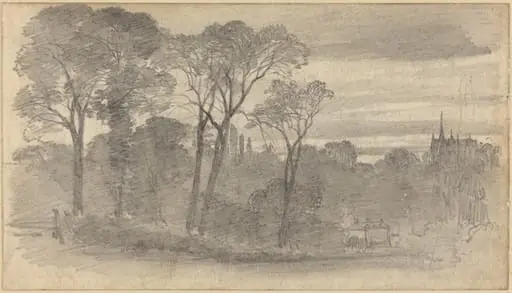 An Evening Landscape with a Distant Cathedral
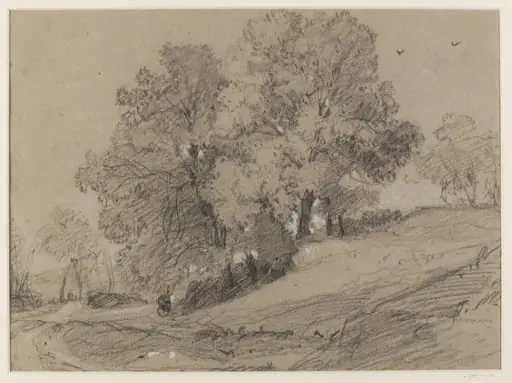 Untitled
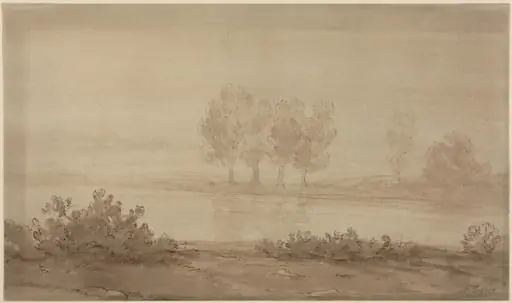 Landscape - Four Trees beyond a River
 Near Nordkerque (Pres de Nordkerque)
 View Near Tivoli (Vue prise à Tivoli)
 Landscape: a stream running between trees
 Landscape with Trees, Cottage, and Farm Wagon
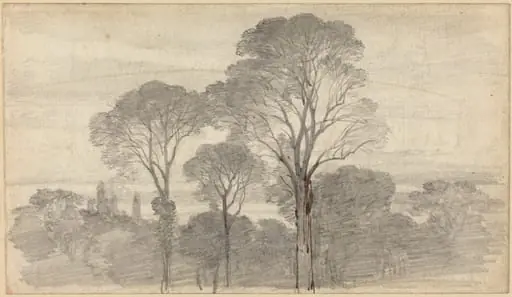 An Evening Landscape with Tall Trees
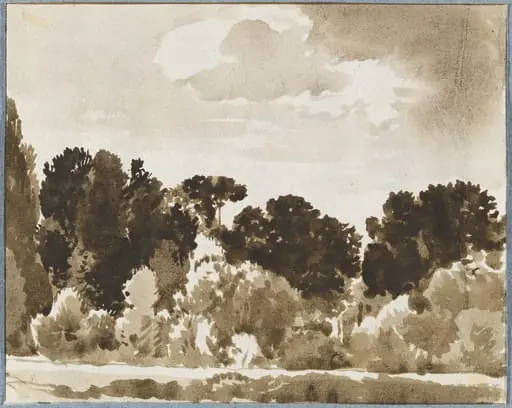 Forest Edge on a Brilliant Day
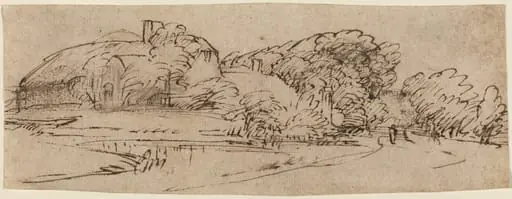 A Landscape with Farm Buildings among Trees