Artwork
Peasants Carrying Sticks (Paysannes portant des fagots)
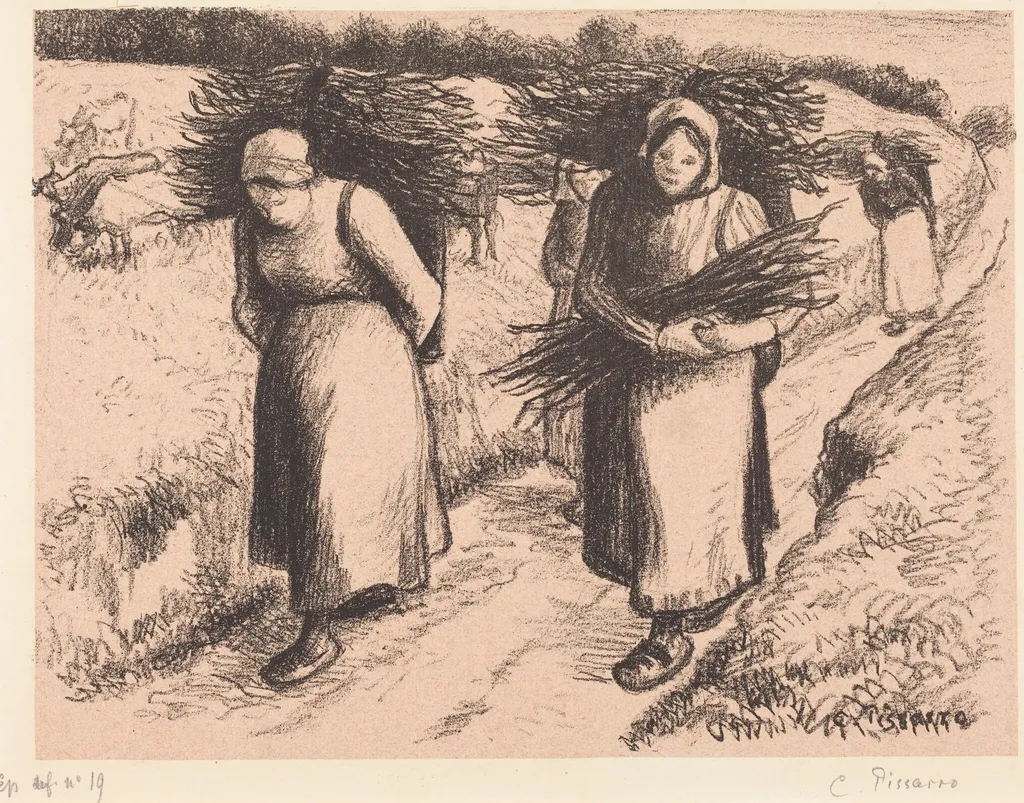
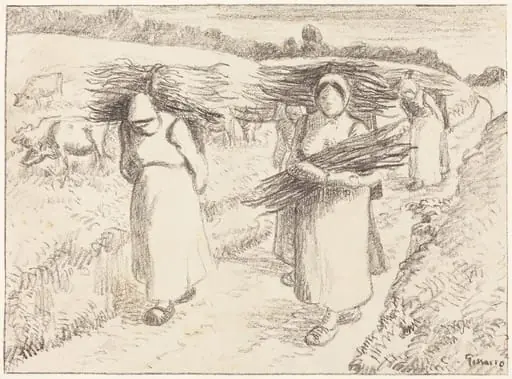
Peasants Carrying Sticks (Paysannes portant des fagots) is an ink print by the Impressionist artist Camille Pissarro. It dates from 1896 and is held in the collection of the National Gallery of Art.
About this work
Overview
Created in 1896, this lithograph by Camille Pissarro depicts two rural laborers transporting bundles of firewood. Executed on pink Chine collé paper, the work belongs to a series of prints exploring peasant life in the French countryside. The choice of medium and substrate reflects Pissarro’s interest in accessible, experimental printmaking during his later years.
Subject & Meaning
The figures, dressed in plain garments, move steadily along a rugged path, their postures conveying physical exertion. Their anonymity emphasizes the quiet dignity of daily toil rather than individual identity. Pissarro, long committed to portraying rural laborers with empathy, avoids romanticization, presenting their labor as an unvarnished part of the landscape.
Technique & Style
Pissarro employed lithography on zinc, using fluid, rapid lines to suggest motion and weight. The sketchlike quality captures the rhythm of movement rather than precise detail. The pink paper enhances contrast, allowing the inked contours to stand out with subtle warmth. The textured background, rendered with loose strokes, evokes the uneven terrain and sparse vegetation of the field.
History & Provenance
This print emerged during a period when Pissarro was deeply engaged with printmaking, producing numerous lithographs and etchings after 1890. It was likely made for private circulation or small editions, not mass distribution. While specific early ownership records are limited, it is held in major museum collections today, reflecting its significance in his graphic oeuvre.
Context
In the 1890s, Pissarro turned increasingly to printmaking as a means to explore form and social themes outside the constraints of painting. His focus on peasant labor aligned with broader late-19th-century interests in rural life, though he avoided political rhetoric. This work reflects his enduring connection to the land and its workers, shaped by decades of observation in Normandy and Pontoise.
Legacy
Pissarro’s lithographs, including this one, expanded the possibilities of print as a vehicle for social observation. Though less celebrated than his paintings, these works influenced later artists seeking to combine expressive line with documentary realism. The piece remains a quiet testament to his commitment to depicting ordinary lives with clarity and respect.
Own this work as a print
Artist & collection


 Peasants Carrying Sticks (Paysannes portant des fagots)
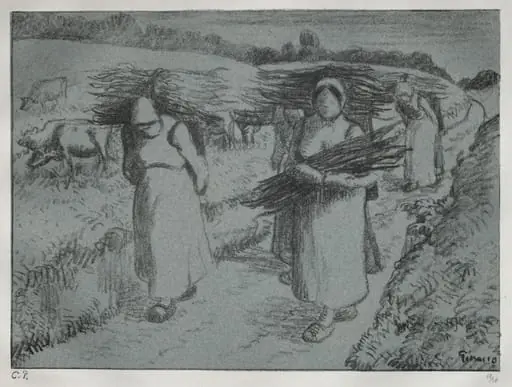 Peasants Carrying Fagots
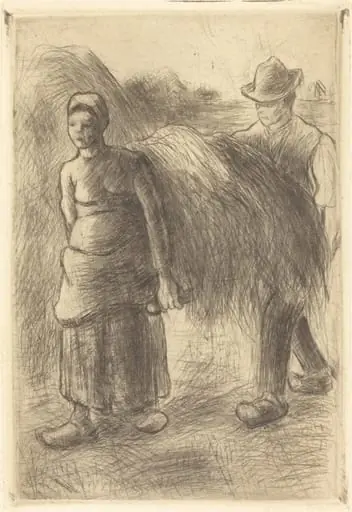 Peasants Carrying Hay (Paysans portant du foin)
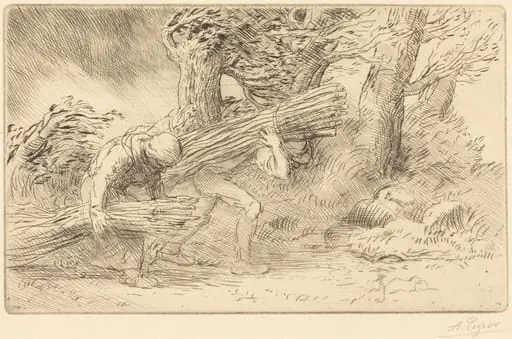 Fagot-gatherers (Les fagottiers)
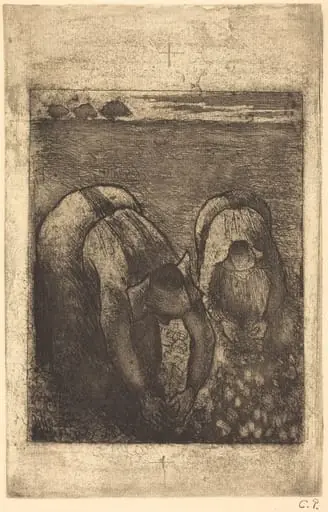 Peasants in a Field of Beans (Paysannes dans un champ de haricots)
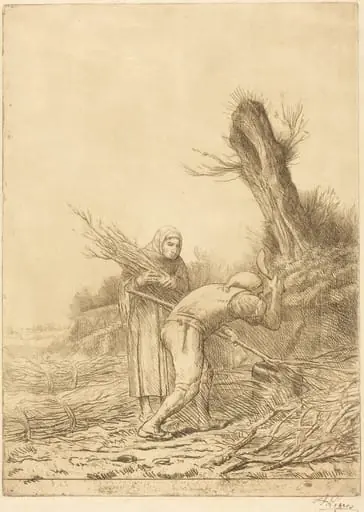 Fagot-makers (Les faiseurs de fagots)
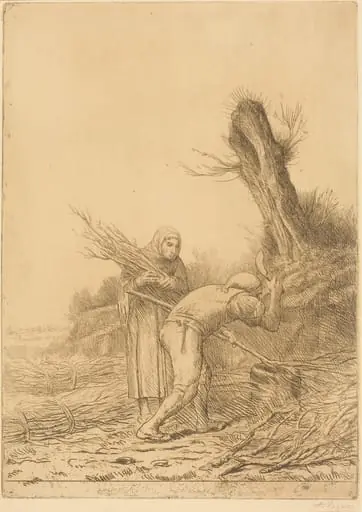 Fagot-makers (Les faiseurs de fagots)
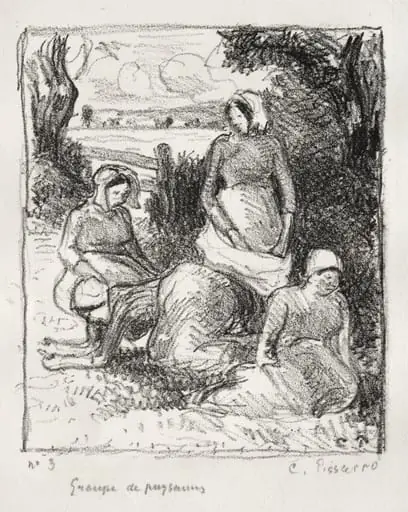 Group of Peasants
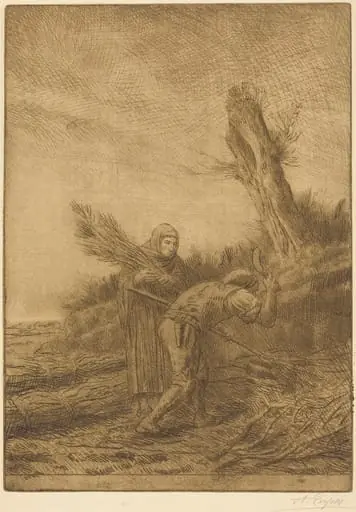 Fagot-makers (Les faiseurs de fagots)
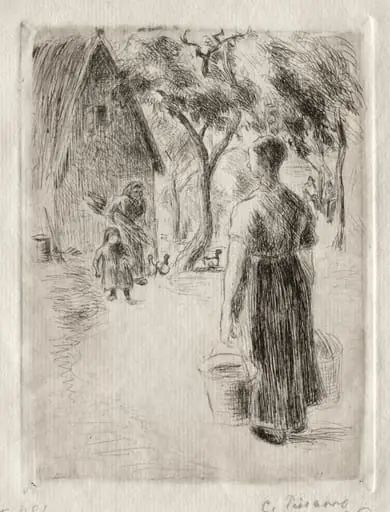 Peasant Woman Carrying Buckets
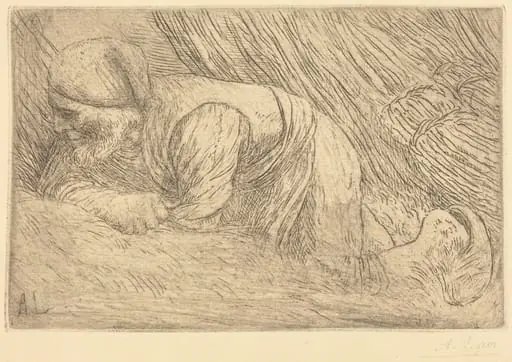 Fagot-gatherer (Le fagotier)