Artwork
Fagot-gatherers (Les fagottiers)
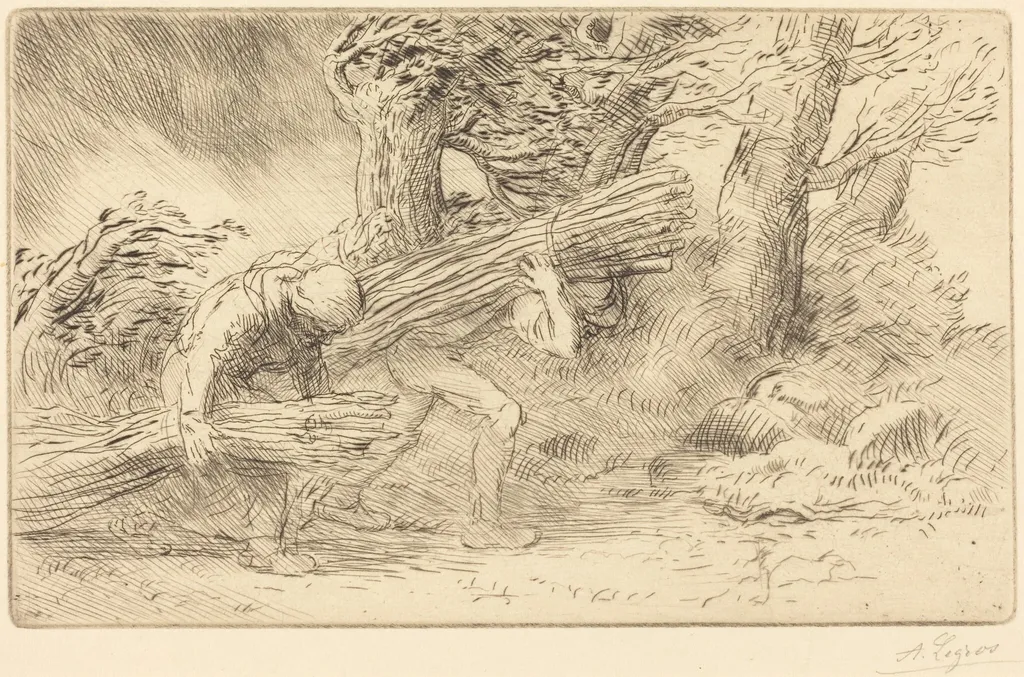
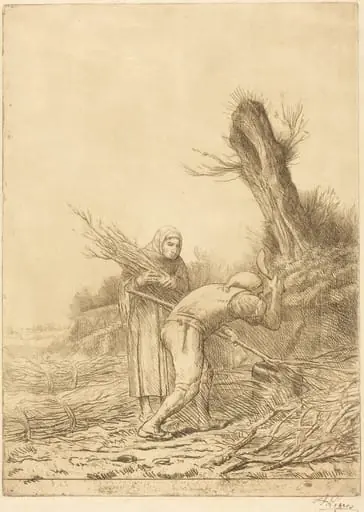
Fagot-gatherers (Les fagottiers) is an ink print by the Romanticist artist Alphonse Legros. It dates from 1874 and is held in the collection of the National Gallery of Art.
About this work
Overview
Created in 1874, *Fagot‑gatherers (Les fagottiers)* is an ink print produced by Alphonse Legros through a combination of etching and drypoint. The work records two laborers bent over as they bind sticks, rendered with brisk, textured lines that convey the physicality of the task.
Subject & Meaning
The composition focuses on ordinary rural workers engaged in the collection of bundled wood, reflecting Legros’s interest in depicting everyday labour and the dignity of manual craft. The figures are shown in profile, their posture emphasizing effort and concentration.
Technique & Style
Legros employed drypoint to incise the plate directly, producing deep, feathered lines that give the image a lively, tactile quality. The etching component adds finer hatching, while the overall handling of line remains quick and sketch‑like, suggesting movement within the static medium.
History & Provenance
Born in France and naturalised as a British citizen after settling in London in 1863, Legros was a pivotal figure in the 19th‑century revival of British etching. His teaching at the Royal Academy helped disseminate the medium, and *Fagot‑gatherers* exemplifies his contribution to that resurgence.
Context
The print belongs to a period when artists increasingly turned to genre scenes of work and rural life, aligning with broader realist tendencies in European art. Legros’s choice of a modest, labor‑intensive subject mirrors contemporary social concerns about the visibility of the working class.
Artist & collection

Artist
Alphonse Legros (French pronunciation: ; 8 May 1837 – 8 December 1911) was a French, later British, painter, etcher, sculptor, and medallist.

 Fagot-makers (Les faiseurs de fagots)
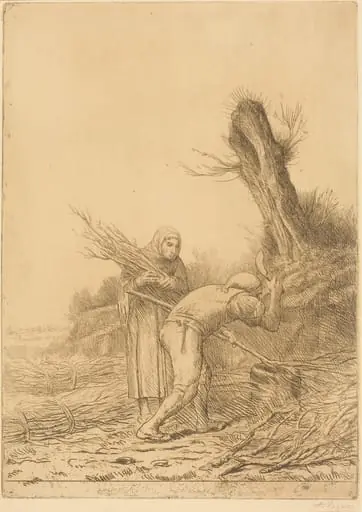 Fagot-makers (Les faiseurs de fagots)
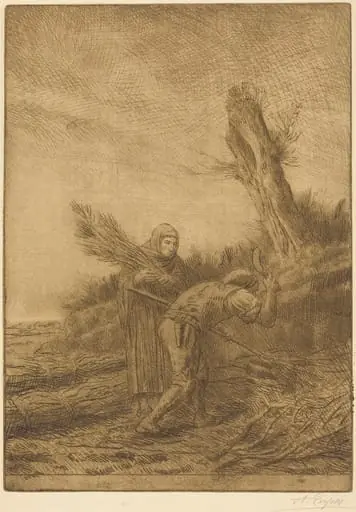 Fagot-makers (Les faiseurs de fagots)
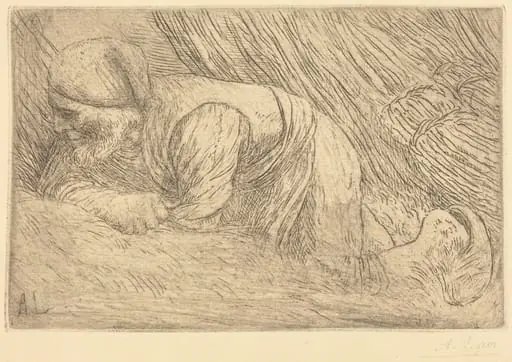 Fagot-gatherer (Le fagotier)
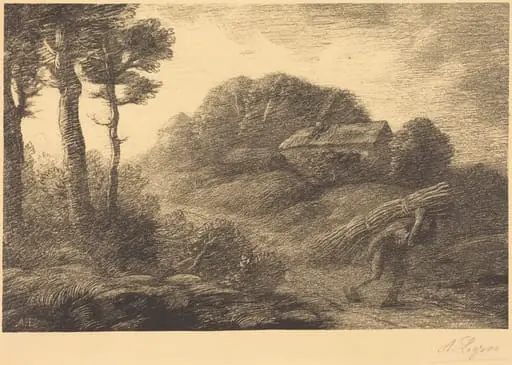 Return of the Fagot-gatherer, 2nd plate (Le retour du fagotier)
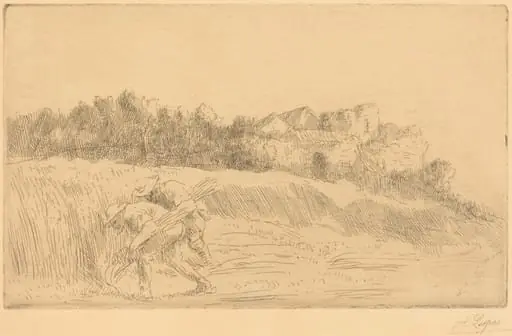 Harvesters (Les moissoneurs)
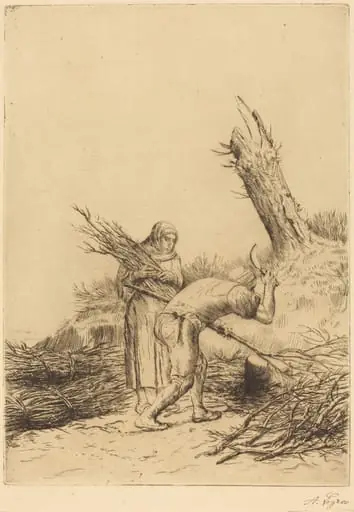 Fagot-makers (Les faiseurs de fagots)
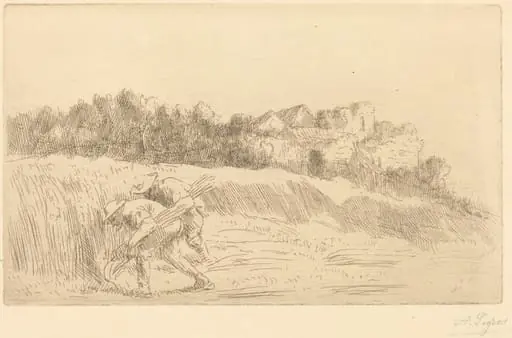 Harvesters (Les moissoneurs)
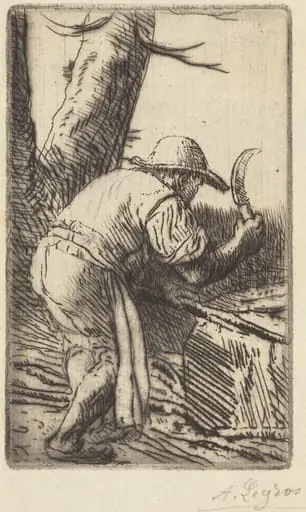 Fagot-cutter (Le coupeur de fagots)
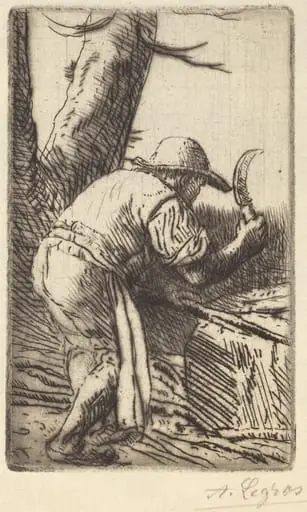 Fagot-cutter (Le coupeur de fagots)
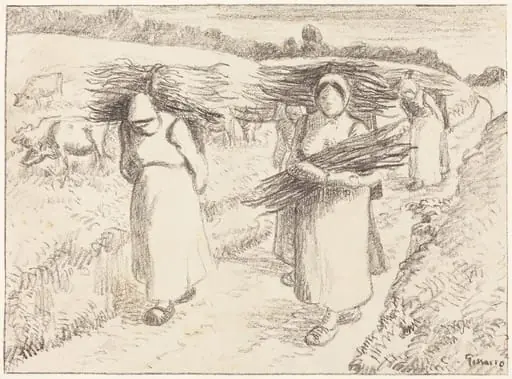 Peasants Carrying Sticks (Paysannes portant des fagots)