Artwork
The Long Landscape (Paysage en long)
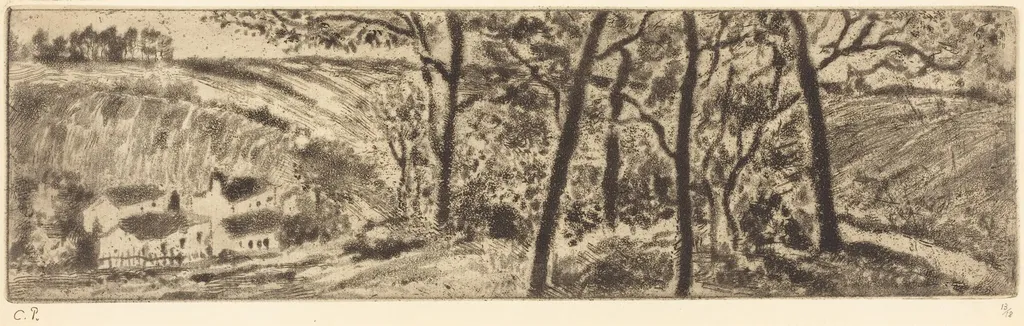
The Long Landscape (Paysage en long) is an ink print by the Impressionist artist Camille Pissarro. It dates from 1879 and is held in the collection of the National Gallery of Art.
About this work
Overview
Created in 1879, The Long Landscape is an etching and aquatint on laid paper, produced as a posthumous impression from Camille Pissarro’s original plate.
Created in 1879, The Long Landscape is an etching and aquatint on laid paper, produced as a posthumous impression from Camille Pissarro’s original plate. It presents a horizontal expanse of rural France, rendered in subtle tonal gradations rather than sharp outlines. The composition emphasizes breadth over detail, inviting contemplation of the land’s quiet rhythm rather than its specific features.
Subject & Meaning
The scene depicts a low-lying countryside traversed by a winding river, flanked by tall, irregular trees whose branches arch overhead. A distant settlement, hinted at by clustered forms and a faint church spire, lies shrouded in atmospheric haze. There is no human activity visible; the land itself is the subject, portrayed not as idealized nature but as a quiet, enduring presence shaped by time and weather.
Technique & Style
Pissarro employed etching and aquatint to achieve soft transitions between light and shadow, avoiding hard contours. The textured fields and foliage emerge through delicate, layered ink washes, mimicking the looseness of a sketch. The paper’s laid texture subtly interacts with the ink, enhancing the sense of organic imperfection. This method aligns with his broader interest in capturing transient light and mood without theatrical emphasis.
History & Provenance
The original plate was made in 1879, but this impression was pulled after Pissarro’s death, likely during the early 20th century when interest in his graphic work grew. Posthumous prints were often made under the supervision of family or publishers to meet collector demand. This version retains the integrity of the original design, though tonal qualities may vary slightly from early impressions.
Context
Pissarro produced this print during a period when he was deeply engaged with both Impressionist painting and printmaking. While his paintings captured fleeting moments, his prints often explored more sustained, meditative landscapes. The Long Landscape reflects his alignment with rural themes and his rejection of urban spectacle, aligning with his anarchist sympathies and reverence for agrarian life.
Legacy
Though less known than his paintings, Pissarro’s prints influenced later generations of printmakers seeking naturalistic, non-idealized landscapes. The Long Landscape exemplifies his belief in art as a quiet observation of the everyday. Its restrained aesthetic and technical restraint continue to inform discussions on the role of printmaking in modern landscape representation.
Artist & collection


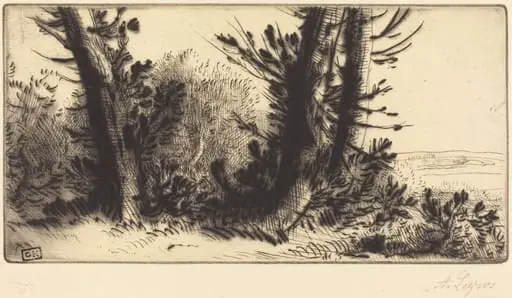 Across Country (A travers champ)
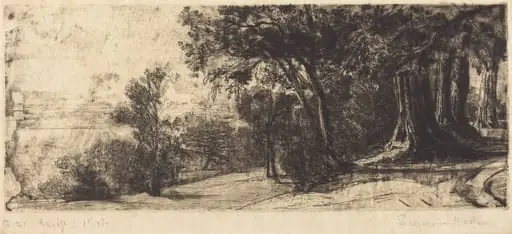 Early Morning - Richmond
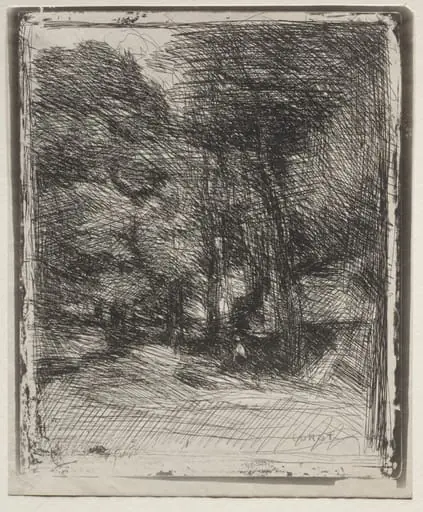 A Souvenir of the Bas-Bréau
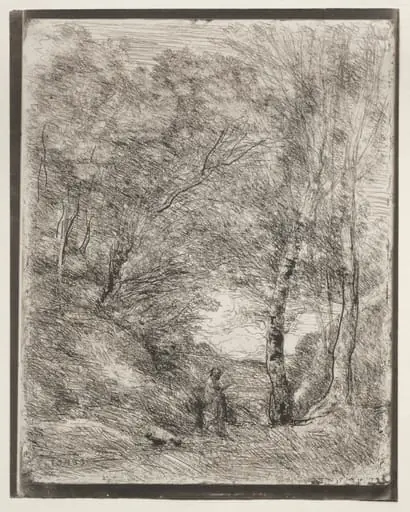 The Gardens of Horace
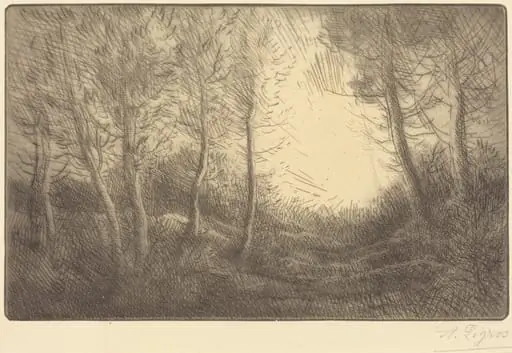 Sunrise, Woods of Clamard (Lever du soleil, bois de Clamard)
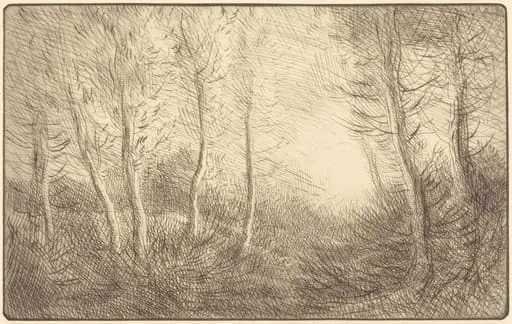 Sunrise, Woods of Clamard (Lever du soleil, bois de Clamard)
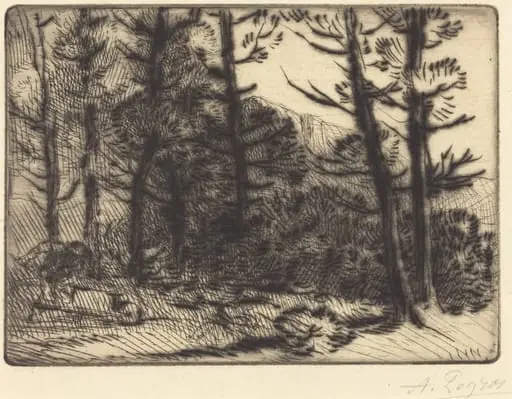 Woods in Winter Sun, 2nd plate (Soleil d'hiver dans les bois)
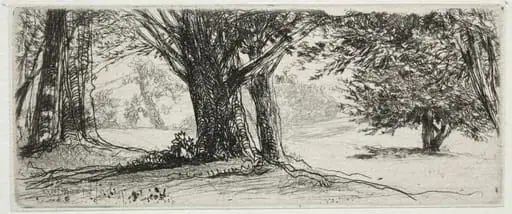 The Holly Field
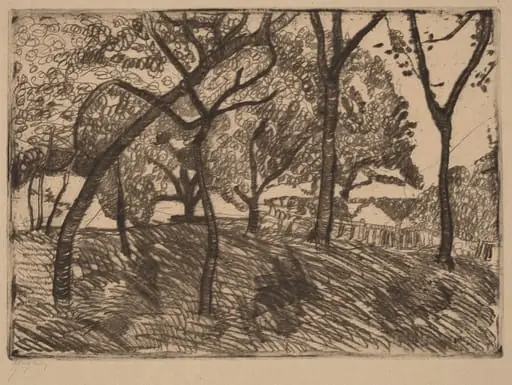 Landscape with Trees
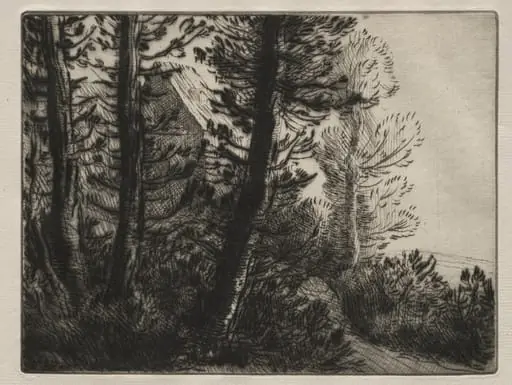 Guard House