Artwork
Village with Pond
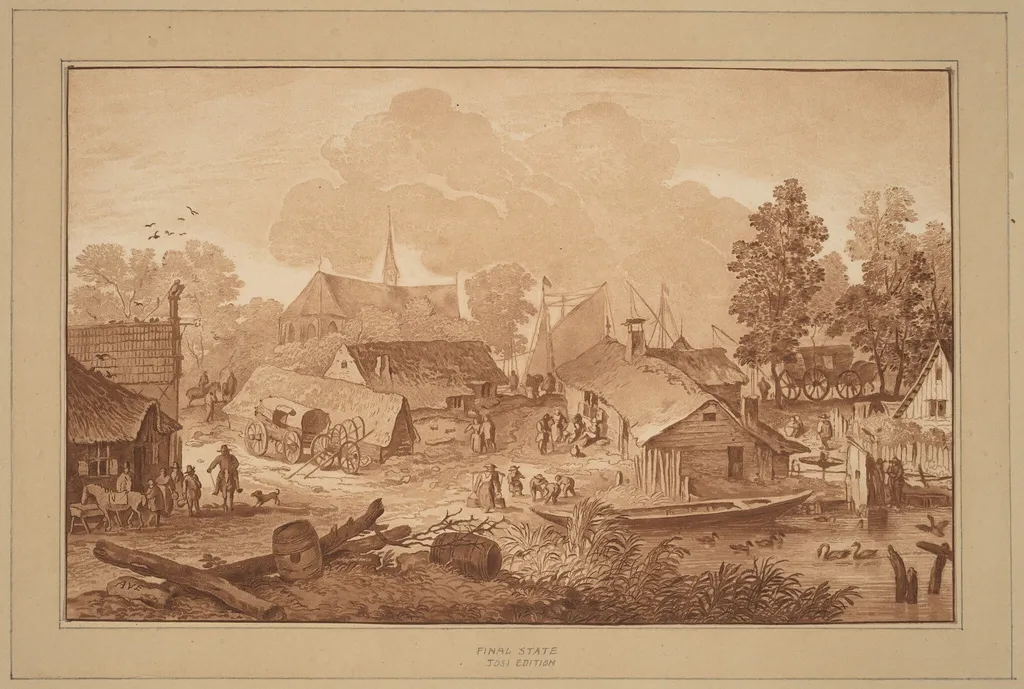
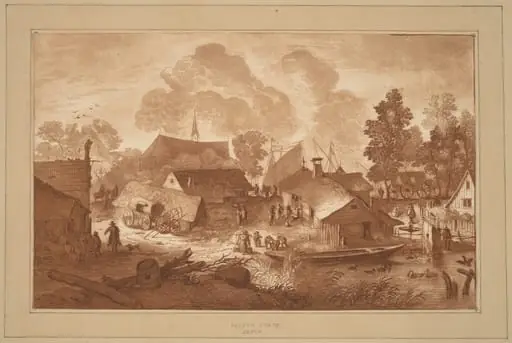
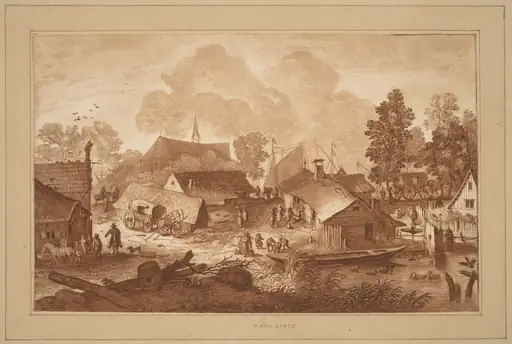
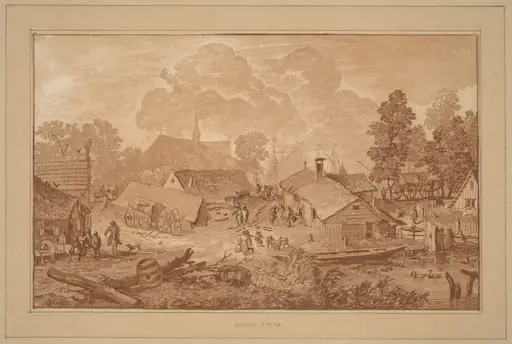
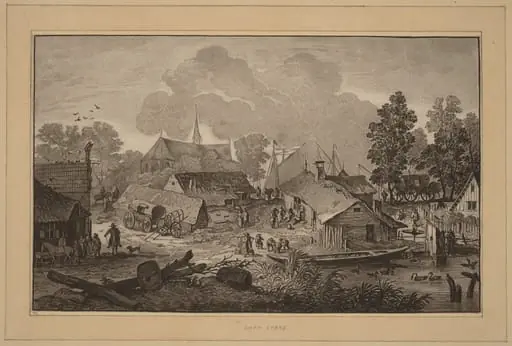
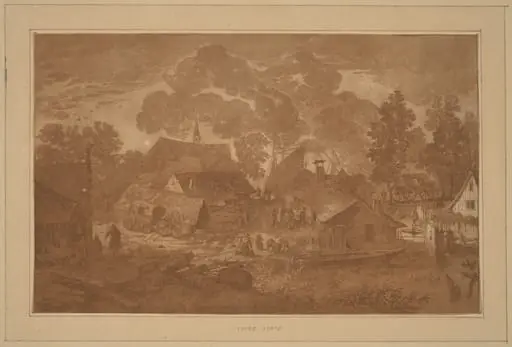
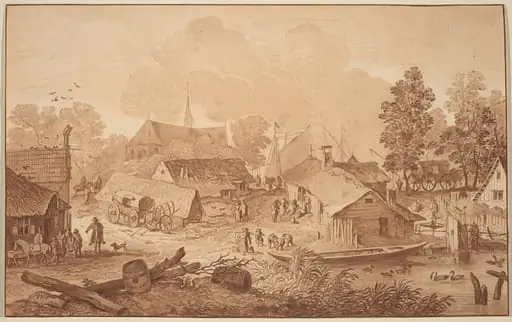
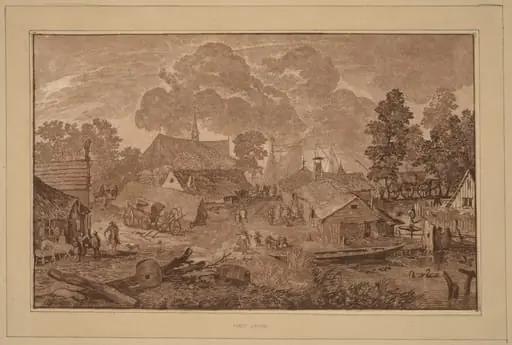
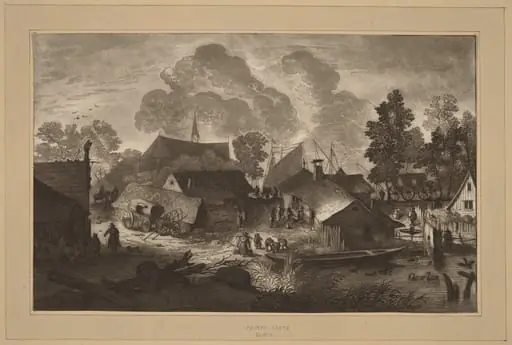
Village with Pond is an ink print by the Romanticist artist Jacobus Buys. It dates from 1782 and is held in the collection of the National Gallery of Art.
About this work
Overview
Cornelis Ploos van Amstel’s print *Village with Pond* dates to around 1782. Executed as an aquatint with additional roulette work and burnishing, the image is printed in a warm red‑brown hue on laid paper. The composition presents a tranquil rural scene centered on a pond surrounded by modest wooden dwellings and a distant church steeple.
Subject & Meaning
The view captures everyday life in a small settlement: figures stroll along pathways, carts and wagons pause near the water’s edge, and a solitary sailboat drifts on the pond. The arrangement of houses, thatched roofs, and the church tower suggests a harmonious relationship between community and landscape, emphasizing both activity and repose.
Technique & Style
Ploos van Amstel employed a layered aquatint process, using a scratchy, tonal application of ink to achieve varied brown shades. Roulette work adds fine texture, while selective burnishing creates highlights. The print’s delicate line work, such as the rendering of wagon wheels and a dog, contributes subtle depth and a sense of movement within the calm setting.
Context
Created in the late 18th century, the work reflects the Dutch tradition of topographical prints that documented rural environments. The artist’s use of aquatint aligns with contemporary experiments in tonal variation, allowing a more atmospheric representation than line‑only engraving.
History & Provenance
The print is known from catalogues of Ploos van Amstel’s oeuvre and is held in several public collections. Its dating to circa 1782 is based on stylistic comparison with other works by the artist from the same period.
Artist & collection
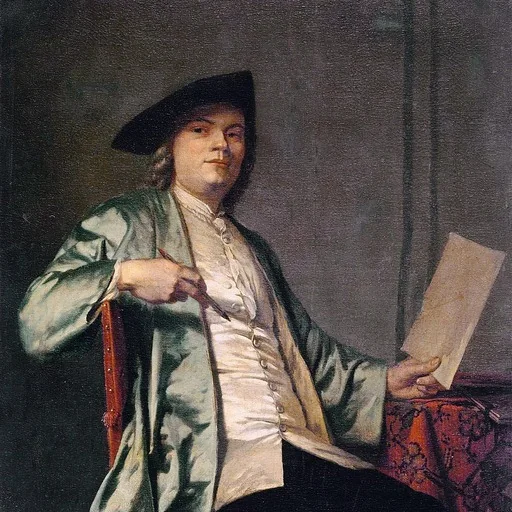

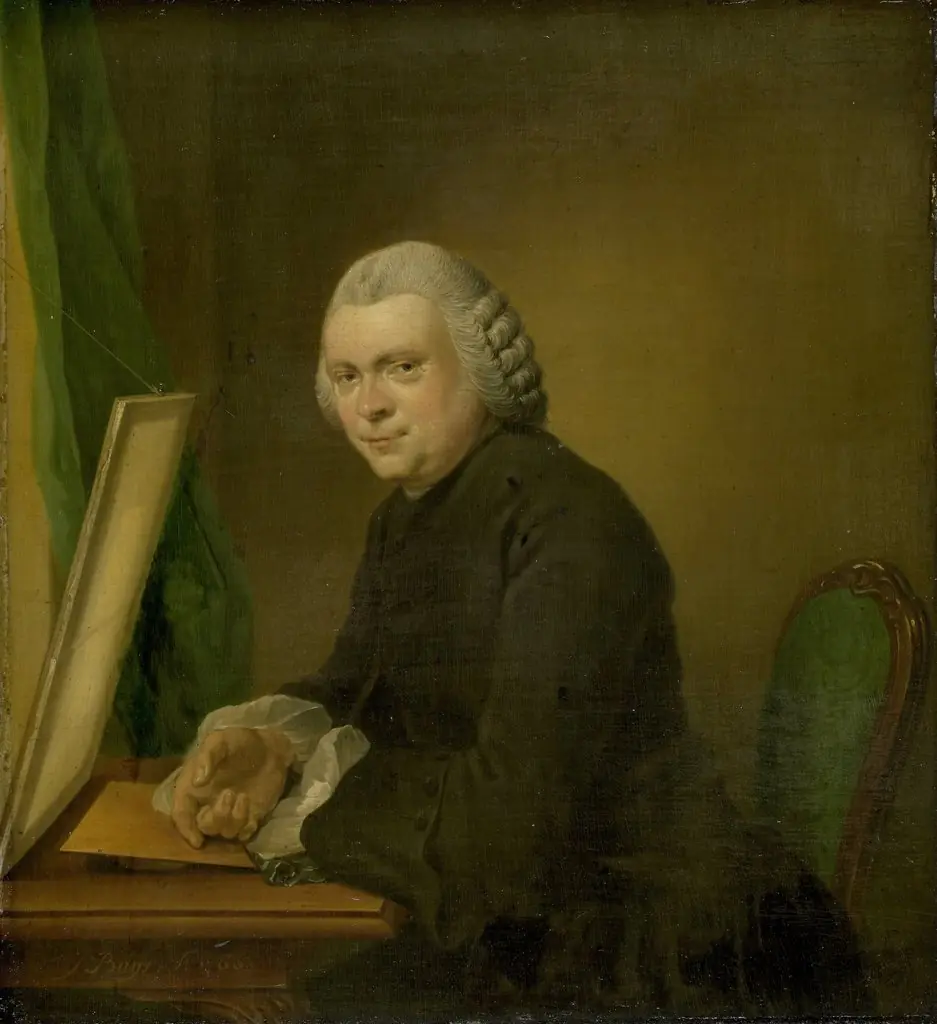 Portrait of Cornelis Ploos van Amstel
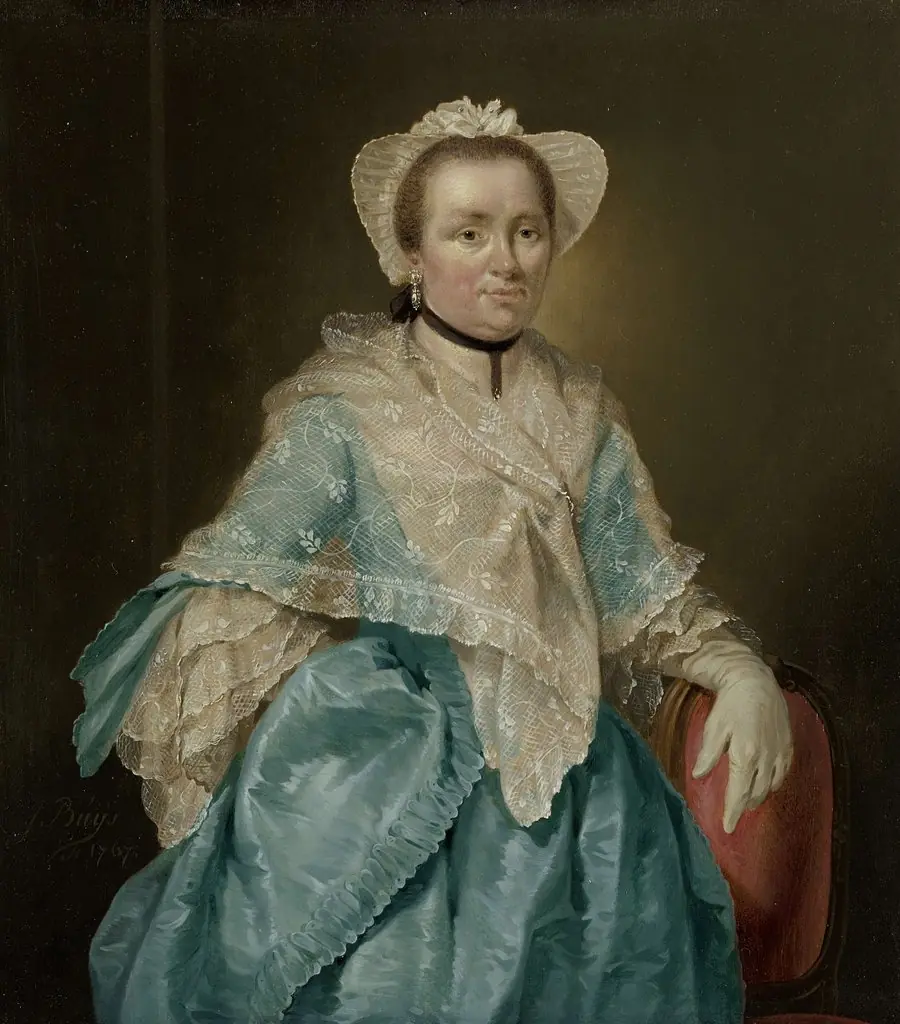 Portrait of Elisabeth Troost (1730-1790)
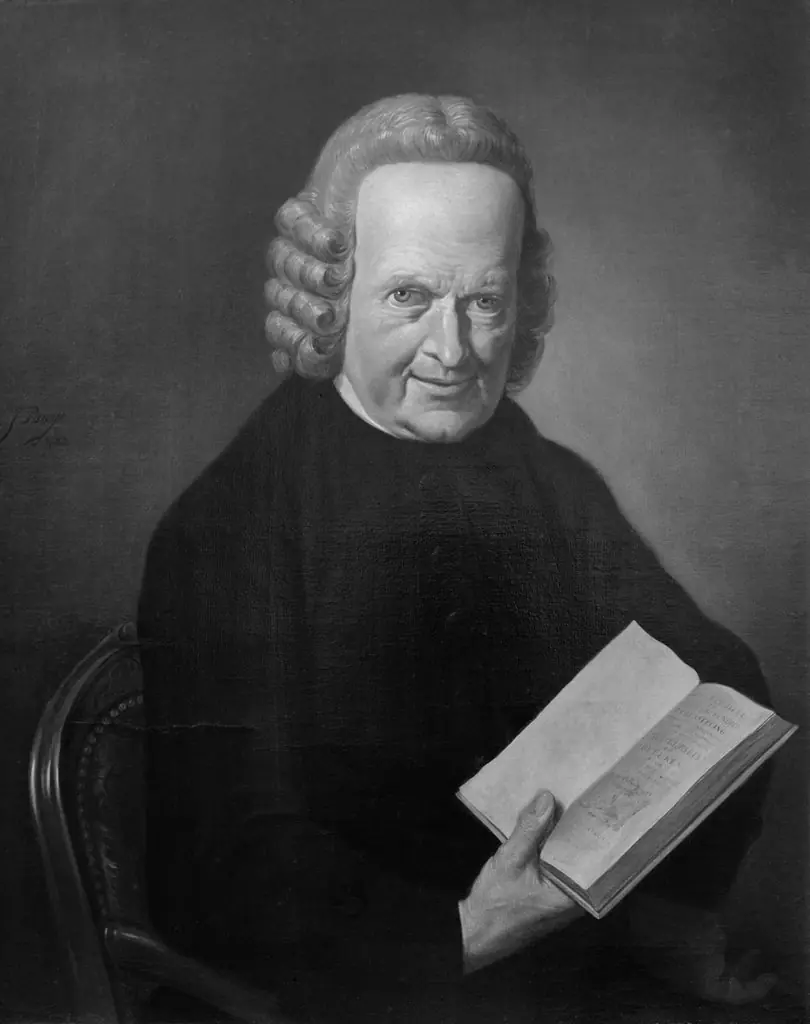 Johannes Monnikhoff (1707-1787)
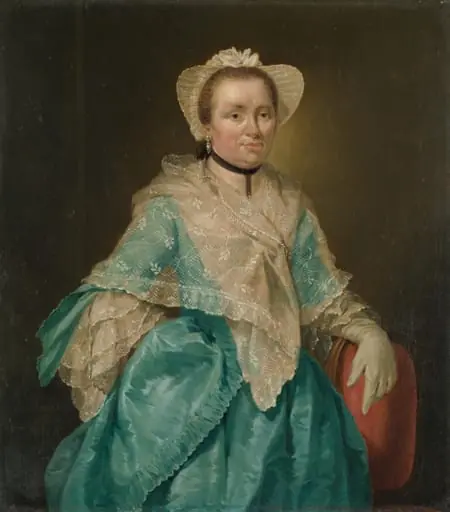 Portrait of Elisabeth Troost (1730-1790)
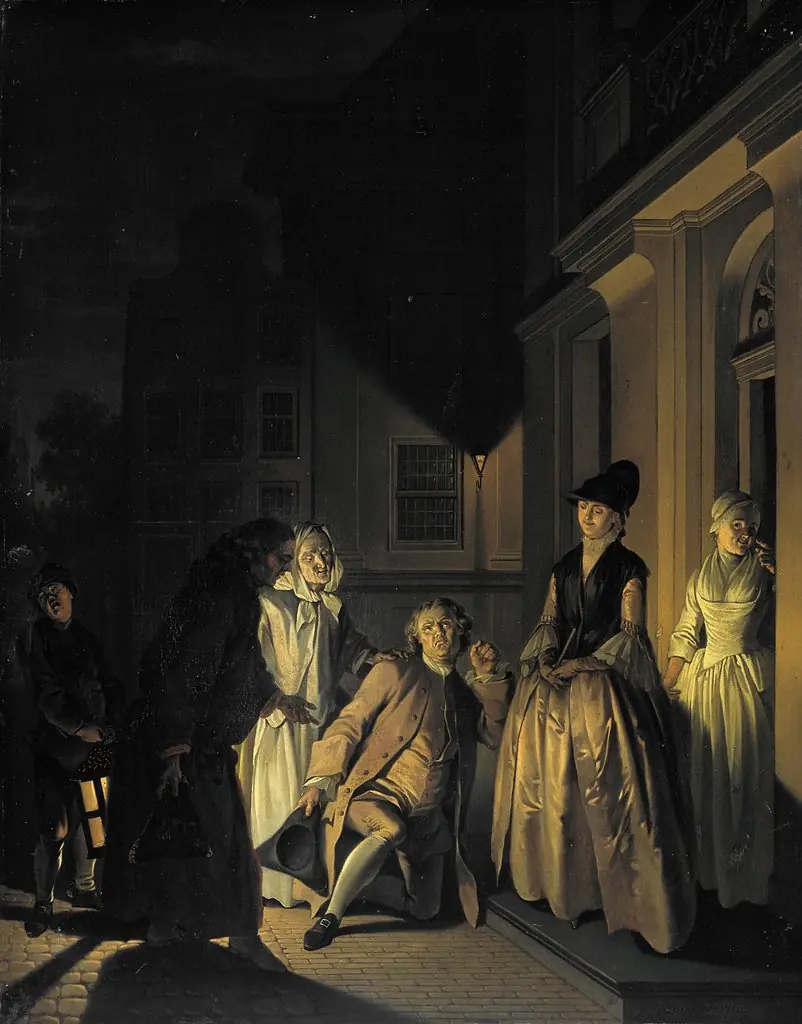 Scene from the Play 'Lubbert Lubbertse of de geadelde boer' by M. van Breda
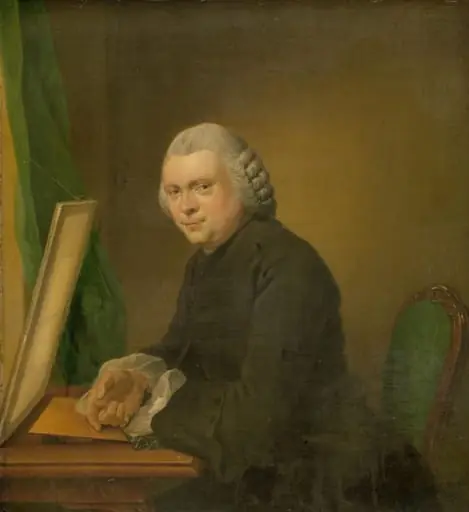 Portrait of Cornelis Ploos van Amstel
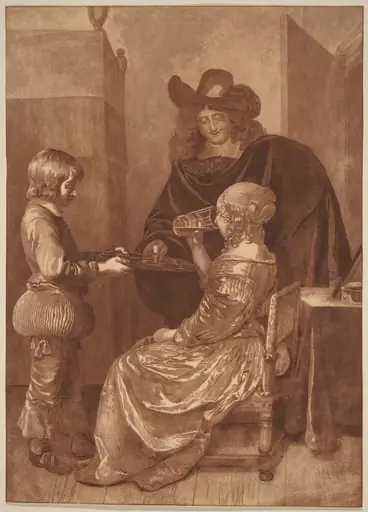 Cavalier and Lady with a Page
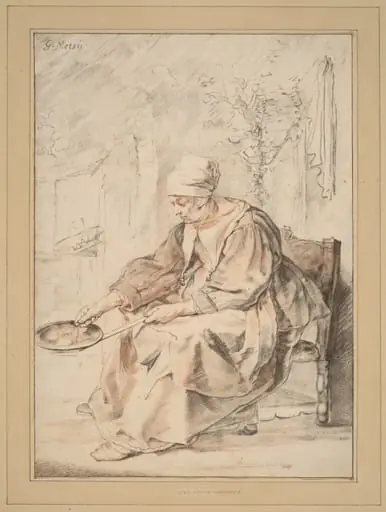 Pancake Woman