Artwork
Portretul lui Constantin Aricescu
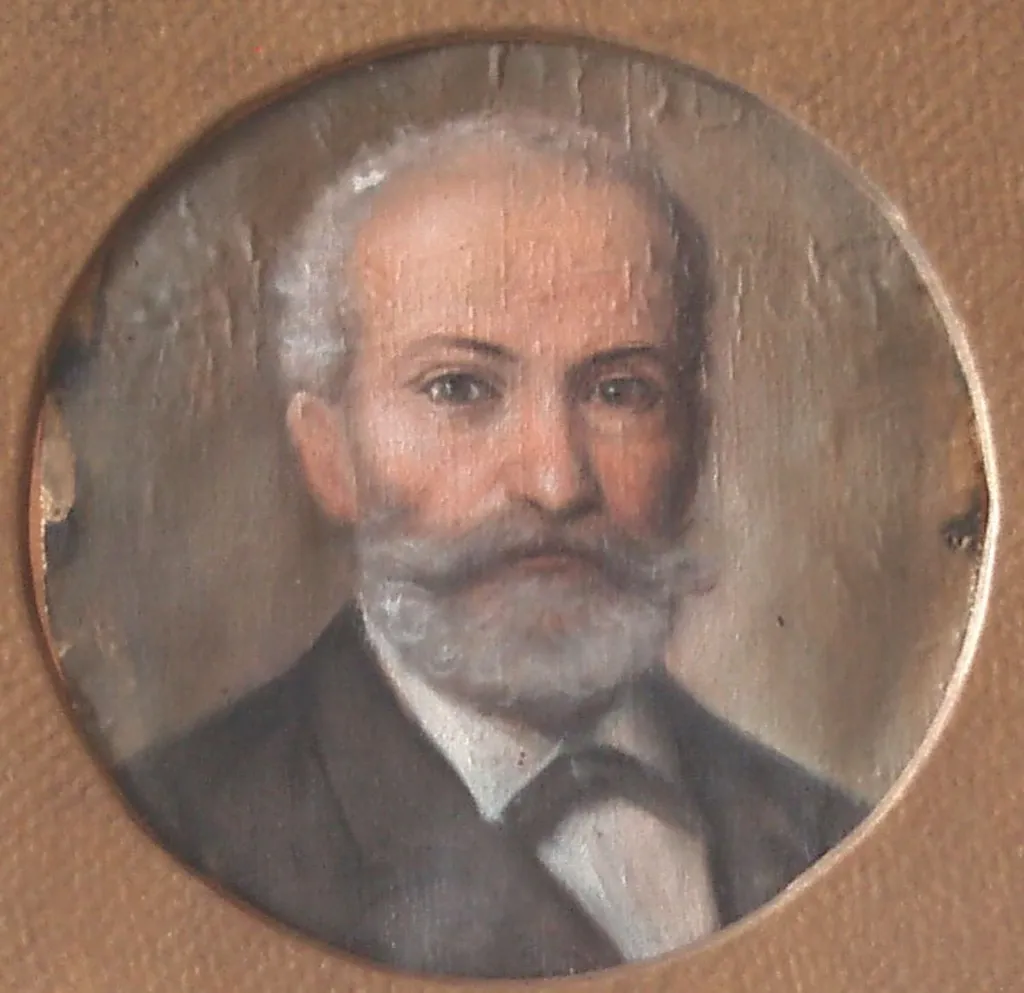
Portretul lui Constantin Aricescu is a print by Mihail (Mișu) Pop. It is held in the collection of the Bucharest Municipality Museum.
About this work
Overview
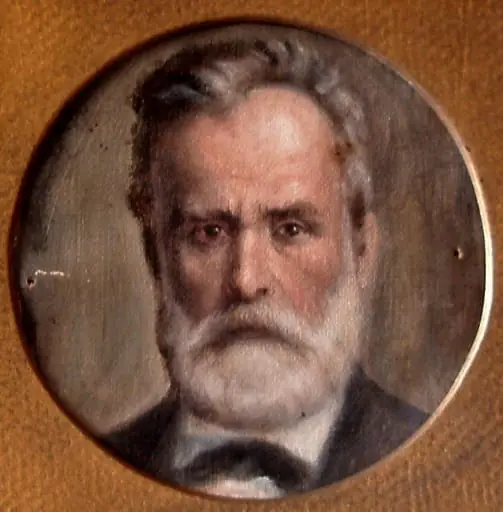
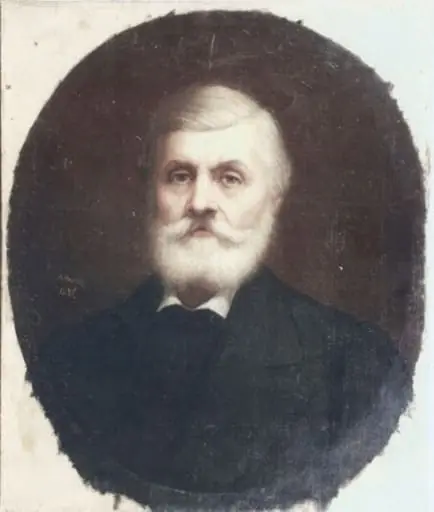
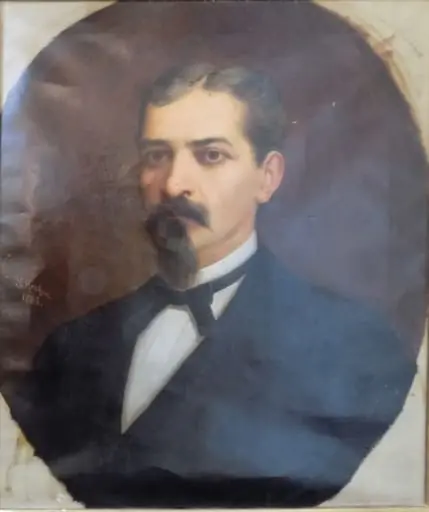
This portrait depicts Constantin Aricescu, an elderly man with a white beard and mustache, rendered in a muted palette with visible signs of age and wear.
This portrait depicts Constantin Aricescu, an elderly man with a white beard and mustache, rendered in a muted palette with visible signs of age and wear. The image is framed within a circular border, a compositional choice common in 19th-century portraiture. The paint surface shows signs of handling and fading, suggesting prolonged exposure and use. Brushwork is uneven in places, conveying a sense of immediacy rather than polished refinement.
Subject & Meaning
Aricescu’s steady gaze and composed demeanor suggest a figure of quiet dignity, likely a person of social standing or professional respect. His attire—a dark coat over a light shirt—hints at modest formality, typical of middle- or upper-class men of his era. The absence of overt symbols or background elements focuses attention on his presence, emphasizing character over circumstance. His expression is solemn but not stern, inviting contemplation rather than awe.
Technique & Style
The artist employs subtle chiaroscuro to model the face, using soft transitions between light and shadow to suggest volume without dramatic contrast. Brushstrokes are deliberate but unpolished, with areas of visible texture and thinning pigment. The muted tones and worn surface reflect either the materials used or the effects of time and handling. The round format constrains the composition, reinforcing intimacy and focusing the viewer’s attention on the sitter’s face.
History & Provenance
The painting’s condition indicates it was likely displayed or stored in a domestic or institutional setting over many decades. The fading and surface abrasions suggest frequent exposure to environmental factors and physical contact. While its exact origin and early ownership are undocumented, its style and subject align with mid-to-late 19th-century Romanian portraiture traditions, possibly commissioned by family or local community members.
Context
In 19th-century Romania, portraiture served both personal and social functions, often documenting individuals who contributed to civic or cultural life. Aricescu, though not widely known today, may have been a local educator, official, or landowner. The painting’s informal technique reflects a regional practice where academic training was limited, and artists relied on practical methods passed through apprenticeships or local workshops.
Legacy
The portrait endures as a quiet record of an ordinary individual from a time when personal representation was less common outside elite circles. Its worn state adds historical weight, transforming it from a mere likeness into a physical artifact of memory. It offers insight into the visual culture of provincial Romania, where portraiture was valued not for grandeur, but for its role in preserving identity across generations.
Artist & collection
Artist
Mihail Pop had a habit of capturing the quiet intensity behind a person’s eyes. He made prints, not paintings, turning portraits into something sharper and more intimate than a photograph. His prints of politicians and…