Artwork
The Thames at Fulham
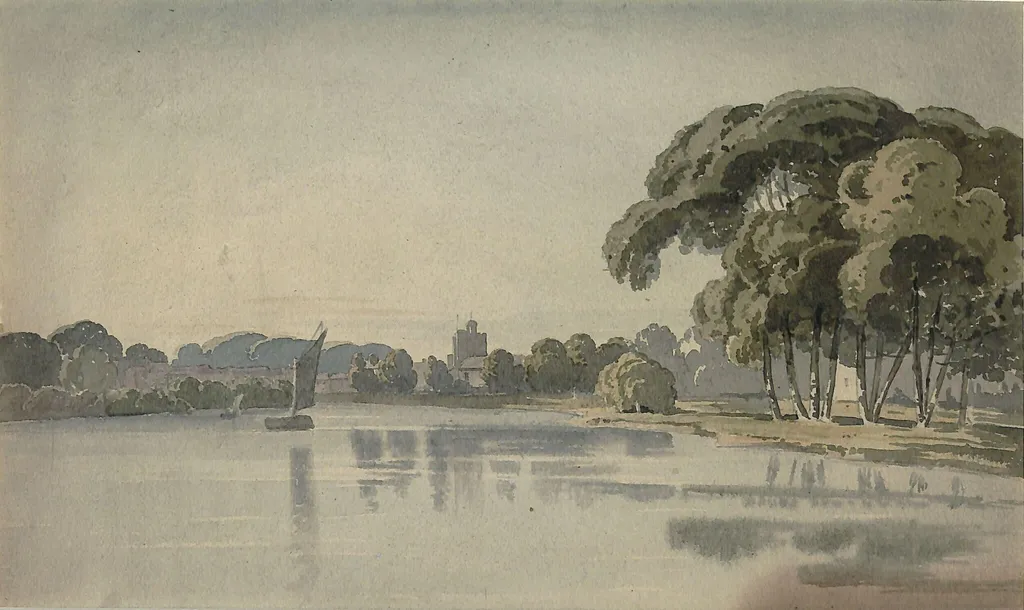
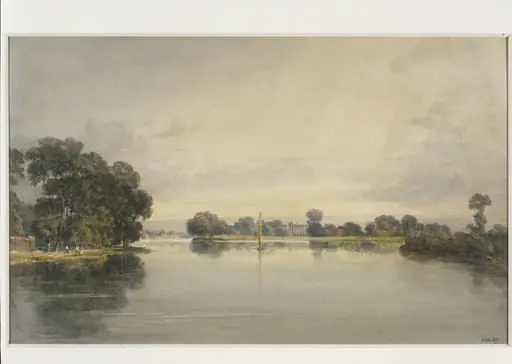
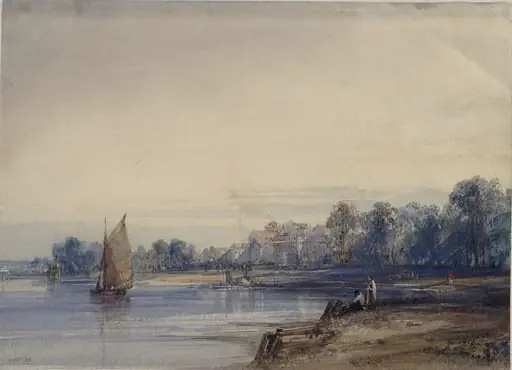
The Thames at Fulham is a watercolor work on paper by the British Romanticist artist Clara Maria Pope. It dates from 1796 and is held in the collection of the Victoria and Albert Museum.
About this work
Overview
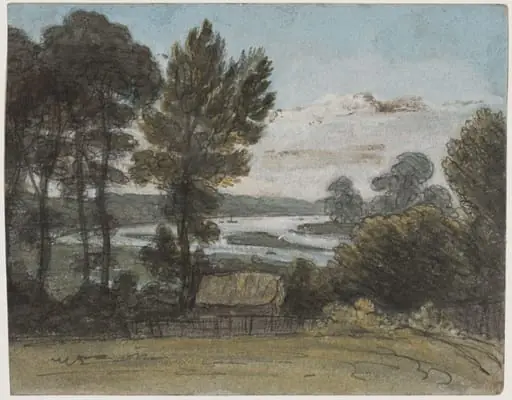
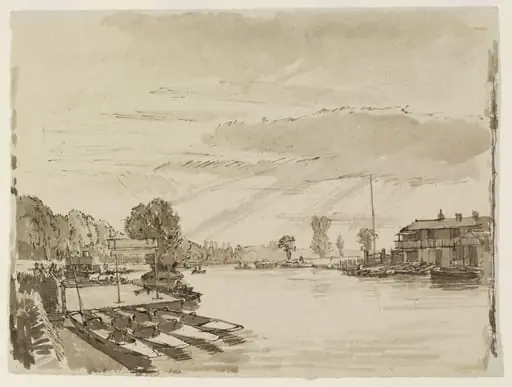
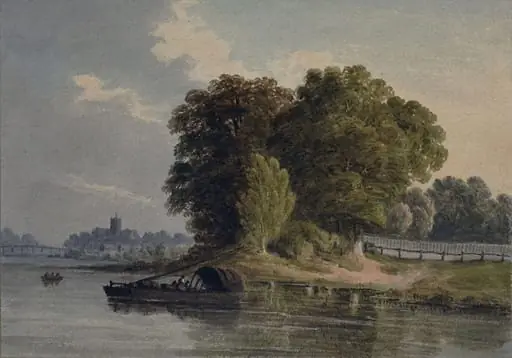
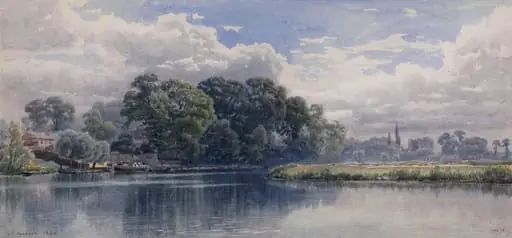
Painted in 1796, *The Thames at Fulham* is a watercolour by Clara Maria Pope that captures a tranquil stretch of the river near the Fulham district.
Painted in 1796, *The Thames at Fulham* is a watercolour by Clara Maria Pope that captures a tranquil stretch of the river near the Fulham district. Executed with delicate washes and minimal detail, the work conveys a sense of stillness, emphasizing the quiet interplay of light and water rather than narrative or activity. The composition is restrained, focusing on atmosphere over topographical precision.
Subject & Meaning
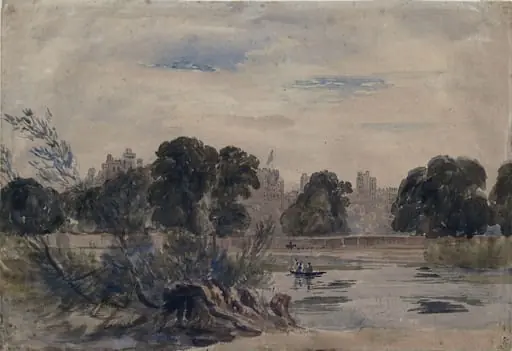
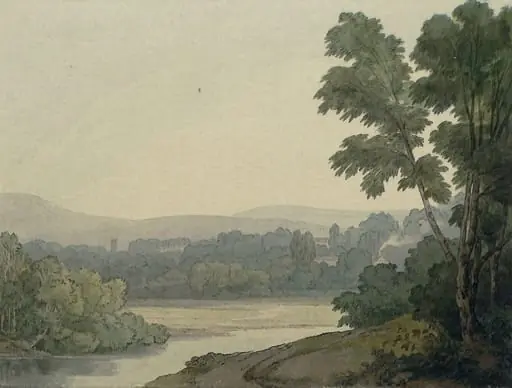
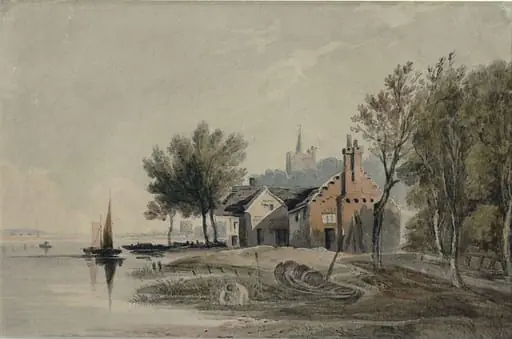
The scene depicts the Thames flanked by trees on both banks, with a prominent, overhanging branch on the right casting a shadowed silhouette against a pale sky. Distant buildings emerge faintly through the foliage, suggesting habitation without intrusion. The absence of figures or movement reinforces a meditative mood, reflecting a 18th-century preference for serene, contemplative landscapes.
Technique & Style
Pope employed loose, transparent watercolour washes to achieve a luminous, airy effect. The river’s surface is rendered with subtle ripples, while the trees dissolve into soft, misty contours. There is no heavy outlining or dense pigment; instead, the paper’s whiteness contributes to the glow of the sky and water, aligning the work with the British watercolour tradition of atmospheric suggestion.
History & Provenance
Created in 1796, the painting is attributed to Clara Maria Pope, an artist active in late 18th-century England. While little is documented about her career, her surviving works are held in institutional collections, including the Victoria and Albert Museum, where this piece is part of a broader archive of amateur and professional watercolours from the period.
Context
During the late 1700s, watercolour painting gained popularity among amateur artists, particularly women, as a refined domestic pursuit. Pope’s work aligns with this trend, reflecting the era’s aesthetic appreciation for natural quietude and the Thames as a subject of personal, rather than monumental, significance.
Legacy
Though not widely exhibited, *The Thames at Fulham* remains a representative example of late Georgian watercolour practice. Its preservation in the Victoria and Albert Museum underscores its value as a quiet testament to the period’s understated landscape sensibility and the role of women in shaping British artistic culture.
Artist & collection
Artist
Clara Maria Pope painted delicate watercolours of British rivers and skies, working in the late 1700s when artists were just discovering watercolour’s potential.