Artwork
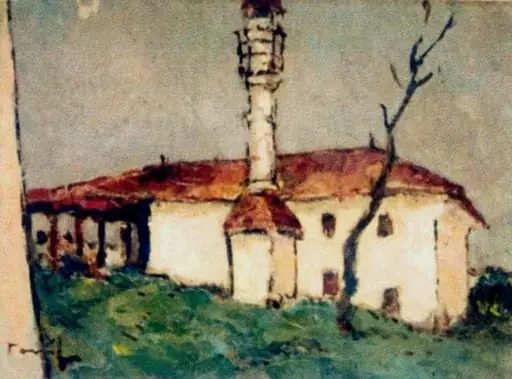
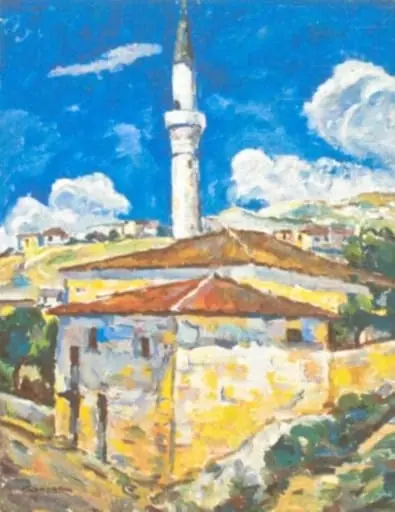
Peisaj cu geamie
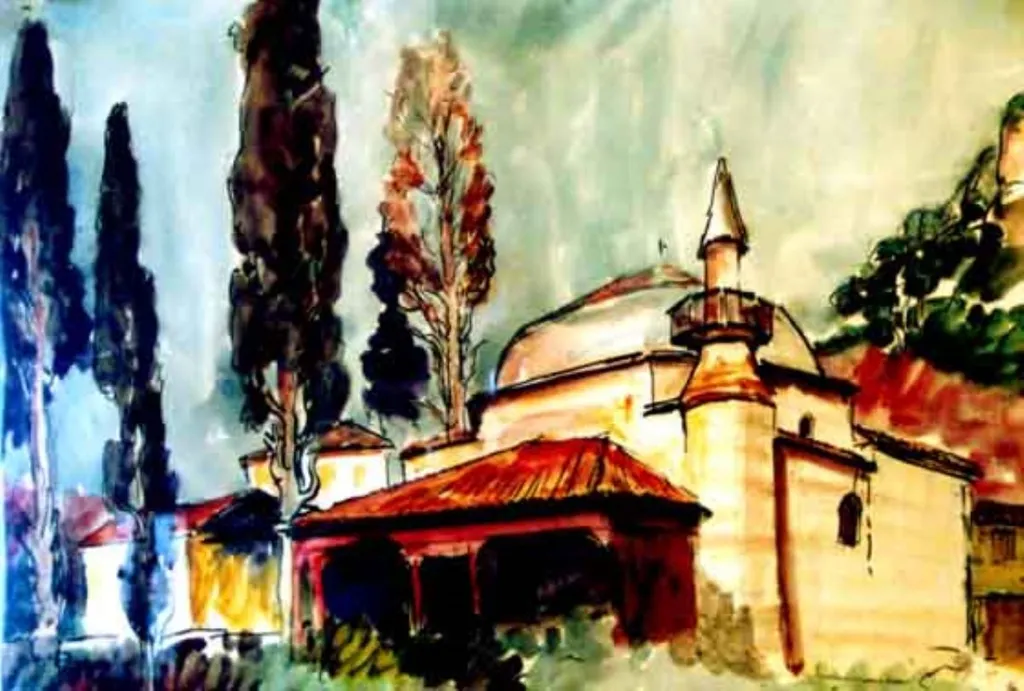
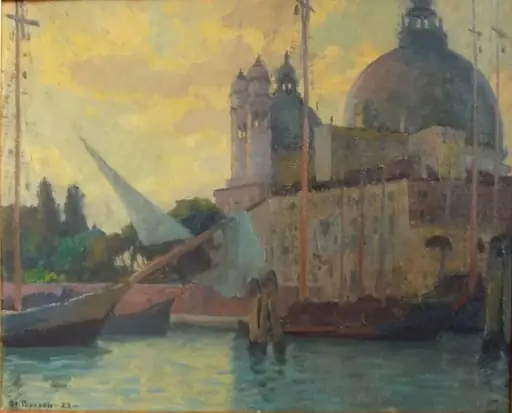
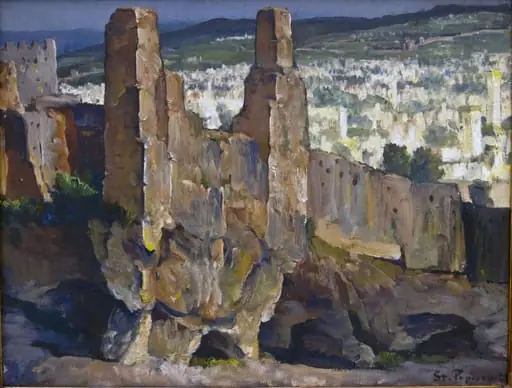
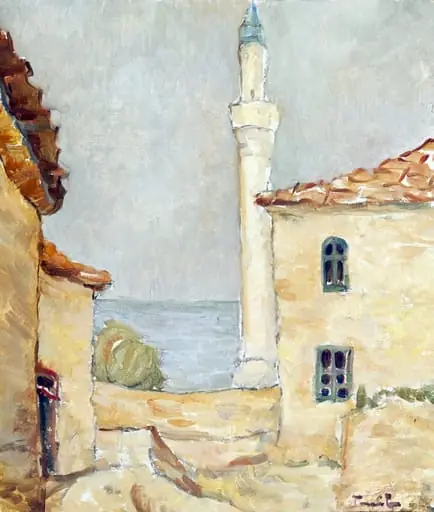
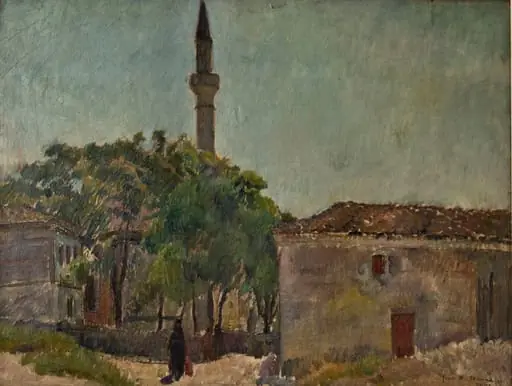
Peisaj cu geamie is an unspecified painting by Ștefan Popescu. It is held in the collection of the Romanian Academy in Bucharest. This painting depicts a modest architectural structure with a domed roof and slender tower, set within a natural landscape.
About this work
Overview
This painting depicts a modest architectural structure with a domed roof and slender tower, set within a natural landscape.
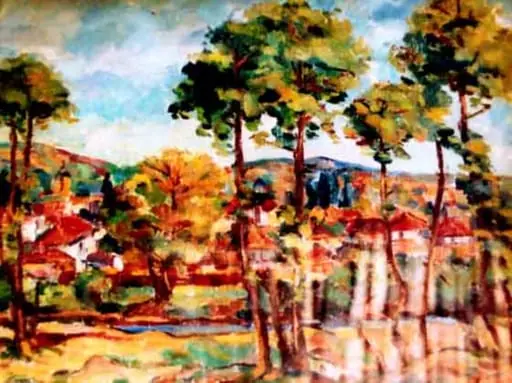
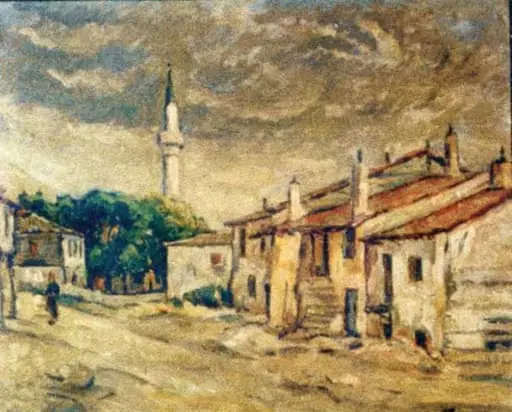
This painting depicts a modest architectural structure with a domed roof and slender tower, set within a natural landscape. The building, rendered in white with a red roof, is framed by dense trees and a shaded forecourt. The sky, pale blue with scattered clouds, completes a quiet, sunlit scene. The artist employs expressive brushwork to convey motion and atmosphere, prioritizing color and form over precise detail.
Subject & Meaning
The structure appears to be a small religious or civic building, its dome and tower suggesting a place of worship or communal significance. The surrounding trees and covered porch imply a tranquil, possibly rural setting. The composition invites contemplation rather than narrative, emphasizing harmony between architecture and nature without overt symbolism.
Technique & Style
Brushstrokes are deliberate and energetic, applying pigment with visible texture to suggest light and movement. Colors are saturated but not unnatural—red roofs contrast with white walls and green foliage, while the sky remains softly muted. The style leans toward impressionistic abstraction, favoring emotional resonance over topographical accuracy.
History & Provenance
The work is attributed to Ștefan Popescu, a Romanian artist active in the early to mid-20th century. Though specific dates and ownership records are not widely documented, the painting aligns with his known interest in rural Romanian architecture and landscape. It likely originated from his personal studies or regional travels.
Context
Popescu’s work emerged during a period when Romanian artists sought to define a national visual identity through depictions of vernacular architecture and countryside life. This piece reflects that trend, capturing everyday structures with emotional immediacy rather than idealized grandeur, distinguishing it from academic traditions of the time.
Legacy
Though not widely exhibited internationally, Popescu’s landscapes remain part of regional art collections and scholarly discussions on Romanian modernism. His use of color and gesture influenced later generations of painters interested in capturing the spirit of place through expressive, non-realist techniques.
Artist & collection
Artist
Ștefan Popescu painted quiet scenes from the 1920s, blending everyday places with soft light.