Artwork
Peisaj din Răducești
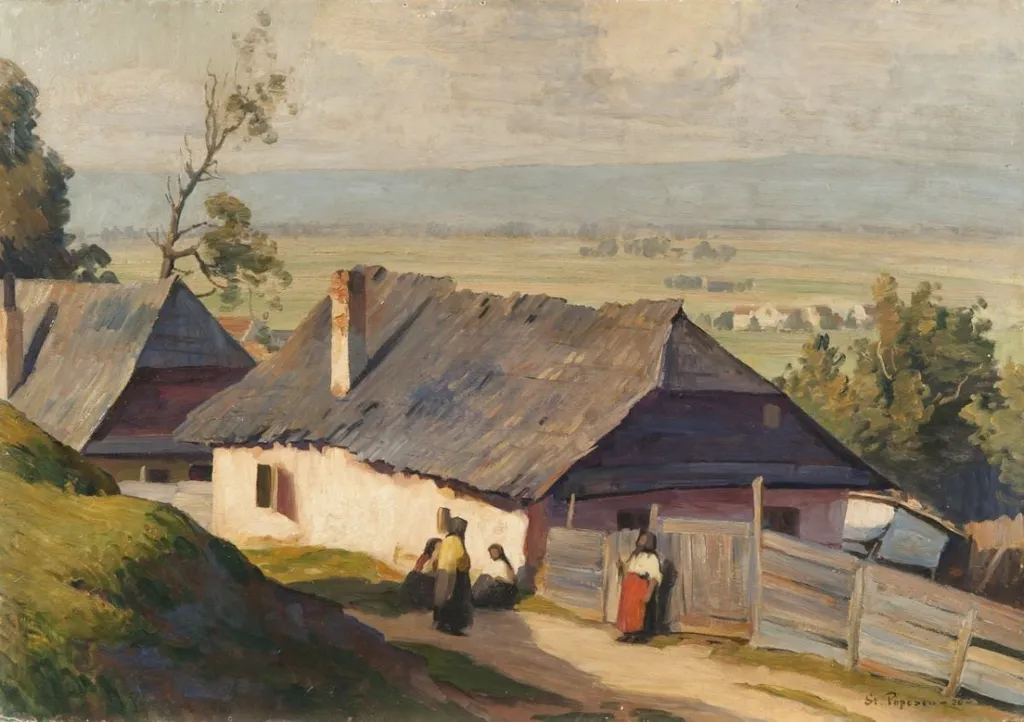
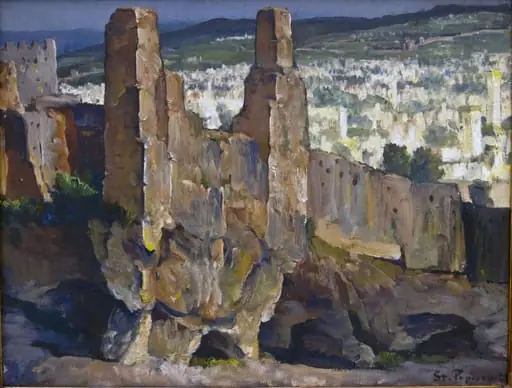
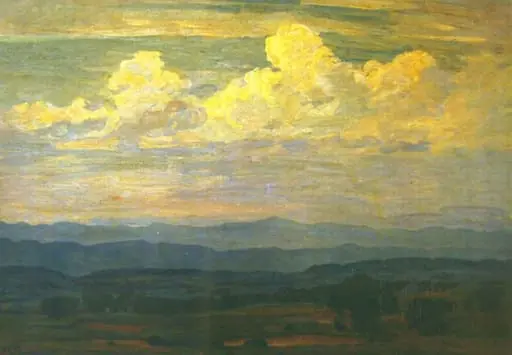
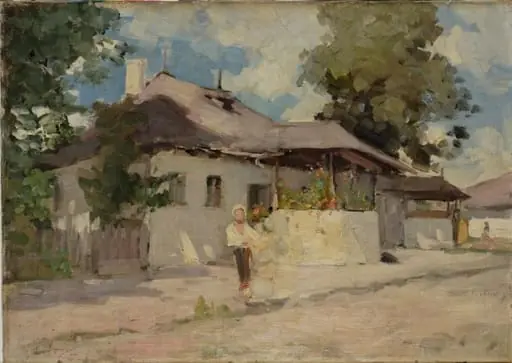
Peisaj din Răducești is a print by Ștefan Popescu. It dates from 1920 and is held in the collection of the National Museum of Art of Romania.
About this work
Overview
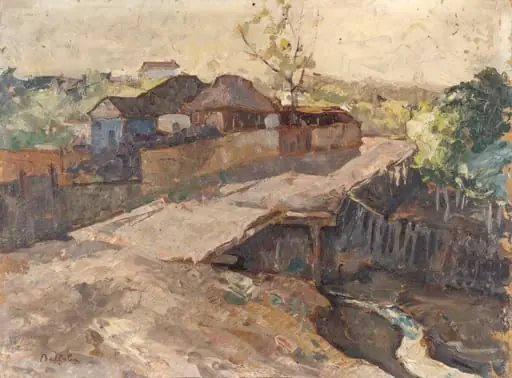
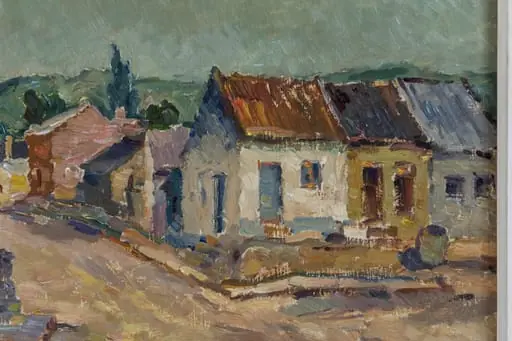
The composition centers on three modest dwellings, their forms softened by time and weather, set against an open field and a gently graded sky.
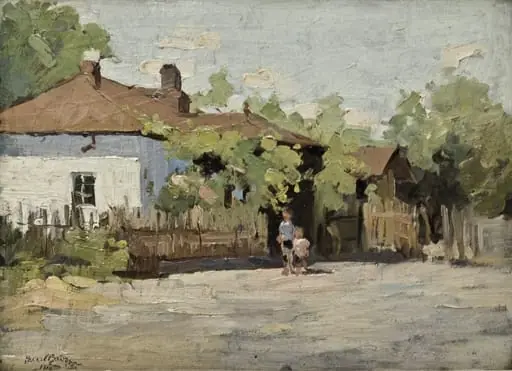
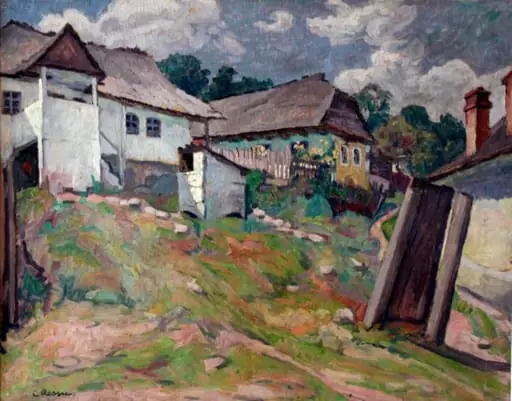
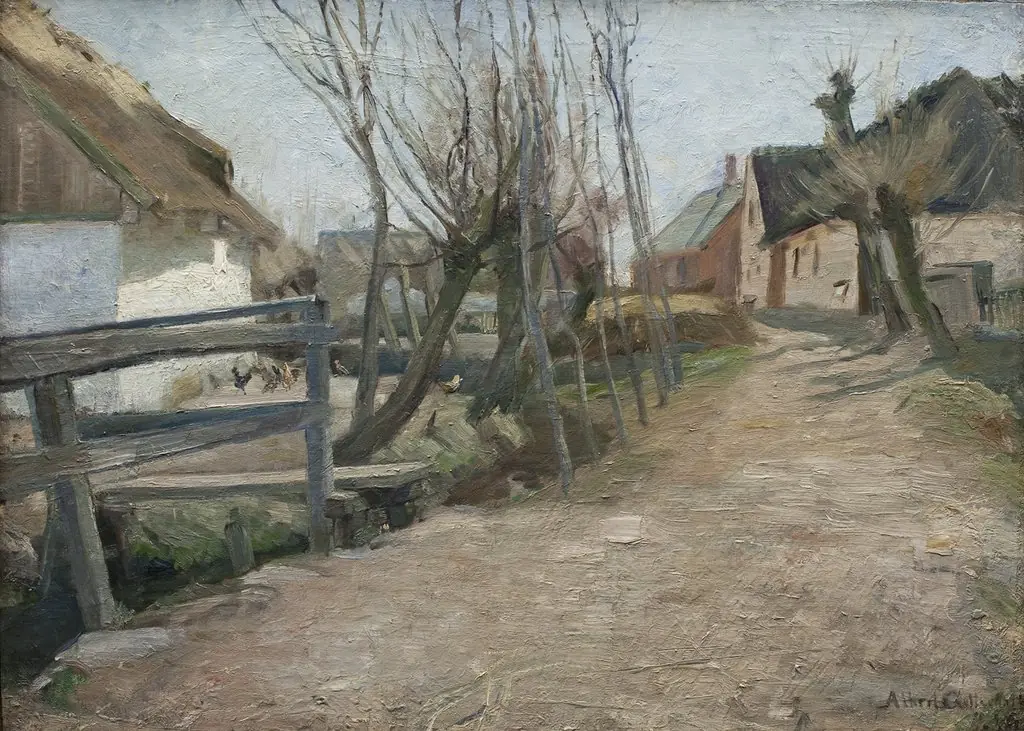
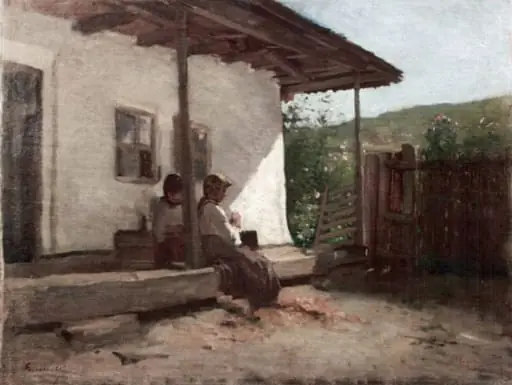
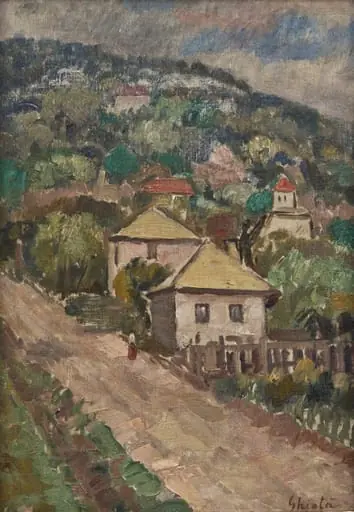
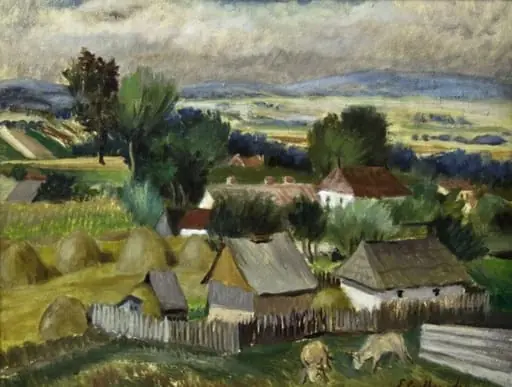
Painted in 1920 by Ștefan Popescu, Peisaj din Răducești captures a rural Romanian hamlet in quiet repose. The composition centers on three modest dwellings, their forms softened by time and weather, set against an open field and a gently graded sky. The scene avoids dramatic action, instead conveying stillness through restrained movement and subdued tones. Popescu’s approach prioritizes atmosphere over narrative, inviting contemplation of everyday rural life.
Subject & Meaning
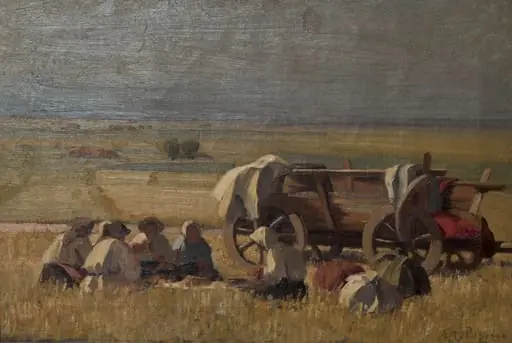
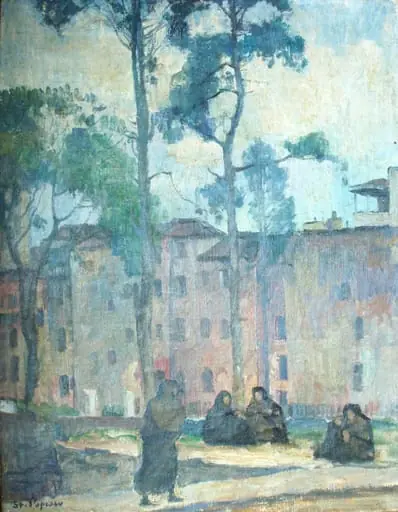
The painting depicts a quiet moment in the village of Răducești, with three small houses and a handful of figures near a wooden fence. The figures, dressed plainly, are not engaged in any identifiable activity, suggesting a pause in daily routine. The absence of labor or ceremony implies a meditation on ordinary existence. The landscape becomes a quiet testament to resilience and continuity in rural communities during a period of national transformation.
Technique & Style
Popescu employed thick, textured brushwork to model light across the houses, creating subtle contrasts between sunlit and shaded surfaces. The impasto technique gives the surfaces a tactile quality, enhancing the sense of weathered wood and aged plaster. Colors are muted—ochres, browns, and soft whites—avoiding saturation to preserve the hushed tone of late afternoon. The brushstrokes are deliberate but not ornate, prioritizing emotional resonance over decorative detail.
History & Provenance
Created in 1920, the work emerged during a period of cultural redefinition in Romania following World War I. While specific ownership records are limited, the painting is associated with Popescu’s early focus on regional landscapes. It reflects his engagement with local vernacular architecture and rural life, a theme consistent with his broader body of work from the 1910s and 1920s. The piece likely remained within Romanian collections until its inclusion in public institutional holdings.
Context
In post-war Romania, artists increasingly turned to native landscapes and village life as subjects of cultural identity. Popescu’s work aligns with this trend, contrasting with urban modernism by emphasizing the dignity of rural simplicity. The painting’s quiet realism reflects broader European movements that valued emotional authenticity over idealization, situating it within a regional response to broader artistic shifts of the early 20th century.
Legacy
Peisaj din Răducești contributes to the canon of Romanian interwar landscape painting, illustrating a quiet, unembellished vision of rural existence. While not widely exhibited internationally, it remains a reference point in discussions of national artistic identity. Its restrained palette and emphasis on texture influenced later generations of Romanian painters seeking to capture the essence of place without sentimentality.
Artist & collection
Artist
Ștefan Popescu painted quiet scenes from the 1920s, blending everyday places with soft light.