Artwork
Peisaj
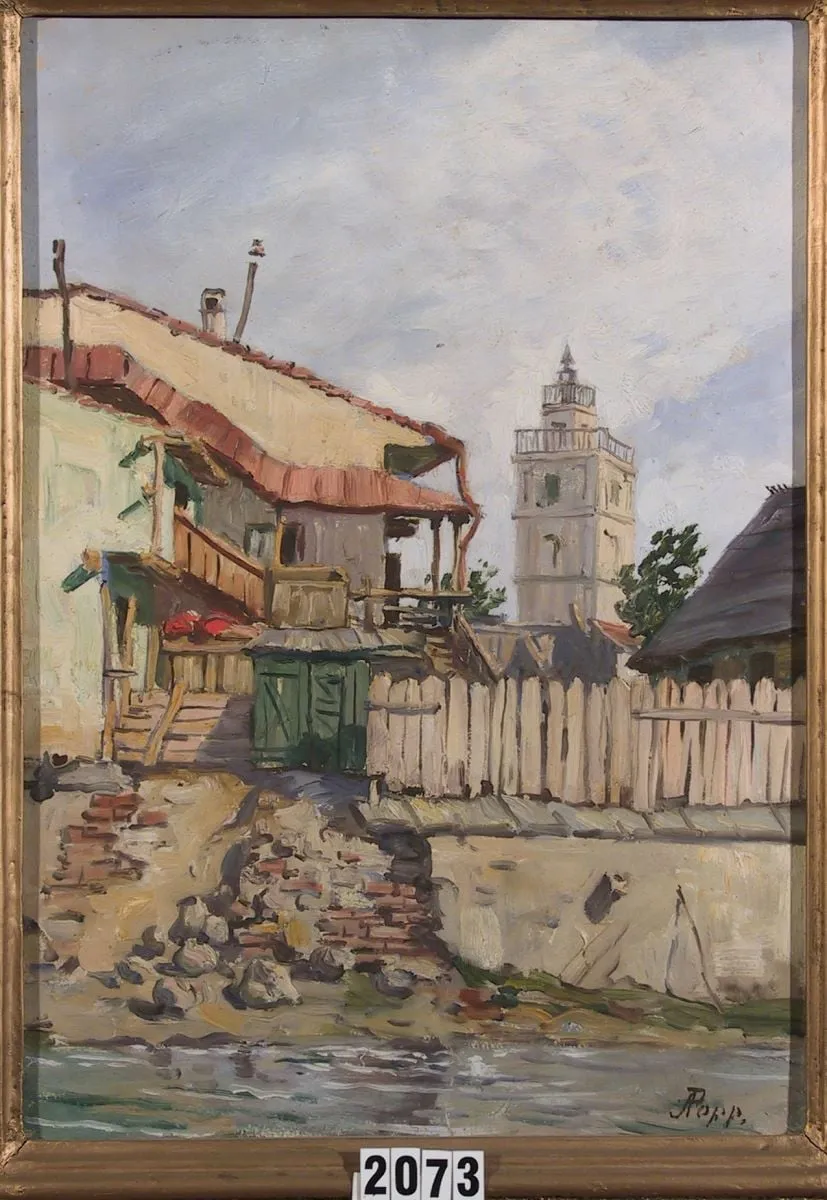
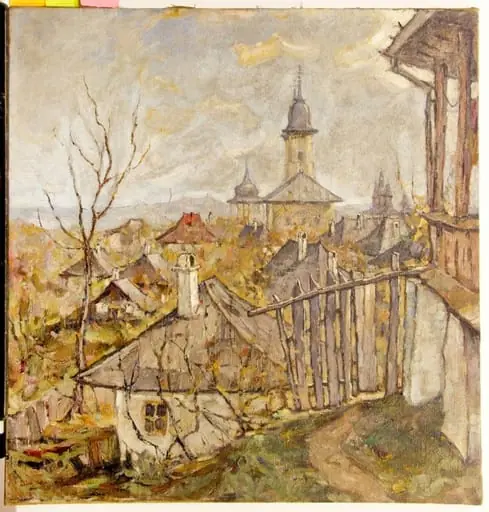
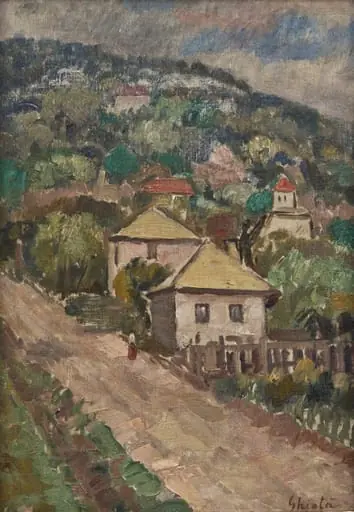
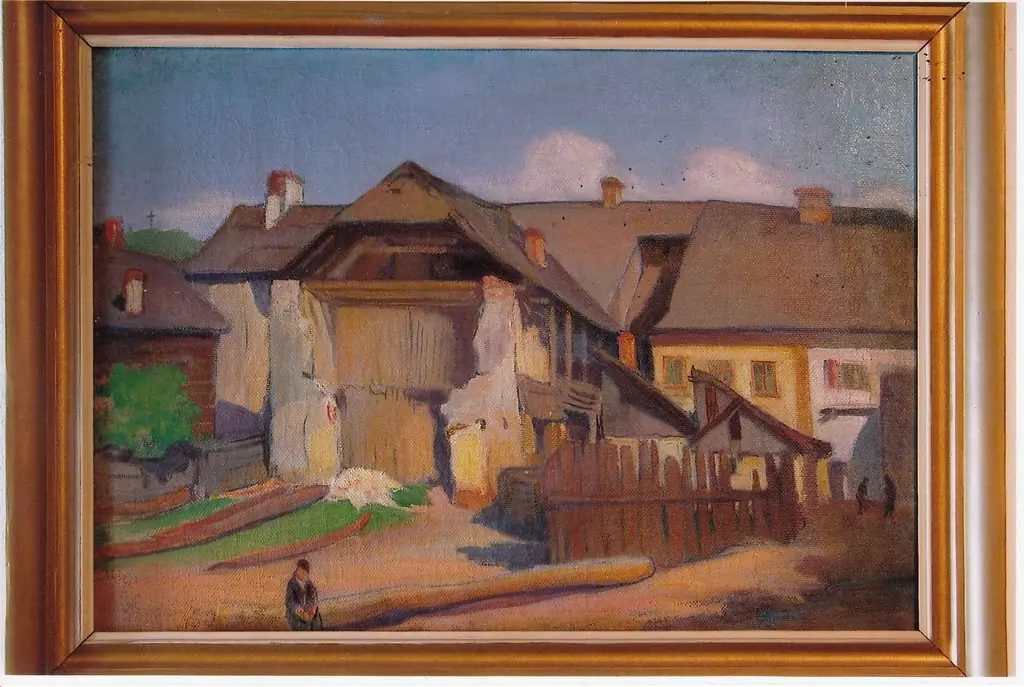
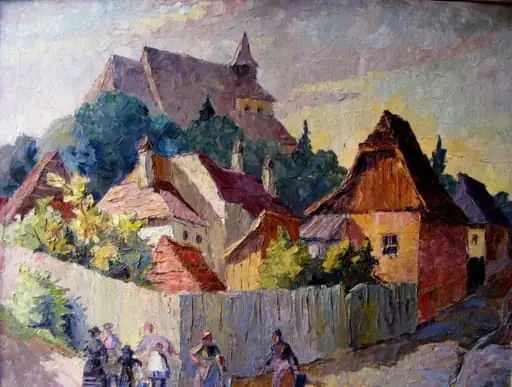
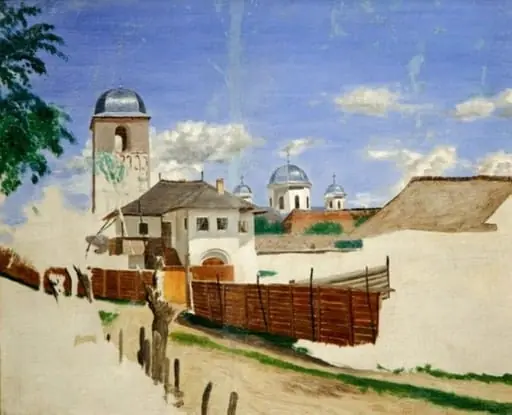
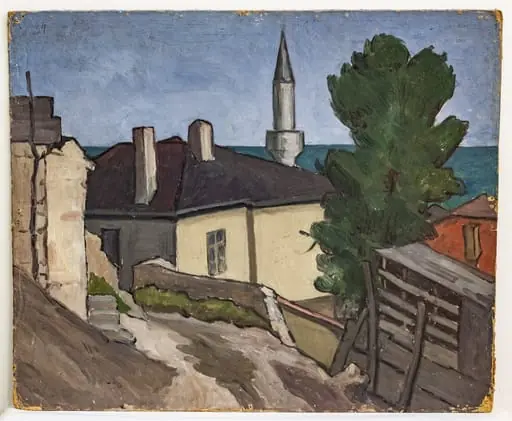
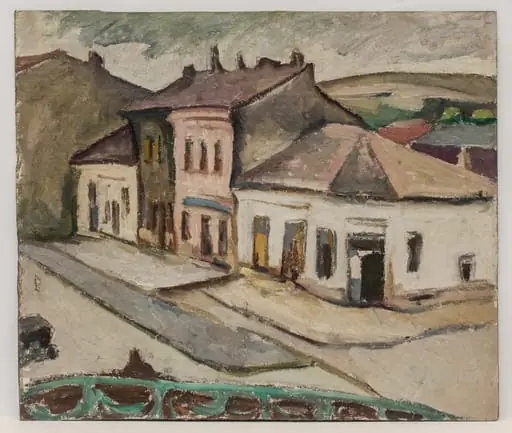
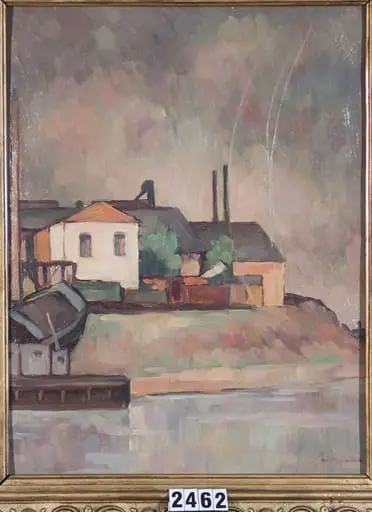
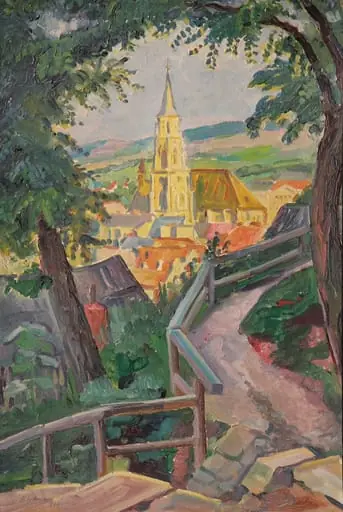
Peisaj is a print by Alexandru Popp. It is held in the collection of the Brukenthal National Museum. This painting depicts a modest rural settlement, rendered with a focus on quiet daily life.
About this work
Overview
Behind it, a tall white clock tower rises above clustered thatched roofs, suggesting a small, isolated community.
This painting depicts a modest rural settlement, rendered with a focus on quiet daily life. A single wooden dwelling, its roof patched and porch sagging, anchors the scene beside a dirt path. Laundry dries in the breeze, and a vivid green door contrasts with the weathered walls. Behind it, a tall white clock tower rises above clustered thatched roofs, suggesting a small, isolated community. The artist avoids idealization, presenting the village with unembellished realism.
Subject & Meaning
The scene conveys the endurance of ordinary life in a humble setting. The patched roof, worn surfaces, and hanging laundry imply sustained use and limited resources. The clock tower, though prominent, appears distant and detached from the immediate life below, hinting at the slow passage of time in rural isolation. There is no narrative drama—only the quiet persistence of routine, rendered without sentimentality.
Technique & Style
Thick, textured brushwork defines the surfaces of walls, ground, and roof, using impasto to emphasize materiality and age. The paint is applied with deliberate heaviness, creating a tactile quality that mirrors the roughness of the environment. Colors are restrained—earthy browns, muted reds, and soft greens—grounded in natural pigments. The palette avoids brightness, reinforcing the subdued, weathered character of the setting.
History & Provenance
The painting’s origin is undocumented in public records, and no known exhibition history or collector lineage has been established. It is attributed to an artist working in a regional tradition, likely during the late 19th or early 20th century. Its survival suggests it was kept within a private or local context, rather than entering the broader art market.
Context
This work aligns with rural realism movements in Europe and North America, where artists turned away from grand historical themes to document everyday life in declining villages. Similar scenes appear in the work of regional painters responding to industrialization’s encroachment. The absence of figures heightens the sense of solitude, reflecting broader societal shifts in rural populations during the period.
Legacy
Though not widely exhibited or reproduced, the painting contributes to a quiet tradition of vernacular landscape art. Its emphasis on texture and subdued color influenced later artists interested in material authenticity over idealized beauty. It remains a modest but resonant record of a fading way of life, valued for its unadorned observation rather than formal innovation.
Artist & collection
Artist
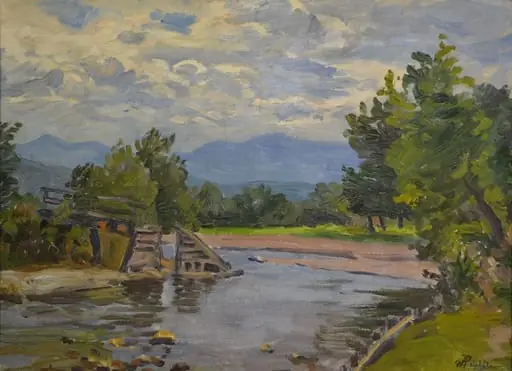
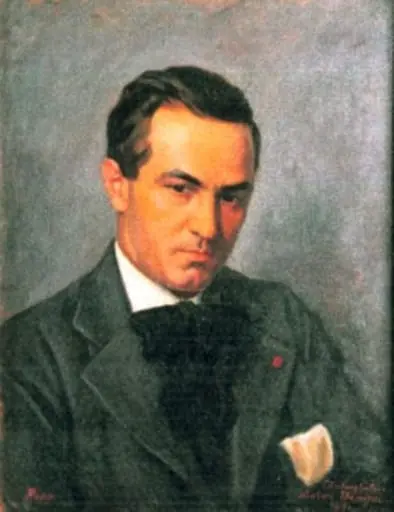
Alexandru Popp painted quiet landscapes and portraits of his time in Romania. Look for the soft hills beside the Someș River in Peisaj de pe Someș or the seated figure in Compozitorul Sabin Drăgoi, a 1934 study in…