Artwork
Dózsa
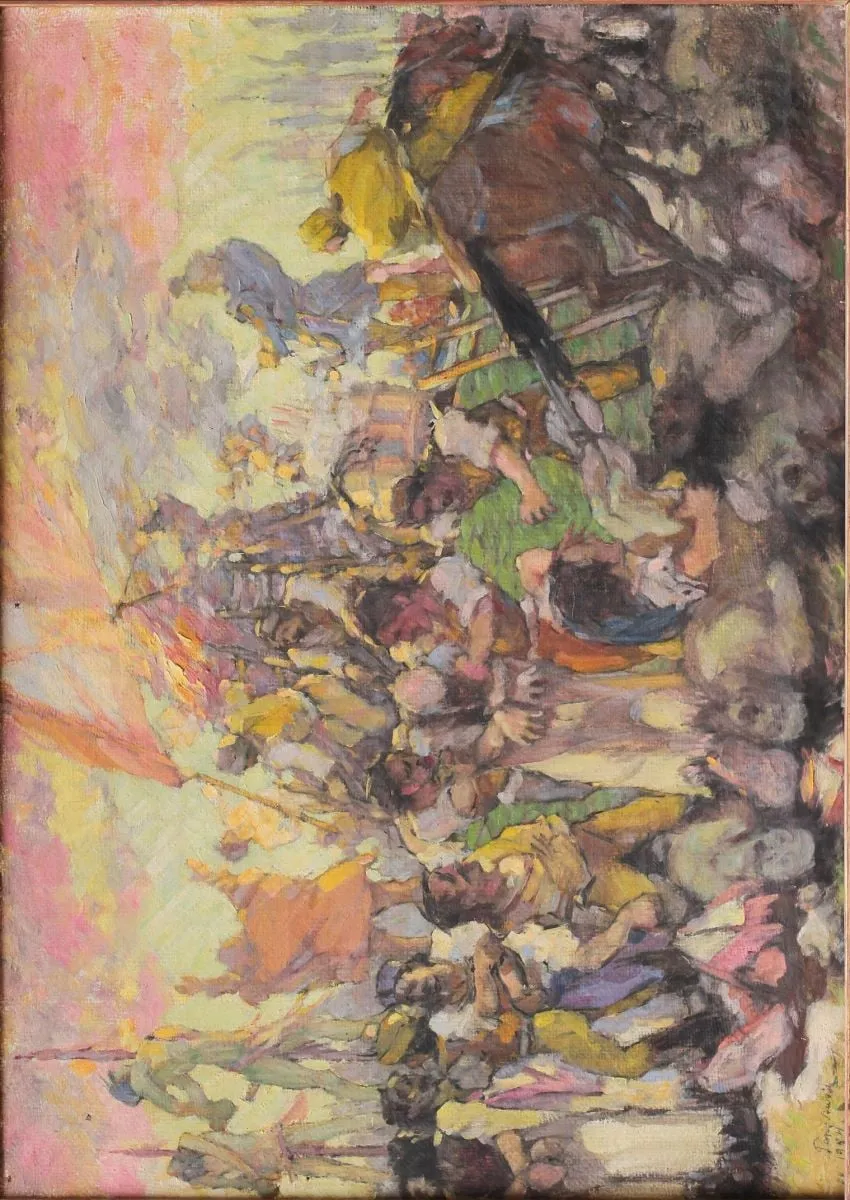
Dózsa is a print by Aurel Popp. It dates from 1929 and is held in the collection of the Museum of Art Cluj-Napoca.
About this work
Overview
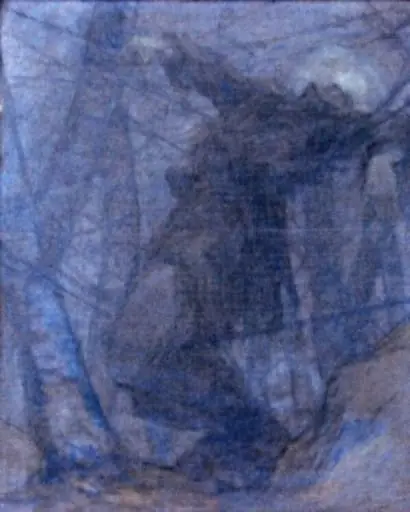
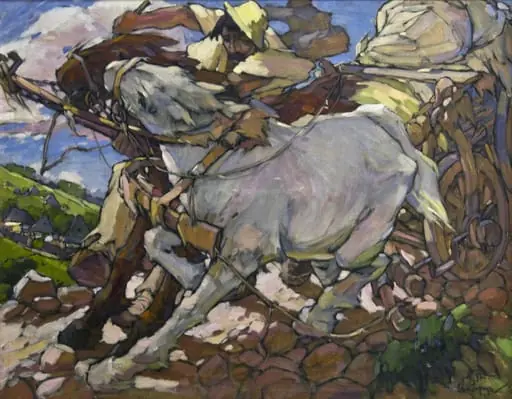
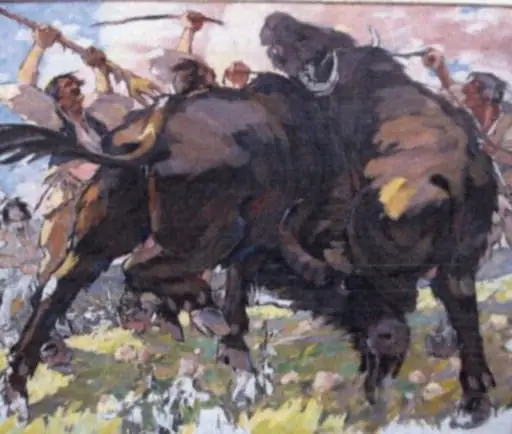
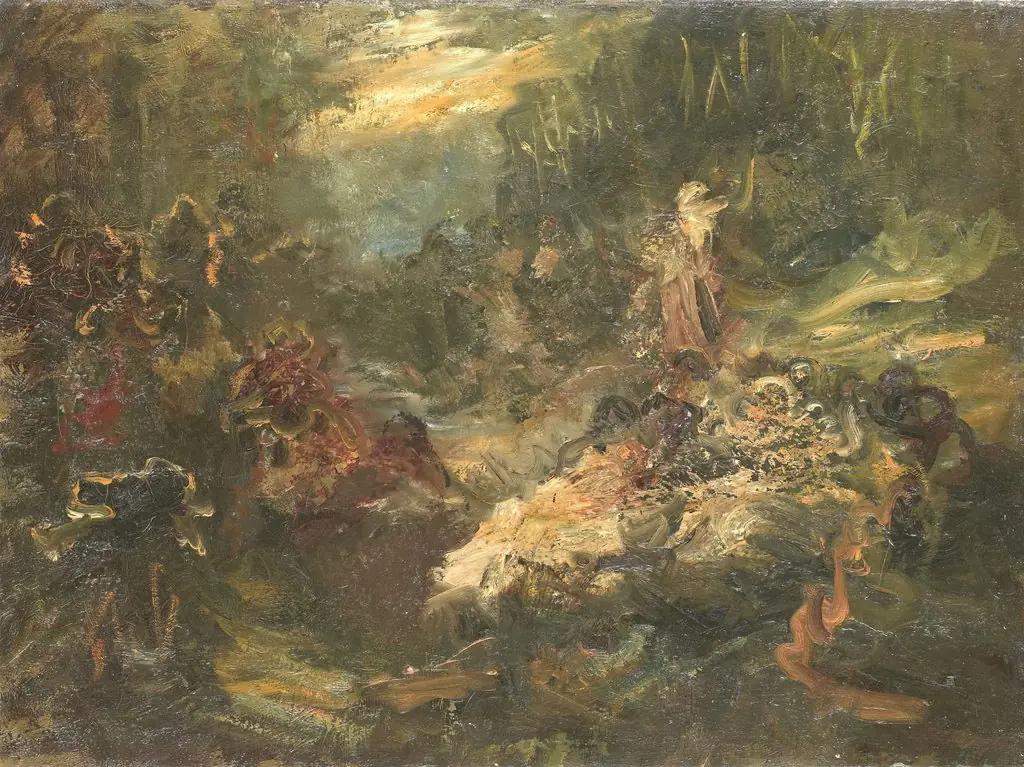
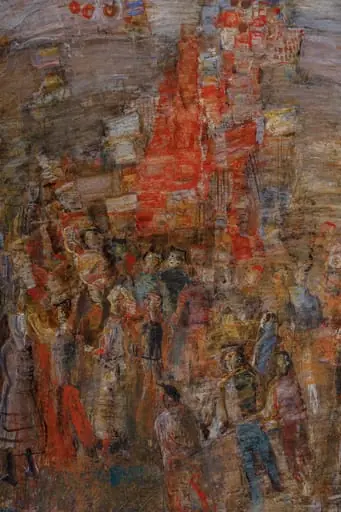
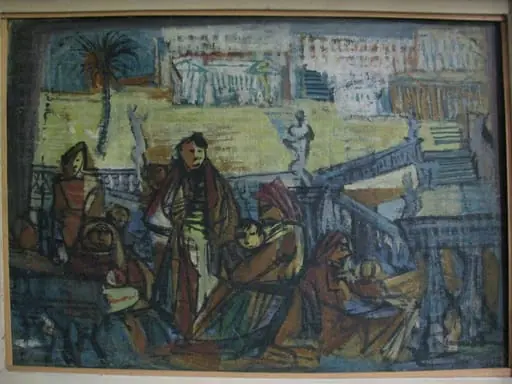
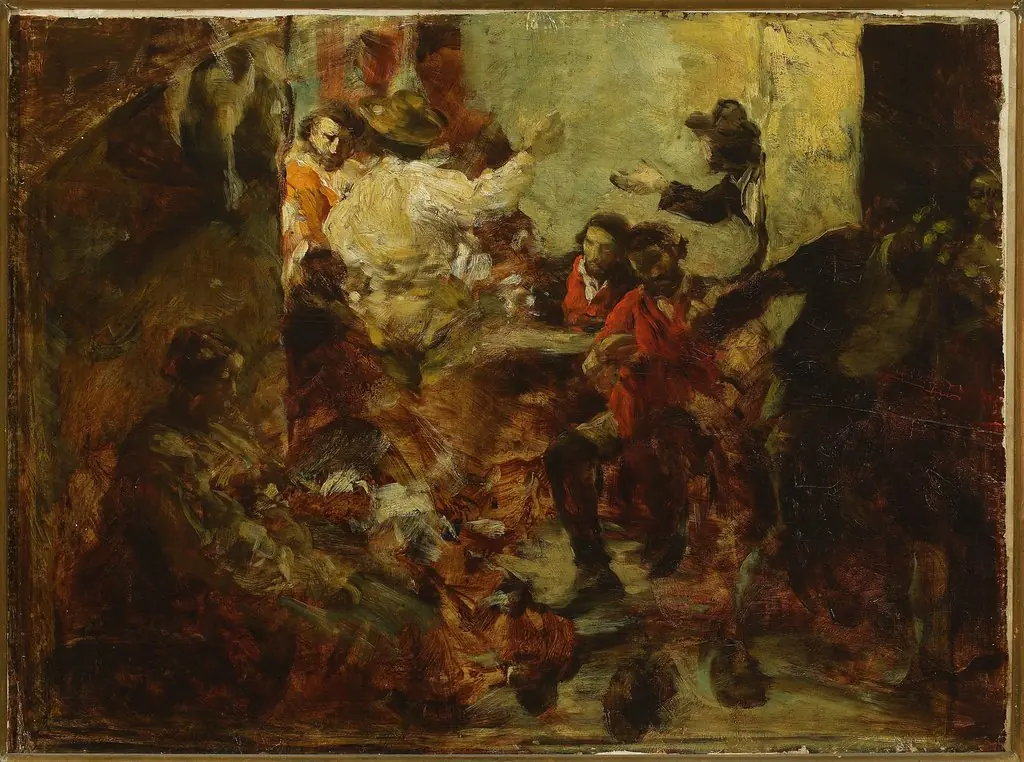
The composition presents a crowded, unsettled scene populated by numerous figures rendered in a restrained palette of browns, greens and yellows.
Created around 1929 by Aurel Popp, the work titled Dózsa is an oil painting in the collection of the Museum of Ethnography. The composition presents a crowded, unsettled scene populated by numerous figures rendered in a restrained palette of browns, greens and yellows. The overall impression is one of movement and anxiety, conveyed through a loosely applied brushwork that emphasizes the chaotic atmosphere.
Subject & Meaning
At the centre of the canvas a singular figure commands attention, suggesting a focal point amid the surrounding crowd. The peripheral figures appear to be in various stages of flight or reaction, implying an unseen disturbance or conflict. The arrangement invites speculation about collective panic or social upheaval, with the central character possibly representing a leader or victim within the tumult.
Technique & Style
Popp employs a muted chromatic scheme, allowing the dominant earth tones to unify the scene. Loose, expressive brushstrokes generate a sense of immediacy, while chiaroscuro modelling supplies depth and volume to the figures. The interplay of light and shadow guides the eye toward the central figure, and the overall handling reflects a modernist inclination toward emotional intensity over precise detail.
History & Provenance
Dózza was produced in the late 1920s, a period of significant artistic experimentation in Central Europe. The painting entered the Museum of Ethnography’s holdings at an unspecified date, where it remains part of the institution’s permanent collection. No records indicate prior private ownership or exhibition history before its museum acquisition.
Context
The work emerges from a time when artists often addressed social unrest and collective experience through allegorical or narrative scenes. Popp’s choice of a crowded, unsettled tableau aligns with contemporary concerns about political turbulence and the fragility of communal order in the interwar years, reflecting broader cultural anxieties of the era.
Artist & collection