Artwork
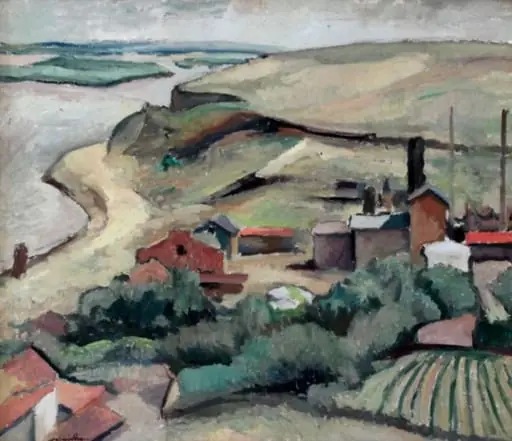
Peisaj cu case
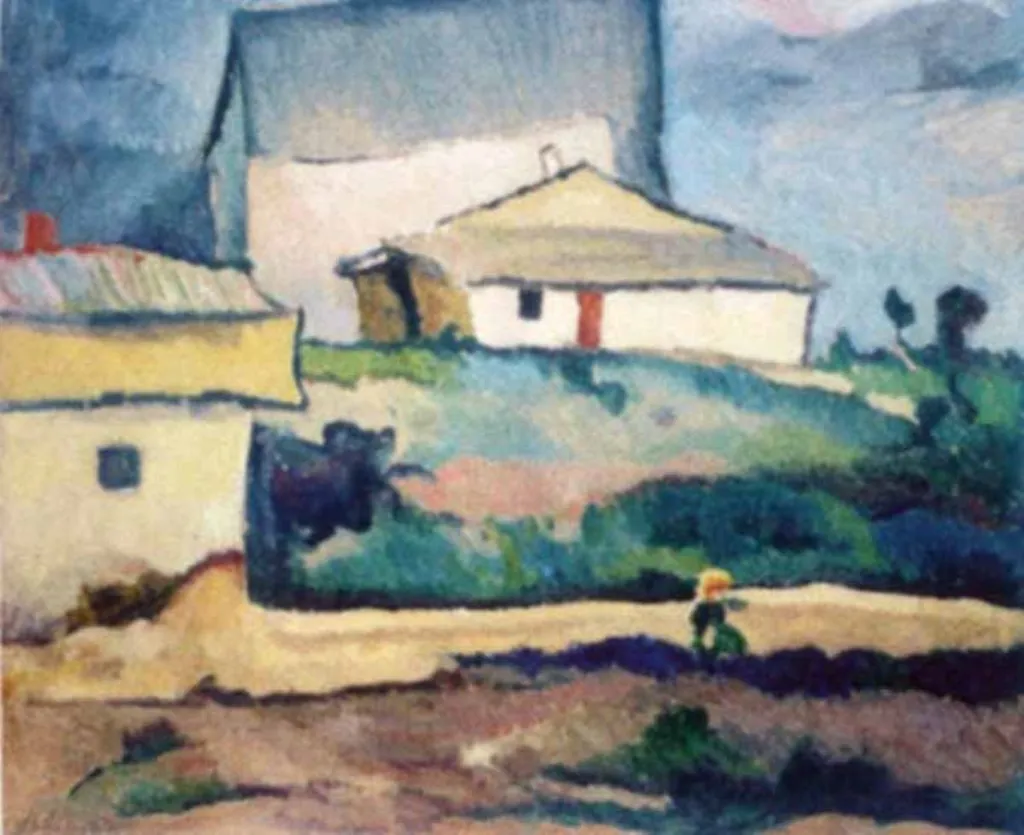
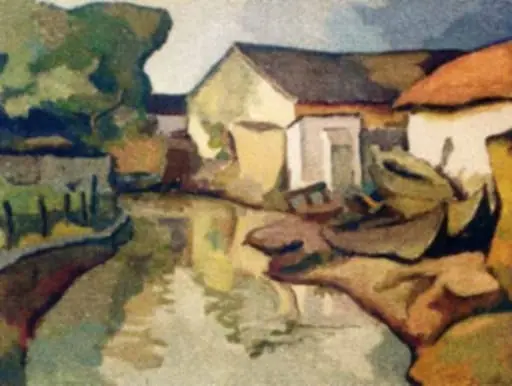
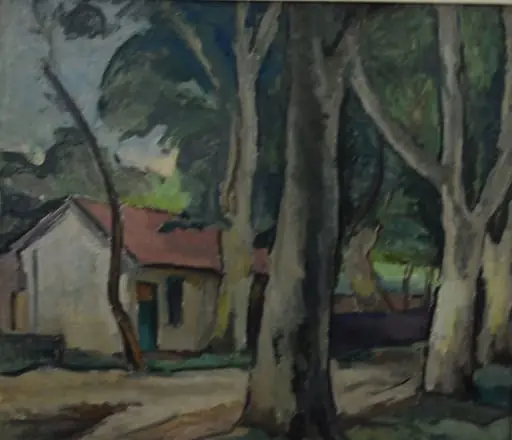
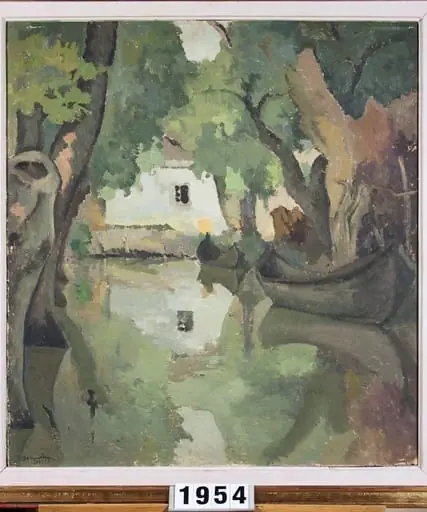
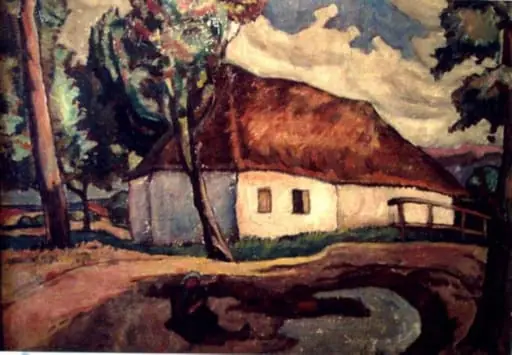
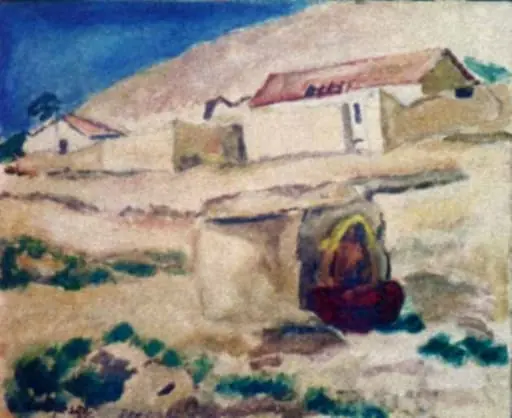
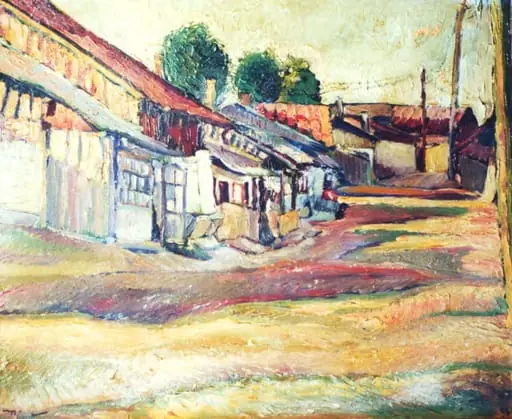
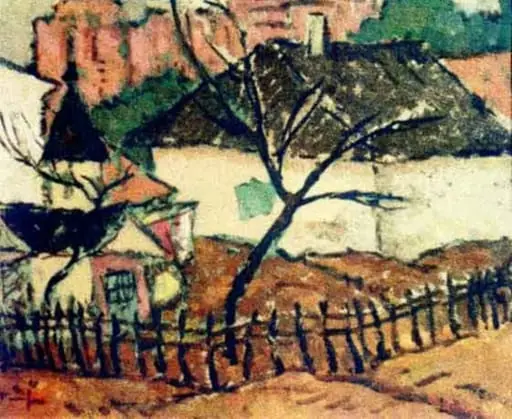
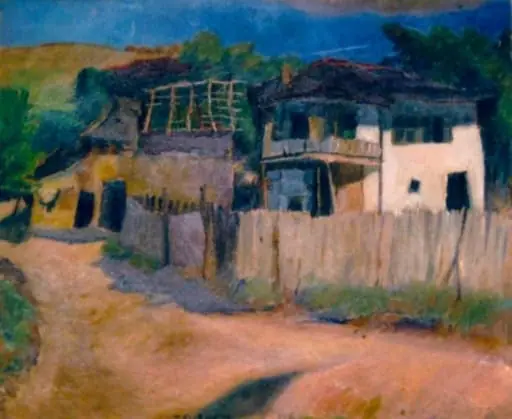
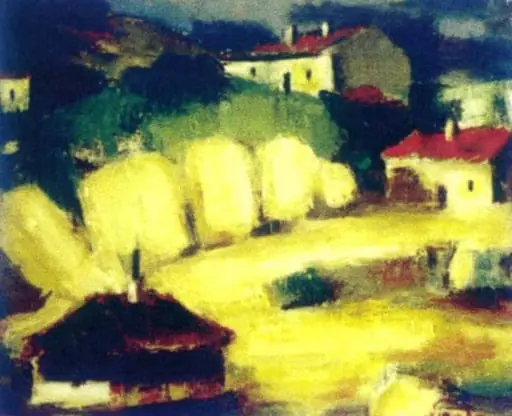
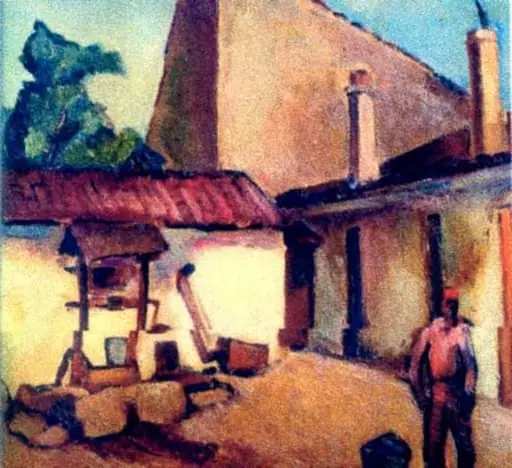
Peisaj cu case is an unspecified painting by Sabin Popp. It dates from 1926 and is held in the collection of the Art Museum of Constanta.
About this work
Overview
Painted in 1926 by Sabin Popp, this landscape depicts a quiet rural settlement nestled against a rolling hill. Executed in oil, the work is part of the Museum of Ethnography’s collection. Its composition centers on modest dwellings, a winding path, and grazing livestock, rendered with deliberate brushwork that emphasizes texture over fine detail.
Subject & Meaning
The scene captures an ordinary moment in village life: a solitary figure walks a dirt path while cattle graze in the foreground. The absence of dramatic action or human interaction suggests a quiet, unromanticized view of rural existence. The houses, though simple, are individually distinguished by roof colors and materials, hinting at local building traditions.
Technique & Style
Popp applied paint thickly, particularly in the grasses and sky, creating a tactile surface through impasto. Colors—soft blues, muted greens, and warm yellows—are layered but appear slightly weathered, as if time has softened their intensity. Light falls evenly across the structures, casting subtle shadows that define form without dramatic contrast.
History & Provenance
The painting entered the Museum of Ethnography’s holdings after its creation, likely acquired as part of a broader effort to document regional visual culture. No record of public exhibition prior to its museum acquisition is known. Its preservation reflects institutional interest in early 20th-century Romanian rural life as represented in art.
Context
Created during a period when Romanian artists increasingly turned to local subjects, the work aligns with a national movement to record vernacular architecture and daily routines. Unlike urban-focused modernists, Popp’s approach remains grounded in observation rather than stylization, echoing ethnographic interests of the time.
Legacy
While not widely reproduced, the painting contributes to a modest but significant body of work documenting Romanian village life through paint. Its emphasis on texture and quiet realism offers a counterpoint to more idealized depictions of the countryside, preserving a visual record of material culture in interwar Romania.
Artist & collection