Artwork
Peter by the door in the wall
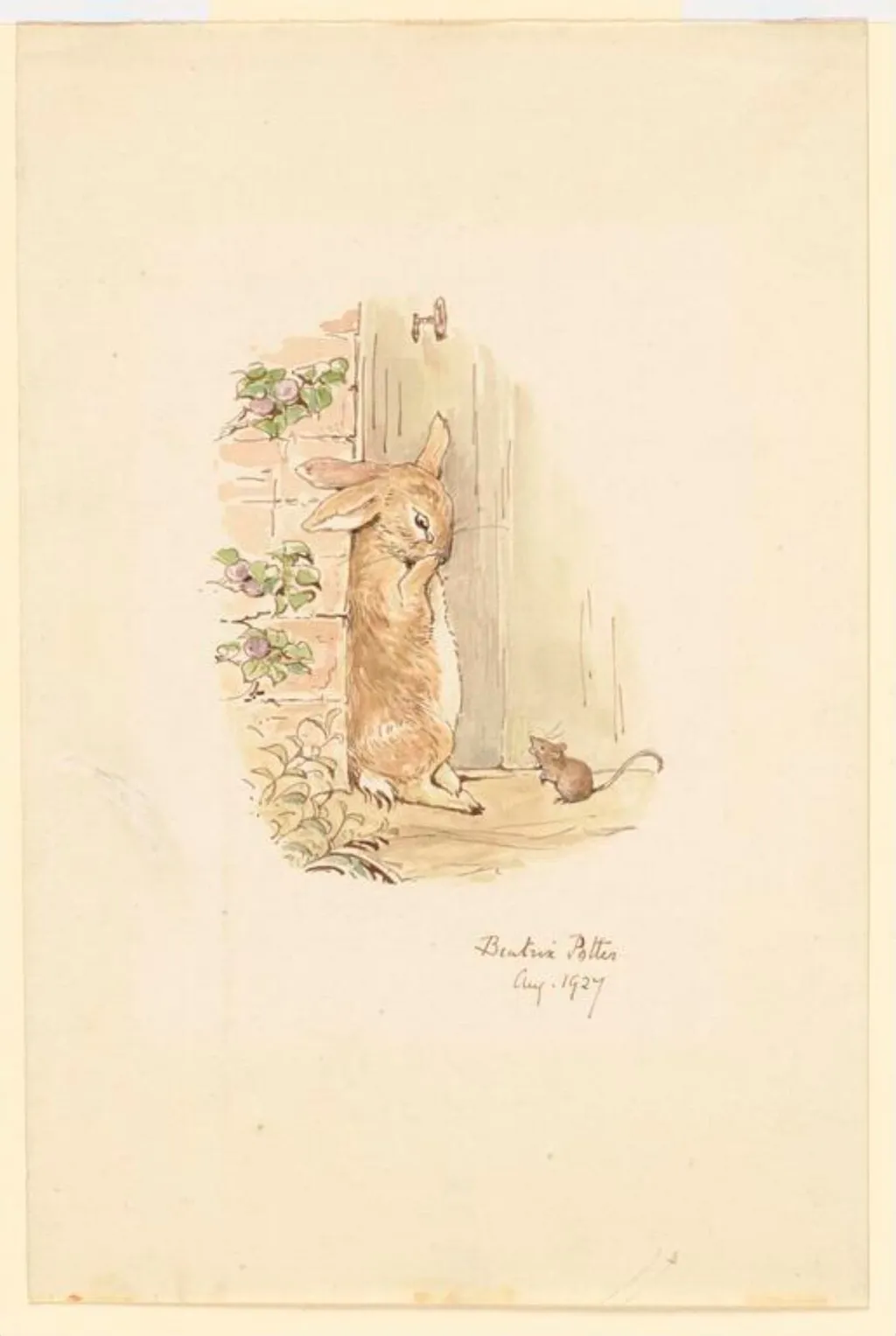
Peter by the door in the wall is a watercolor work on paper by Beatrix Potter. It dates from 1927 and is held in the collection of the Victoria and Albert Museum.
About this work
Beatrix Potter’s watercolour from August 1927 shows Peter Rabbit beside a locked door in a wall.
Beatrix Potter’s watercolour from August 1927 shows Peter Rabbit beside a locked door in a wall. This drawing was part of a fundraiser to save Cockshott Point on Lake Windermere. Readers paid a guinea each for one of fifty signed Peter Rabbit drawings.
Potter used her famous Peter Rabbit character to support conservation. The money helped protect a spot she loved. The image matches the book’s moment when Peter finds the door but can’t open it.
Check out more of Potter’s work at the Victoria and Albert Museum.
Overview
This watercolour, created by Beatrix Potter in August 1927, depicts Peter Rabbit standing before a locked door in a stone wall. It was one of fifty original, signed illustrations produced to raise funds for the preservation of Cockshott Point on Lake Windermere. The drawing directly references a scene from her 1902 book, The Tale of Peter Rabbit, and was distributed through a campaign in The Horn Book magazine to support conservation efforts in the Lake District.
Subject & Meaning
The image captures Peter Rabbit at the moment he encounters a barrier he cannot pass—a locked door symbolizing exclusion and limitation. In the context of the fundraising campaign, the door became a metaphor for the threat of development to natural landscapes. Potter used this familiar scene to evoke emotional recognition among readers, linking Peter’s plight to the vulnerability of the Lake District’s unspoiled terrain.
Technique & Style
Rendered in delicate watercolour, the drawing reflects Potter’s precise, observational style. Soft washes define the wall’s texture and the rabbit’s fur, while fine ink lines outline details with clarity. The composition is restrained, focusing attention on the door and Peter’s small figure, echoing the quiet intimacy of her book illustrations. The medium’s transparency enhances the naturalism, reinforcing the connection between the character and the landscape he inhabits.
History & Provenance
Created in 1927, the watercolour was part of a limited series offered to subscribers of The Horn Book for one guinea each. The campaign, initiated by Potter, successfully raised funds to protect Cockshott Point from commercial development. The drawings were signed and dated by the artist, and their sale marked a rare public use of her literary characters for environmental advocacy. The work remains tied to her personal commitment to conservation in the Lake District.
Context
In the 1920s, Beatrix Potter increasingly devoted herself to land preservation, having acquired substantial property in the Lake District. Her involvement with the National Trust reflected a growing awareness of environmental loss. By leveraging the popularity of Peter Rabbit, she bridged children’s literature and civic action, appealing to readers’ affection for the character to foster support for ecological protection in a region she deeply valued.
Legacy
This watercolour exemplifies how Potter’s artistic legacy extended beyond children’s publishing into environmental stewardship. The campaign she led helped secure the future of a significant stretch of lakeside land, now preserved by the National Trust. Her use of Peter Rabbit as a symbol of conservation set a precedent for cultural figures engaging with ecological causes, grounding activism in familiar, heartfelt imagery.
Artist & collection
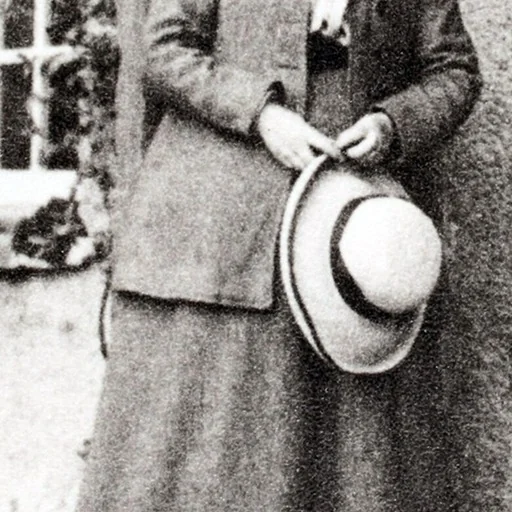
Artist
Helen Beatrix Heelis (née Potter; 28 July 1866 – 22 December 1943), usually known as Beatrix Potter ( BEE-ə-triks), was an English writer, illustrator, natural scientist, and conservationist.