Artwork
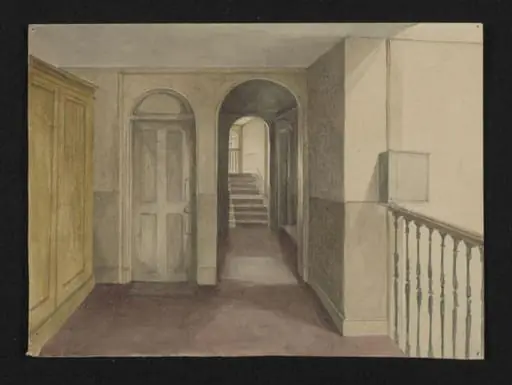
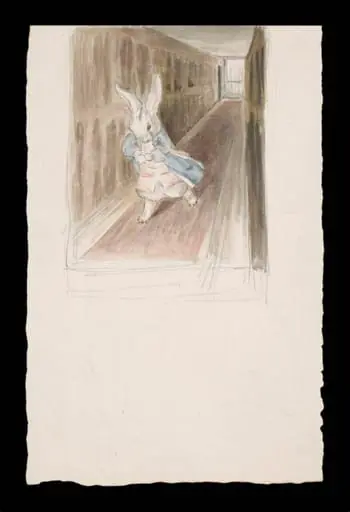
Rear view of the White Rabbit running away along the corridor
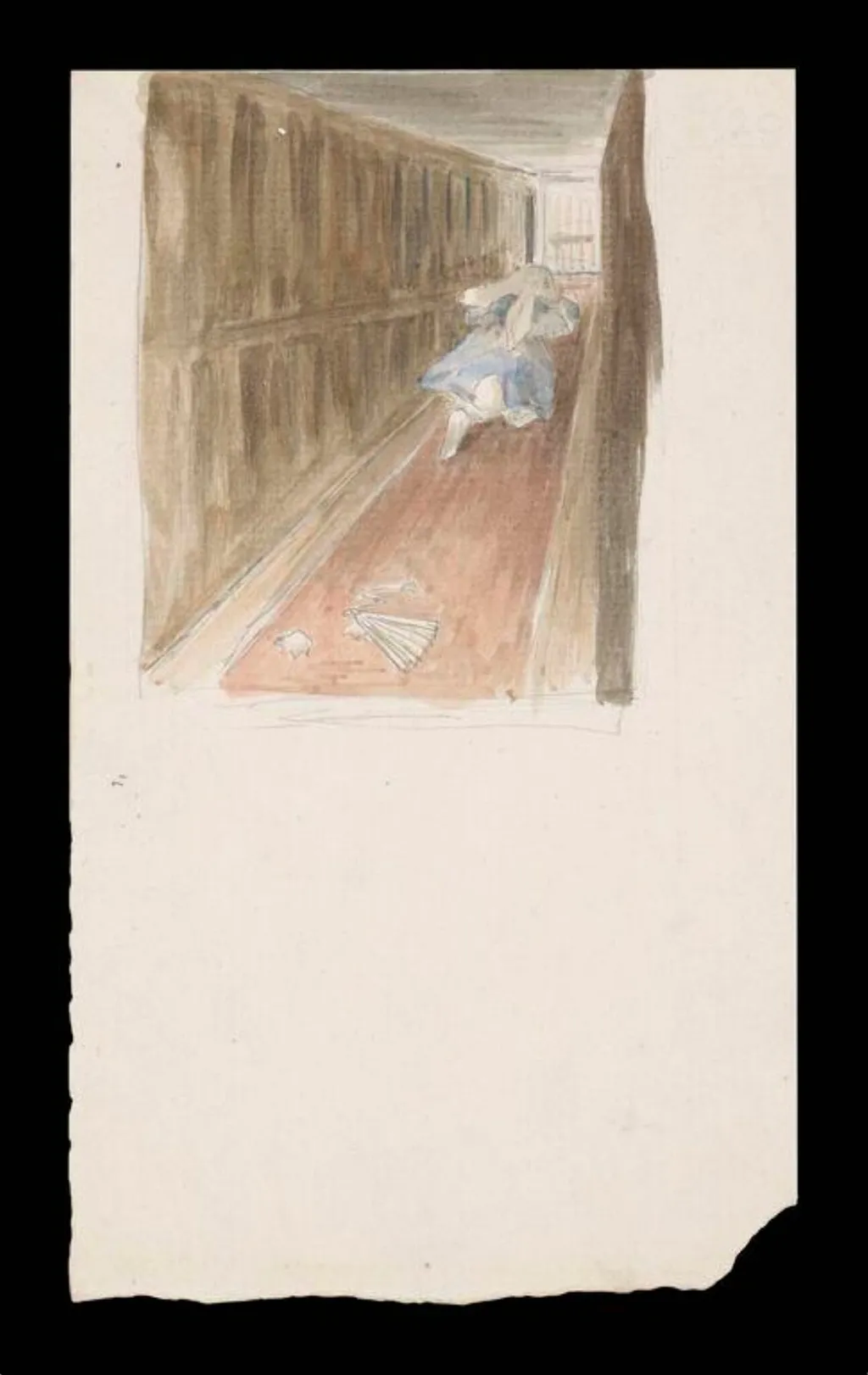
Rear view of the White Rabbit running away along the corridor is a watercolor work on paper by the Impressionist artist Beatrix Potter. It dates from 1895 and is held in the collection of the Victoria and Albert Museum.
About this work
This painting is called Rear view of the White Rabbit running away along the corridor.
It was made by Beatrix Potter around 1895.
Beatrix Potter was inspired by John Tenniel's illustrations in Alice's Adventures in Wonderland, which she got as a child. She even used her own pet rabbit as a model for the White Rabbit.
You can learn more about Beatrix Potter at the Victoria and Albert Museum.
Overview
Created around 1895, this watercolour depicts the White Rabbit from Alice’s Adventures in Wonderland seen from behind, fleeing down a corridor.
Created around 1895, this watercolour depicts the White Rabbit from Alice’s Adventures in Wonderland seen from behind, fleeing down a corridor. Made by Beatrix Potter during her early artistic development, the work reflects her study of classical literature and illustration techniques before she turned to original children’s stories. It is one of several personal projects she undertook to refine her draftsmanship.
Subject & Meaning
The image captures the White Rabbit in motion, a figure drawn from Lewis Carroll’s narrative but filtered through Potter’s own observational lens. Rather than emphasizing whimsy, the composition focuses on urgency and spatial depth, echoing Tenniel’s dramatic framing. The rabbit’s form suggests anxiety and haste, aligning with its role in the story while revealing Potter’s interest in psychological nuance within familiar tales.
Technique & Style
Potter employed delicate watercolour washes to suggest texture and movement, with precise ink outlines defining the rabbit’s form and the corridor’s architecture. Her attention to anatomical detail—particularly in the limbs and posture—demonstrates her training in natural history illustration. The muted palette and controlled brushwork reflect a restrained, almost scientific approach, distinct from the more theatrical style of Tenniel’s originals.
History & Provenance
This watercolour was produced during Potter’s formative years, before her commercial success with Peter Rabbit. It stems from a series of illustrations she created for personal amusement, often based on her pets and favorite literary works. The rabbit model was her own pet, Peter Piper, whose movements she observed closely. The work remained in private hands until its later acquisition by institutions studying her artistic evolution.
Context
In the 1890s, Potter was immersed in the Victorian tradition of illustrating classic texts, a common practice among amateur artists. Her engagement with Alice’s Adventures in Wonderland was both intellectual and technical: she studied Tenniel’s compositions to understand narrative pacing and visual storytelling. These exercises laid the groundwork for her later ability to merge naturalism with gentle fantasy in her own books.
Legacy
Though not published during her lifetime, this watercolour reveals the artistic discipline that underpinned Potter’s later success. It demonstrates how her early engagement with literary illustration informed her unique visual language—grounded in observation, restrained in expression, and deeply attentive to animal behavior. Today, it serves as a key artifact in understanding the transition from amateur study to professional authorship.
Artist & collection
Artist
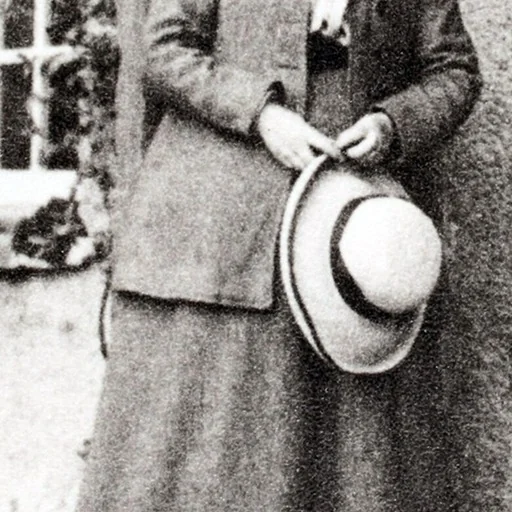
Helen Beatrix Heelis (née Potter; 28 July 1866 – 22 December 1943), usually known as Beatrix Potter ( BEE-ə-triks), was an English writer, illustrator, natural scientist, and conservationist.