Artwork
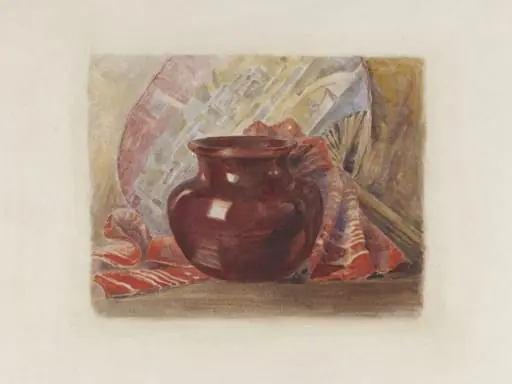
Still life study of a Lambeth salt-glazed stoneware jug and bananas
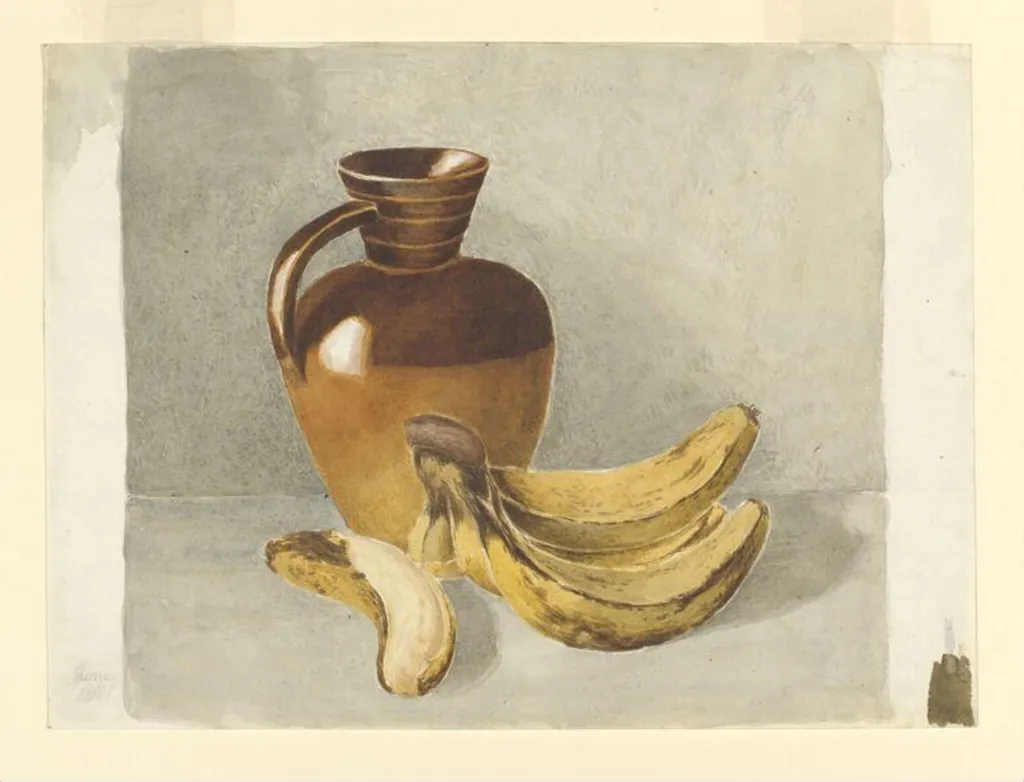
Still life study of a Lambeth salt-glazed stoneware jug and bananas is a watercolor work on paper by the Impressionist artist Beatrix Potter. It dates from 1881 and is held in the collection of the Victoria and Albert Museum.
About this work
Overview
This watercolour study depicts a Lambeth salt-glazed stoneware jug and a cluster of bananas, executed during Beatrix Potter’s formal art training.
This watercolour study depicts a Lambeth salt-glazed stoneware jug and a cluster of bananas, executed during Beatrix Potter’s formal art training. Created between 1878 and 1883, it reflects her engagement with academic exercises at the National Art Training School in South Kensington. Though technically proficient—she earned an ‘Excellent’ grade—it lacks the vitality seen in her later illustrations, revealing the constraints of institutional instruction.
Subject & Meaning
The jug and bananas are chosen for their simple, everyday forms, typical of still-life assignments meant to develop observational skill. No symbolic or narrative layer is evident; the subject serves purely as a study in shape, texture, and light. The arrangement is unadorned, reflecting the pedagogical focus on accuracy rather than expression, aligning with the curriculum’s emphasis on disciplined representation.
Technique & Style
Rendered in watercolour, the piece demonstrates careful handling of washes and controlled brushwork, typical of student work at the time. The forms are rendered with precision but lack dynamism; shadows are flat, contours rigid. The composition adheres to conventional still-life rules, with objects centered and evenly lit, suggesting adherence to prescribed methods rather than personal interpretation.
History & Provenance
Created during Potter’s enrollment at the National Art Training School, this work is one of many academic exercises completed between 1878 and 1883. It was produced under the supervision of instructors who emphasized technical correctness over individual vision. The piece remained in private hands after her studies, later recognized as part of her early artistic development rather than a finished work of art.
Context
For middle-class Victorian girls, proficiency in drawing was expected as a social accomplishment, not a professional pursuit. Potter’s training was part of this norm, though her family’s support allowed deeper engagement than many peers. While her peers may have seen art as decoration, Potter approached it as a means of understanding the natural world—a habit that later informed her scientific illustrations and children’s books.
Legacy
Though this work shows technical competence, it stands in contrast to the lively, character-driven imagery of her later books. Potter herself questioned the value of formal instruction, believing true observation could not be taught. This study, therefore, serves not as a precursor to her famous illustrations, but as evidence of the discipline she moved beyond to find her own visual voice.
Artist & collection
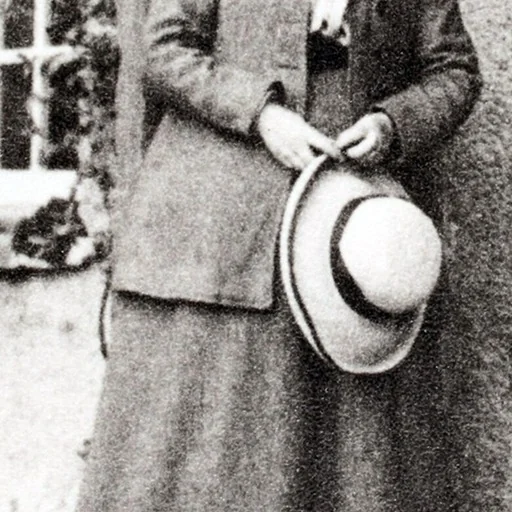
Artist
Helen Beatrix Heelis (née Potter; 28 July 1866 – 22 December 1943), usually known as Beatrix Potter ( BEE-ə-triks), was an English writer, illustrator, natural scientist, and conservationist.