Artwork
Two Cows Seen from Behind
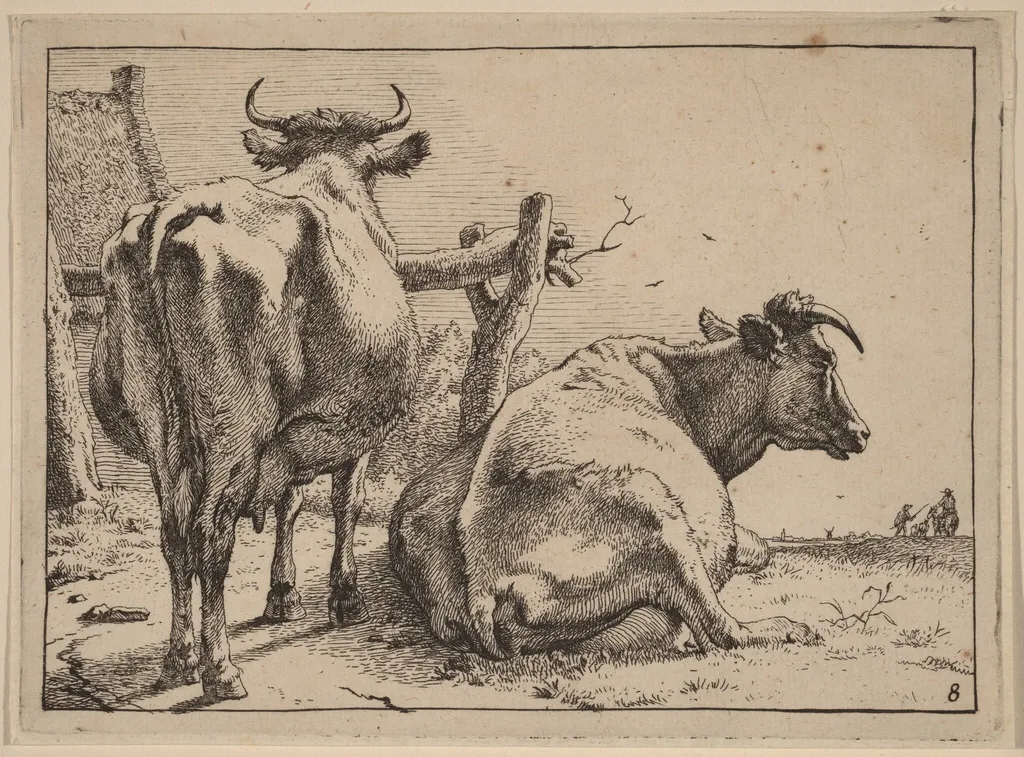
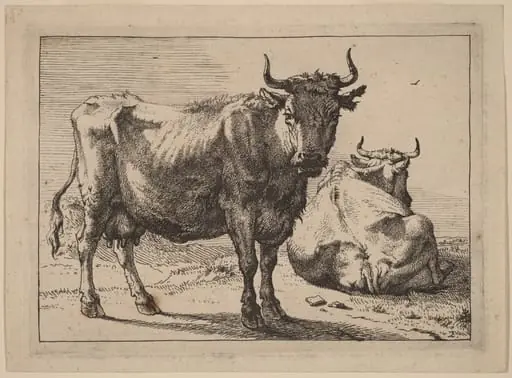
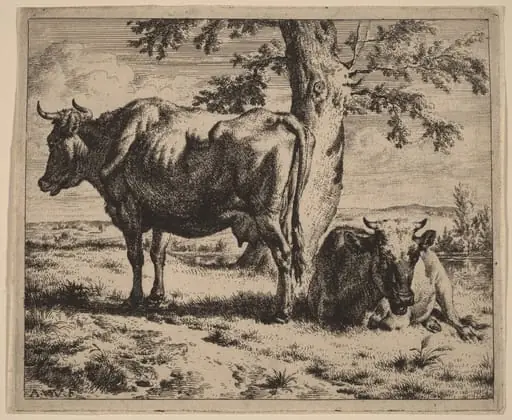
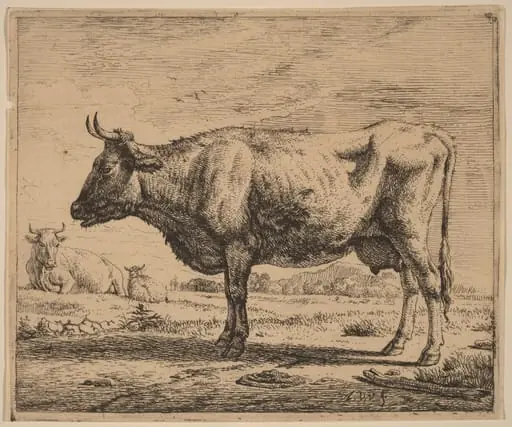
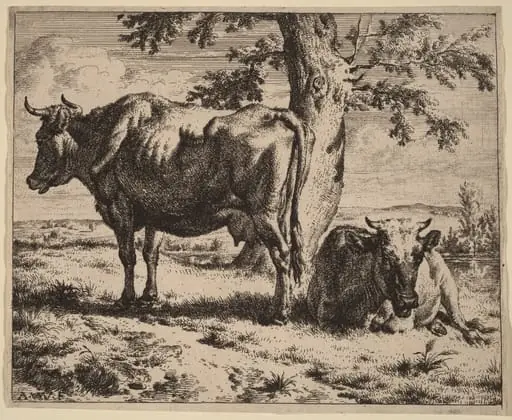
Two Cows Seen from Behind is an ink print by the Baroque artist Paulus Potter. It dates from 1650 and is held in the collection of the National Gallery of Art.
About this work
Overview
Created in 1650, *Two Cows Seen from Behind* is an etching by Dutch artist Paulus Potter. Executed during the height of the Dutch Golden Age, the work measures the quiet presence of livestock from a low, rearward perspective. The composition features a pair of cows standing side by side, their backs turned toward the viewer, exemplifying Potter’s sustained interest in rural subjects.
Subject & Meaning
The print depicts two bovines, the left animal rendered in a darker coat and the right in a lighter hue with a distinctly white face. By presenting the cows from behind, Potter emphasizes their form and movement rather than individual identity, inviting contemplation of the everyday labor and vitality inherent in pastoral life.
Technique & Style
Executed as an etching, the image relies on fine line work to convey the texture of hide and the tension of underlying muscles. Potter’s careful observation translates into subtle gradations of tone, allowing the contrast between the dark and light cows to emerge without overt shading, a hallmark of his restrained yet detailed approach to animal rendering.
History & Provenance
Paulus Potter produced roughly one hundred works before his premature death from tuberculosis at the age of twenty‑eight. *Two Cows Seen from Behind* belongs to the small body of prints that complement his more numerous oil paintings, illustrating the breadth of his practice within a brief but prolific career.
Own this work as a print
Artist & collection
Artist
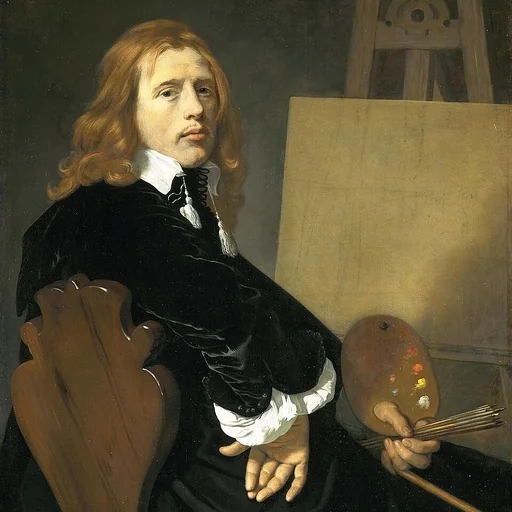
Paulus Potter (Dutch pronunciation: ; 20 November 1625 (baptised) – 17 January 1654 (buried)) was a Dutch painter who specialized in landscapes featuring animals, often from a low vantage point.