Artwork
Two Cows and a Sheep
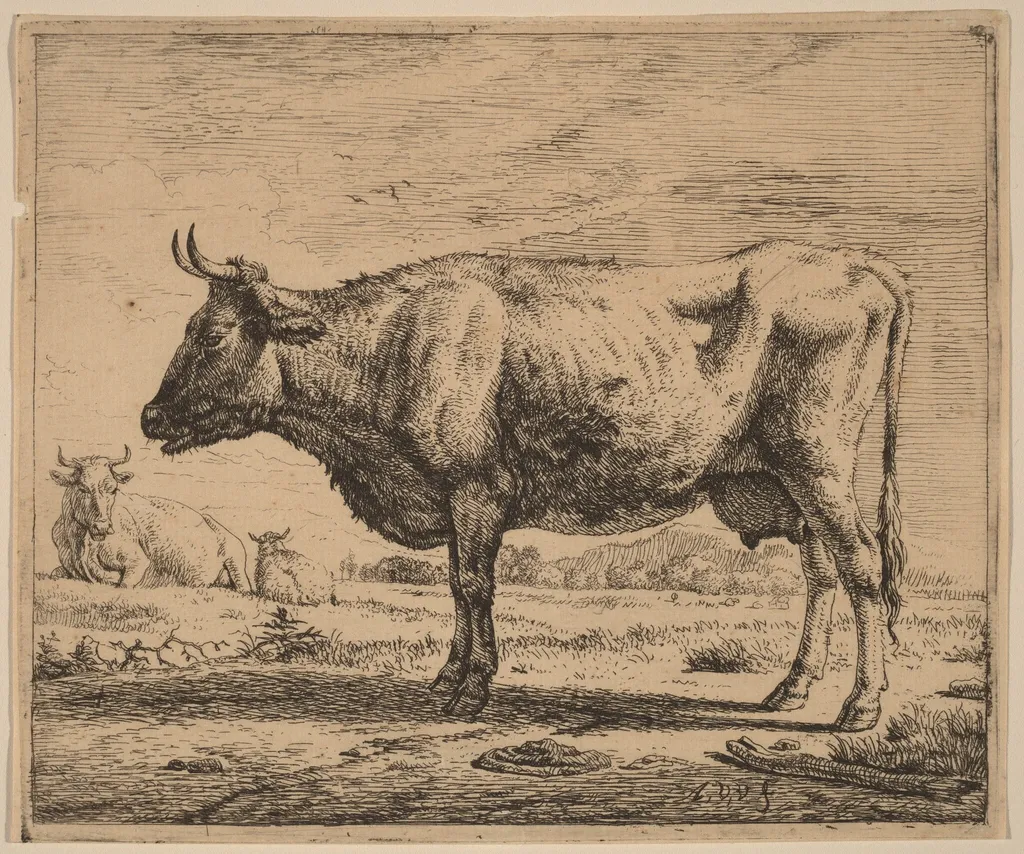
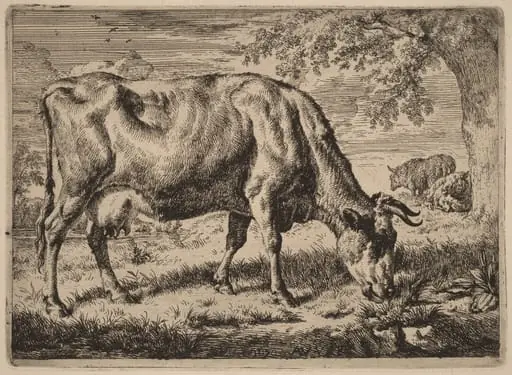
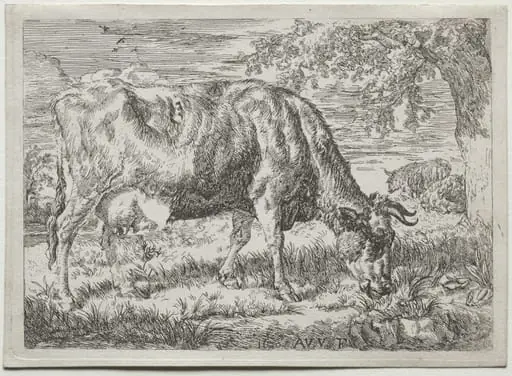
Two Cows and a Sheep is an ink print by the Baroque artist Adriaen van de Velde. It dates from 1658 and is held in the collection of the National Gallery of Art.
About this work
Overview
Though primarily known for painting, he also worked extensively in printmaking, using the etching technique to capture quiet rural scenes.
Adriaen van de Velde, a Dutch artist active in the mid-17th century, produced *Two Cows and a Sheep* as an etching around 1658. Though primarily known for painting, he also worked extensively in printmaking, using the etching technique to capture quiet rural scenes. This work exemplifies his focus on livestock within natural settings, reflecting his broader interest in pastoral life and the subtle interplay between animals and landscape.
Subject & Meaning
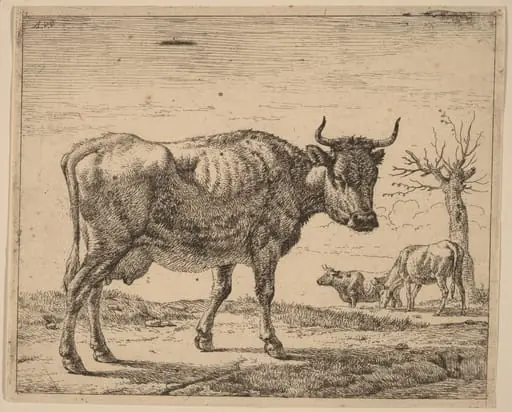
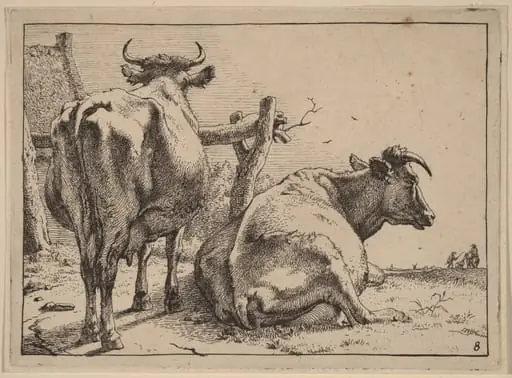
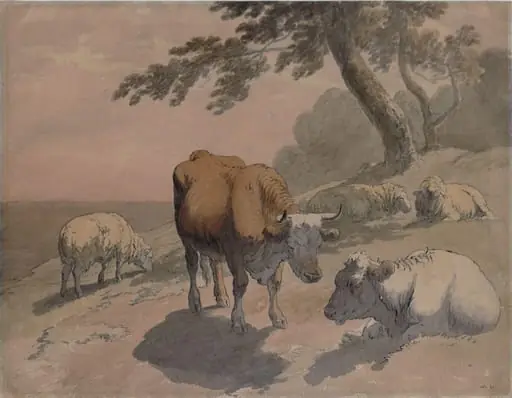
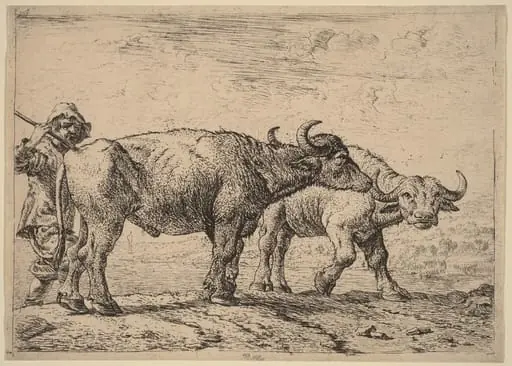
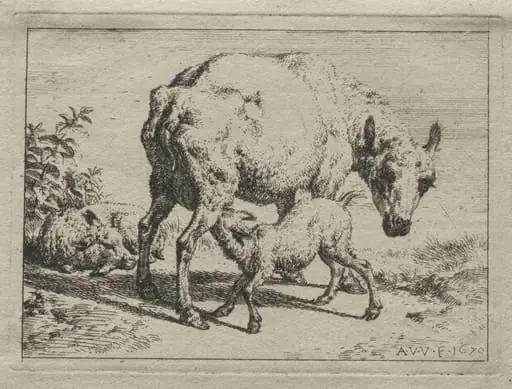
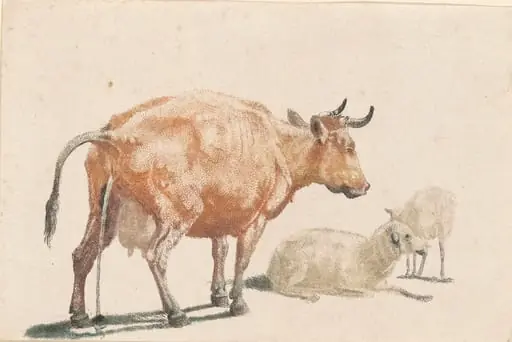
The print depicts three grazing animals—a pair of cows and a sheep—standing still in an open field. There is no human presence, no narrative action, only a moment of stillness. The animals appear at ease, their postures suggesting familiarity with the land. The absence of drama or symbolism points to a quiet celebration of everyday rural existence, typical of Dutch naturalism in the period.
Technique & Style
Van de Velde employed a loose, expressive etching technique, using uneven, scratchy lines to suggest texture and form. The animals’ wool and hides are rendered with delicate, irregular strokes rather than precise outlines, lending a sense of organic movement. The background is minimally defined, allowing the figures to dominate while preserving a sense of atmospheric space, characteristic of his restrained yet evocative draftsmanship.
History & Provenance
Created during Van de Velde’s mature period in Amsterdam, the etching was likely made for a private audience interested in landscape and animal studies. Few records of its early ownership survive, but it aligns with the broader circulation of Dutch prints among collectors who valued intimate, observational works. The print’s survival in multiple institutional collections suggests its enduring recognition within printmaking circles.
Context
Van de Velde worked within the Dutch Italianate tradition, which fused local rural subjects with compositional ideals drawn from Italian landscape painting. While *Two Cows and a Sheep* lacks overt Italianate elements, its calm, balanced structure reflects that influence. The work also resonates with the Dutch Golden Age’s broader fascination with the natural world, where even humble animals became subjects of quiet contemplation.
Legacy
Though less celebrated than his paintings, Van de Velde’s etchings contributed to the development of animal drawing as a serious artistic pursuit in the Netherlands. His ability to convey character and presence with minimal lines influenced later generations of printmakers. *Two Cows and a Sheep* remains a representative example of how Dutch artists found depth in the ordinary, elevating pastoral simplicity through careful observation.
Own this work as a print
Artist & collection

Artist
Adriaen van de Velde, was a Dutch painter, draughtsman, and print artist. His favorite subjects were landscapes with animals and genre scenes. He also painted beaches, dunes, forests, winter scenes, portraits in…