Artwork
Landscape with timber wagon and figures
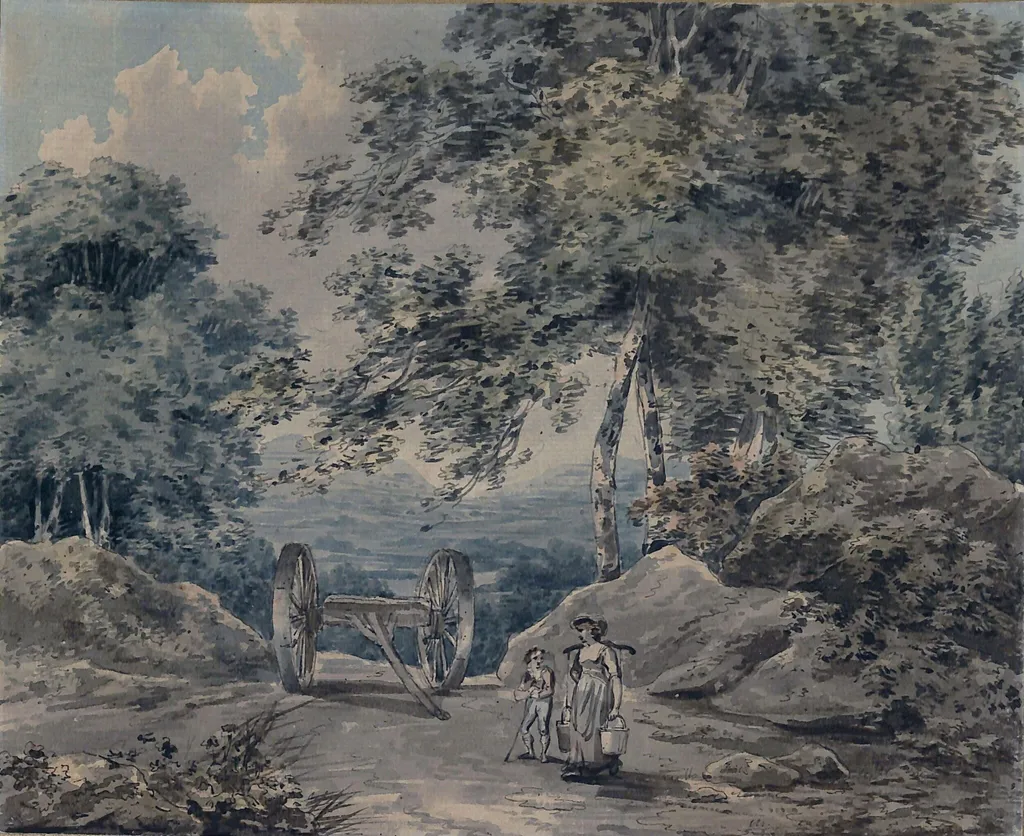
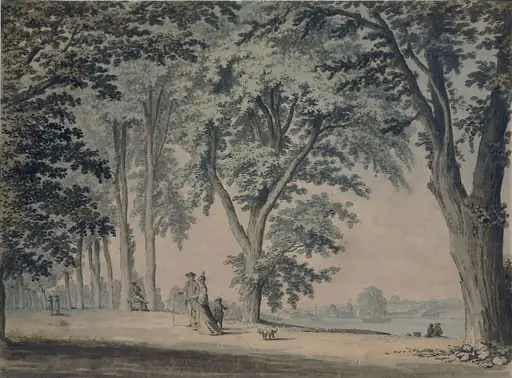
Landscape with timber wagon and figures is a watercolor work on paper by the Rococo painting artist Benjamin Thomas Pouncy. It dates from 1760 and is held in the collection of the Victoria and Albert Museum. This watercolour presents a quiet rural scene centered on a damaged timber wagon halted along a rocky trail.
About this work
Overview
The composition emphasizes natural elements—trees, stone, and sky—rendered with delicate, loose brushwork that conveys atmosphere rather than detail.
This watercolour presents a quiet rural scene centered on a damaged timber wagon halted along a rocky trail. Two figures walk nearby, their presence suggesting labor or transit. The composition emphasizes natural elements—trees, stone, and sky—rendered with delicate, loose brushwork that conveys atmosphere rather than detail. The work belongs to a tradition of observational landscape drawing, capturing a moment of pause within an ongoing journey.
Subject & Meaning
The broken wagon wheel, resting against a boulder, implies mechanical failure or exhaustion, while the figures’ movement suggests persistence. The fluttering flag in the distance hints at a nearby settlement or landmark, adding narrative ambiguity. The scene avoids drama, instead inviting contemplation of quiet endurance—work, travel, and the rhythms of rural life rendered without sentimentality.
Technique & Style
The artist employed transparent watercolour washes with minimal detail, using soft, sketchy lines to suggest texture and motion. The rocky ground, tree trunks, and foliage are indicated with quick strokes rather than defined forms, emphasizing light and atmosphere. The sky, partially clouded, is rendered with pale washes, allowing the paper’s white to suggest brightness. This restrained approach prioritizes mood over precision.
History & Provenance
The watercolour is held in the collection of the Victoria and Albert Museum, acquired as part of a broader assemblage of 19th-century British topographical drawings. Its origin remains undocumented beyond its medium and subject, but its style aligns with amateur and professional artists who recorded rural scenes during the period of expanding railway networks and changing land use.
Context
Created during a time when Britain’s countryside was increasingly shaped by industrialization, this image reflects a fading agrarian reality. Timber transport by horse-drawn wagons was being replaced by rail, making such scenes relics of an older economy. The quiet tone of the work contrasts with the era’s rapid change, offering a subdued record of everyday rural labor.
Legacy
Though unsigned and unattributed, the watercolour contributes to a larger body of modest, observational works that document the British landscape beyond grand vistas. Its preservation in a major museum underscores the value placed on everyday scenes as historical evidence. It continues to serve as a quiet testament to the rhythms of pre-industrial transport and rural life.
Own this work as a print
Artist & collection

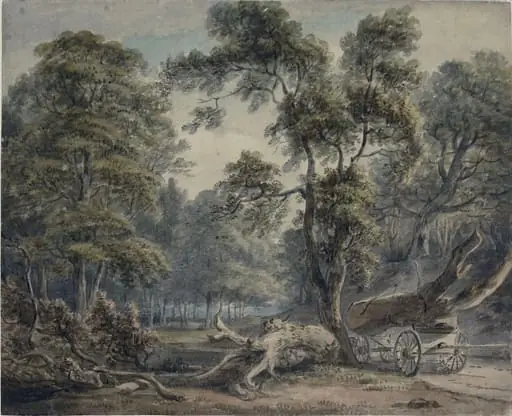 Scene in Windsor Forest
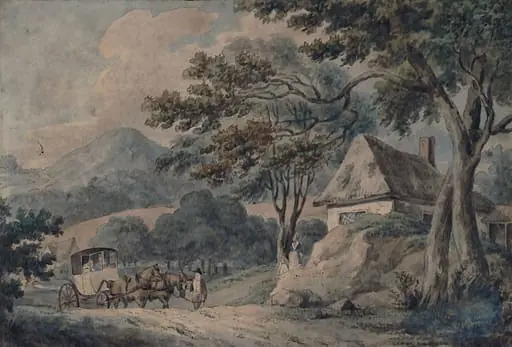 Landscape with cottage and postchaise
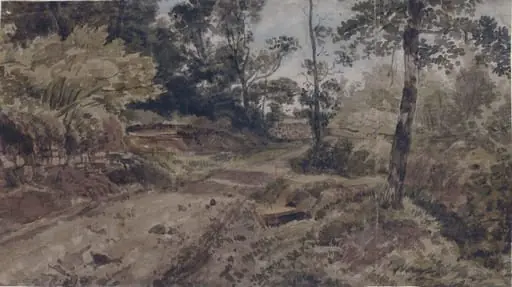 View at Cheshunt, Hertfordshire
 Landscape with Bridge and Stream
 Woodland Road with Ox-waggon
 Landscape with church and cattle
 Landscape with Dray and Figures
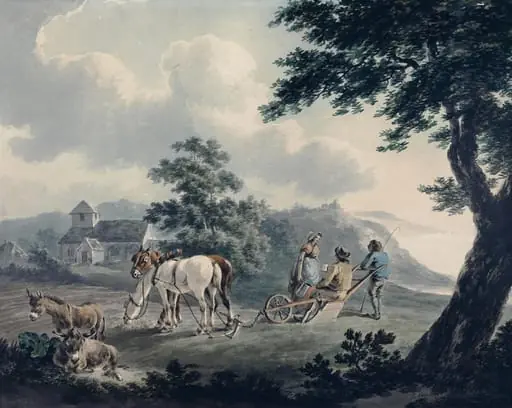 Landscape with Horses at Plough, and Figures
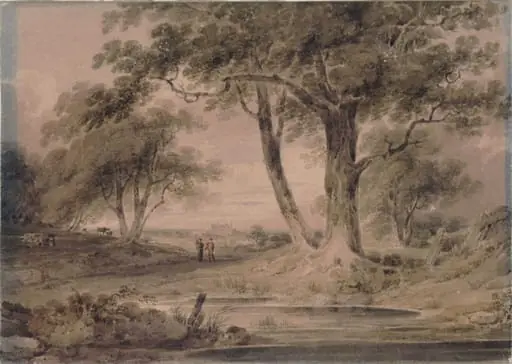 Landscape: Ripon Cathedral in the distance
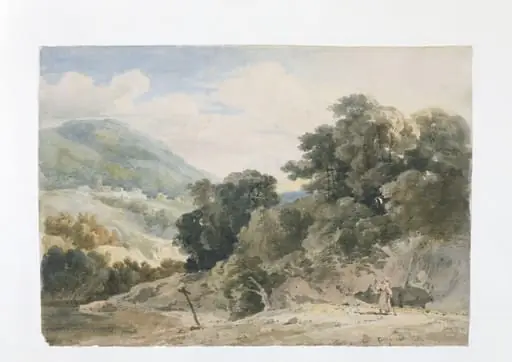 Landscape with hermit
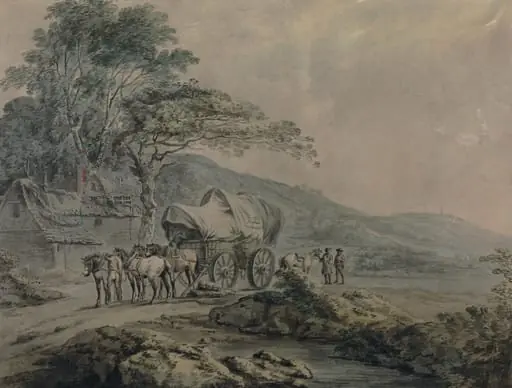 Landscape with wagon and figures
 Trees by the Thames, opposite Hammersmith