Artwork
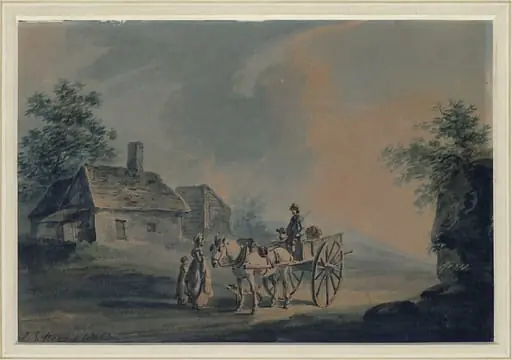
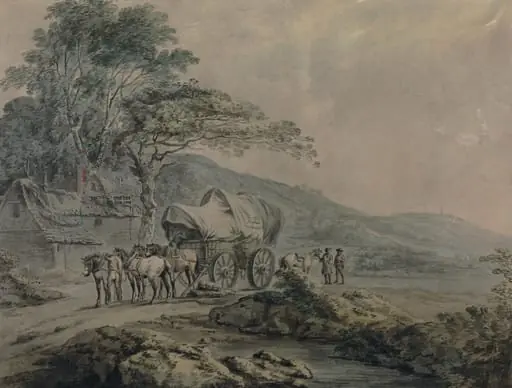
Landscape with cottage and postchaise
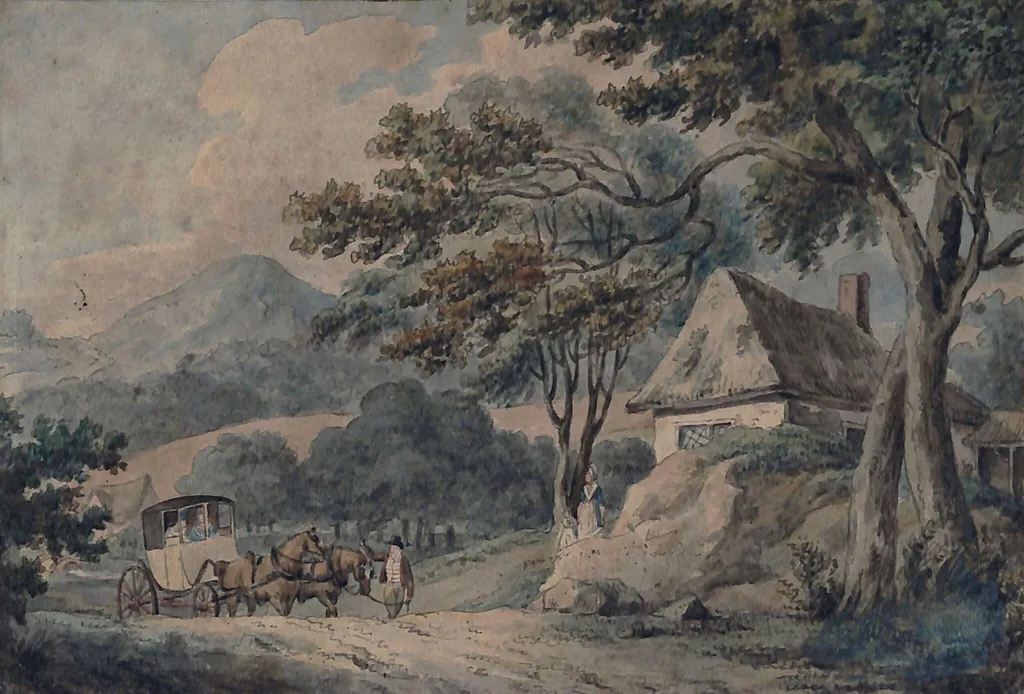
Landscape with cottage and postchaise is a watercolor work on paper by the Romanticist artist Giacomo Cavedone. It is held in the collection of the Victoria and Albert Museum. Painted in 1802, this watercolour captures a tranquil rural moment with minimal detail and restrained tones.
About this work
Overview
The scene centers on a dirt path where a postchaise, drawn by two horses, rests beside a modest stone cottage with a thatched roof.
Painted in 1802, this watercolour captures a tranquil rural moment with minimal detail and restrained tones. The scene centers on a dirt path where a postchaise, drawn by two horses, rests beside a modest stone cottage with a thatched roof. Figures move quietly through the landscape—one guiding the animals, another standing near the dwelling. The composition avoids dramatic focus, instead inviting contemplation of everyday rural life.
Subject & Meaning
The painting presents an unembellished view of rural transport and domestic life, emphasizing stillness over action. The postchaise, a common vehicle for travel in the era, suggests movement paused, while the cottage implies permanence. The lone figures, neither heroic nor idealized, ground the scene in ordinary experience. Nature surrounds them without intrusion, reflecting a quiet harmony between human activity and the land.
Technique & Style
The artist employed diluted watercolour washes to achieve a luminous, translucent effect, allowing the paper’s white to suggest light and air. Brushwork is loose and fluid, with soft edges and minimal definition, particularly in the hills and sky. This approach avoids sharp detail, favoring atmosphere over precision. The technique aligns with a tradition of sketch-like watercolours valued for their immediacy and emotional tone.
History & Provenance
Created in 1802, the work likely originated in Britain during a period when watercolour was gaining recognition as a serious medium. Its modest scale and subject suggest it was made for private collection rather than public exhibition. No documented ownership history is available, but its style places it within the circle of amateur and professional artists exploring landscape as a subject of quiet reflection.
Context
In early 19th-century Britain, watercolour landscapes flourished as artists turned away from grand historical themes toward intimate natural scenes. This work reflects the growing interest in the countryside as a space of personal contemplation, influenced by Romantic ideals that valued emotion over order. Unlike dramatic landscapes of the period, this scene avoids grandeur, focusing instead on the subtle rhythms of rural existence.
Legacy
Though not widely exhibited or reproduced, the painting exemplifies a quiet strand of British watercolour practice that prioritized mood over narrative. Its restrained technique and unassuming subject matter contributed to a broader shift in artistic values, where everyday landscapes became vessels for introspection. It remains a quiet testament to the aesthetic potential of simplicity in watercolour.
Own this work as a print
Artist & collection