Artwork
Interior of the Palace of Priam, Alexandria Troas
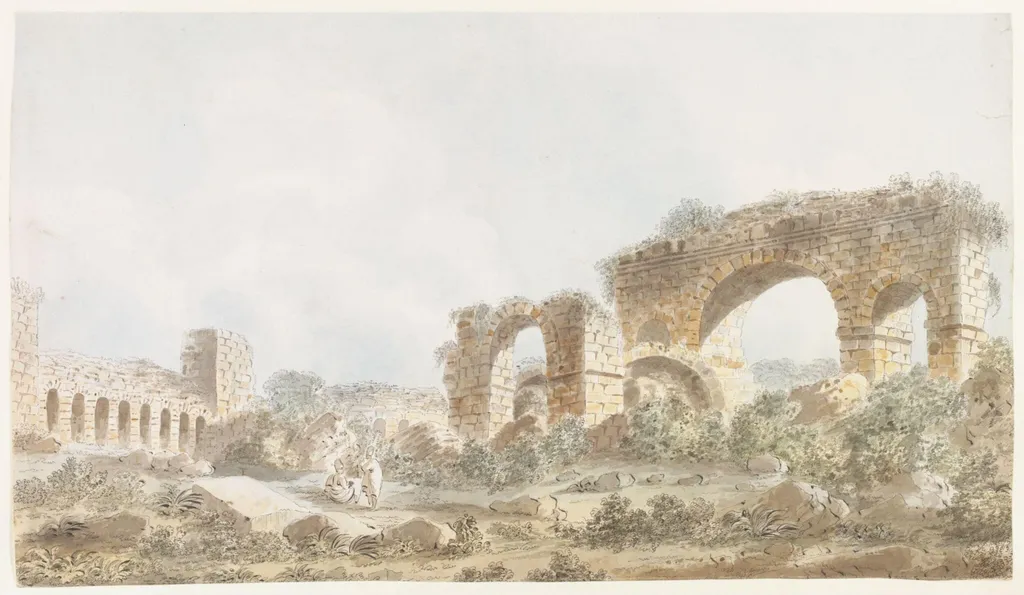
Interior of the Palace of Priam, Alexandria Troas is a watercolor work on paper by the Romanticist artist Michel-François Préaulx. It dates from 1801 and is held in the collection of the Victoria and Albert Museum.
About this work
Overview
This watercolour by Michel-François Préaulx captures the ruins of the Palace of Priam at Alexandria Troas, rendered in delicate tones and subtle washes.
This watercolour by Michel-François Préaulx captures the ruins of the Palace of Priam at Alexandria Troas, rendered in delicate tones and subtle washes. It derives from a series of twenty-four drawings originally compiled in an album associated with Lord Elgin, later adapted into published illustrations. The work reflects early 19th-century antiquarian interest in classical sites, prioritizing atmospheric observation over architectural precision.
Subject & Meaning
The scene portrays a tranquil, overgrown ruin: crumbling stone arches, weathered walls, and a narrow stream winding through the debris. Two small figures rest beside the water, emphasizing solitude and the passage of time. The absence of human activity or grandeur suggests a meditation on decay and memory, aligning with Romantic-era sensibilities that found poignancy in abandoned antiquity.
Technique & Style
Preaulx employed soft watercolour washes to convey the quiet erosion of stone and the diffused light of an overcast day. Gentle shading and muted hues—ochres, greys, and pale greens—enhance the sense of stillness. The composition avoids dramatic contrast, instead using delicate lines and layered transparency to suggest texture and depth without sharp definition.
History & Provenance
The watercolour originated in a collection of twenty-four drawings linked to Lord Elgin’s travels. One variant of the arch motif was later engraved in E.D. Clarke’s 1812 travelogue, indicating its circulation among antiquarian circles. The piece entered the market in 1977 when it was sold at Christie’s, marking its transition from private collection to public record.
Context
Created during a period of heightened European interest in classical ruins, the work reflects the broader trend of topographical documentation of ancient sites in Anatolia. Unlike grand archaeological reconstructions, Préaulx’s approach favored intimate, contemplative views, aligning with emerging Romantic ideals that valued emotional resonance over scholarly reconstruction.
Legacy
Though not widely exhibited, the watercolour contributes to a modest but significant corpus of early 19th-century topographical watercolours documenting the Eastern Mediterranean. Its survival and sale history underscore its role as a material witness to the transition from private antiquarian study to public heritage awareness.
Artist & collection
Artist
Michel-François Préaulx made detailed watercolours of Mediterranean harbours, palaces, and battle scenes in the late 1700s.

 The Bridge and Goats
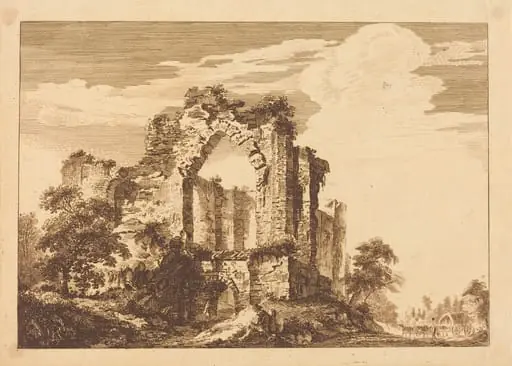 Ruins with a Seated Man, and a Covered Wagon in the Distance
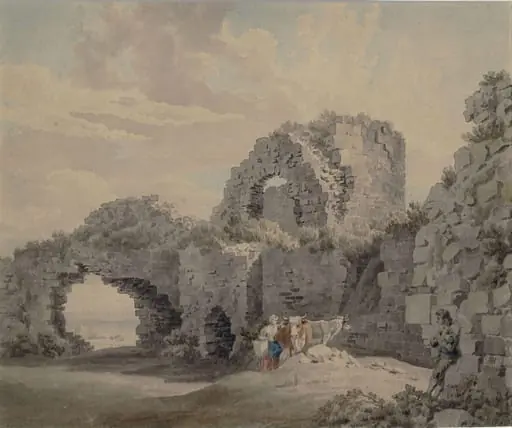 Ruins of Pevensey Castle
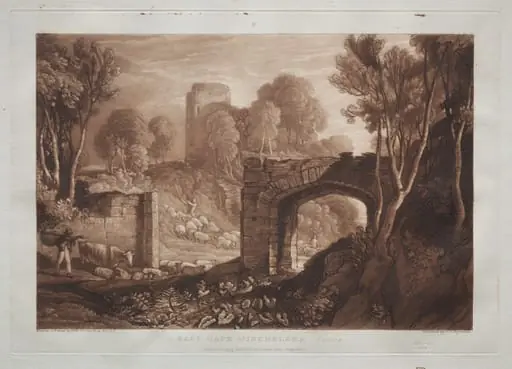 Liber Studiorum: East Gate, Winchelsea, Sussex
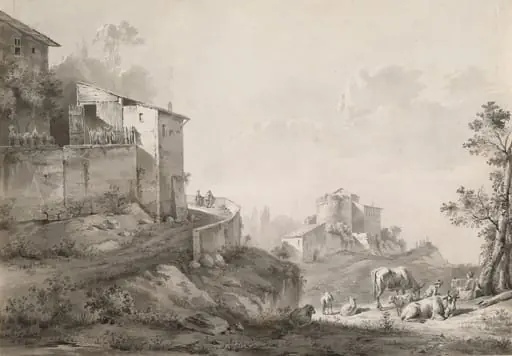 A Sunlit Landscape with Hilltop Houses
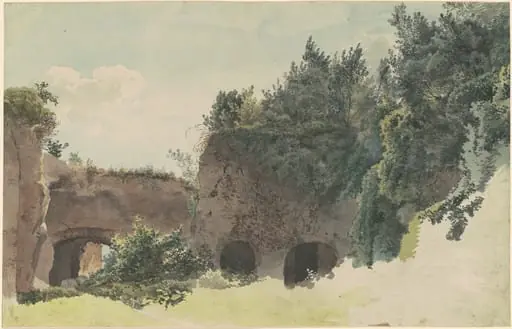 Ancient Roman Ruins Overgrown with Trees and Bushes
 Untitled
 Santa Constanza, Rome
 Landscape with Bridge
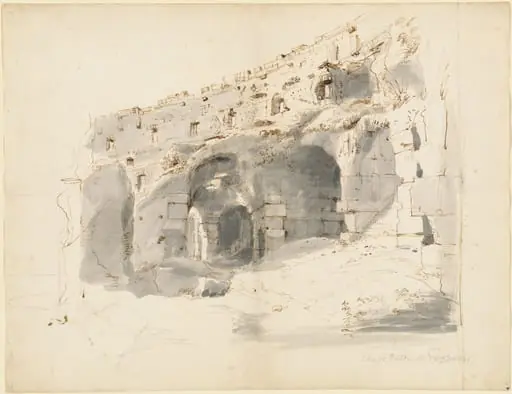 The Ruins of an Ancient Amphitheater
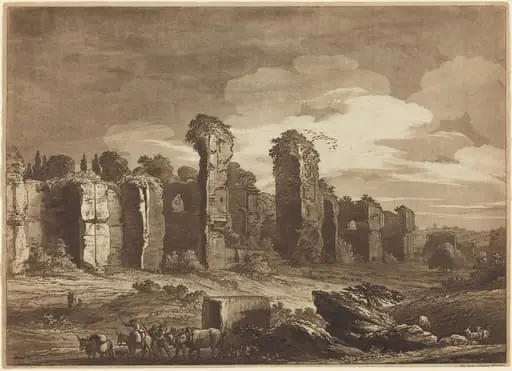 View of the Remains of Caracalla's Baths, Taken from the Jesuits Gardens at Rome
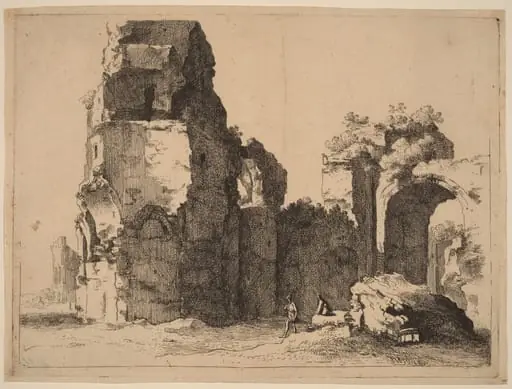 Ruins
Ruins