Artwork
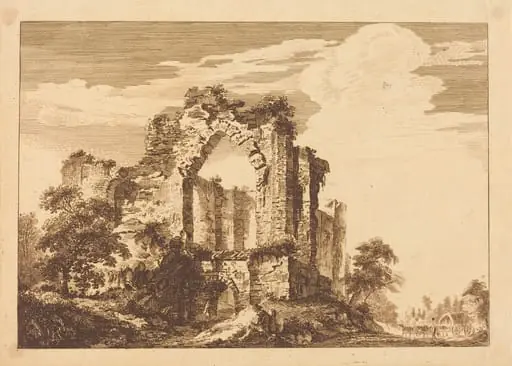
View of the Remains of Caracalla's Baths, Taken from the Jesuits Gardens at Rome
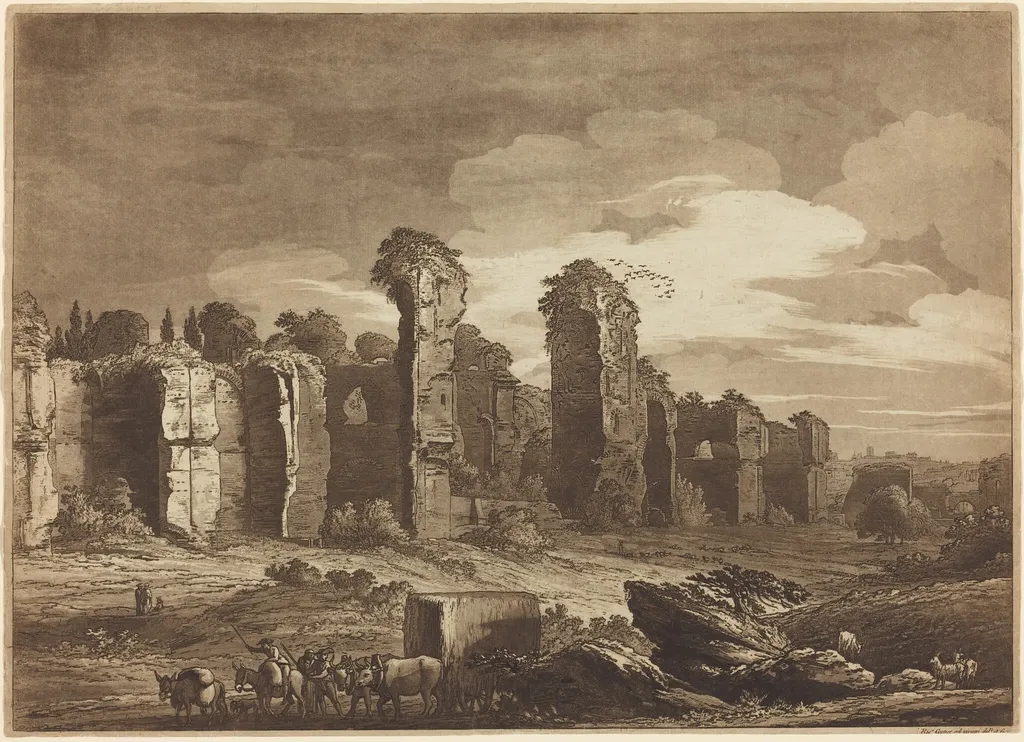
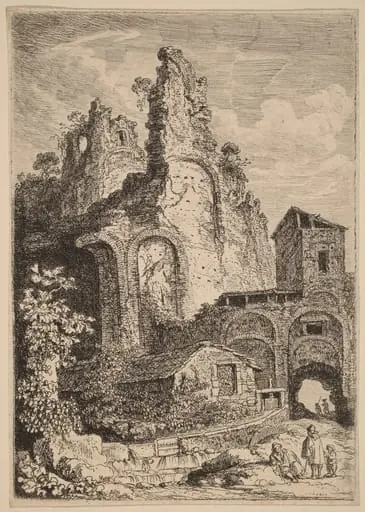
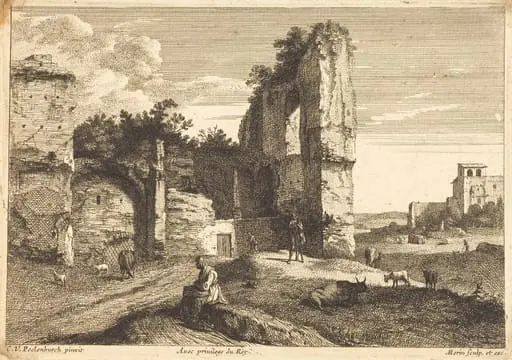
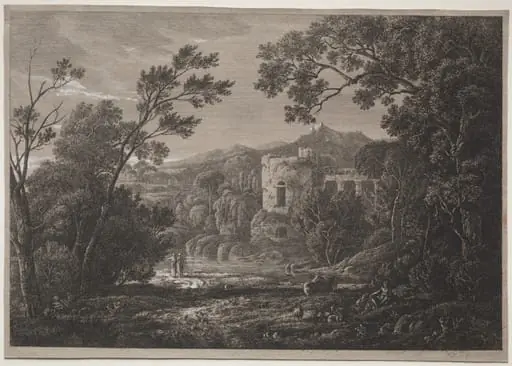
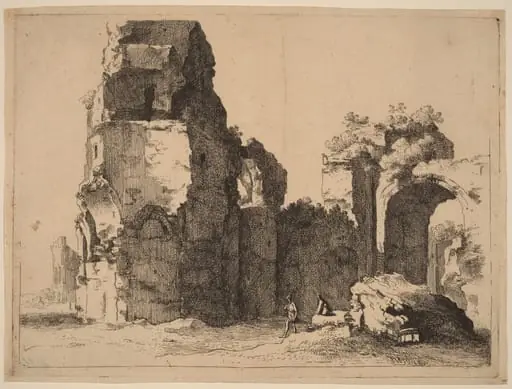
View of the Remains of Caracalla's Baths, Taken from the Jesuits Gardens at Rome is an ink print by the Romanticist artist Richard Cooper II. It dates from 1778 and is held in the collection of the National Gallery of Art.
About this work
Richard Cooper II made this in 1778 during the Grand Tour era, when Europeans traveled to sketch ruins.
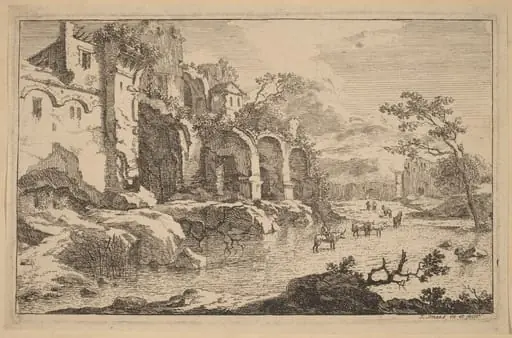
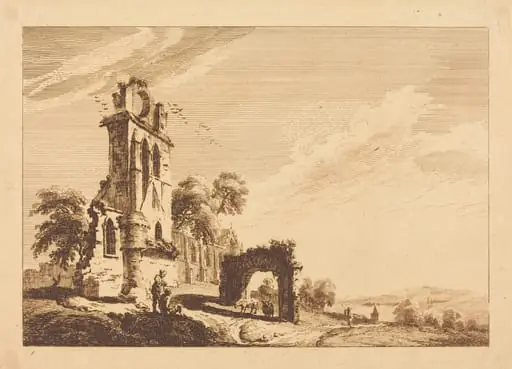
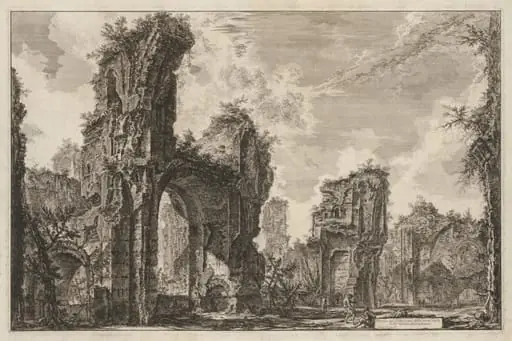
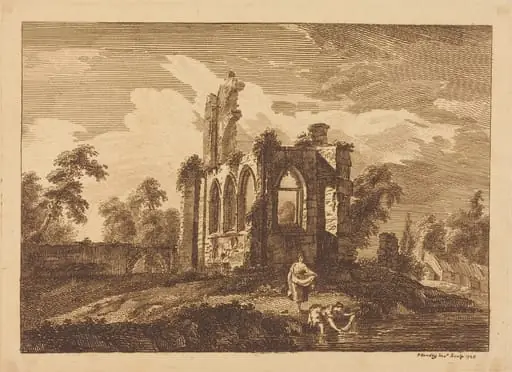
This print shows ancient Roman bath ruins rising behind a grassy hill. The artist used etching and aquatint, a method that mixes acid and resin to make soft gray tones.
Richard Cooper II made this in 1778 during the Grand Tour era, when Europeans traveled to sketch ruins. The print captures the ruins’ quiet, crumbly beauty without showing people.
Look at how the overgrown plants frame the stones. Compare this to Cooper’s earlier work in Rome.
Cooper II, Richard
Overview
Created in 1778, this print by Richard Cooper II depicts the ruins of the Baths of Caracalla as seen from the Jesuits' gardens in Rome. Executed in etching and aquatint on laid paper, it belongs to a tradition of topographical prints made during the Grand Tour. The image emphasizes the quiet decay of ancient architecture, rendered in subtle brown tones without human figures or dramatic intervention.
Subject & Meaning
The scene focuses on the weathered stone remains of the imperial baths, framed by wild vegetation that softens their monumental scale. The absence of people underscores a contemplative mood, inviting reflection on time and impermanence. The view from the Jesuits' gardens offers a private, intimate perspective, contrasting with more formal depictions of Roman ruins common in the period.
Technique & Style
Cooper employed etching for precise line work and aquatint to achieve delicate gradations of gray, mimicking the soft light and texture of aged stone. The technique allowed him to suggest atmospheric depth and the mossy, crumbling surfaces of the ruins. His handling of tone avoids sharp contrasts, favoring a muted, harmonious palette that enhances the sense of quiet ruin.
History & Provenance
Made during Cooper’s time in Rome as part of the Grand Tour, this print reflects the growing interest among British travelers in documenting classical antiquities. It was likely produced for a private audience rather than public sale, consistent with the practice of artists recording personal observations. Its survival suggests it was valued as a record of a specific vantage point now lost to time.
Context
In the late 18th century, Roman ruins were studied as both archaeological sites and aesthetic subjects. Cooper’s approach diverged from grandiose reconstructions, instead capturing the organic reclamation of architecture by nature. His work aligns with emerging Romantic sensibilities that found beauty in decay, contrasting with earlier neoclassical ideals of order and restoration.
Legacy
This print contributes to a body of work that shifted the perception of ancient ruins from relics to evocative landscapes. Cooper’s restrained style influenced later topographical artists who prioritized atmosphere over spectacle. While not widely reproduced, it remains a quiet testament to the personal, observational mode of Grand Tour drawing.
Artist & collection