Artwork
Die Grosse Grotte auf dem Heidelberger Schlosse (The Large Grotto at Heidelberg Castle)
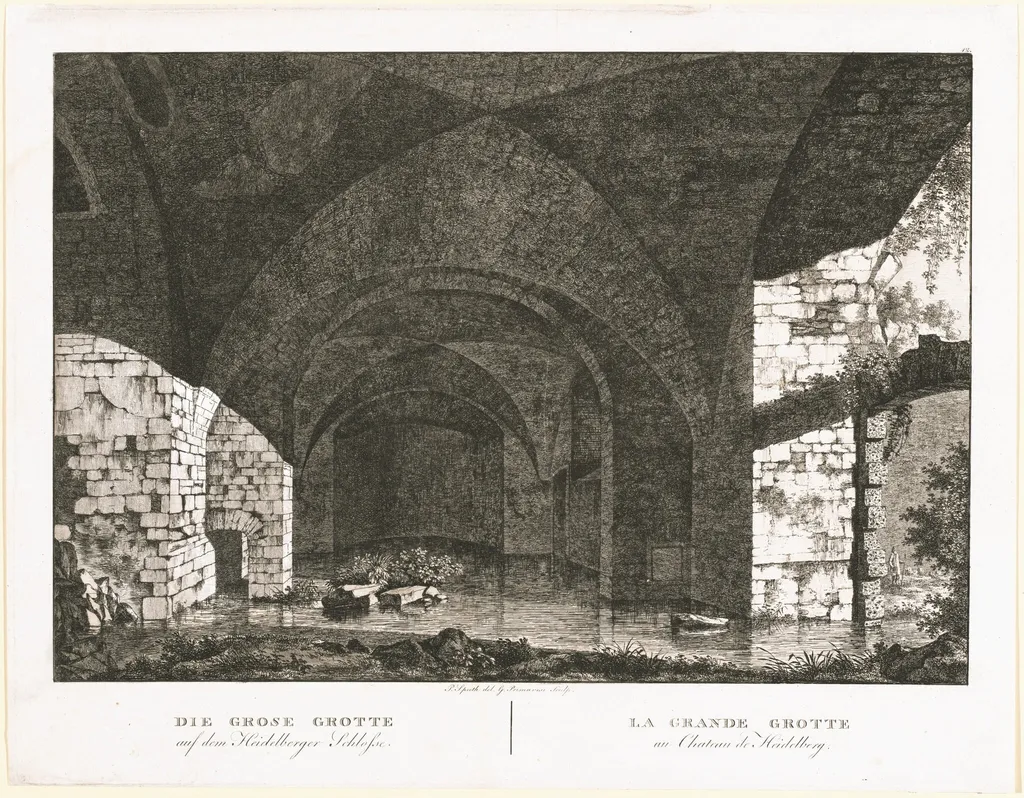
Die Grosse Grotte auf dem Heidelberger Schlosse (The Large Grotto at Heidelberg Castle) is an ink print by the Romanticist artist Georg Primavesi. It dates from 1806 and is held in the collection of the National Gallery of Art.
About this work
Overview
Georg Primavesi’s 1806 print, titled *Die Grosse Grotte auf dem Heidelberger Schlosse*, is an etching combined with aquatint on wove paper. The work records a stone grotto within the grounds of Heidelberg Castle, presenting the site as it appeared in the early nineteenth century.
Subject & Meaning
The image centers on a deteriorating stone cavern whose vaulted arches frame a shallow pool of water. Fragmented walls and a few diminutive figures near the water’s edge suggest a visited, perhaps tourist, locale, emphasizing the passage of time and the romantic allure of ruin.
Technique & Style
Primavesi employed aquatint alongside traditional etching to achieve tonal gradations. The method allows soft, blended shadows in the water and stone, giving the surface a near‑painterly quality while retaining the crisp line work characteristic of printmaking.
History & Provenance
Created in 1806, the print reflects the period’s fascination with historic sites and the burgeoning market for souvenir images of German landmarks. It was likely produced for sale to visitors of Heidelberg Castle, though specific ownership records are scarce.
Context
During the early 1800s, the Romantic movement encouraged artists to depict ruins and natural decay as symbols of the sublime. Primavesi’s depiction of the grotto aligns with this trend, offering a visual record of a celebrated architectural feature within the castle complex.
Artist & collection


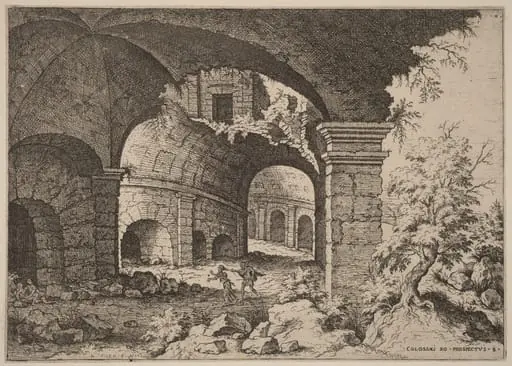 Eighth View of the Colosseum
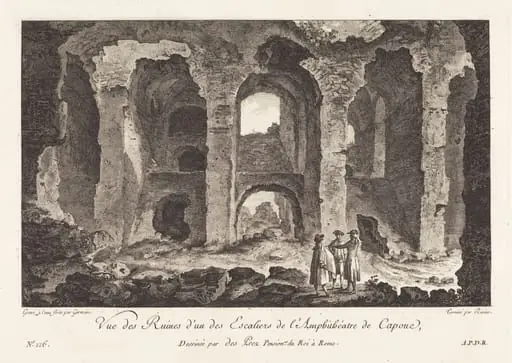 Vue des Ruines d'un des Escaliers de l'Amphithéatre de Capue
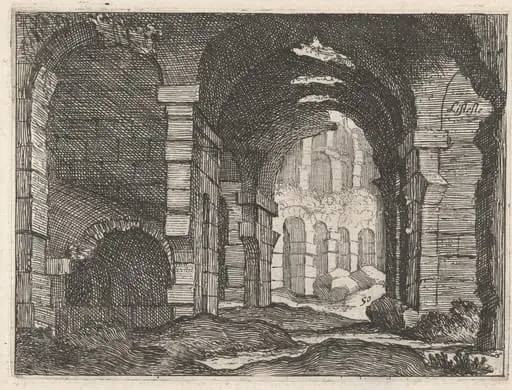 The Ruins of the Colosseum
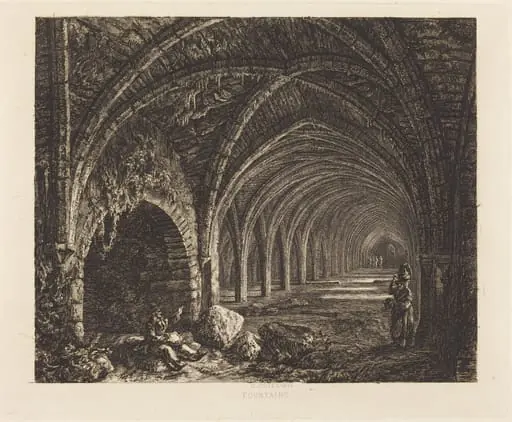 Fountains
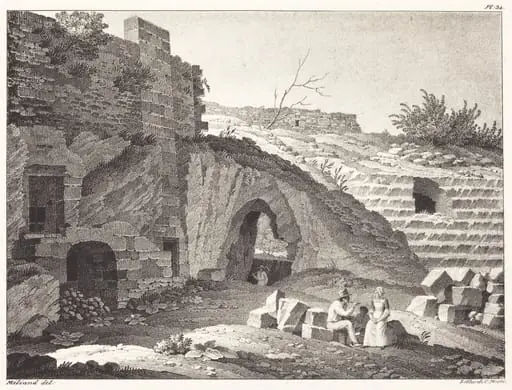 Rustics Picnicking in Ruins
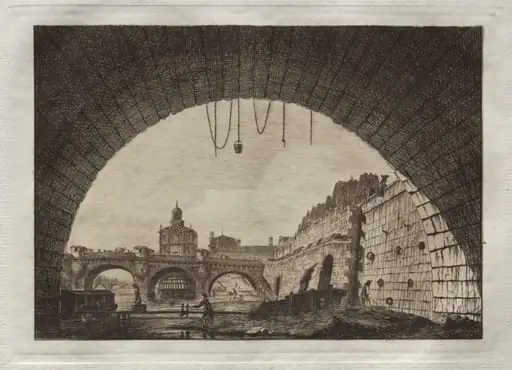 Le Pont Neuf et la Samaritaine
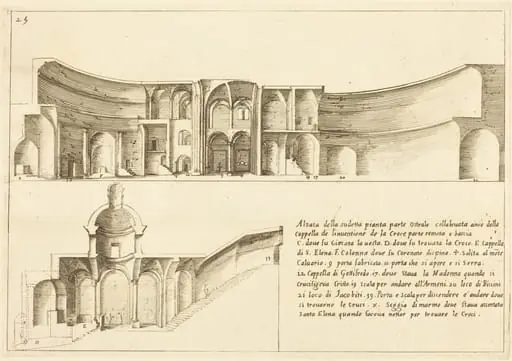 Elevation of the Chapel of the Invention of the Cross
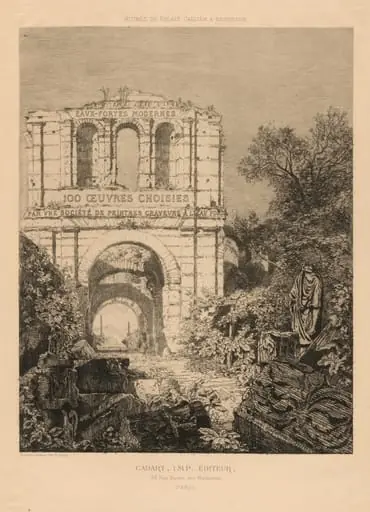 Ruines du Palais Gallien à Bordeaux
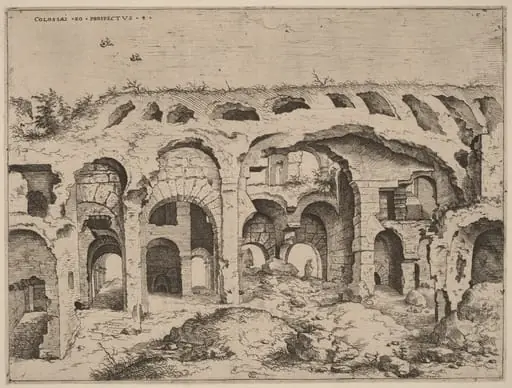 Fourth View of the Colosseum
 H Beard Print Collection
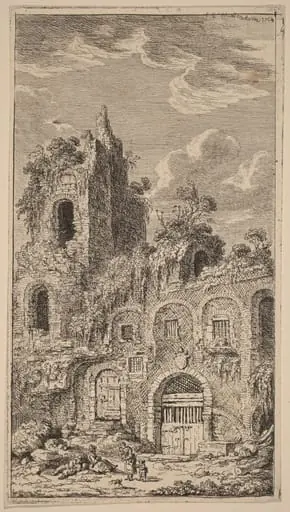 Fragment of the Old City Wall at San Giovanni Laterano
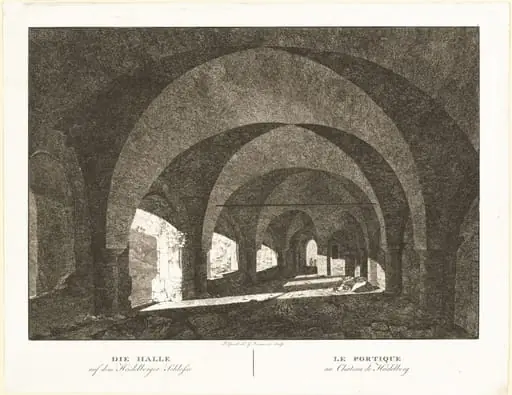 Die Halle auf dem Heidelberger Schlosse (The Hall of Heidelberg Castle)