Artwork
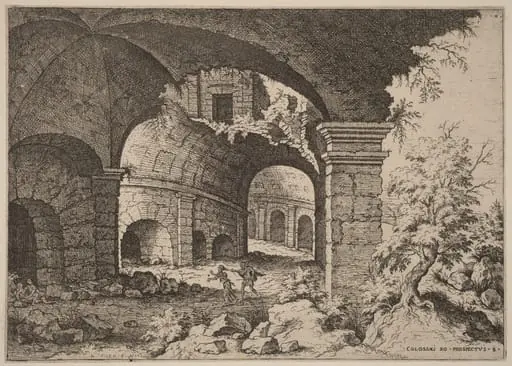
Fourth View of the Colosseum
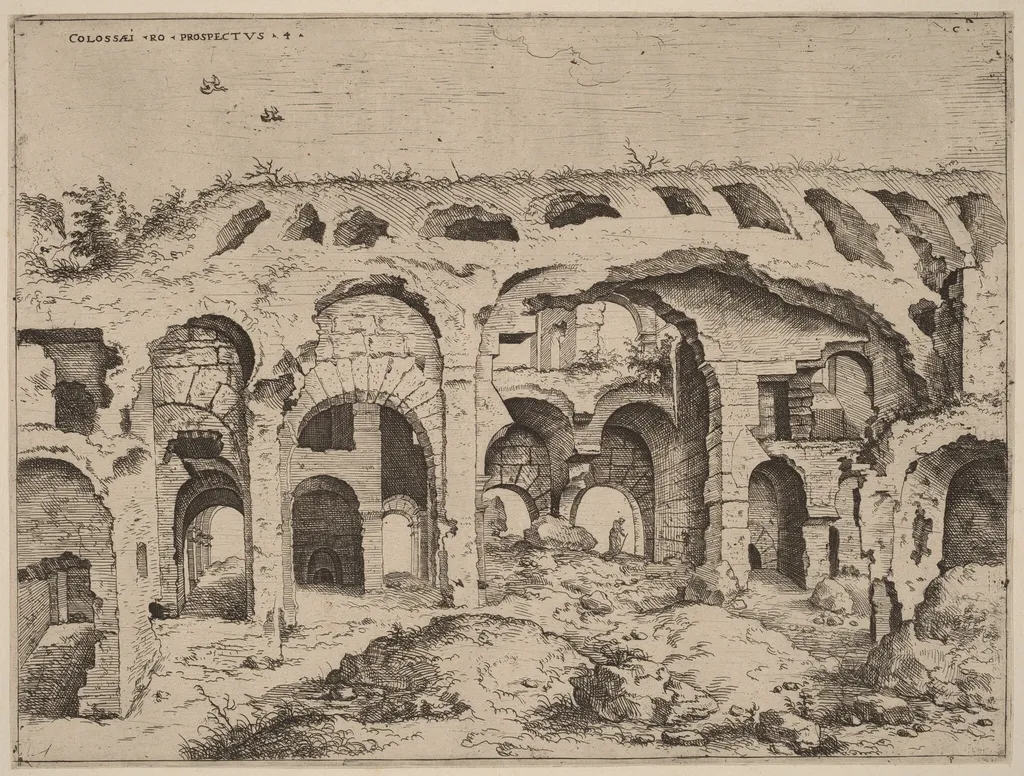
Fourth View of the Colosseum is an ink print by the Renaissance artist Hieronymus Cock. It dates from 1550 and is held in the collection of the National Gallery of Art.
About this work
Overview
Created around 1550 by Hieronymus Cock, this etching on laid paper presents a precise depiction of the Colosseum’s interior ruins.
Created around 1550 by Hieronymus Cock, this etching on laid paper presents a precise depiction of the Colosseum’s interior ruins. As one of over a thousand prints produced by Cock, it reflects his role in advancing printmaking as a reproducible art form. The work belongs to a series of Roman views, emphasizing architectural detail over narrative, and exemplifies the Renaissance interest in antiquity through measured observation.
Subject & Meaning
The image captures the Colosseum as a decaying monument, its arches and columns partially collapsed, surrounded by sparse vegetation and rocky terrain. A solitary figure in the foreground, barely illuminated, underscores the scale and solitude of the ruin. Rather than glorifying imperial power, the scene invites contemplation of time’s erosion, aligning with humanist fascination with Rome’s fallen grandeur.
Technique & Style
Cock employed fine, controlled etching lines to render the texture of weathered stone, the depth of shadowed arches, and the delicate gradations of landscape. The use of laid paper, with its subtle chain lines, enhances the tactile quality of the print. The composition balances architectural precision with atmospheric depth, reflecting the influence of northern Renaissance draftsmanship and topographical accuracy.
History & Provenance
Produced through Cock’s Antwerp publishing house, the print was part of a broader commercial effort to distribute images of classical sites to European collectors. Though its early ownership is undocumented, it circulated widely among scholars and artists drawn to Roman antiquities. Its survival in multiple institutional collections suggests enduring interest in its topographical fidelity.
Context
In mid-16th-century Europe, interest in ancient Rome surged among humanists and travelers. Cock’s series of Roman views responded to this trend, offering accessible, detailed images for those unable to visit the city. His prints contributed to a growing visual archive of antiquities, bridging scholarly inquiry and artistic representation during the Renaissance revival of classical themes.
Legacy
Cock’s etching helped standardize the depiction of Roman ruins in print, influencing later topographical artists and antiquarians. His method of combining architectural accuracy with atmospheric detail became a model for subsequent generations. Though not widely known today, his work laid groundwork for the systematic documentation of heritage sites in early modern Europe.
Artist & collection
Artist
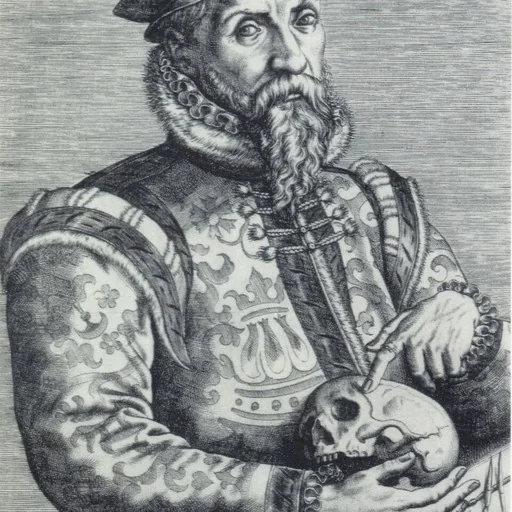
Hieronymus Cock, or Hieronymus Wellens de Cock, (1518 – 3 October 1570) was a Flemish painter and etcher as well as a publisher and distributor of prints.

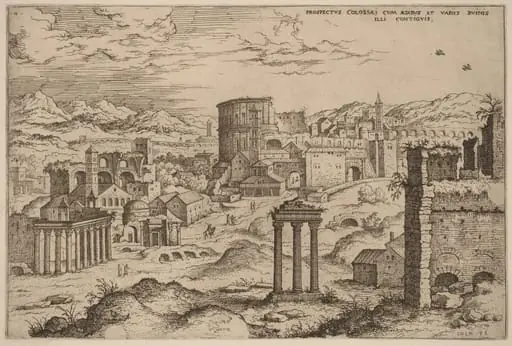
 Third View of the Colosseum
 Seventh View of the Colosseum
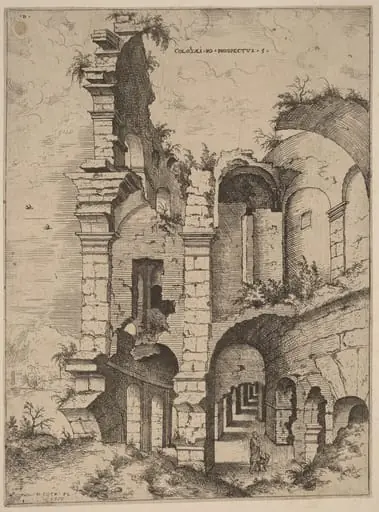 Fifth View of the Colosseum
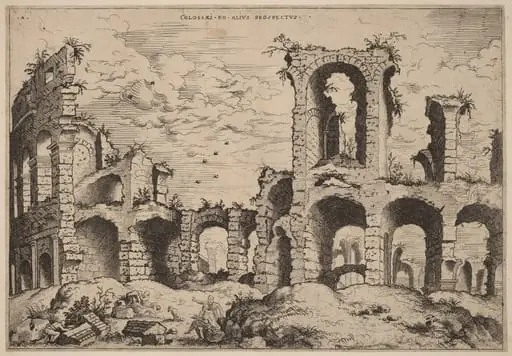 Second View of the Colosseum
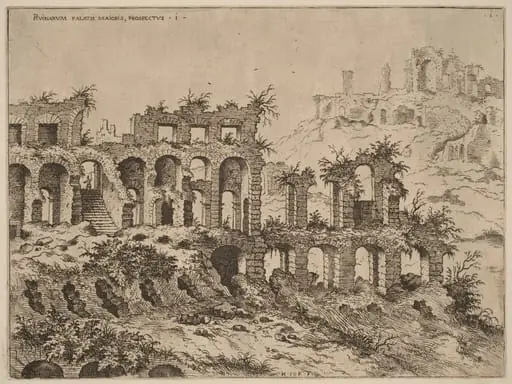 View of the Colosseum with the Palatine in the Background
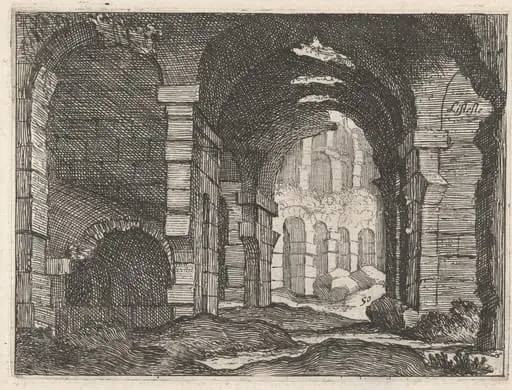 The Ruins of the Colosseum
 The Septizonium and the Colosseum
 The Ruins of the Colosseum
 Colossaei. Ro. Prospectus. 3 (Third View of the Colosseum in Rome)