Artwork
The Ecstasy of the Magdalen
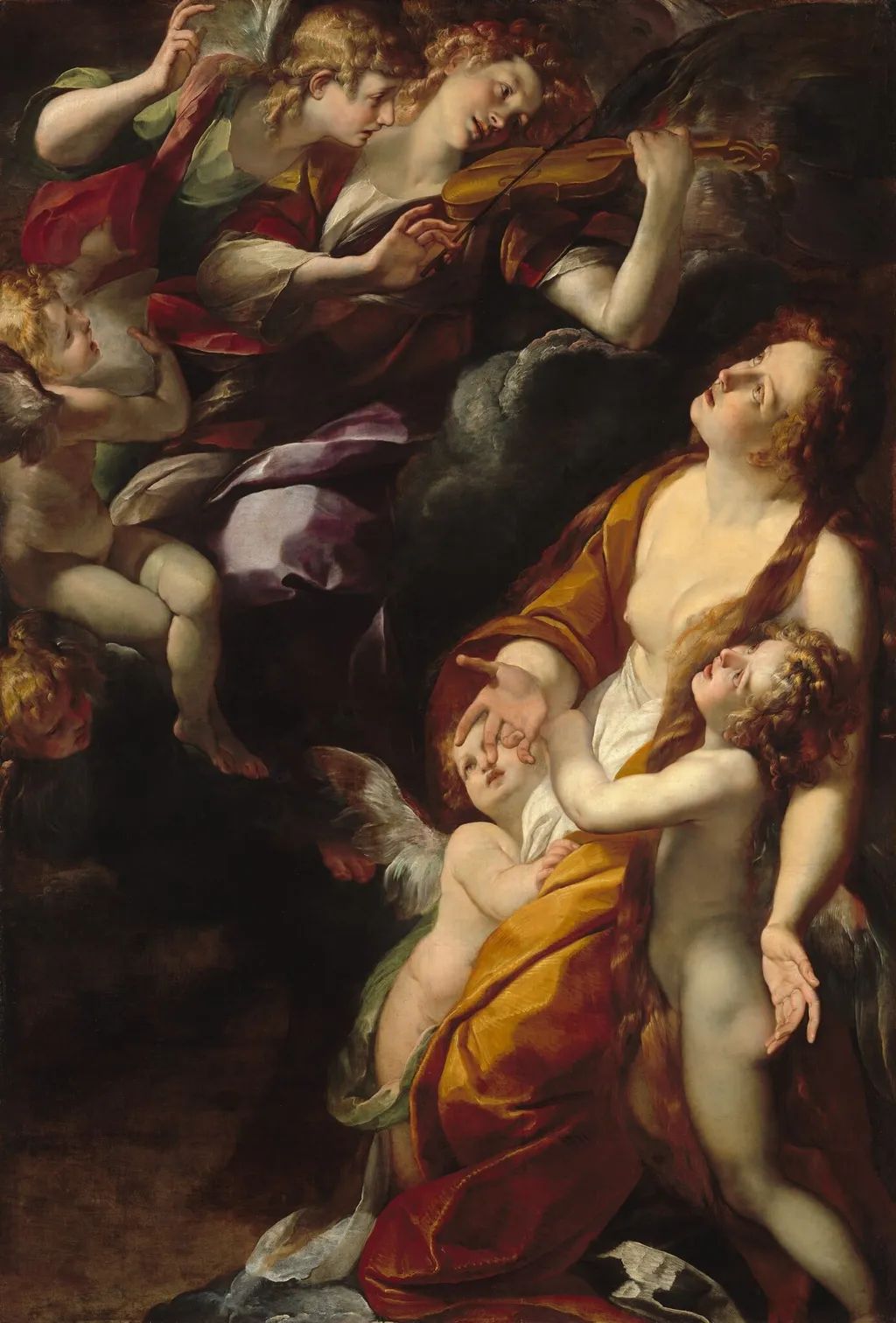
The Ecstasy of the Magdalen is an oil painting by the Baroque artist Giulio Cesare Procaccini. It dates from 1618 and is held in the collection of the National Gallery of Art.
About this work
Overview
Deep reds, golds, and luminous whites dominate the palette, emphasizing the central figure’s radiant skin against the surrounding shadows.
Giulio Cesare Procaccini’s *The Ecstasy of the Magdalen* (1618) is an oil on canvas created in Milan during the early Baroque period. The work portrays a suspended female figure, eyes closed, surrounded by winged beings and musicians in a dark, swirling atmosphere. Deep reds, golds, and luminous whites dominate the palette, emphasizing the central figure’s radiant skin against the surrounding shadows.
Subject & Meaning
The central figure represents Mary Magdalene in a moment of spiritual rapture, her tranquil expression suggesting an inner vision beyond the material world. The surrounding angels and instrumentalists, floating weightlessly, reinforce a sense of heavenly ascent, while the ambiguous space eliminates earthly references, inviting viewers to contemplate the transcendental nature of devotion.
Technique & Style
Procaccini employs dramatic chiaroscuro, contrasting intense, saturated tones with deep shadows to model forms and convey emotional intensity. The fluid brushwork and soft transitions between light and dark create a dreamlike ambience. The composition’s lack of architectural grounding and the swirling arrangement of figures are characteristic of early Baroque dynamism and theatricality.
History & Provenance
The painting was produced under the patronage of Cardinal Federico Borromeo, a leading figure in Milan’s artistic circles who supported Counter‑Reformation projects. Procaccini collaborated with contemporaries such as Giovanni Battista Crespi and Pier Francesco Mazzucchelli during this period, though the work’s later ownership record remains limited to ecclesiastical collections.
Context
Created at a time when Milanese artists were integrating the emotional vigor of the Baroque with the devotional aims of the Counter‑Reformation, the work reflects the era’s emphasis on personal piety and affective experience. Its subject, Mary Magdalene, was a popular focus for artists seeking to illustrate repentance and divine love, aligning with the spiritual agenda promoted by Borromeo’s reforms.
Own this work as a print
Artist & collection
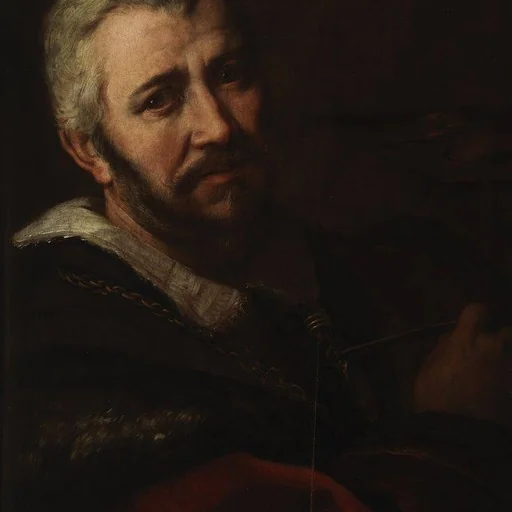
Artist
Giulio Cesare Procaccini (30 May 1574 – 14 November 1625) was an Italian painter and sculptor of the early Baroque era in Milan.