Artwork
Topographical drawing
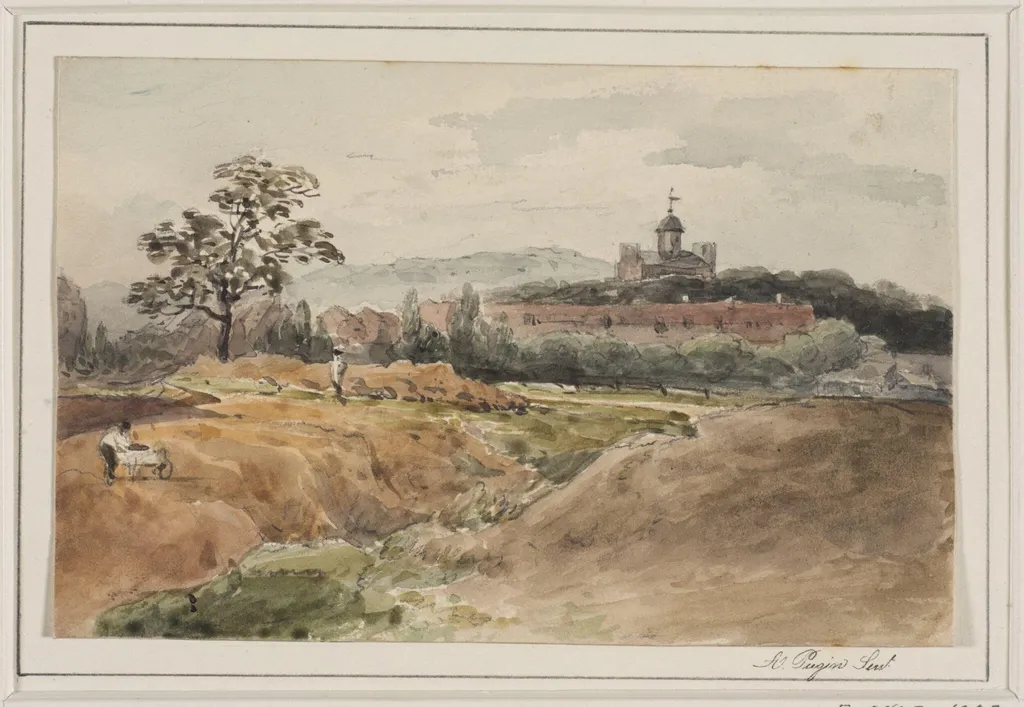
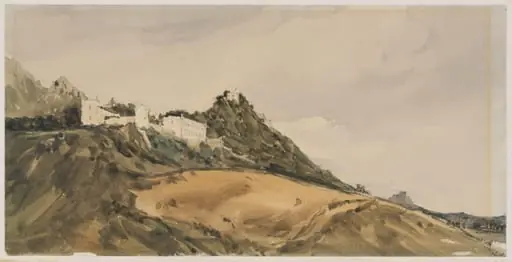
Topographical drawing is a watercolor work on paper by the Romanticist artist pugin. It dates from 1807 and is held in the collection of the Victoria and Albert Museum.
About this work
Overview
This 1807 watercolour by Augustus Welby Northmore Pugin records a view of the Smallpox Hospital situated on Gray’s Inn Lane in London. The composition places the institutional building amid a modest rural setting, with cultivated fields occupying the foreground where two labourers are shown at work.
Subject & Meaning
The drawing combines architectural documentation with a glimpse of everyday activity, highlighting the hospital’s presence within its surrounding landscape. By including the figures engaged in fieldwork, Pugin underscores the juxtaposition of public health infrastructure and the agrarian labor that supported the city’s outskirts.
Technique & Style
Executed in a fluid watercolour wash, the work favours broad, spontaneous strokes over meticulous detailing. Pugin employs a muted palette of earth tones, allowing forms to merge softly and convey atmospheric light rather than precise architectural rendering.
History & Provenance
Created early in Pugin’s career, the piece reflects his interest in topographical studies that later informed his Gothic Revival architecture. The watercolour entered a private collection before being acquired by a public institution, where it remains catalogued as an example of early 19th‑century urban‑rural documentation.
Own this work as a print
Artist & collection
Artist
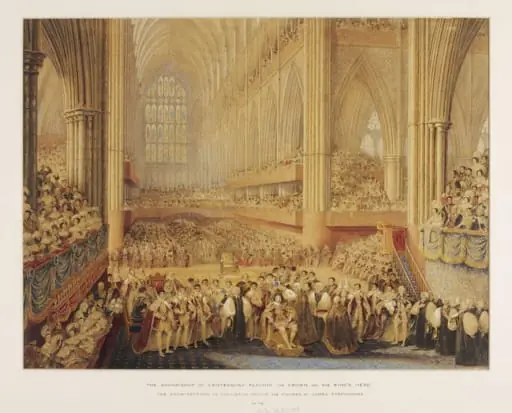
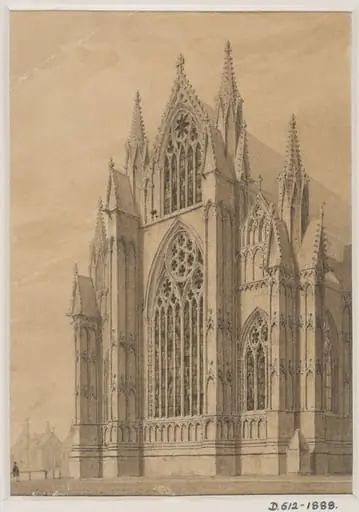
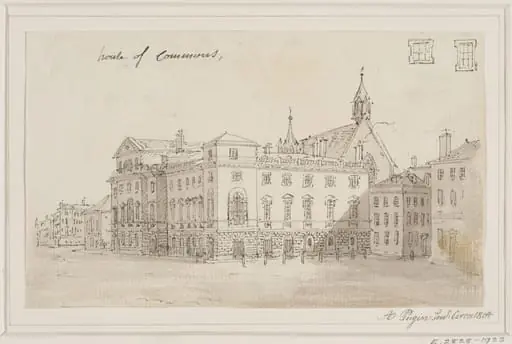
These watercolours and drawings from the early 1800s capture landscapes, buildings, and streets in crisp, exacting lines.

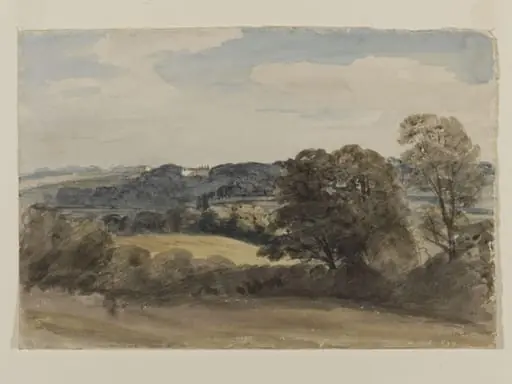 Landscape with buildings in the distance
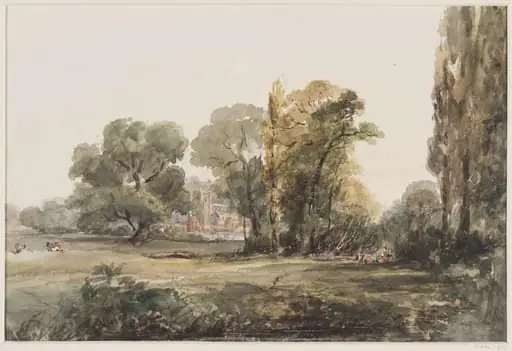 Stowe: a church in the distance, seen amid trees
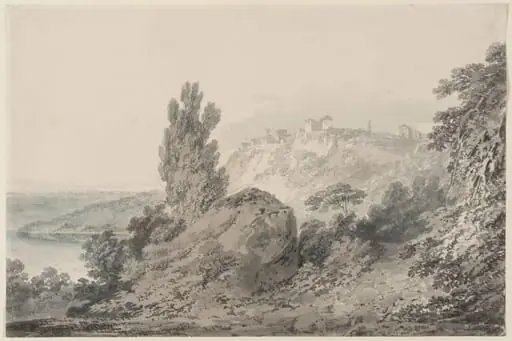 Lake and Town of Nemi
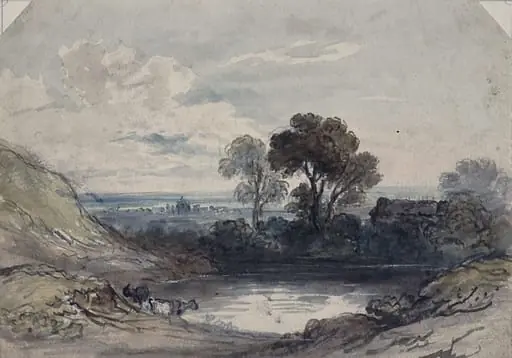 London from Hampstead Heath
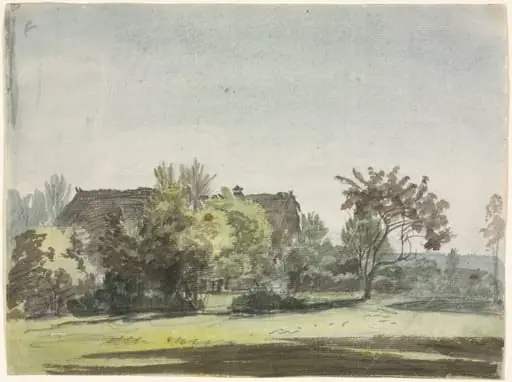 Farmhouse behind Trees
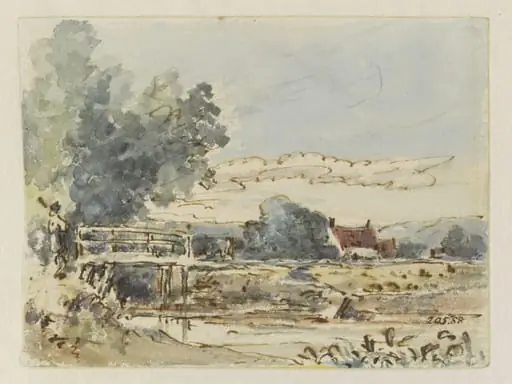 A bridge over a stream, with a cottage behind
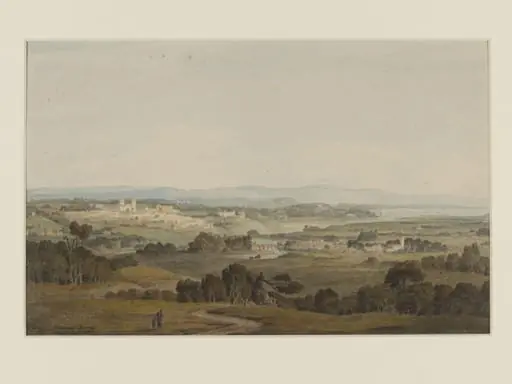 View of Exeter
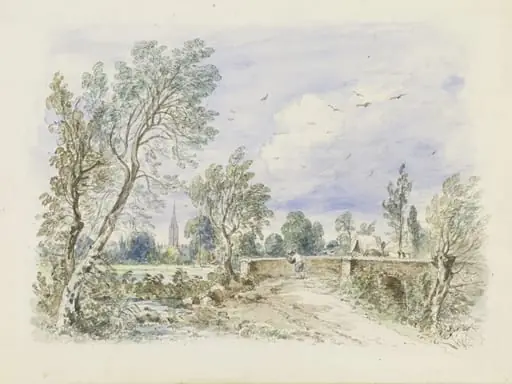 Milford Bridge, with a distant view of Salisbury
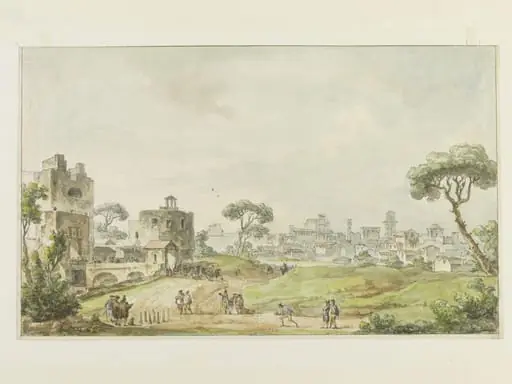 Untitled
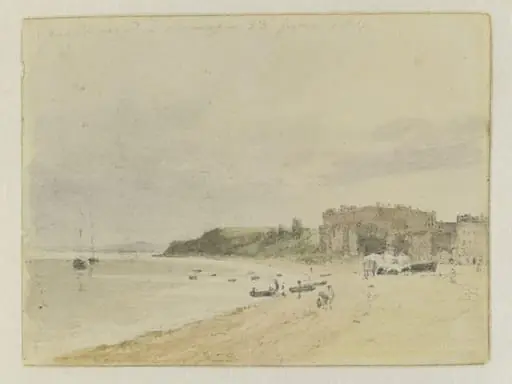 Southend
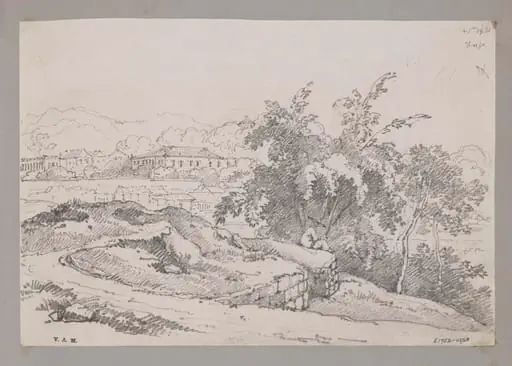 The Casa, Macao, in the gardens of which is Camoens' Cave (the residence of Lady Pereira), Macao
 Manalva Palace