Artwork
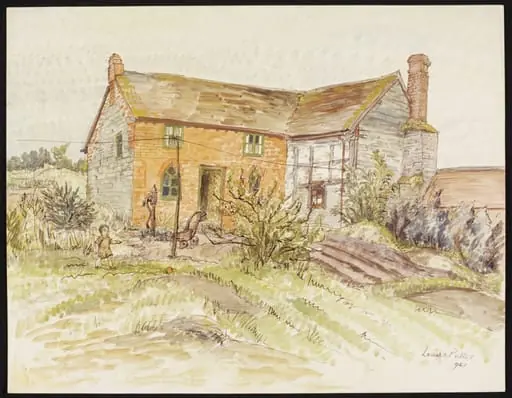
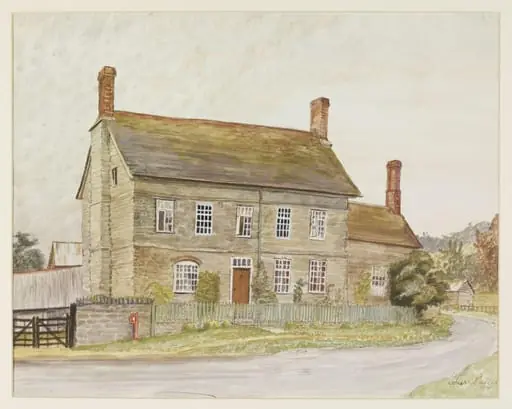
Chantry Farm in Orford
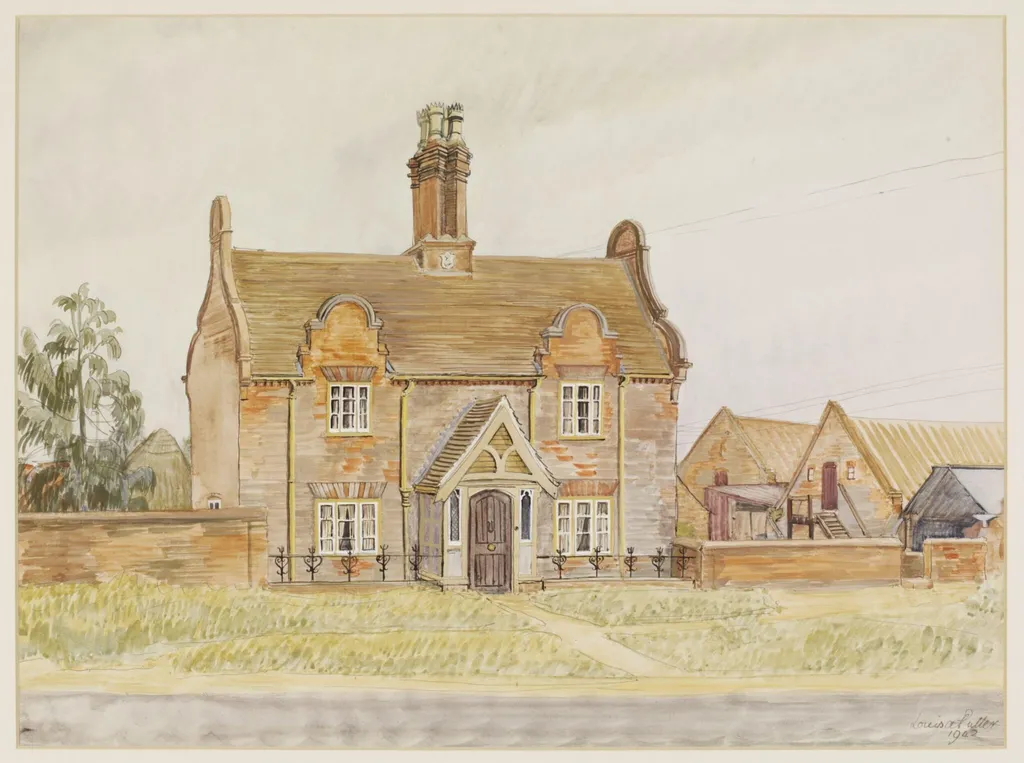
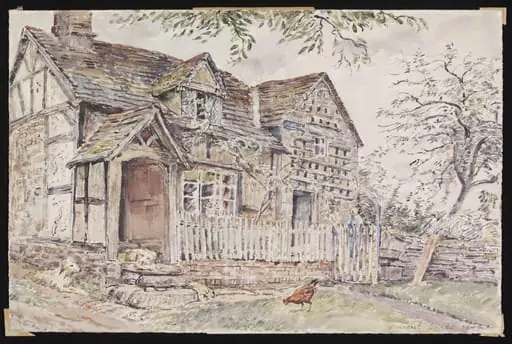
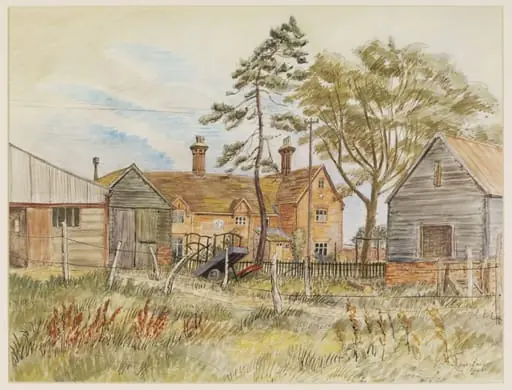
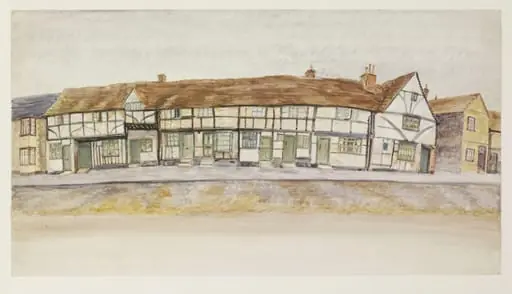
Chantry Farm in Orford is a watercolor work on paper by the Social Realist artist Puller. It is held in the collection of the Victoria and Albert Museum.
About this work
Overview
Chantry Farm in Orford is a 1942 watercolour by artist Puller, created as part of the Recording Britain project.
Chantry Farm in Orford is a 1942 watercolour by artist Puller, created as part of the Recording Britain project. The work captures a modest rural dwelling in Suffolk, rendered in delicate washes and restrained brushwork. It bears the artist’s signature and date, confirming its origin within a larger wartime effort to preserve visual records of Britain’s vernacular architecture before potential loss or transformation.
Subject & Meaning
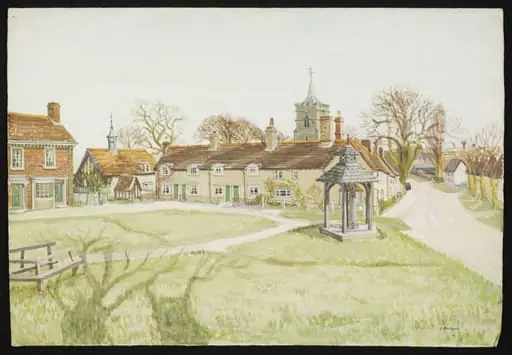
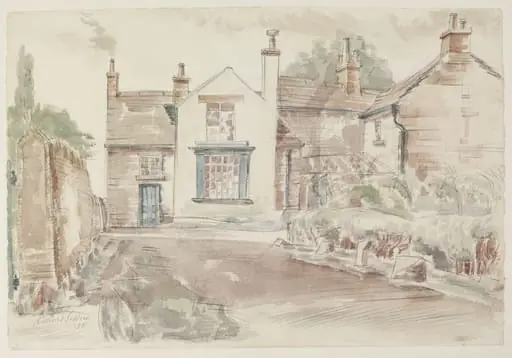
The painting depicts a traditional farmhouse with Dutch gables and a central chimney, flanked by ancillary outbuildings. The composition emphasizes quiet endurance—low fences, weathered stone walls, and a solitary tree suggest a place untouched by modernity. The dark doorway and arched window hint at domestic life, while the overall stillness conveys a sense of continuity amid the upheaval of war.
Technique & Style
Puller employed transparent watercolour with loose, economical strokes to suggest texture and form without detail. Soft washes define the stone walls and wooden roof, while minimal shading preserves the lightness of the medium. The absence of sharp lines and the muted palette reflect a deliberate restraint, aligning with the Recording Britain project’s aim to evoke atmosphere over precision.
History & Provenance
Created in 1942, the work was commissioned by the Recording Britain scheme, initiated by the Pilgrim Trust under Sir Kenneth Clark’s direction. The project sought to document at-risk rural architecture during wartime. Chantry Farm entered the Victoria and Albert Museum’s collection as part of this initiative, preserving it as a record of pre-industrial English countryside.
Context
Recording Britain emerged in 1940 as a cultural preservation effort during the Second World War. Artists were commissioned to record landscapes and buildings deemed vulnerable to bombing, neglect, or modernization. Chantry Farm reflects this mission, capturing a regional architectural type that symbolized continuity and local identity at a time of national uncertainty.
Legacy
The painting remains part of the Recording Britain archive held by the Victoria and Albert Museum, where it contributes to a broader understanding of 20th-century British rural life. Its quiet realism offers insight into how artists responded to wartime anxieties by focusing on enduring, everyday structures rather than grand monuments.
Artist & collection