Artwork
Pigeon House and Post Office, Mansel Lacy
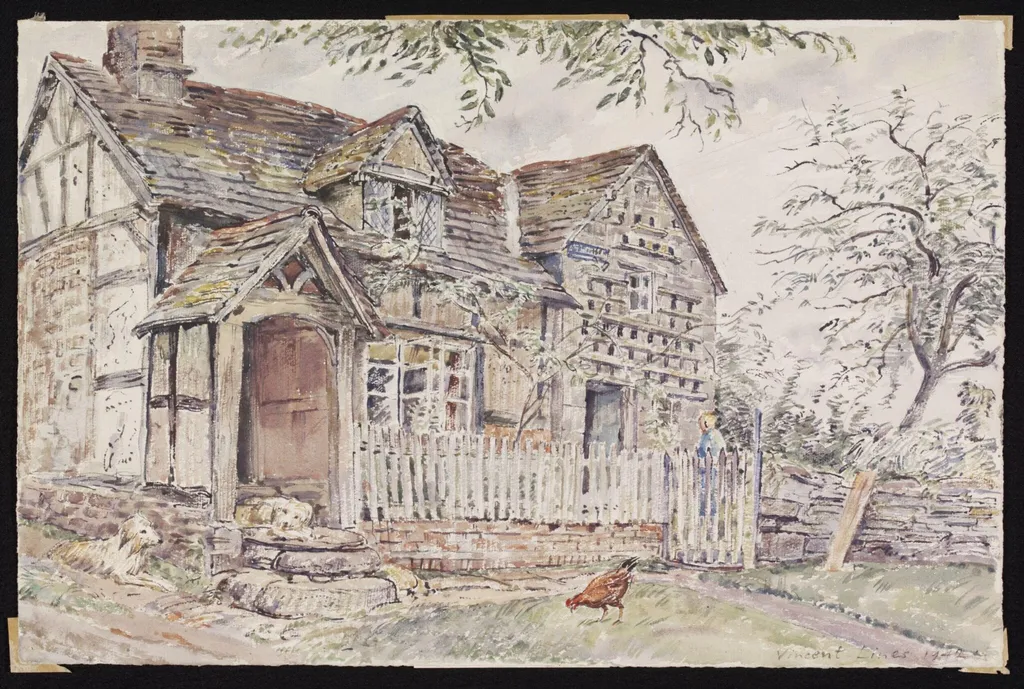
Pigeon House and Post Office, Mansel Lacy is a watercolor work on paper by the Social Realist artist Lines. It dates from 1942 and is held in the collection of the Victoria and Albert Museum.
About this work
Overview
Created in 1942, this watercolour by John Lines portrays two modest rural structures in Mansell Lacy, Herefordshire: a pigeon house and the village post office.
Created in 1942, this watercolour by John Lines portrays two modest rural structures in Mansell Lacy, Herefordshire: a pigeon house and the village post office. It was produced as part of the Recording Britain project, an initiative to visually archive traditional English architecture amid the disruptions of wartime. The work belongs to a broader effort to preserve the visual character of the British countryside before it could be altered or lost.
Subject & Meaning
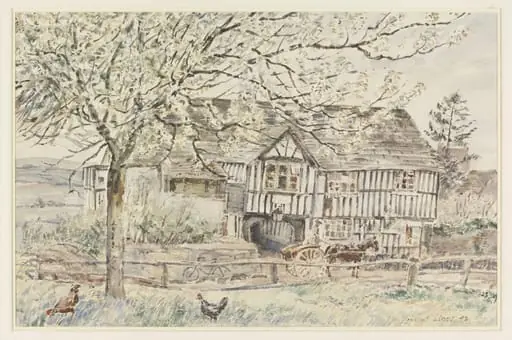
The painting captures everyday rural life through its depiction of functional buildings—a pigeon house for domestic use and a post office serving as a community hub. Figures—a woman near the gate and a dog resting on the grass—add quiet human presence. A chicken in the foreground reinforces the scene’s domestic rhythm. Together, these elements suggest a self-sufficient, unhurried existence rooted in place and routine.
Technique & Style
Lines employed transparent watercolour washes to render the half-timbered buildings with delicate precision. Soft, muted tones convey the weathered textures of wood and plaster, while subtle shifts in light suggest late afternoon. The composition is deliberately uncluttered, with the fence and foreground elements guiding the eye gently through the scene. The medium’s fluidity enhances the sense of stillness and intimacy.
History & Provenance
The work was commissioned by the Pilgrim Trust under the direction of Sir Kenneth Clark as part of the Recording Britain project. Artists were sent across the country to document vernacular architecture at risk from bombing, urban development, or neglect. This piece entered the Victoria and Albert Museum’s collection as part of the project’s archive, where it remains a documented record of pre-war rural England.
Context
During the Second World War, many rural landscapes faced uncertainty due to military use, infrastructure changes, and resource shortages. The Recording Britain project emerged as a cultural response to preserve visual records of places deemed vulnerable. Lines’s painting reflects a national effort to safeguard not just buildings, but the quiet rhythms of everyday life that defined English village identity.
Legacy
The Recording Britain collection, including this watercolour, continues to serve as a historical resource for architectural historians and regional studies. Lines’s work contributes to a broader understanding of how ordinary structures held cultural value during times of upheaval. The painting’s endurance in museum archives underscores its role as a quiet but enduring witness to a vanishing way of life.
Artist & collection

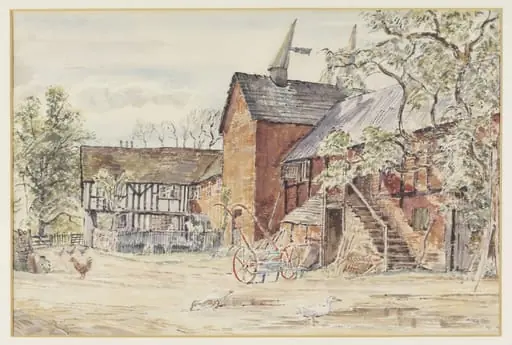
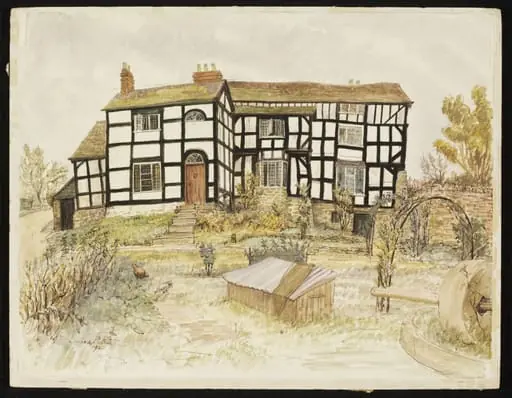 Paytoe Hall, Leintwardine
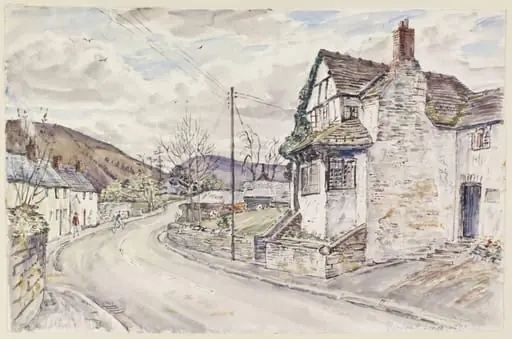 The Old Parsonage, New Radnor
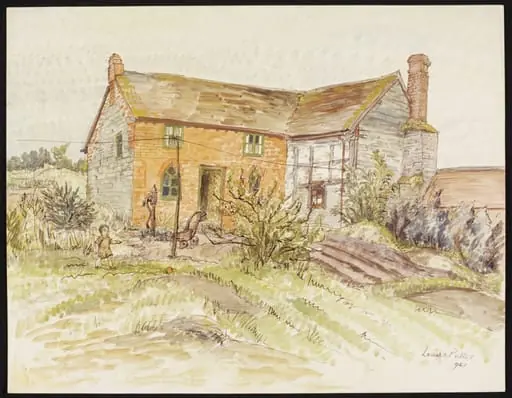 Cottages near Hopton
 Rhydspence
 Cottages at Norton, No.1
 Glebe Farm, Fingest
 Old brick residences in the grounds of the South Kensington Museum (now the Victoria and Albert Museum)
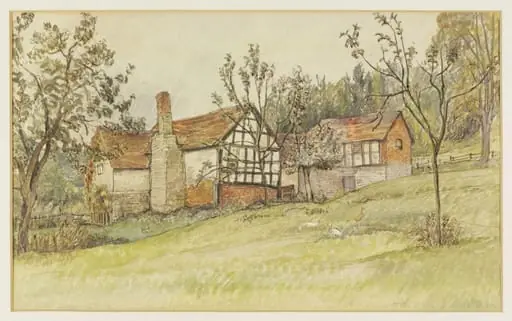 Oldfield Farm, between Leinthall Earls and Richard's Castle
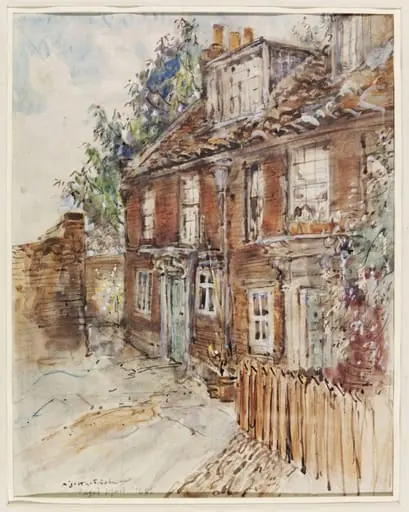 Page's Yard, Chiswick Mall
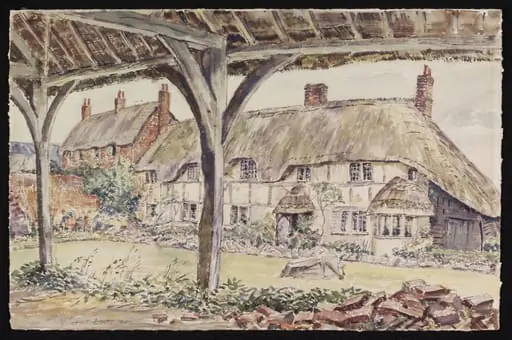 The Old Oxyard, Oare
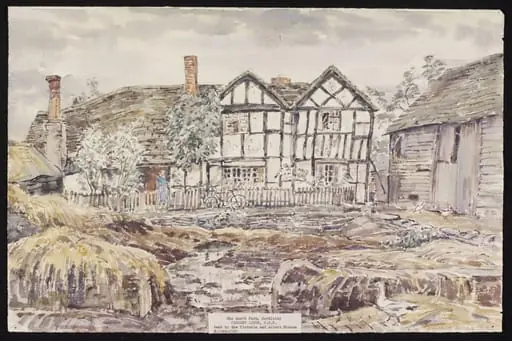 The Quebb Farm, Eardisley