Artwork
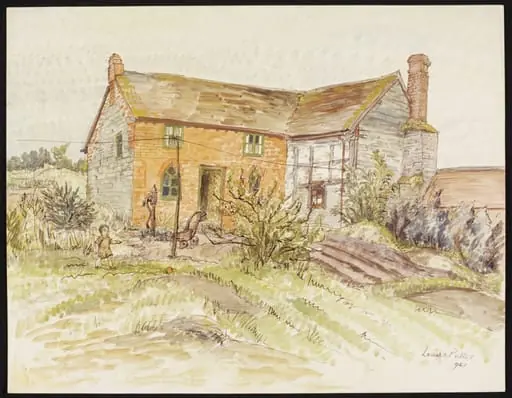
Church Farm, Sudbourne
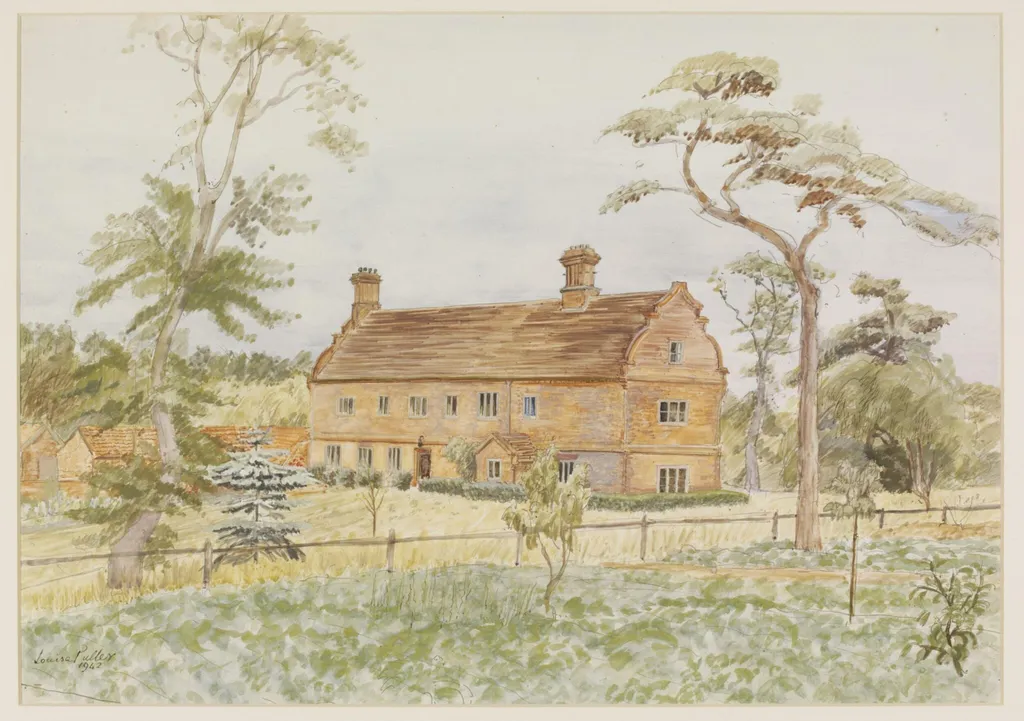
Church Farm, Sudbourne is a watercolor work on paper by the Social Realist artist Puller. It is held in the collection of the Victoria and Albert Museum.
About this work
The artist signed it "Puller, 1942," which tells us this is a quiet watercolor scene.
This painting shows a two-story wooden house with a sloped roof and small windows. The house sits in a grassy yard with a simple wooden fence in front. Trees with green leaves surround it, and the sky above is pale and soft.
The artist signed it "Puller, 1942," which tells us this is a quiet watercolor scene. The brushstrokes are light, almost like a sketch, with no heavy shading.
Next, check out the Victoria and Albert Museum to see more works like this.
Overview
Church Farm, Sudbourne is a 1942 watercolour by Puller, depicting a traditional farmhouse with distinctive moulded eaves set amidst a serene landscape.
Subject & Meaning
The painting captures a quintessential British farmhouse, emphasizing the preservation of rural heritage during a time of war and potential destruction, as part of the Recording Britain scheme.
Technique & Style
Executed in light, sketch-like brushstrokes with minimal shading, the watercolour conveys a sense of quietness, featuring a soft, pale sky, green-leaved trees, and a simple wooden fence enclosing the house.
History & Provenance
Created under the Recording Britain initiative (1940-1946), directed by Sir Kenneth Clark, this work is part of a collection of over 1,500 pieces by 97 artists, aiming to document Britain’s vulnerable landscape and architecture during WWII.
Context
Part of a broader governmental effort to record and preserve national heritage, Church Farm, Sudbourne reflects the wartime concern for preserving cultural and physical landscapes threatened by conflict and modernization.
Artist & collection

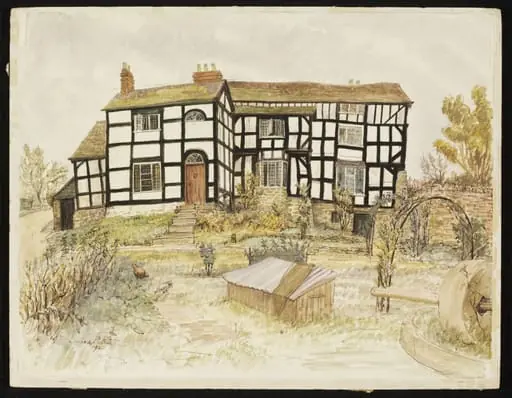 Paytoe Hall, Leintwardine
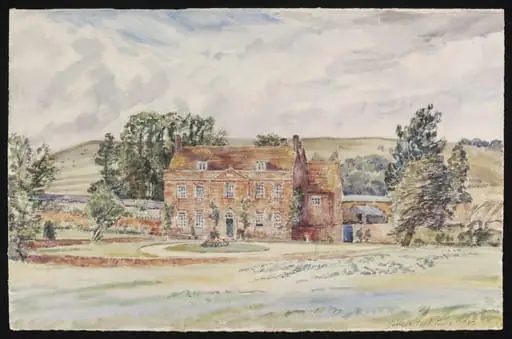 West Wick Manor, near Oare
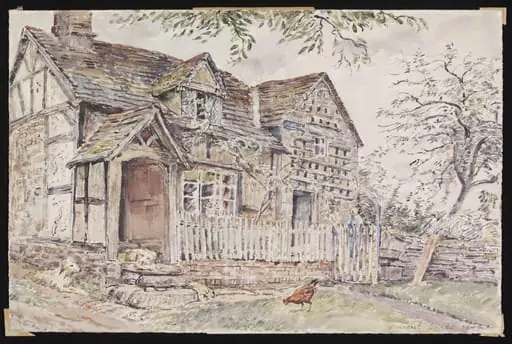 Pigeon House and Post Office, Mansel Lacy
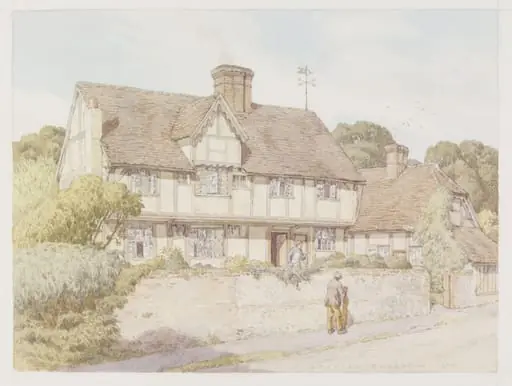 An old Quaker Meeting House, Hedgerley Village
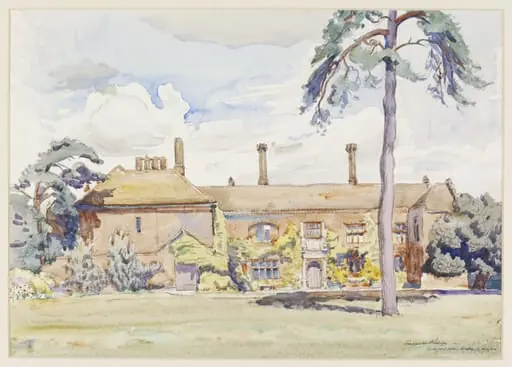 Seckford Hall, Bealings Magna (Garden Front)
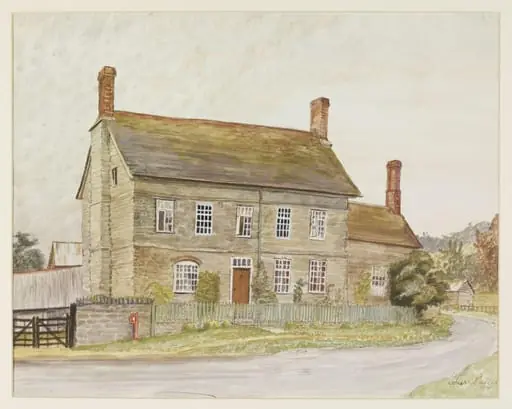 Hall Farm, Leinthall Earls
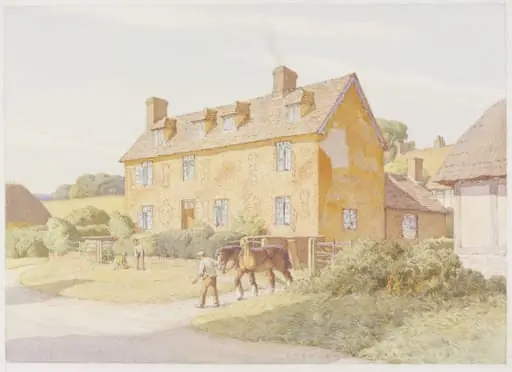 A 15th century cottage at Nether Wynchenden
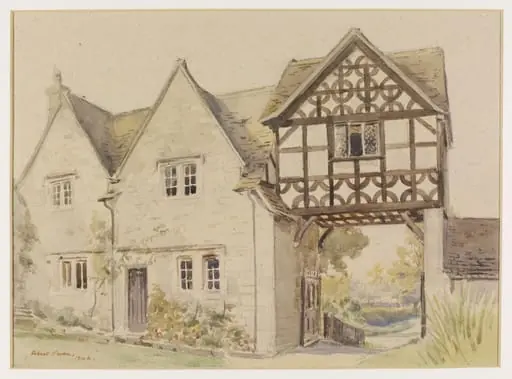 Gatehouse, Frocester Court
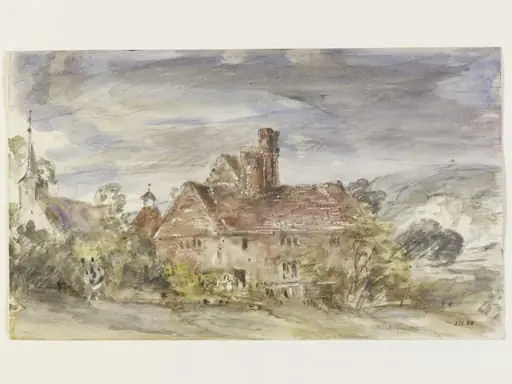 A farmhouse and church at Houghton, Sussex