Artwork
Culver House, Malmesbury
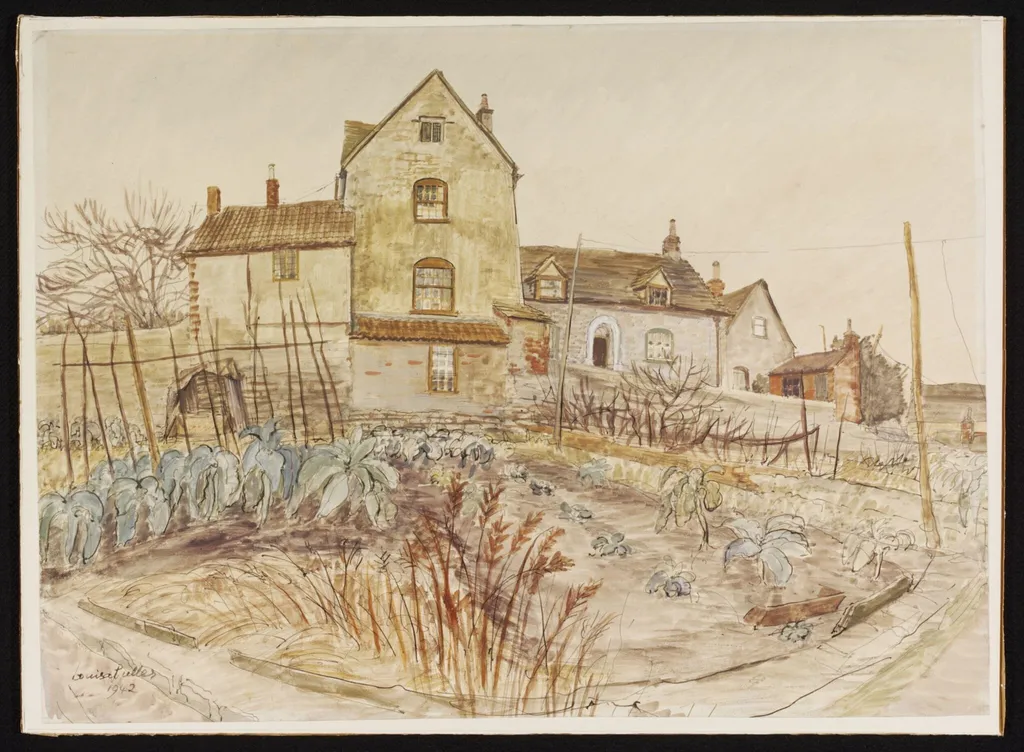
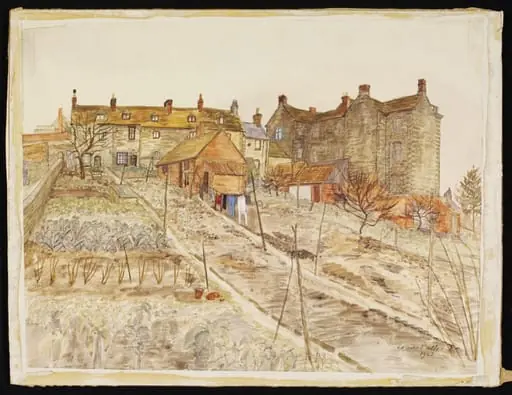
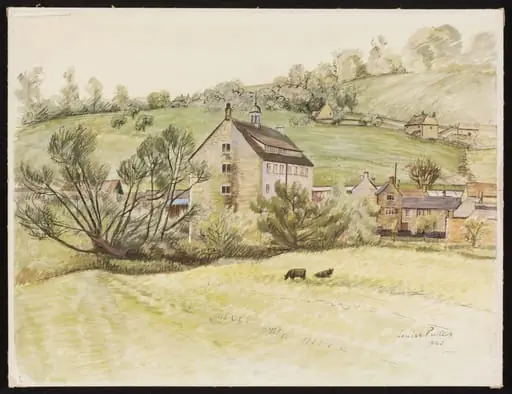
Culver House, Malmesbury is a watercolor work on paper by Puller. It is held in the collection of the Victoria and Albert Museum.
About this work
The sheep and simple buildings give it a calm, everyday feel—no drama, just daily life.
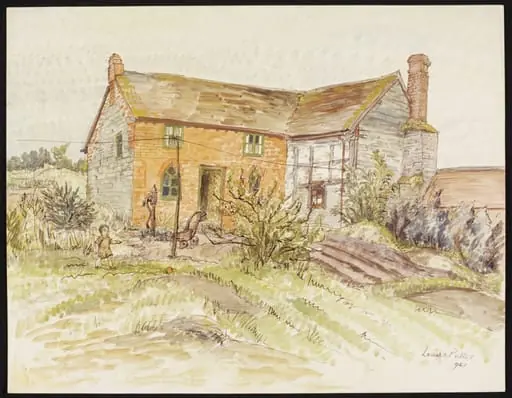
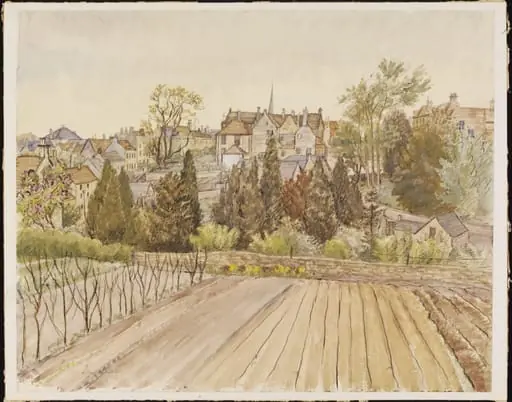
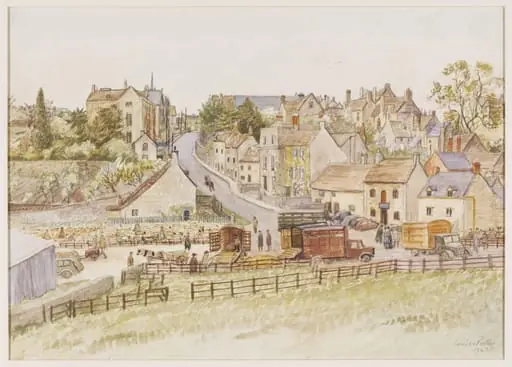
This watercolor shows an old stone house with a tall, narrow tower and small windows. In front, a muddy yard has sheep grazing under bare trees. The house looks worn, with patches of red on the walls and a simple wooden fence. The whole scene feels quiet and a little cold, with dry grass and leafless branches.
The artist signed it "Puller, 1942," so this was made during World War II. The sheep and simple buildings give it a calm, everyday feel—no drama, just daily life.
Look up Victoria and Albert Museum to see more of this artist’s work.
Overview
The watercolour, executed in 1942 by the artist Puller, portrays Culver House, an irregularly gabled stone residence situated in Malmesbury. Rendered in subdued browns and greens, the composition includes a vegetable garden and a foreground populated by sheep, conveying a quiet, everyday rural scene.
Subject & Meaning
The image captures a modest country house with a narrow tower, small windows, and patches of red mortar, set against a barren yard of dry grass and leafless trees. The presence of grazing sheep and a simple wooden fence underscores the ordinary domestic life of the period, without overt narrative or dramatization.
Technique & Style
Puller employs a restrained palette of earth tones, applying washes that suggest weathered stone and muted foliage. The handling of watercolour creates a soft, slightly hazy atmosphere, while fine brushwork delineates architectural details such as the asymmetrical gables and the tower’s vertical emphasis.
History & Provenance
The work belongs to the Recording Britain project, a wartime initiative overseen by Sir Kenneth Clark and financed by the Pilgrim Trust. Artists were commissioned to document British landscapes and structures at risk of loss during World War II; over 1,500 pieces were produced. This watercolour was signed and dated by Puller in 1942.
Context
Recorded during the Second World War, the painting reflects the broader effort to preserve visual records of rural and urban environments threatened by bombings or post‑war redevelopment. Culver House, like many subjects in the series, was captured to safeguard its appearance for future generations.
Artist & collection