Artwork
Stokesay Castle
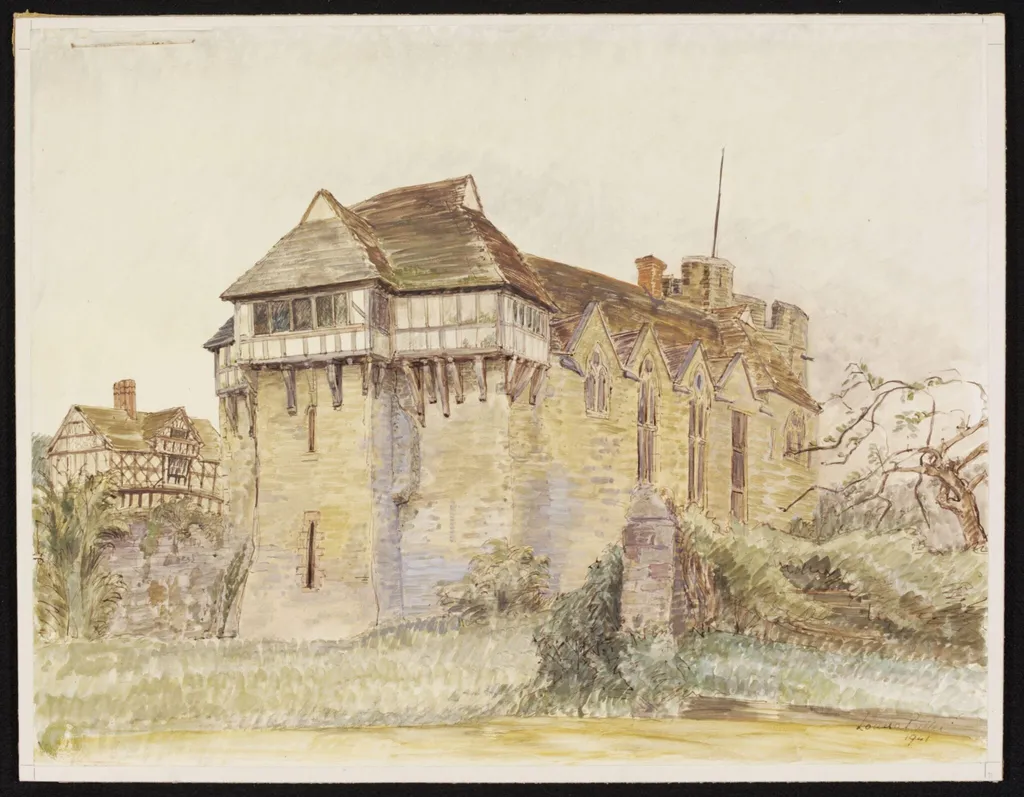
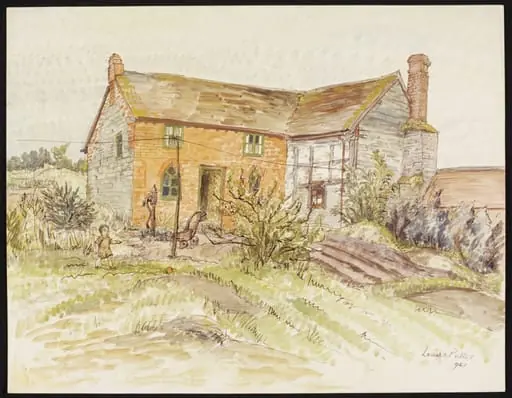
Stokesay Castle is a watercolor work on paper by Puller. It is held in the collection of the Victoria and Albert Museum.
About this work
Overview
The project, supported by the Pilgrim Trust and overseen by Sir Kenneth Clark, sought to document at-risk landscapes during wartime.
Painted in 1941, this watercolour by Puller captures Stokesay Castle in Shropshire as part of the 'Recording Britain' initiative. The project, supported by the Pilgrim Trust and overseen by Sir Kenneth Clark, sought to document at-risk landscapes during wartime. Puller’s work contributes to a broader effort to preserve visual records of England’s architectural heritage, focusing on structures vulnerable to modernization or conflict.
Subject & Meaning
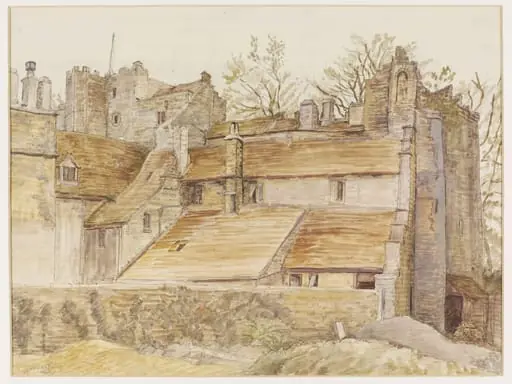
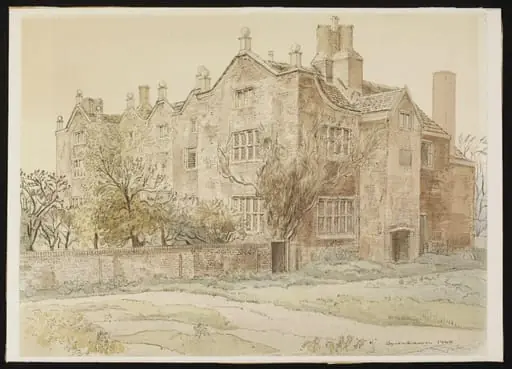
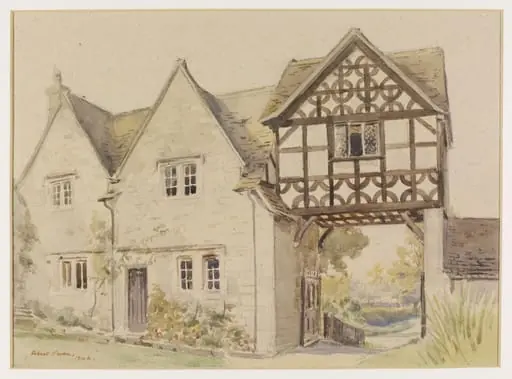
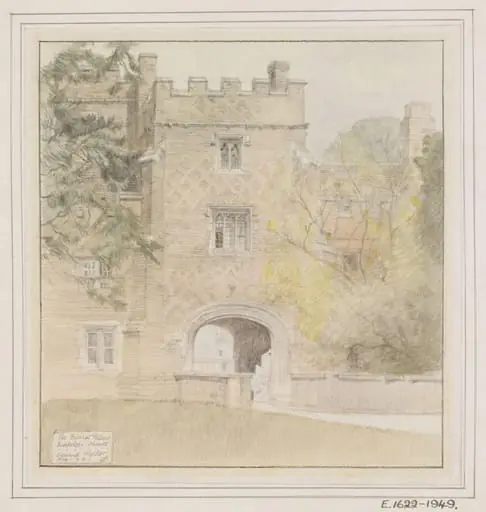
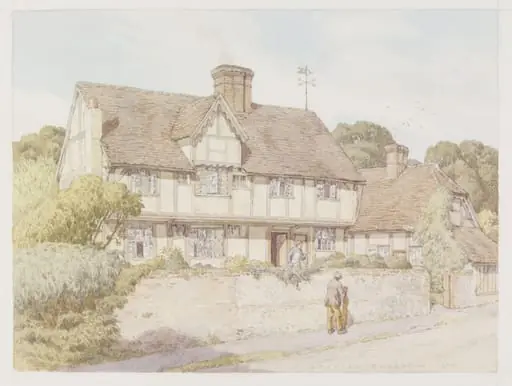
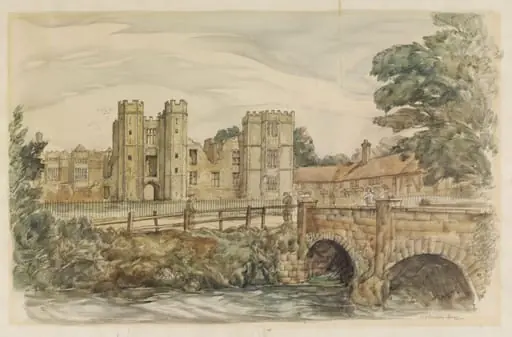
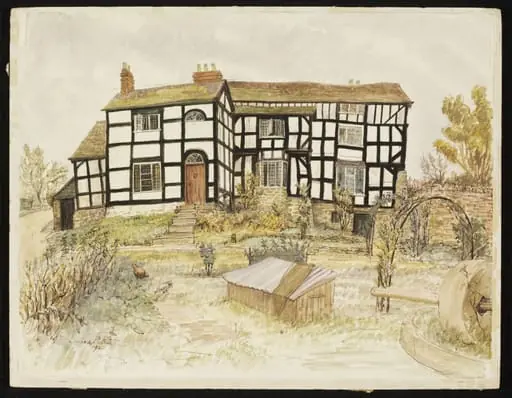
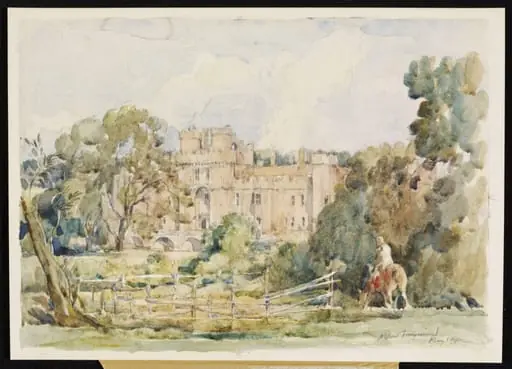
The painting presents Stokesay Castle’s north tower, its timber-framed upper storey prominent against the stone masonry. To the right, the great hall’s large windows suggest its medieval function, while the black-and-white gatehouse recedes into the distance. The surrounding vegetation and quiet setting emphasize the castle’s isolation and enduring presence, reflecting a quiet reverence for vernacular heritage amid national uncertainty.
Technique & Style
Puller employed loose, fluid brushwork and translucent washes to convey atmosphere rather than precise detail. The soft gradations of tone suggest shifting light, while the muted palette enhances the scene’s somber stillness. Timber framing and shingled roofs are rendered with suggestive strokes, avoiding sharp definition—this approach prioritizes mood and immediacy over topographical accuracy.
History & Provenance
Created during World War II, the painting was produced under the 'Recording Britain' scheme, which commissioned artists to document sites deemed vulnerable to wartime destruction or postwar change. The work entered the Victoria and Albert Museum’s collection as part of this national archive, where it remains accessible as both an artistic and historical record of England’s rural architecture.
Context
The 'Recording Britain' project emerged as a cultural response to the threats of aerial bombing and urban development. It focused on English sites, with limited coverage of Wales and no inclusion of Northern Ireland. Artists like Puller were chosen for their skill in watercolour, a medium valued for its portability and sensitivity to light—ideal for capturing fleeting, unaltered landscapes before they vanished.
Legacy
Puller’s watercolour endures as part of a significant wartime archive that reshaped how Britain valued its architectural past. The 'Recording Britain' collection, now held by the V&A, continues to inform conservation efforts and public understanding of heritage. These works, though not intended as grand statements, collectively preserve a quiet but vital testimony to pre-war English landscapes.
Artist & collection