Artwork
Herstmonceux Castle
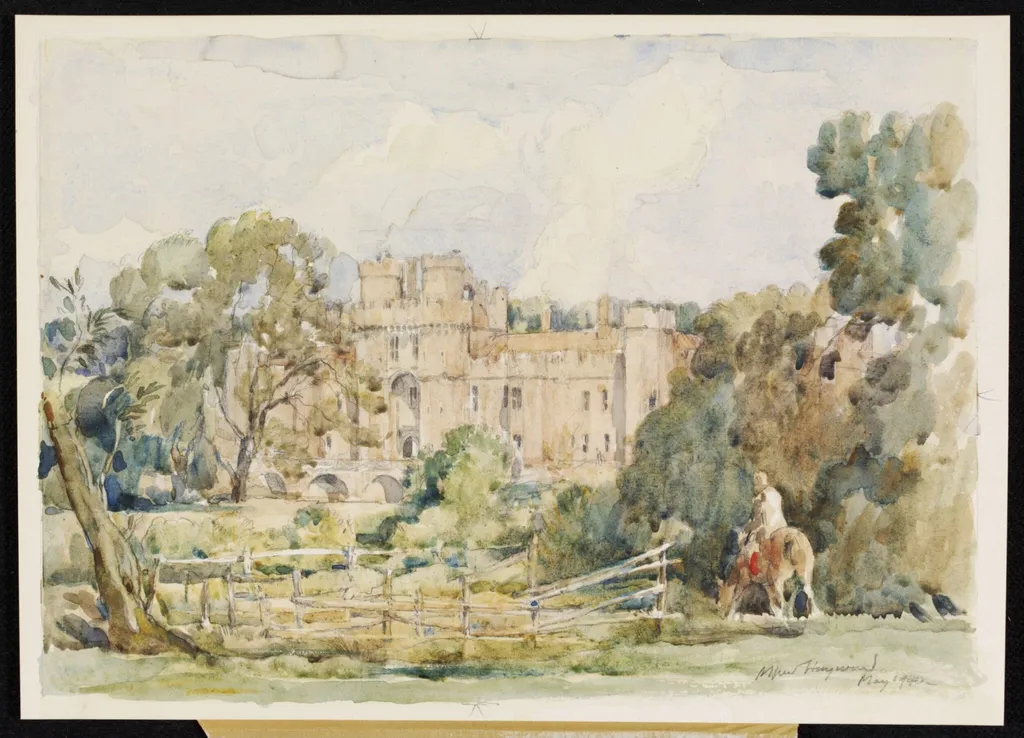
Herstmonceux Castle is a watercolor work on paper by Alfred Hayward. It dates from 1940 and is held in the collection of the Victoria and Albert Museum.
About this work
The artist used loose, sketchy brushstrokes to suggest light and shadow, giving the painting a dreamy feel.
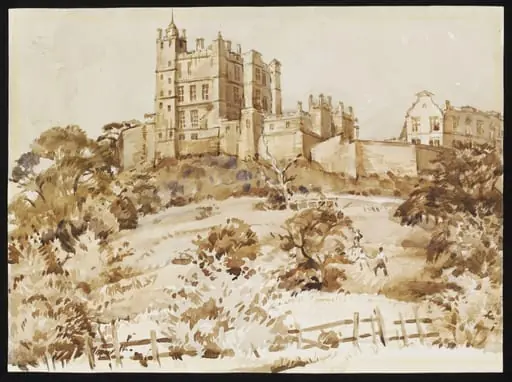
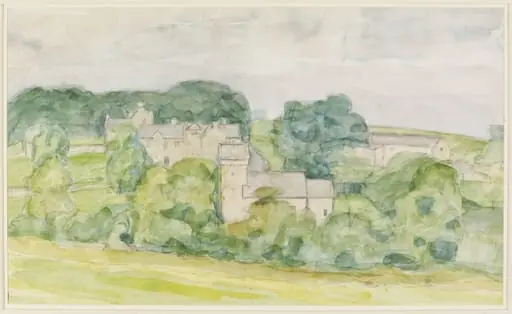
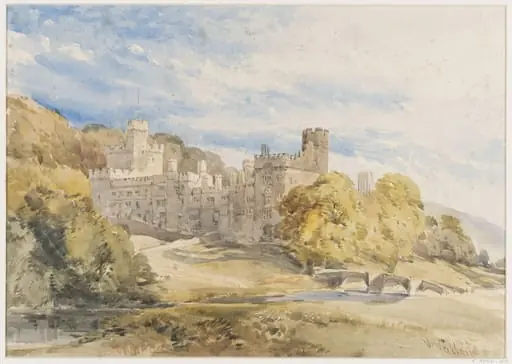
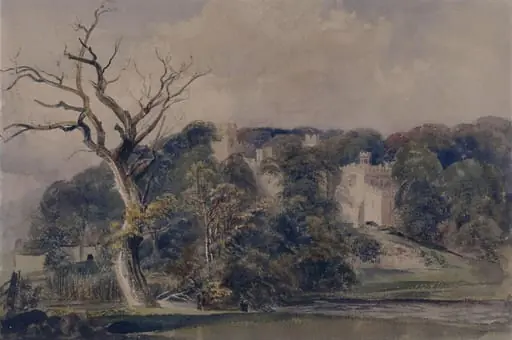
This watercolor shows a large stone building with towers and arches, set back from a river. In the foreground, two people ride horses along a narrow path beside a wooden fence. Trees frame the scene, with soft greens and blues blending into the sky.
The artist used loose, sketchy brushstrokes to suggest light and shadow, giving the painting a dreamy feel. The date in the corner tells us it was painted in May 1940.
Next, check out the Victoria and Albert Museum to see more of this artist’s work.
Overview
Herstmonceux Castle is a watercolour painting created by Alfred Hayward in May 1940. The work is part of the Recording Britain project, a documentation effort focused on British landscapes and buildings during World War II.
Subject & Meaning
The painting depicts Herstmonceux Castle set amidst a serene landscape, with horse riders in the foreground. The scene captures a tranquil moment, conveying a sense of national identity and heritage.
Technique & Style
The watercolour features loose, sketchy brushstrokes that evoke a dreamy atmosphere, with soft greens and blues merging into the sky. The artist's technique effectively suggests the play of light and shadow.
History & Provenance
Commissioned by the Committee for the Employment of Artists in Wartime, the Recording Britain project was funded by the Pilgrim Trust and ran from 1940 to 1943, involving notable watercolour artists.
Context
The project aimed to preserve a record of places and scenes seen as part of a vanishing national identity amid wartime changes.
Artist & collection
Artist
Alfred Hayward painted quiet English landscapes in watercolour during the early 1940s.