Artwork
Sergeant Peppers Lonely Hearts Bastards
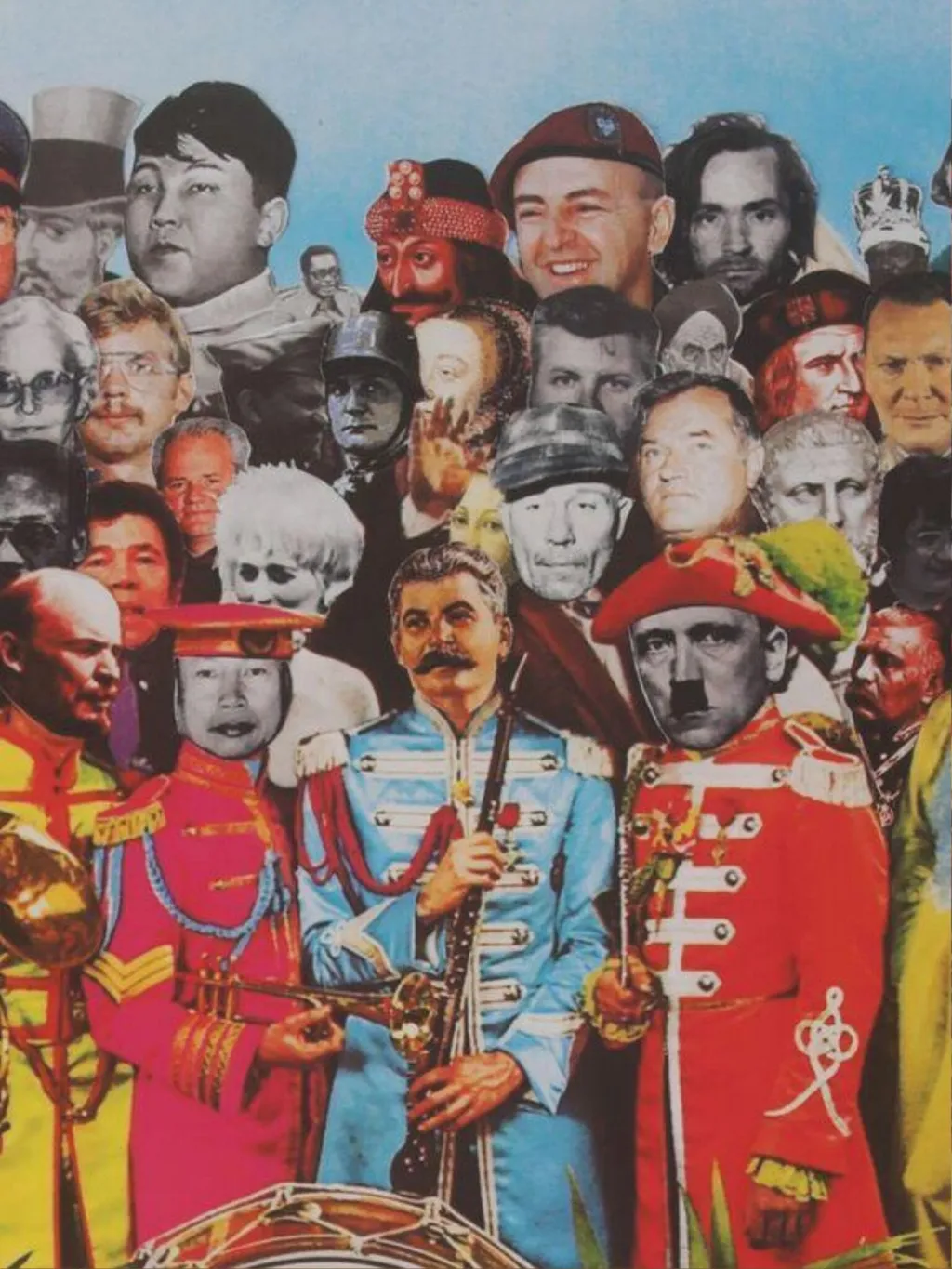
Sergeant Peppers Lonely Hearts Bastards is a print by Pure Evil. It dates from 2009 and is held in the collection of the Victoria and Albert Museum.
About this work
Overview
This print reconfigures the iconic 1967 Beatles album cover by substituting the band members with portraits of authoritarian figures from across history.
This print reconfigures the iconic 1967 Beatles album cover by substituting the band members with portraits of authoritarian figures from across history. The original floral and decorative collage remains intact, but the central figures are replaced with a disquieting assembly of rulers, dictators, and political icons. The title twists the album’s name into something more ominous, signaling a critical reinterpretation rather than a homage.
Subject & Meaning
The work assembles historical and modern autocrats—some recognizable, others obscured—into a single, crowded tableau. Their inclusion suggests a commentary on the persistence of power, control, and ideological violence across eras. The absence of faces on some figures, alongside the violinist in the foreground, introduces ambiguity: is this a memorial, a mockery, or a warning about the normalization of tyranny?
Technique & Style
The print employs a layered collage method, blending vintage black-and-white photographs with saturated, unnatural color fields. Faces are rendered in varying degrees of clarity, some faded as if decaying, others sharply defined. The juxtaposition of bright hues with muted grays creates a hallucinatory effect, evoking both nostalgia and unease. The composition mimics the original album’s density but subverts its warmth with clinical dissonance.
History & Provenance
The piece draws directly from the Beatles’ 1967 cover, which itself was a collage of cultural icons. This reinterpretation emerged in the early 21st century as part of a broader trend in political art that re-examines pop culture through critical lenses. While the artist’s identity is not widely documented, the work circulates in contemporary exhibitions focused on power, memory, and media manipulation.
Context
The work emerges amid growing public scrutiny of historical figures once celebrated as national heroes, and the rise of digital image manipulation as a tool for political critique. It reflects a cultural moment in which pop icons are reinterpreted not as symbols of peace, but as vessels for examining systemic oppression. The choice of Sergeant Pepper’s cover—a symbol of 1960s idealism—heightens the contrast with its grim replacement.
Legacy
The print contributes to a lineage of subversive appropriation in visual art, where familiar imagery is repurposed to expose hidden violence or hypocrisy. It invites viewers to question how history is curated, remembered, or erased in public memory. Its enduring relevance lies in its refusal to offer resolution, instead presenting tyranny as an ongoing, layered phenomenon.
Artist & collection

 Untitled
 Untitled
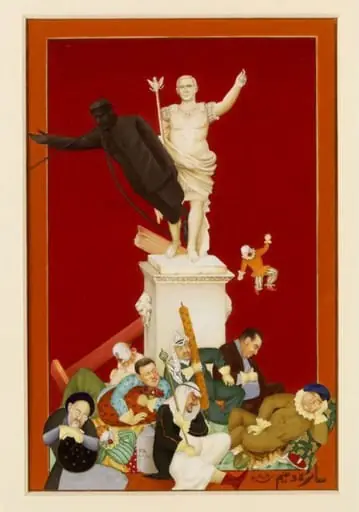 Regime Change
 Untitled
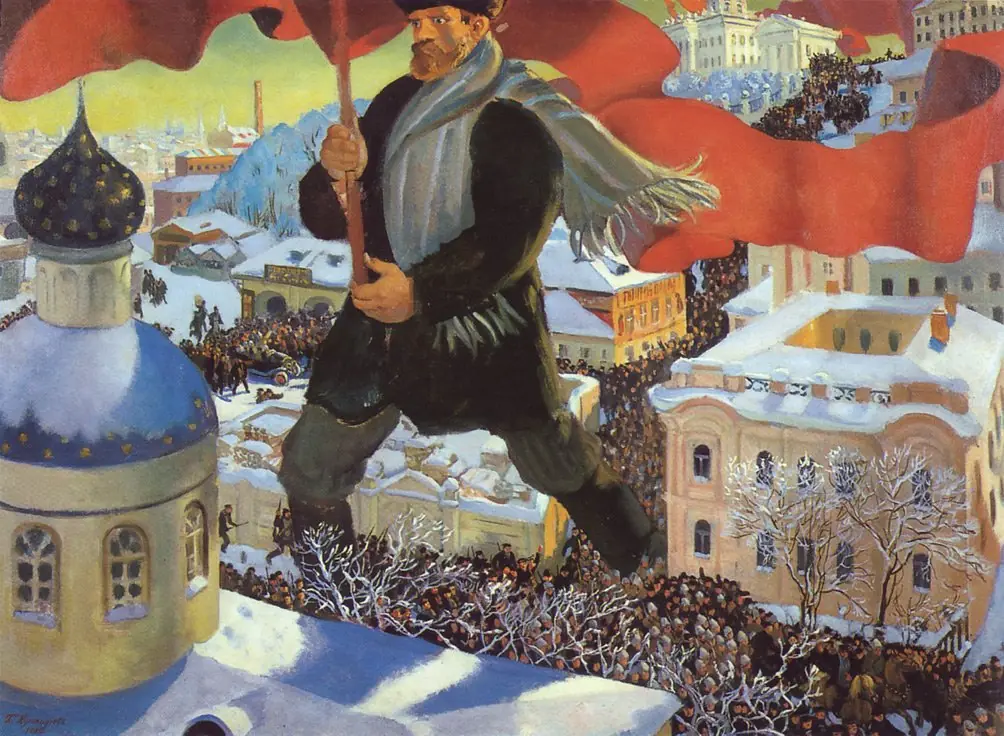 Bolshevik
 Untitled
 Untitled
 Speicher, Kroll and Bellows
 Untitled
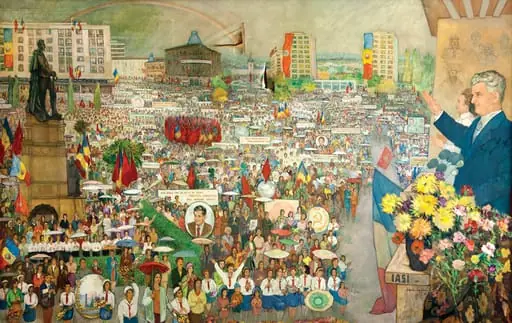 Tablou ”Mitingul din Piața Unirii din Iași de la 15 septembrie 1980”, semnat Costache Agafiței și datat în partea dreaptă jos. Tabloul îi înfățișază pe Elena și pe Nicolae Ceaușescu la balcon salutând mulțimea adunată în Piața Unirii din Iași. Comandat de Comitetul Județean de Partid Iași și dăruit soților Ceaușescu în octombrie 1981.
 Untitled
 Untitled