Artwork
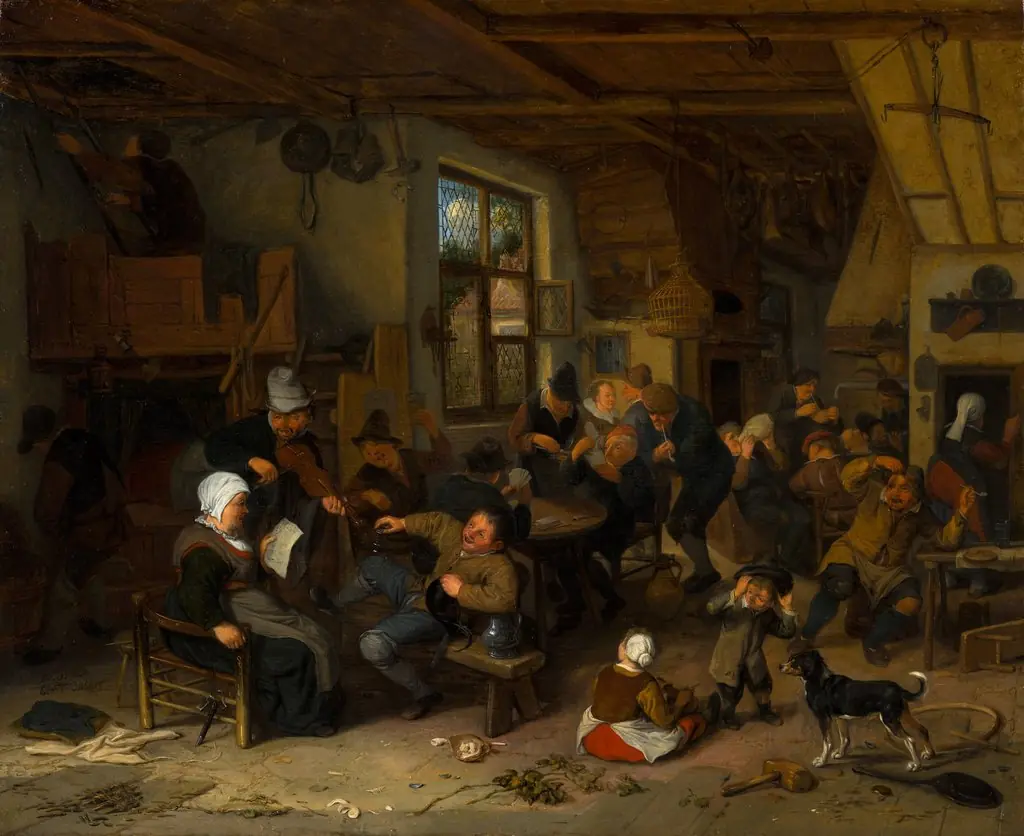
Peasants Drinking and Dancing at an Inn
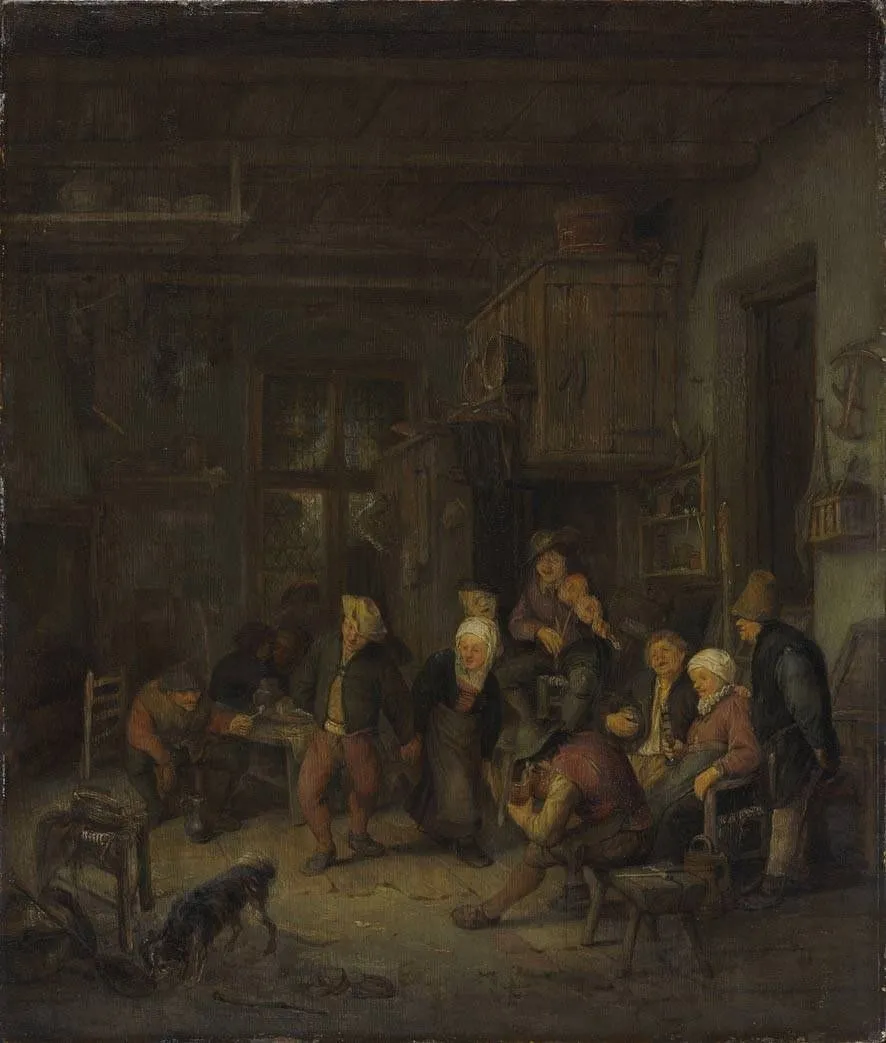
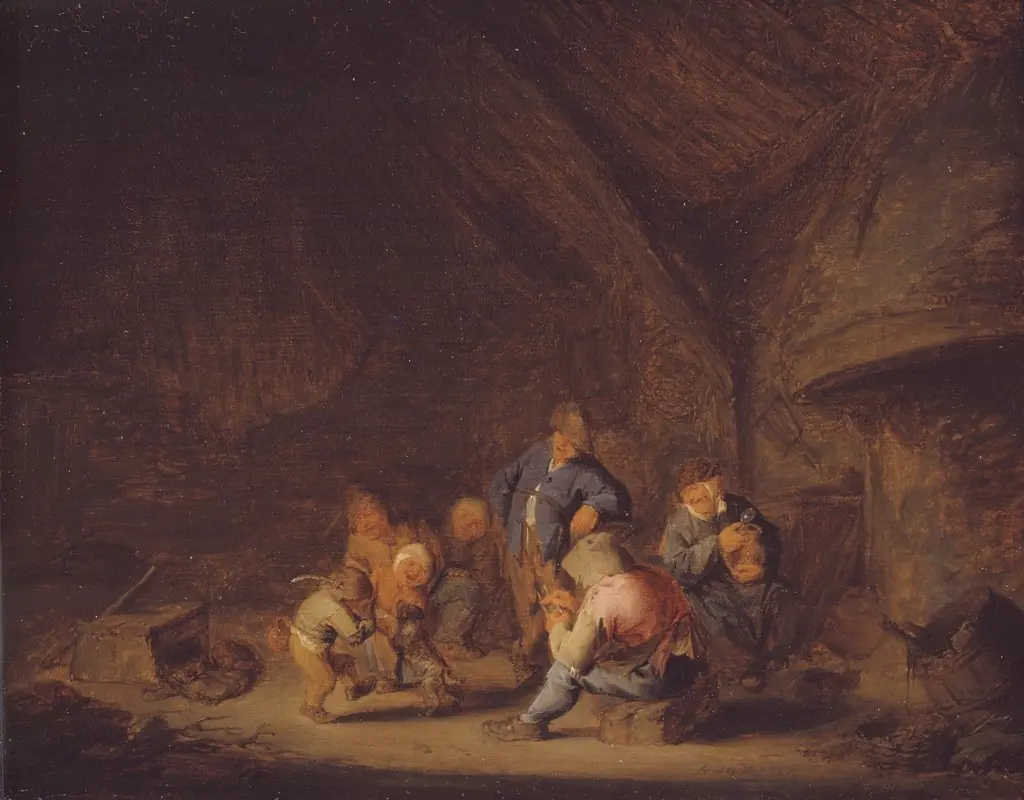
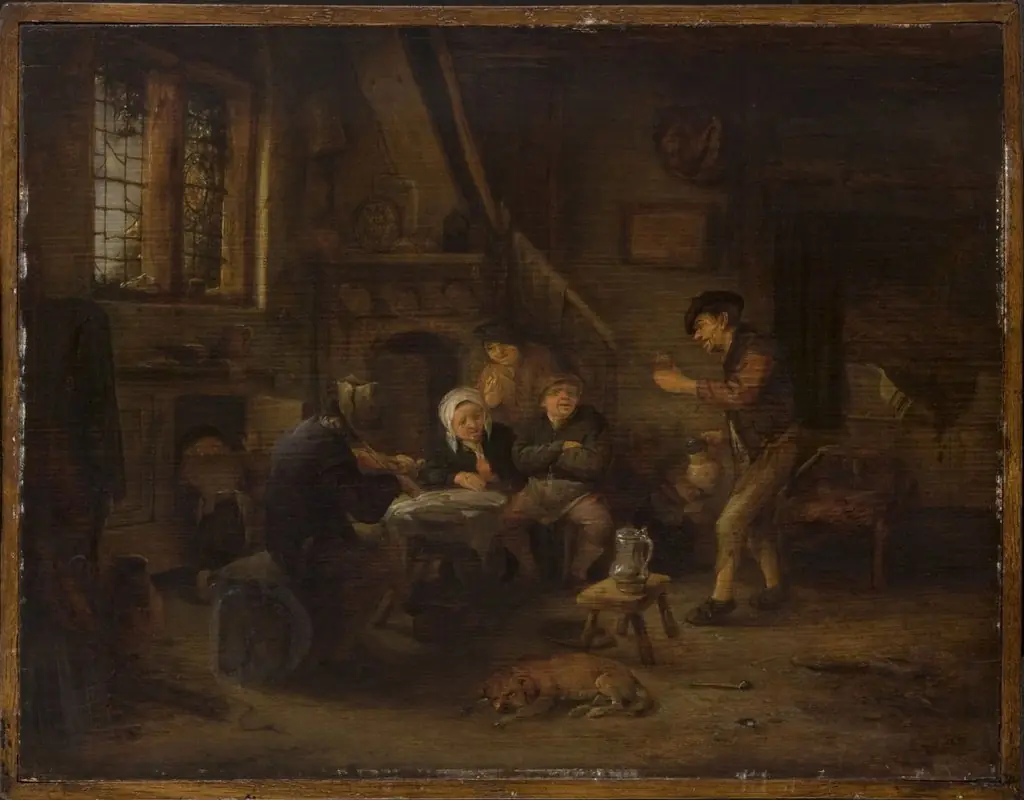
Peasants Drinking and Dancing at an Inn is an oil painting by the Dutch Golden Age artist Adriaen van Ostade. It dates from 1650 and is held in the collection of the Bavarian State Painting Collections.
About this work
Overview
The setting is defined by dark wooden walls and shelves cluttered with domestic objects, grounding the scene in a specific, humble reality.
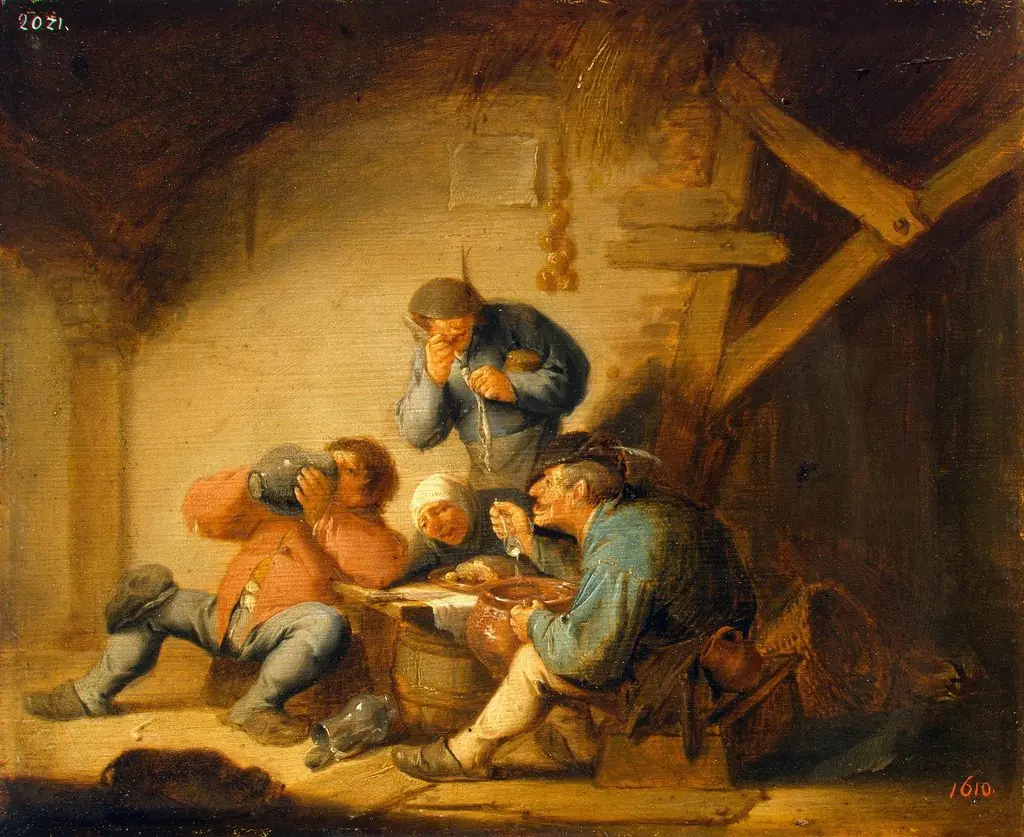
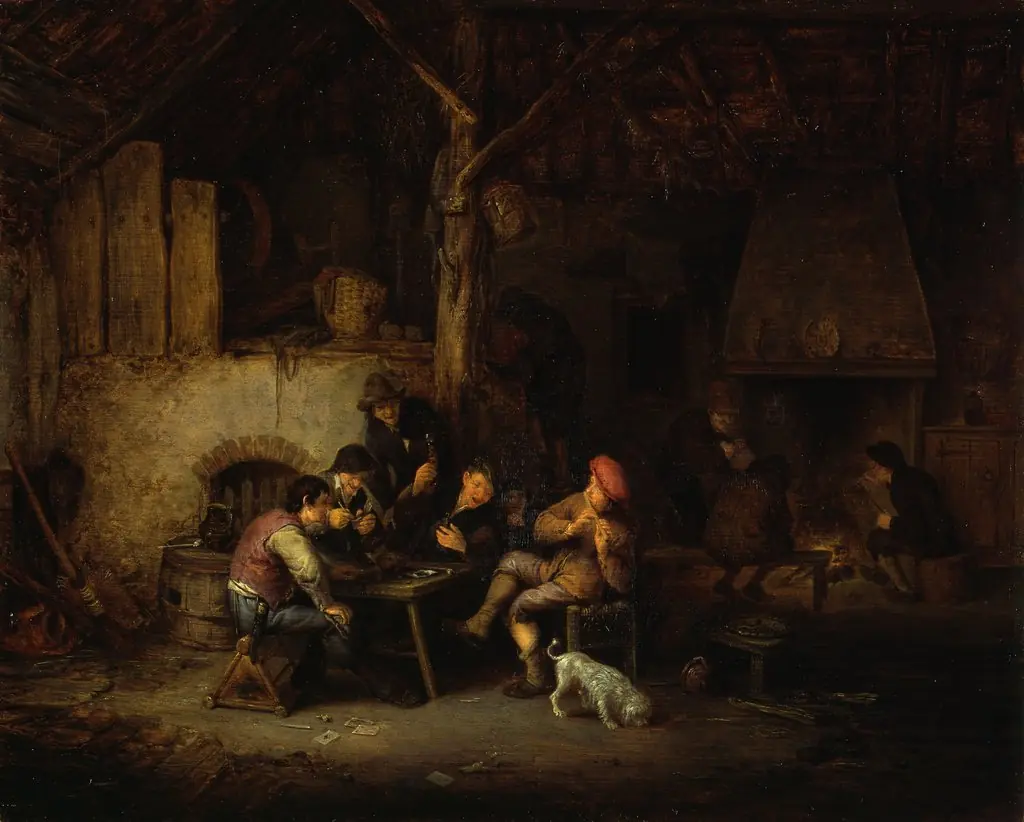
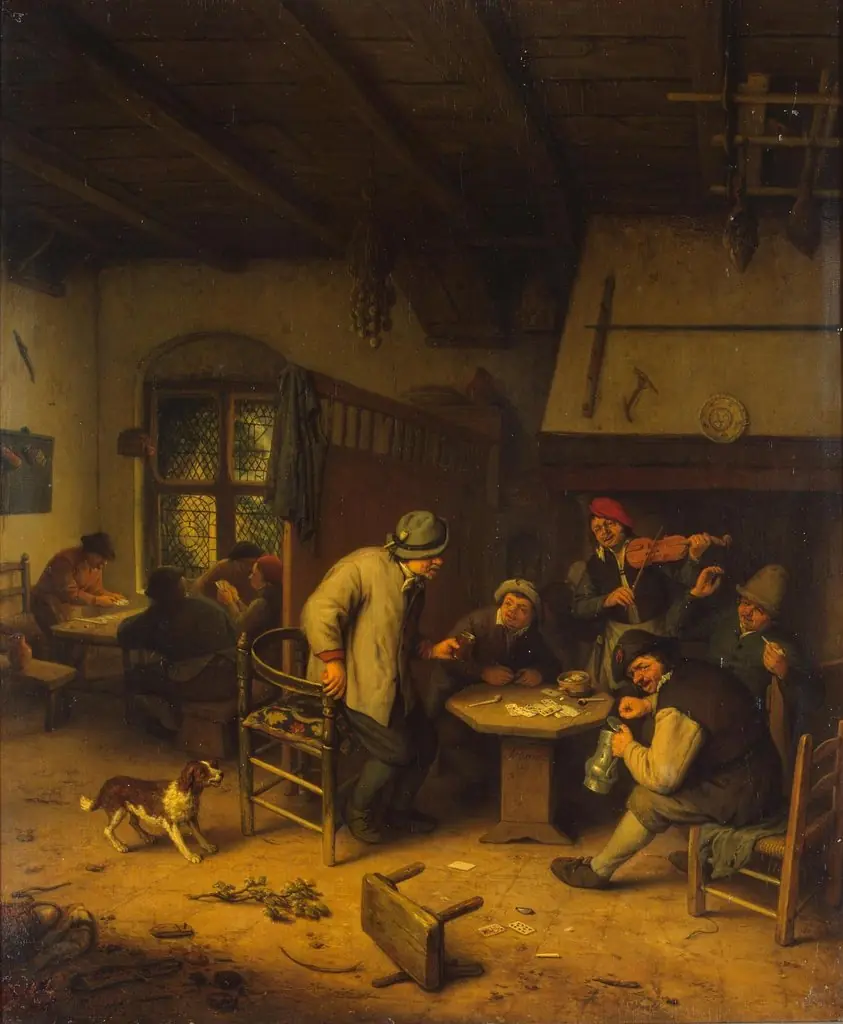
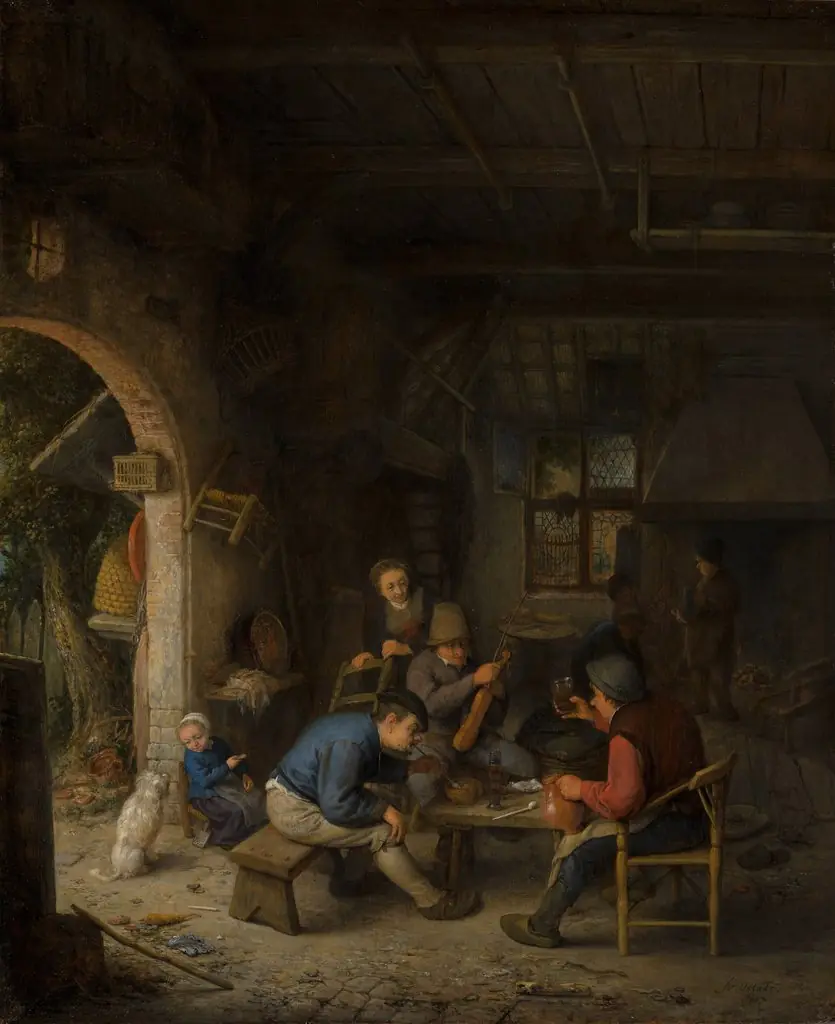
Adriaen van Ostade's 'Peasants Drinking and Dancing at an Inn' (1650) is a quintessential example of Dutch Golden Age genre painting, capturing the raucous interior life of a rural tavern. The composition centers on a group of peasants engaged in merrymaking, with figures seated at a rough table, standing in conversation, or participating in a lively dance. Ostade employs a restricted palette dominated by earthy browns and ochres, illuminated by a warm, directional light source that highlights the textures of worn clothing and the gleam of earthenware jugs. The setting is defined by dark wooden walls and shelves cluttered with domestic objects, grounding the scene in a specific, humble reality. A dog resting in the corner adds a touch of naturalism to the crowded space. Created during the peak of Ostade's career, this work reflects his enduring fascination with the lower classes, portraying them not with moralizing judgment but with a keen observation of their habits and social dynamics. The painting exemplifies the artist's mature style, characterized by loose, expressive brushwork and a sophisticated handling of light and shadow that unifies the chaotic activity into a cohesive visual narrative.
Subject & Meaning
The scene gathers a group of rural figures around a central table, some seated, others standing or swaying as if to music. Their simple, worn garments and the presence of a dog in the corner convey a straightforward, unvarnished view of lower‑class leisure, suggesting both conviviality and the roughness of tavern culture.
Technique & Style
Van Ostade employs chiaroscuro, allowing the faces and hands to catch a soft glow while the surrounding space recedes into shadow. This contrast of light and dark creates depth and a tangible atmosphere, rendering textures—from the rough wooden walls to the gleam of metal tools— with convincing realism.
History & Provenance
Created in the mid‑17th century, the canvas entered the Alte Pinakothek’s holdings during the museum’s early acquisitions of Dutch genre works. Its provenance traces back to private collections in the Netherlands before being transferred to the Bavarian state collection, where it remains on public display.
Context
The painting belongs to a period when Dutch artists frequently explored scenes of daily life, emphasizing moral undertones through ordinary activities. Van Ostade, a pupil of Adriaen Brouwer, specialized in such tavern scenes, using humor and observation to reflect social habits of the time.
Artist & collection
Artist
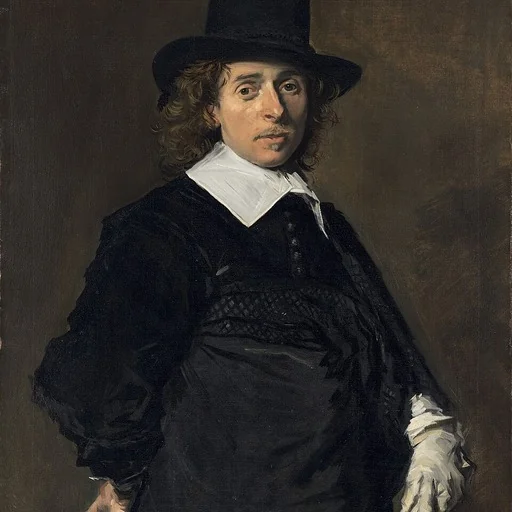
Adriaen van Ostade (baptized as Adriaen Jansz Hendricx 10 December 1610 – buried 2 May 1685) was a Dutch Golden Age painter of genre works, showing the everyday life of ordinary men and women.